
Map Snapshot


11 Records
Status
Description
Citations
No citations linked for this taxon yet.
Source: Wikipedia
| Fomitopsis mounceae | |
|---|---|

| |
Scientific classification 
| |
| Kingdom: | Fungi |
| Division: | Basidiomycota |
| Class: | Agaricomycetes |
| Order: | Polyporales |
| Family: | Fomitopsidaceae |
| Genus: | Fomitopsis |
| Species: | F. mounceae
|
| Binomial name | |
| Fomitopsis mounceae Haight & Nakasone (2019)
| |
| Fomitopsis mounceae | |
|---|---|
| Mycological characteristics | |
 | Pores on hymenium |
 | No distinct cap |
 | Hymenium attachment is irregular or not applicable |
| Lacks a stipe |
 | Spore print is white |

 | Ecology is saprotrophic or parasitic |
 | Edibility is inedible |
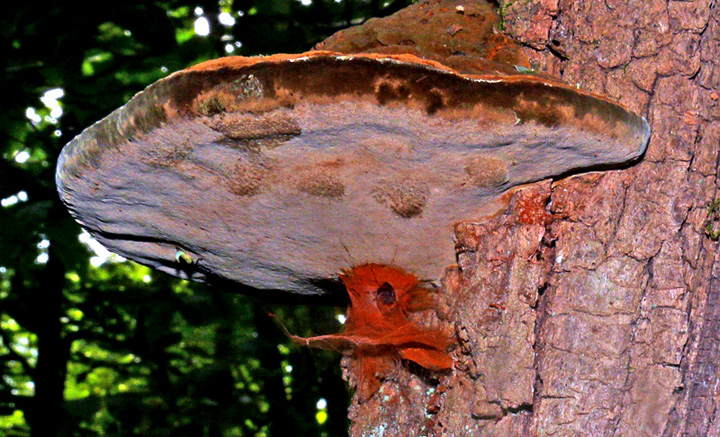
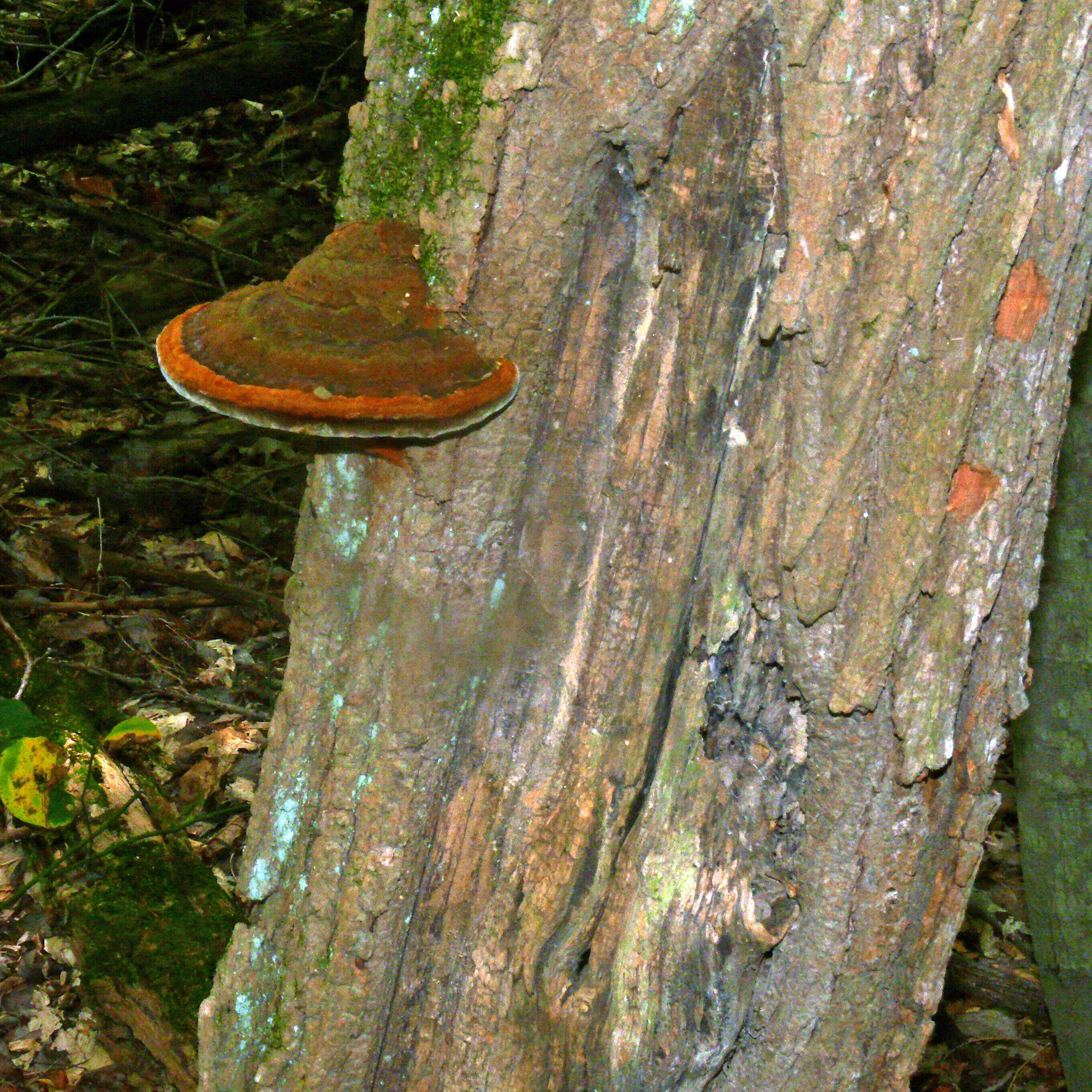
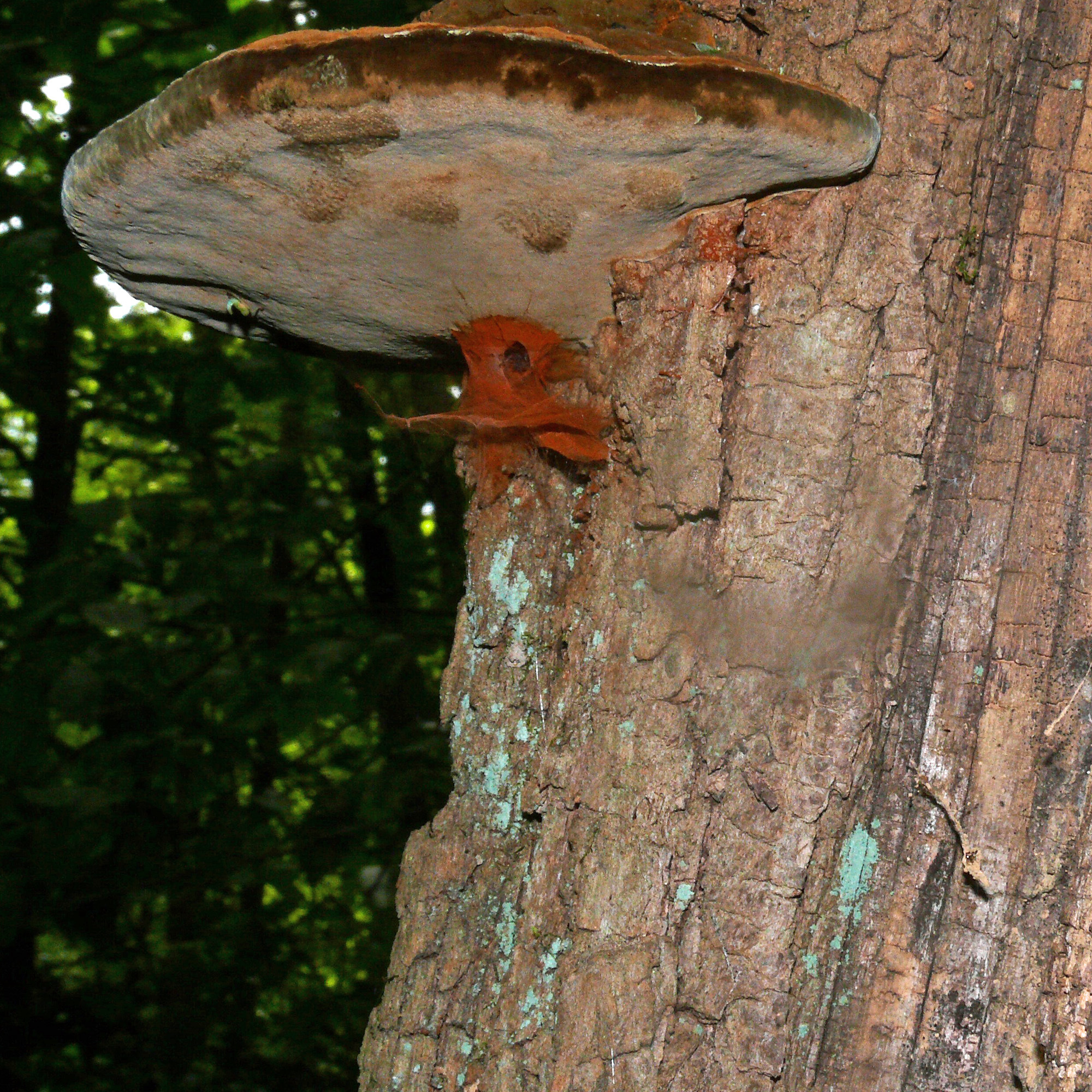
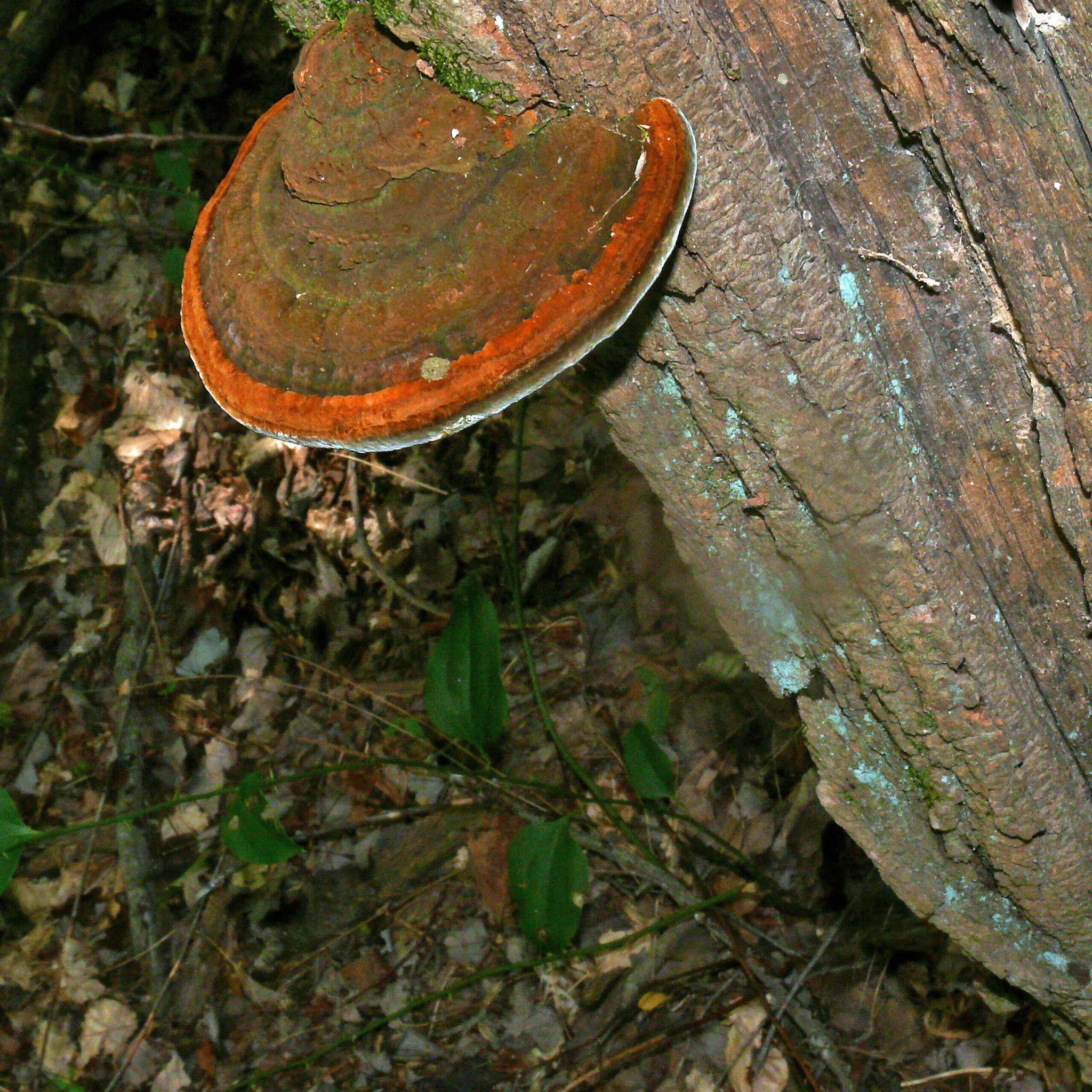
Fomitopsis mounceae is a North American species of shelf fungus.
Taxonomy
[edit]Originally thought to be identical to the red-belted conk, studies show that it is in fact a discrete species.[1] The original specimen was isolated from Edson, Alberta on a poplar tree. This species was named after Canadian mycologist Irene Mounce.[1]
Description
[edit]Fomitopsis mounceae is typically fan-like in shape, with distinct bands usually brown or red in colour.[1] It can have a resinous, sticky coating.[1] As the conks age, they often become bumpy or warty.[1] The cap is 8–25 centimetres (3–10 in) wide and 5–12 cm (2–4+1⁄2 in) thick at the base.[2]
The underside of the conk is typically white or yellow in colour, with 3–6 round pores per millimetre.[1] If broken open, the inside is yellowish,[2] or sometimes woody and brown, with no distinct bands.[1] It stains brown in KOH.
The spore print is whitish to cream.[2]
Similar species
[edit]Fomitopsis ochracea is very similar but always lacks a red, orange or yellow zone; F. ochracea chars if burnt, while F. mounceae melts. Fomitopsis schrenkii is found in the Southwest.[2] Ganoderma applanatum usually lacks a blackish zone on the cap and its pores stain dark brown. Species of Fomes are usually taller than wide.[2]
Habitat and distribution
[edit]The perennial woody conk causes cubical brown rot typical of Fomitopsis. It favours aspen or conifer trees.[2] It is a detritivore, and does not typically grow on live trees. It typically grows at lower elevations than F. schrenkii.[1]
It is distributed across Canada and the northern United States, as far south as northern California.[1]
References
[edit]- ^ a b c d e f g h i Haight, John-Erich; Nakasone, Karen K.; Laursen, Gary A.; Redhead, Scott A.; Taylor, D. Lee; Glaeser, Jessie A. (2019-03-04). "Fomitopsis mounceae and F. schrenkii—two new species from North America in the F. pinicola complex". Mycologia. 111 (2): 339–357. doi:10.1080/00275514.2018.1564449. ISSN 0027-5514. PMID 30908115. S2CID 85515024.
- ^ a b c d e f Audubon (2023). Mushrooms of North America. Knopf. p. 260. ISBN 978-0-593-31998-7.