

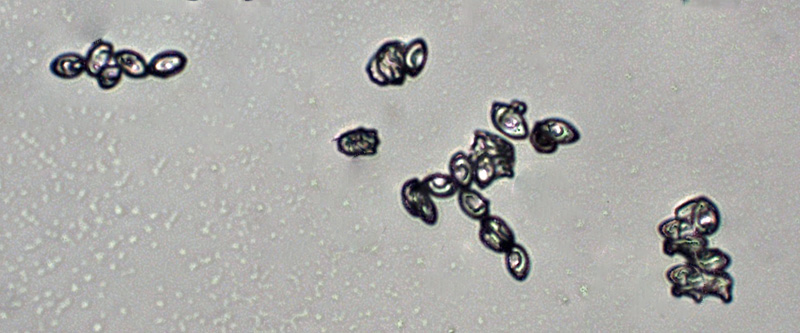
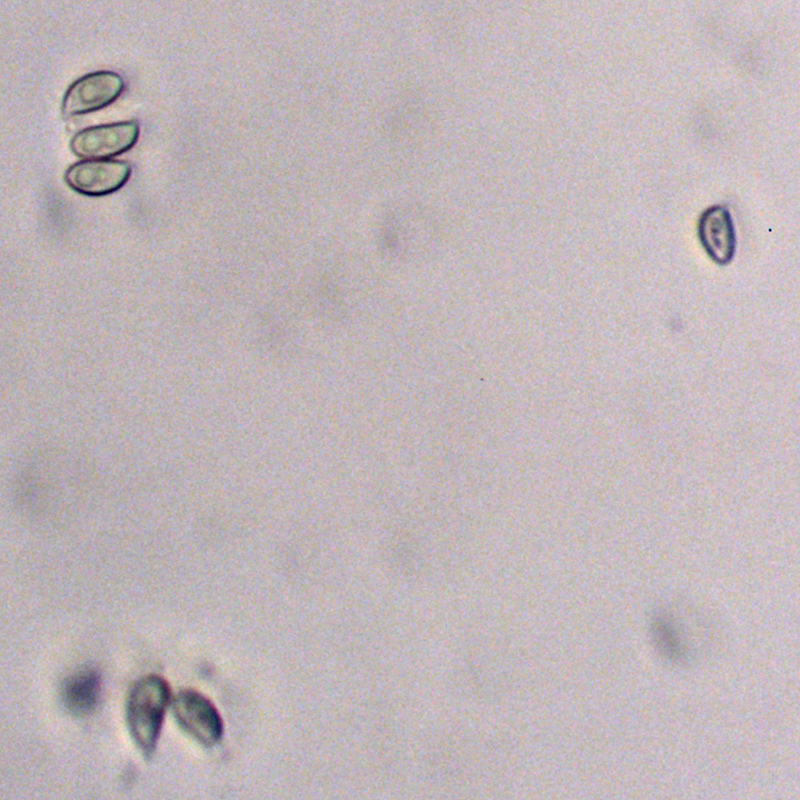
Map Snapshot


11 Records
Status
Description
Citations
No citations linked for this taxon yet.
Source: Wikipedia
| Leucocoprinus rubrotinctus | |
|---|---|
_Singer_260223.jpg)
| |
Scientific classification 
| |
| Kingdom: | Fungi |
| Division: | Basidiomycota |
| Class: | Agaricomycetes |
| Order: | Agaricales |
| Family: | Agaricaceae |
| Genus: | Leucocoprinus |
| Species: | L. rubrotinctus
|
| Binomial name | |
| Leucocoprinus rubrotinctus (Peck) Redhead (2023)
| |
| Synonyms[1][2] | |
| |
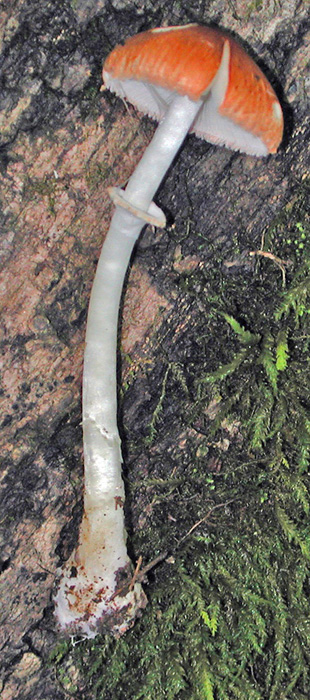
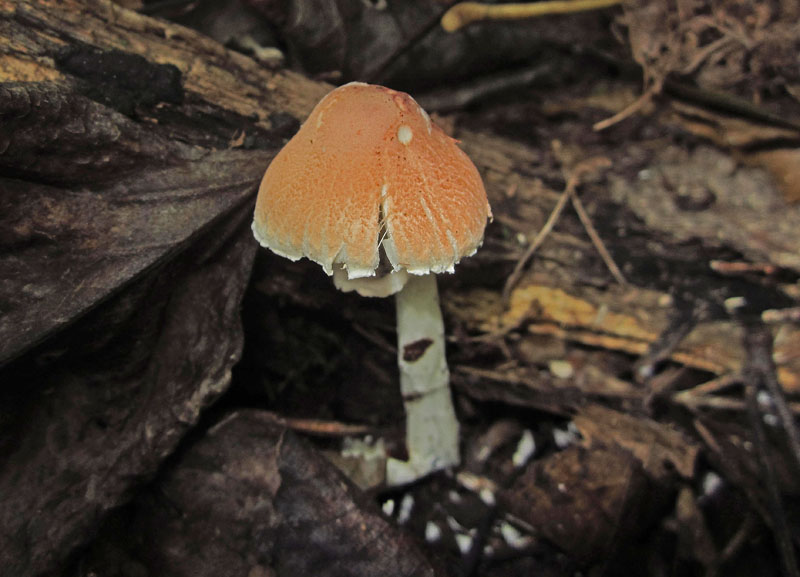
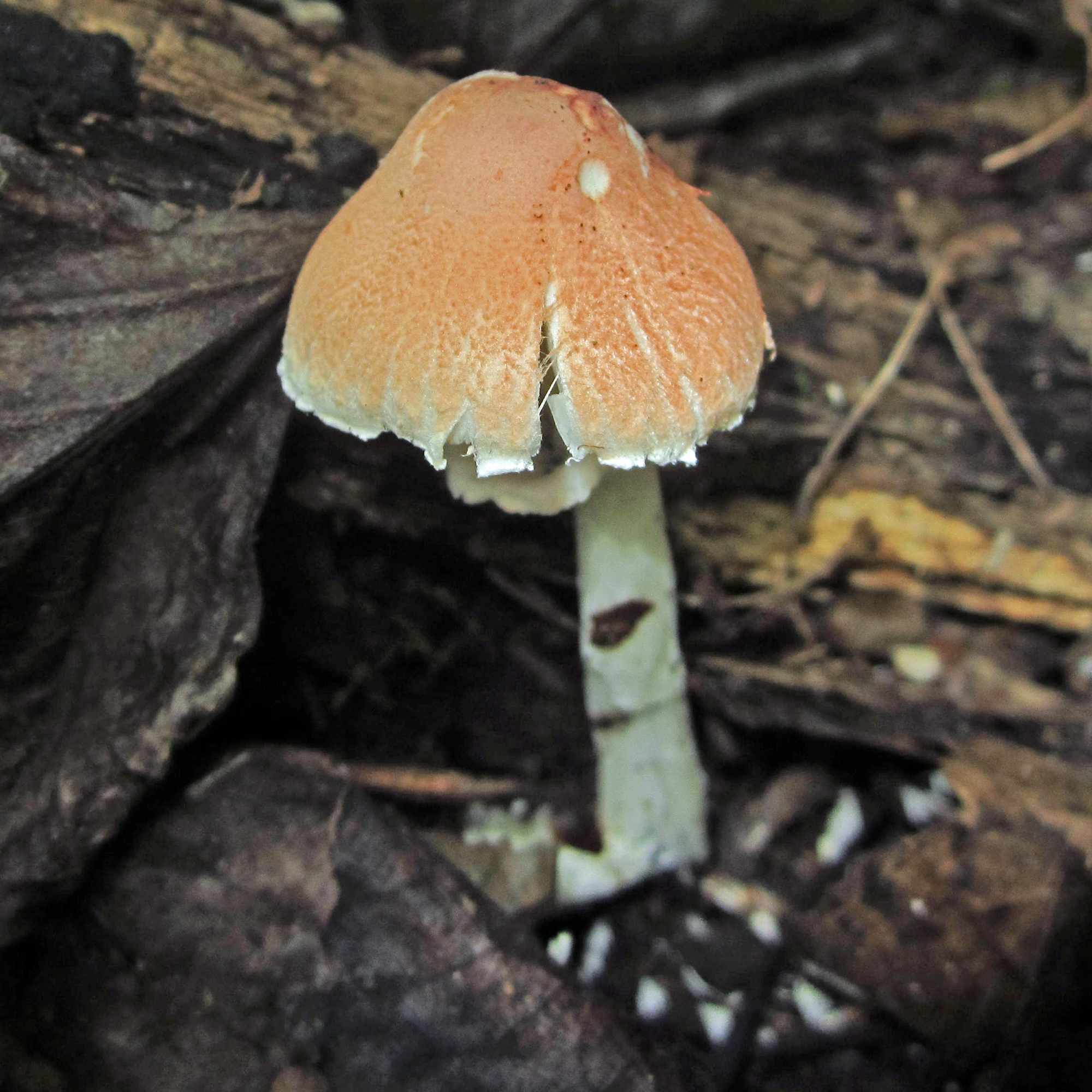
Leucocoprinus rubrotinctus, commonly known as the red-eyed parasol,[3] is a widespread species of fungus in the family Agaricaceae.
Taxonomy
[edit]It was described as new to science in 1884 by American mycologist Charles Horton Peck as Agaricus rubrotinctus.[4] In 1948 it was reclassified as Leucoagaricus rubrotinctus by the German mycologist Rolf Singer[5] and then in 2023 it was reclassified as Leucocoprinus rubrotinctus when the Leucocoprinus and Leucoagaricus genera began to be combined.[6]
The fungus may be a complex of several closely related species.[7]
Description
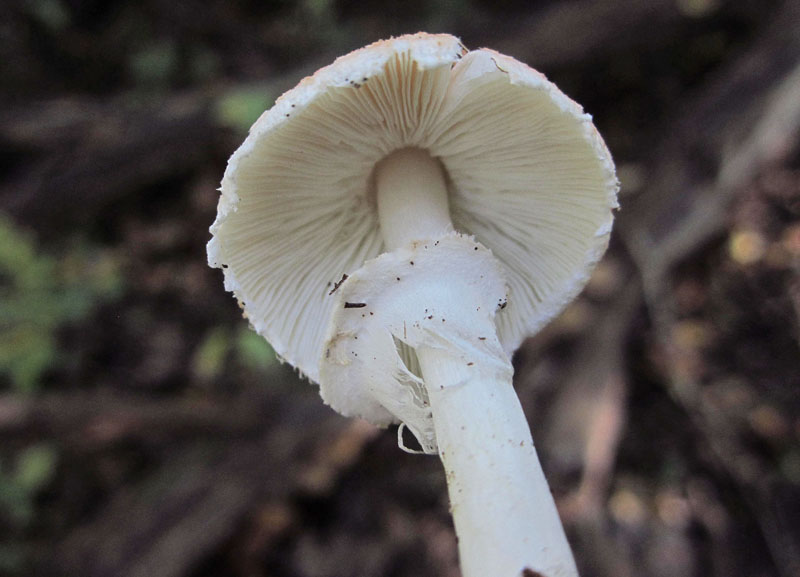
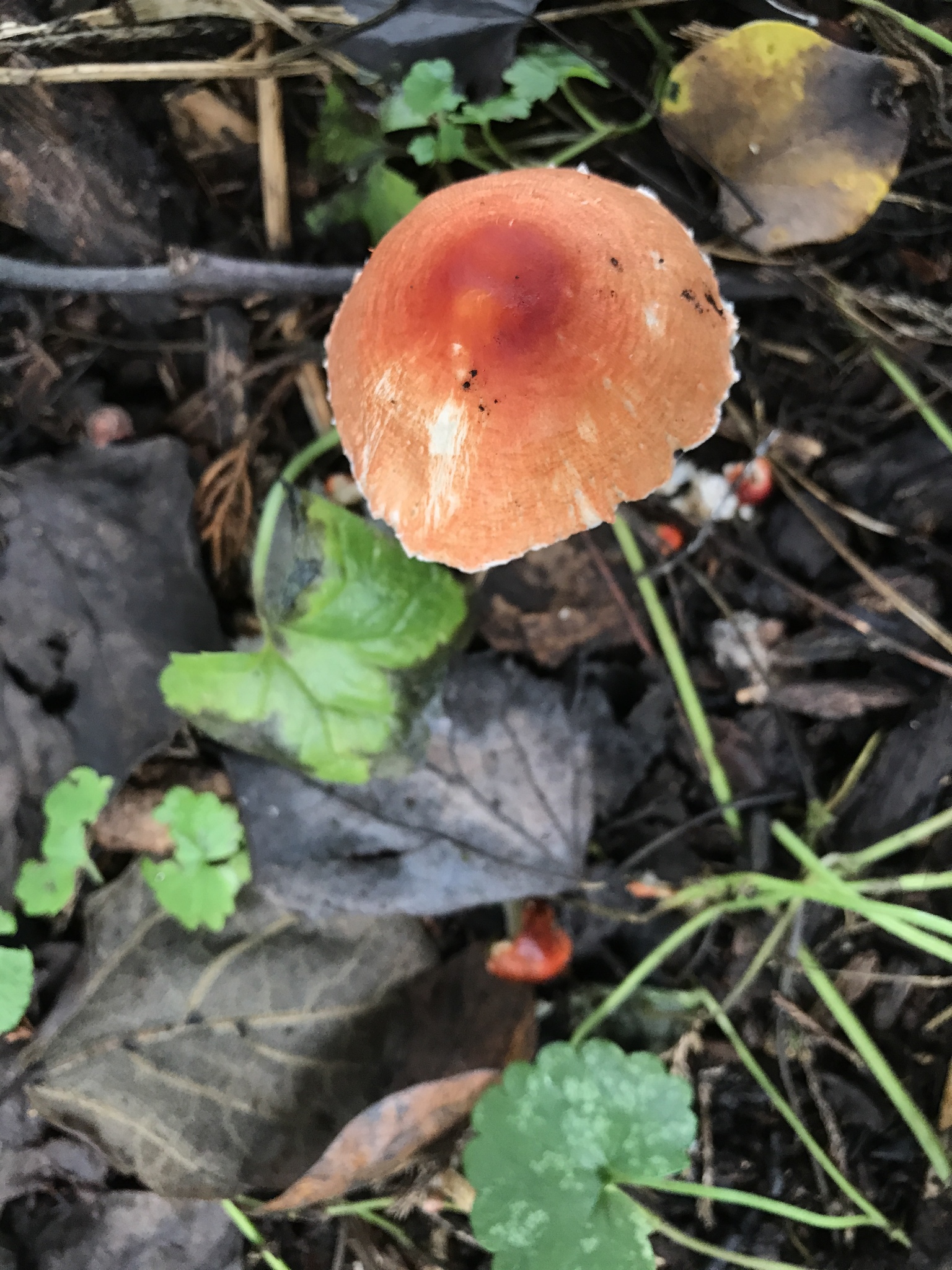
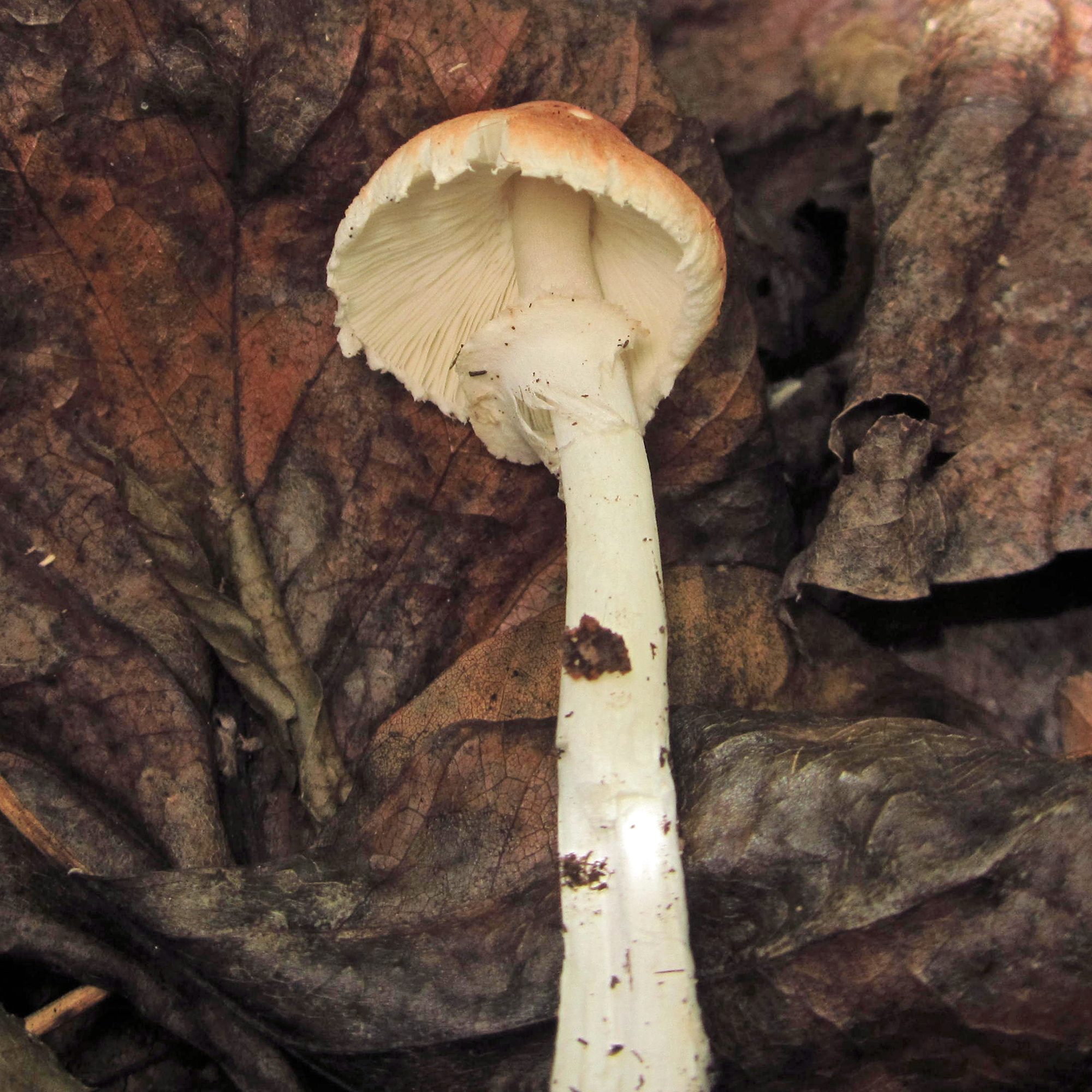
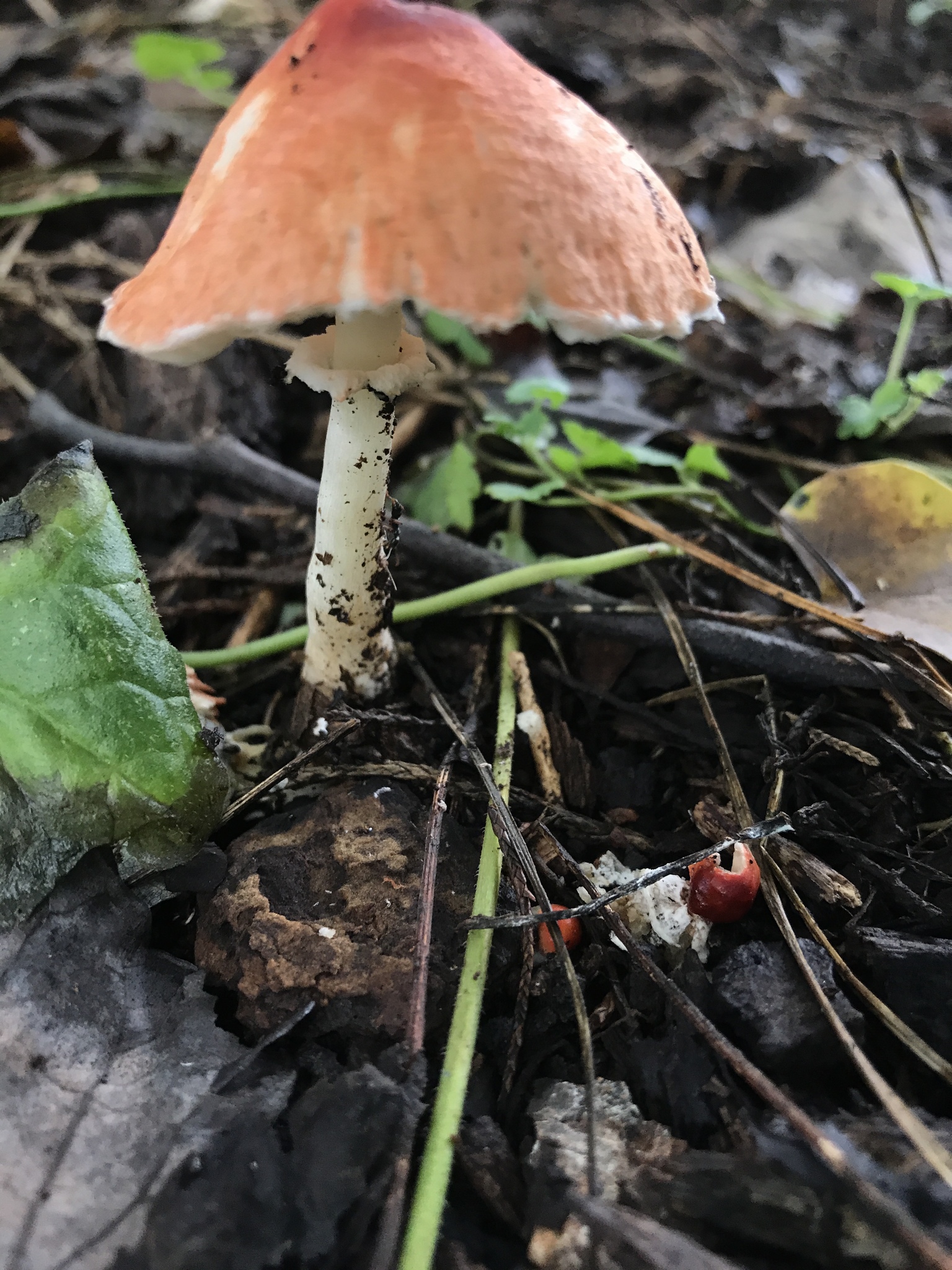
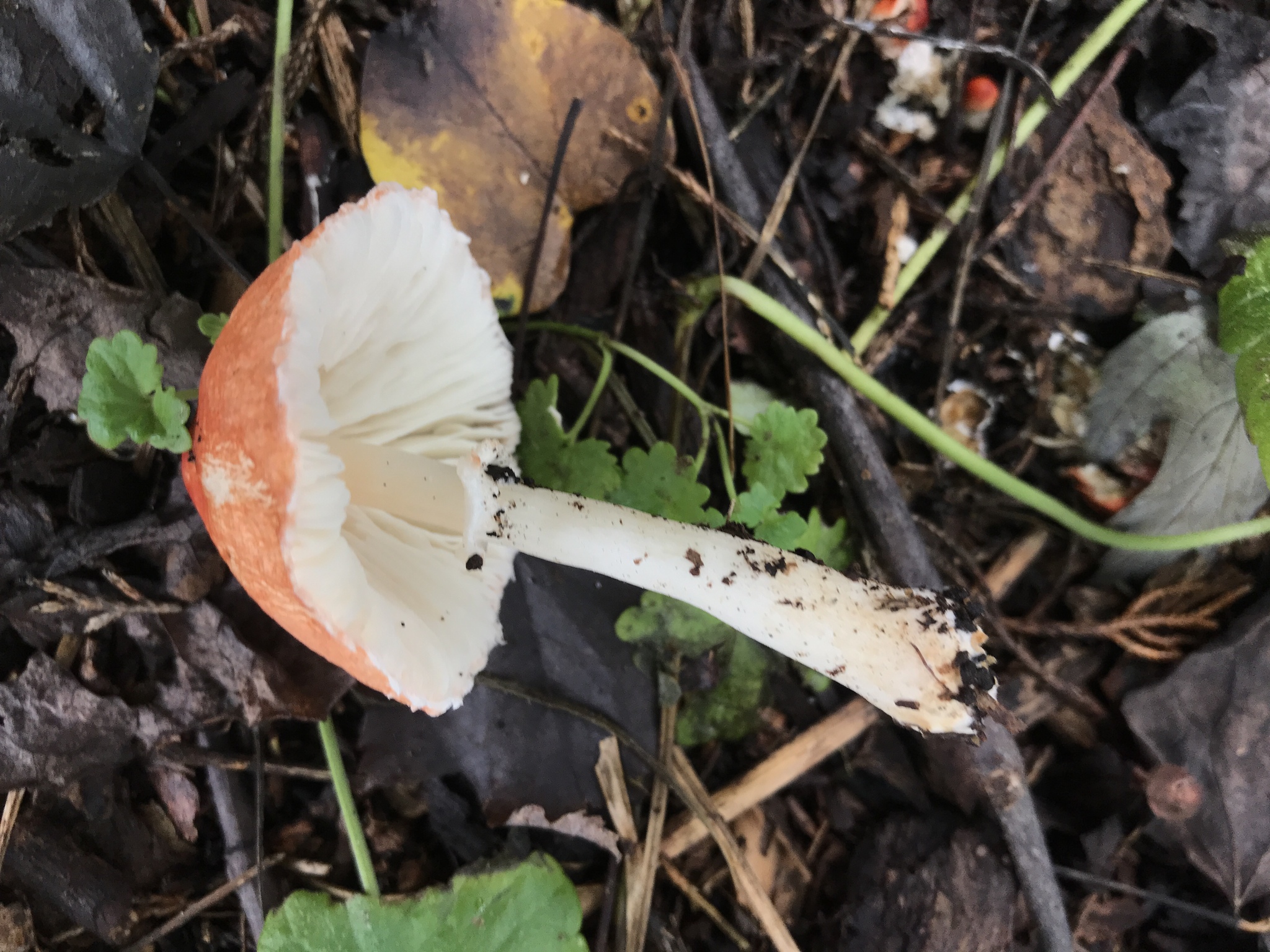
[edit]The cap is up to 8 centimetres (3+1⁄4 in) wide,[8] reddish brown, and convex to flat.[2] The margin splits and causes lines of the whitish flesh to darken.[2] The gills are white and do not stain.[2] The stipe is up to 10 cm long,[8] whitish and enlarged at the base, with a fragile ring.[2] The species is found in leaf litter in much of North America[8] and is inedible.[9]
References
[edit]- ^ "GSD Species Synonymy: Leucoagaricus rubrotinctus (Peck) Singer". Species Fungorum. CAB International. Retrieved 2015-01-30.
- ^ a b c d e Trudell, Steve; Ammirati, Joe (2009). Mushrooms of the Pacific Northwest. Timber Press Field Guides. Portland, OR: Timber Press. pp. 76–77. ISBN 978-0-88192-935-5.
- ^ Arora, David (1986) [1979]. Mushrooms Demystified: A Comprehensive Guide to the Fleshy Fungi (2nd ed.). Berkeley, CA: Ten Speed Press. pp. 305–6. ISBN 978-0-89815-170-1.
- ^ Peck CH. (1884). "Report of the Botanist (1882)". Annual Report on the New York State Museum of Natural History. 35: 125–64.
- ^ Singer R. (1948). "Diagnoses fungorum novorum Agaricalium". Sydowia. 2 (1–6): 26–42.
- ^ Redhead, Scott A. (August 2023). "Nomenclatural novelties" (PDF). Index Fungorum. 551.
- ^ Roberts P, Evans S. (2014). The Book of Fungi: A Life-Size Guide to Six Hundred Species from around the World. University of Chicago Press. p. 668. ISBN 978-0-226-17719-9.
- ^ a b c Audubon (2023). Mushrooms of North America. Knopf. p. 569. ISBN 978-0-593-31998-7.
- ^ Phillips, Roger (2010). Mushrooms and Other Fungi of North America. Buffalo, NY: Firefly Books. p. 37. ISBN 978-1-55407-651-2.
.jpg) | This Agaricaceae-related article is a stub. You can help Wikipedia by adding missing information. |