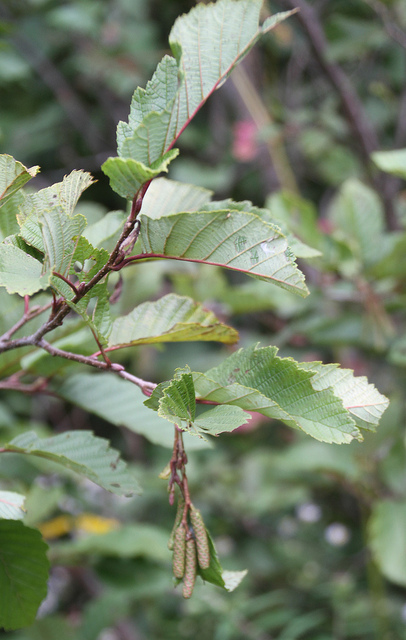
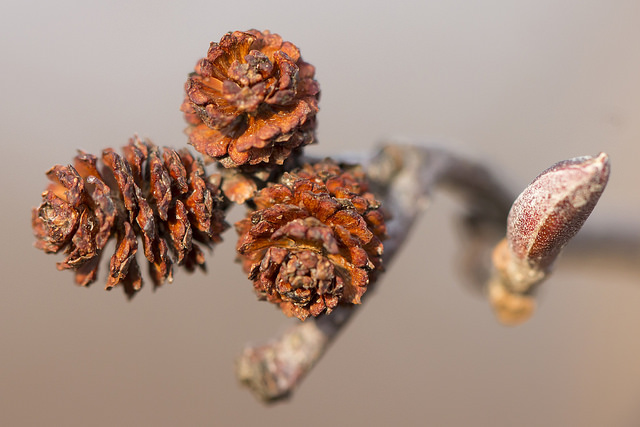
Gray Alder cones in Garrett Co., Maryland (4//2014).
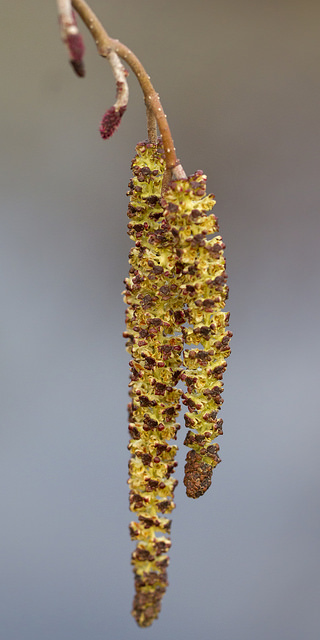
A Gray Alder catkin in Garrett Co., Maryland (4/13/2014).
Photo by
Mike Burchett
MBP List
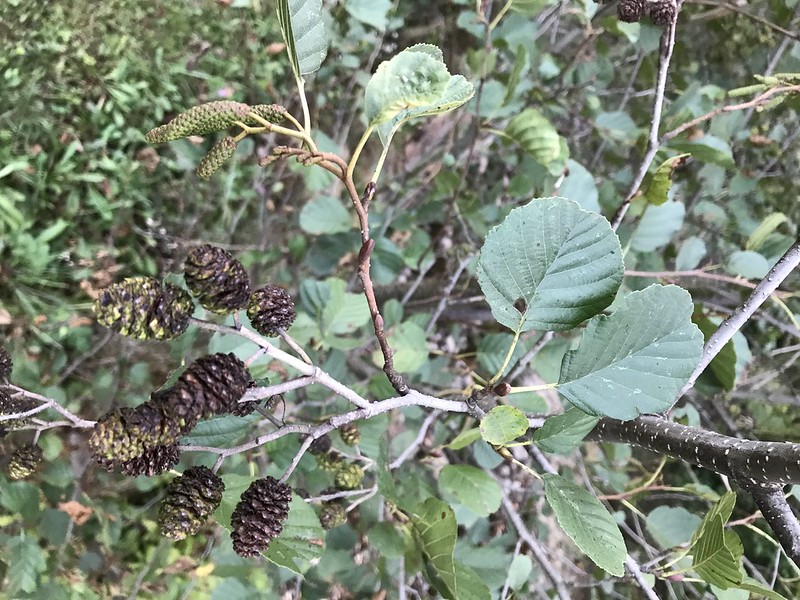
Gray Alder in Allegany Co., Maryland (10/4/2019).
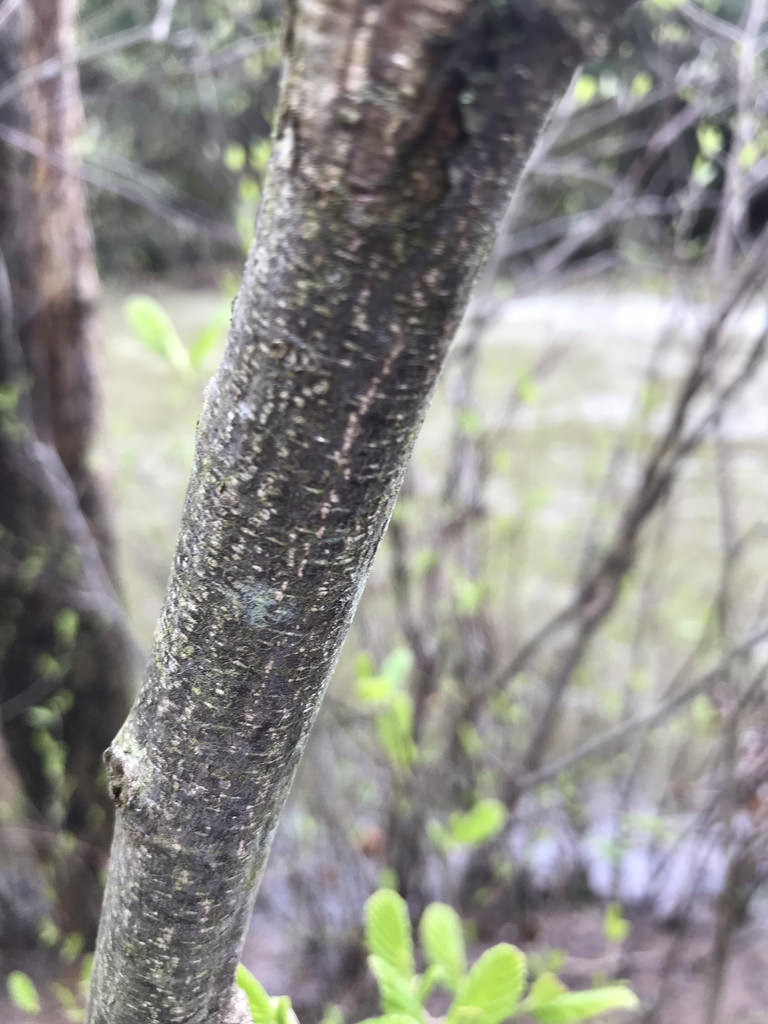
Gray Alder in Allegany Co., Maryland (5/6/2018).
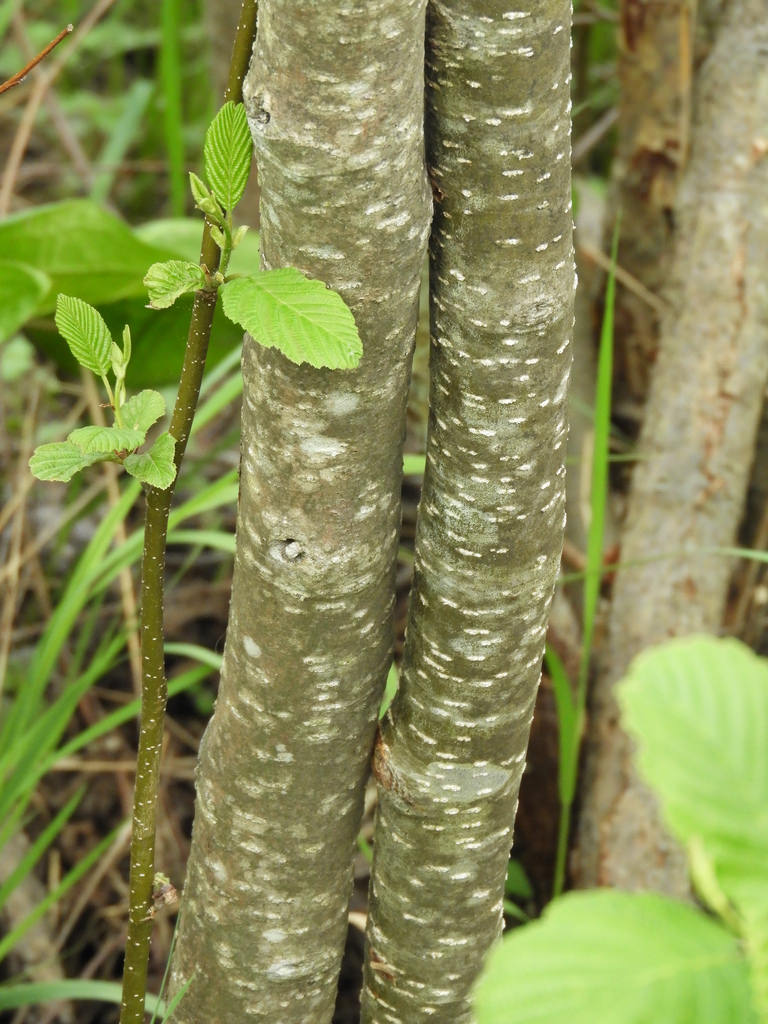
Gray Alder in Garrett Co., Maryland (5/19/2017).
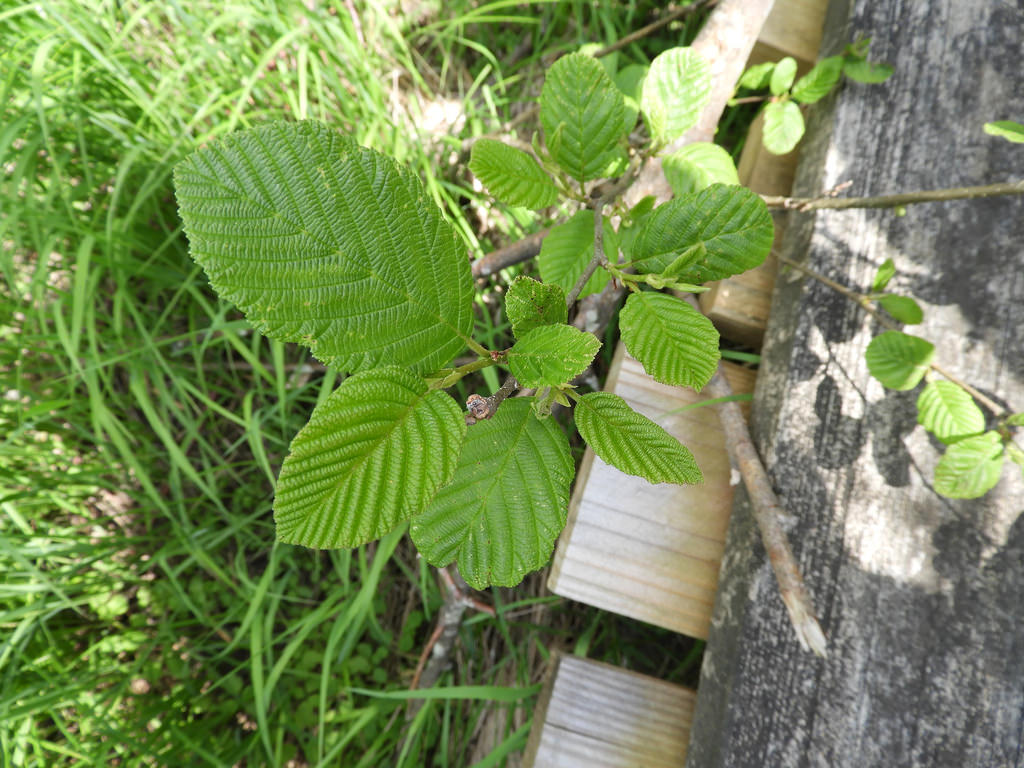
The leaves of Gray Alder in Garrett Co., Maryland (5/19/2017).

A Gray Alder in the Cranberry Wilderness, Pocahontas Co., West Virginia (7/7/2012).
Photo by
Jim Brighton
MBP List
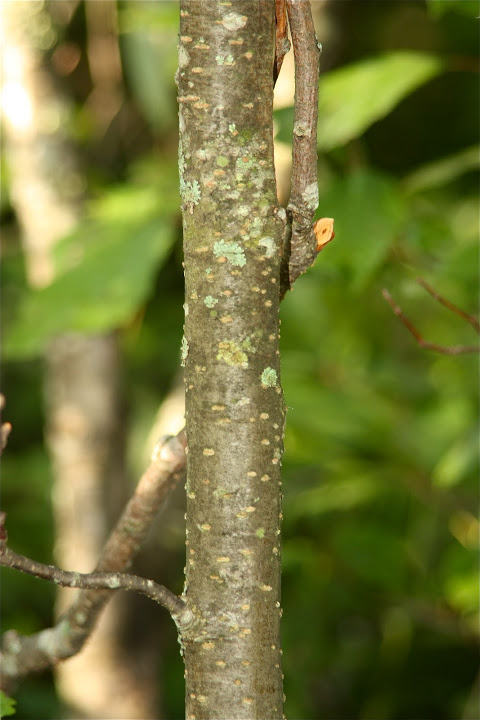
The bark of a Gray Alder growing in the Cranberry Wilderness, Pocahontas Co., West Virginia (7/7/2012).
Photo by
Jim Brighton
MBP List
Map Snapshot


20 Records
Status
Gray, or Speckled, Alder is a shrub or small tree that grows across much of Canada and the northeastern United States, and southward in the Appalachian Mountains. In Maryland it is limited to the western, mountainous part of the state. It occurs along streams and in swamps.
Description
Compare with Smooth Alder. Leaves of Gray Alder are egg-shaped and coarsely doubly toothed. Bark is dark gray, with prominent, pale, horizontal lenticels. Male and female catkins form during the summer and persist through the winter. The female catkins are small and drooping, in contrast to Smooth Alder’s more erect female catkins. In the spring, male catkins elongate and female catkins produce very small red flowers. The cone-like fruiting structures that develop after fertilization resemble conifer cones. They are clustered and persist until the following growing season.
Where To Find
Look along streams, swales, and in swamps in Maryland’s westernmost counties.
Relationships
Like all alders, Gray Alder has a symbiotic relationship with a bacterium that fixes nitrogen in nodules on the roots. This nitrogen is then available to the plant nutritionally. In this respect, the alders resemble the legumes and some other plants that fix nitrogen.
Host plant for various moth species including Serviceberry Leafroller Moth (Gilligan, Wright, & Gibson, 2008).
The leaf beetle Calligrapha alni uses Gray Alder as a host plant.
Woolly Alder Aphids use Gray Alder as one of their two alternate host plants (the other host being Silver Maple).
Host plant for various moth species including Serviceberry Leafroller Moth (Gilligan, Wright, & Gibson, 2008).
The leaf beetle Calligrapha alni uses Gray Alder as a host plant.
Woolly Alder Aphids use Gray Alder as one of their two alternate host plants (the other host being Silver Maple).
Citations
No citations linked for this taxon yet.
Use of media featured on Maryland
Biodiversity Project is only permitted with express permission of the
photographer.
Gray Alder in Garrett Co., Maryland (9/13/2013).
Media by
Jim Stasz.
Gray Alder cones in Garrett Co., Maryland (4//2014).
View Record Details
Media by
Mike Burchett.
A Gray Alder catkin in Garrett Co., Maryland (4/13/2014).
Media by
Mike Burchett.
Gray Alder in Allegany Co., Maryland (10/4/2019).
View Record Details
Media by
Mark Eanes.
Gray Alder in Allegany Co., Maryland (5/6/2018).
View Record Details
Media by
Jim Brighton.
Gray Alder in Garrett Co., Maryland (5/19/2017).
View Record Details
Media by
Sue Muller.
The leaves of Gray Alder in Garrett Co., Maryland (5/19/2017).
View Record Details
Media by
Sue Muller.
A Gray Alder in the Cranberry Wilderness, Pocahontas Co., West Virginia (7/7/2012).
Media by
Jim Brighton.
The bark of a Gray Alder growing in the Cranberry Wilderness, Pocahontas Co., West Virginia (7/7/2012).
Media by
Jim Brighton.