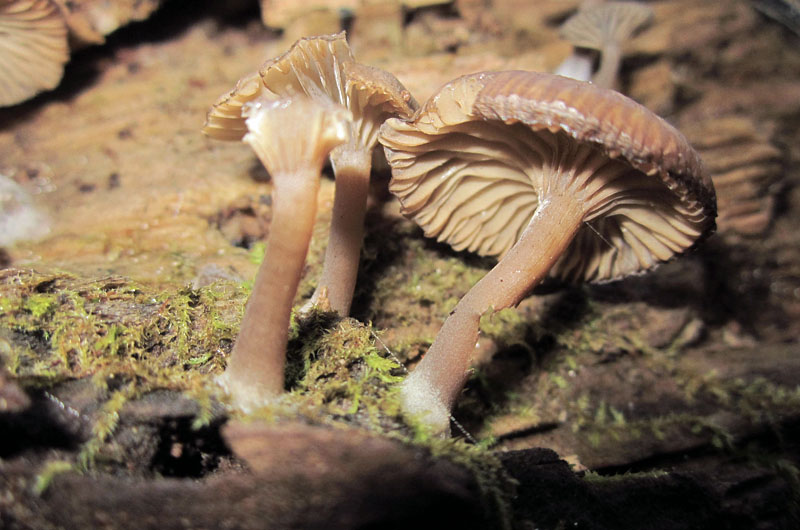
Arrhenia epichysium in Howard Co., Maryland (11/11/2014).

An Arrhenia epichysium in Washington Co., Maryland (10/13/2019). Determined by Jo Solem.
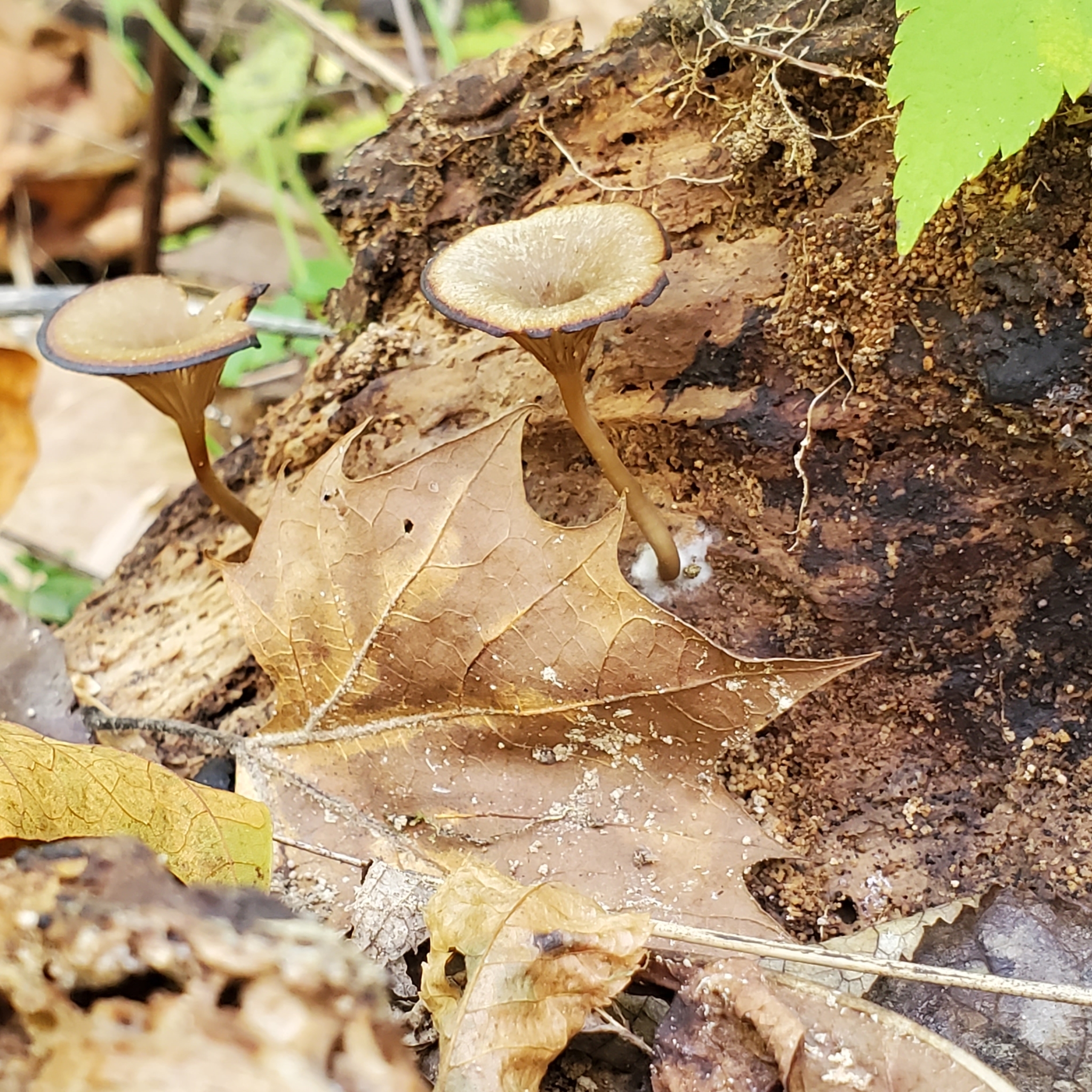
Arrhenia epichysium in Frederick Co., Maryland (10/19/2024). (c) cgreenlee285, some rights reserved (CC BY-NC).
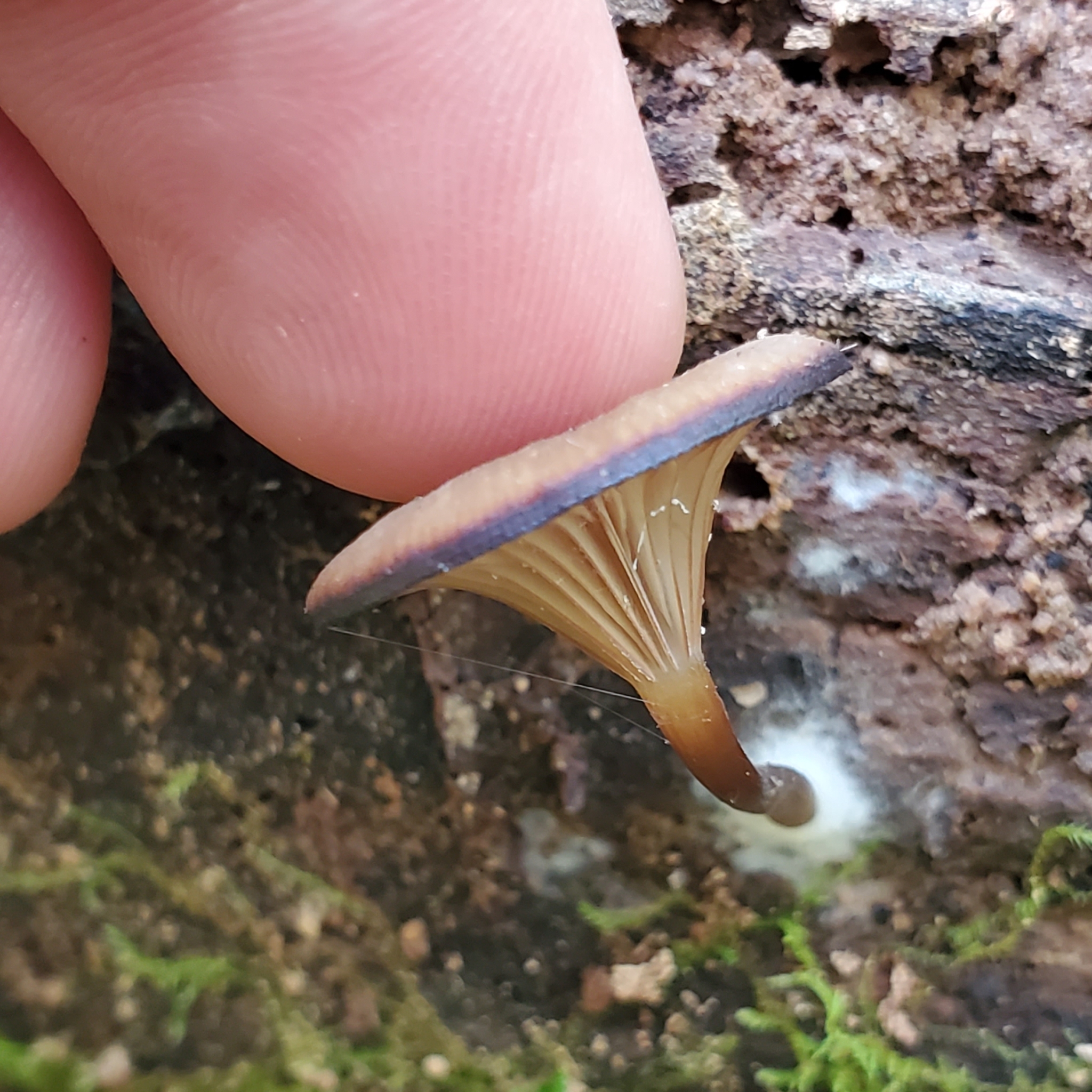
Arrhenia epichysium in Frederick Co., Maryland (10/19/2024). (c) cgreenlee285, some rights reserved (CC BY-NC).
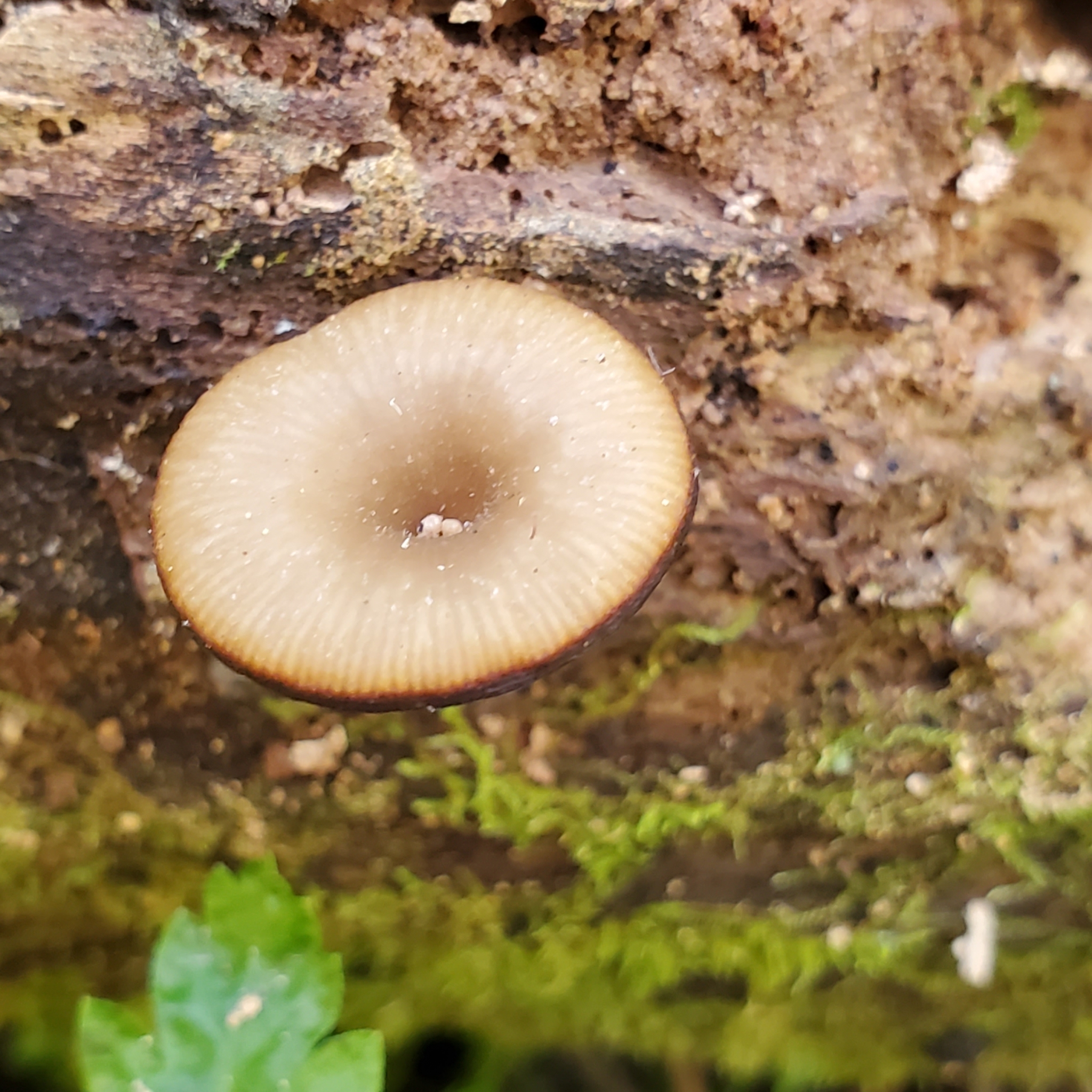
Arrhenia epichysium in Frederick Co., Maryland (10/19/2024). (c) cgreenlee285, some rights reserved (CC BY-NC).
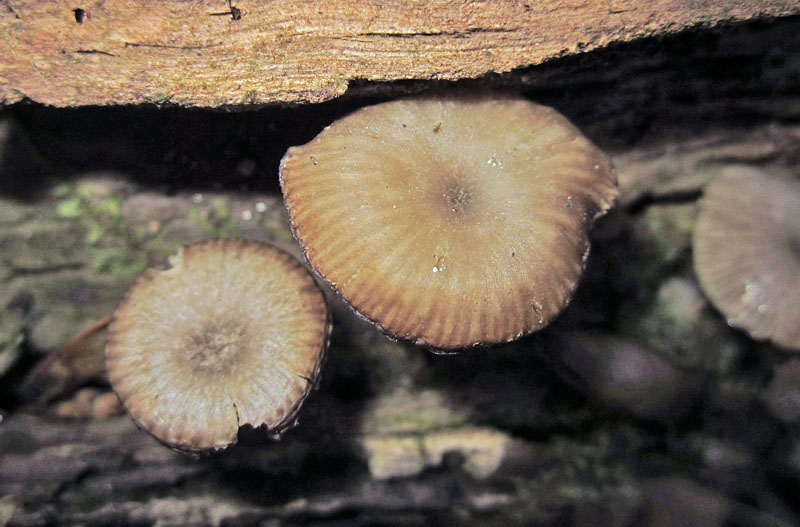
Arrhenia epichysium in Howard Co., Maryland (11/11/2014).
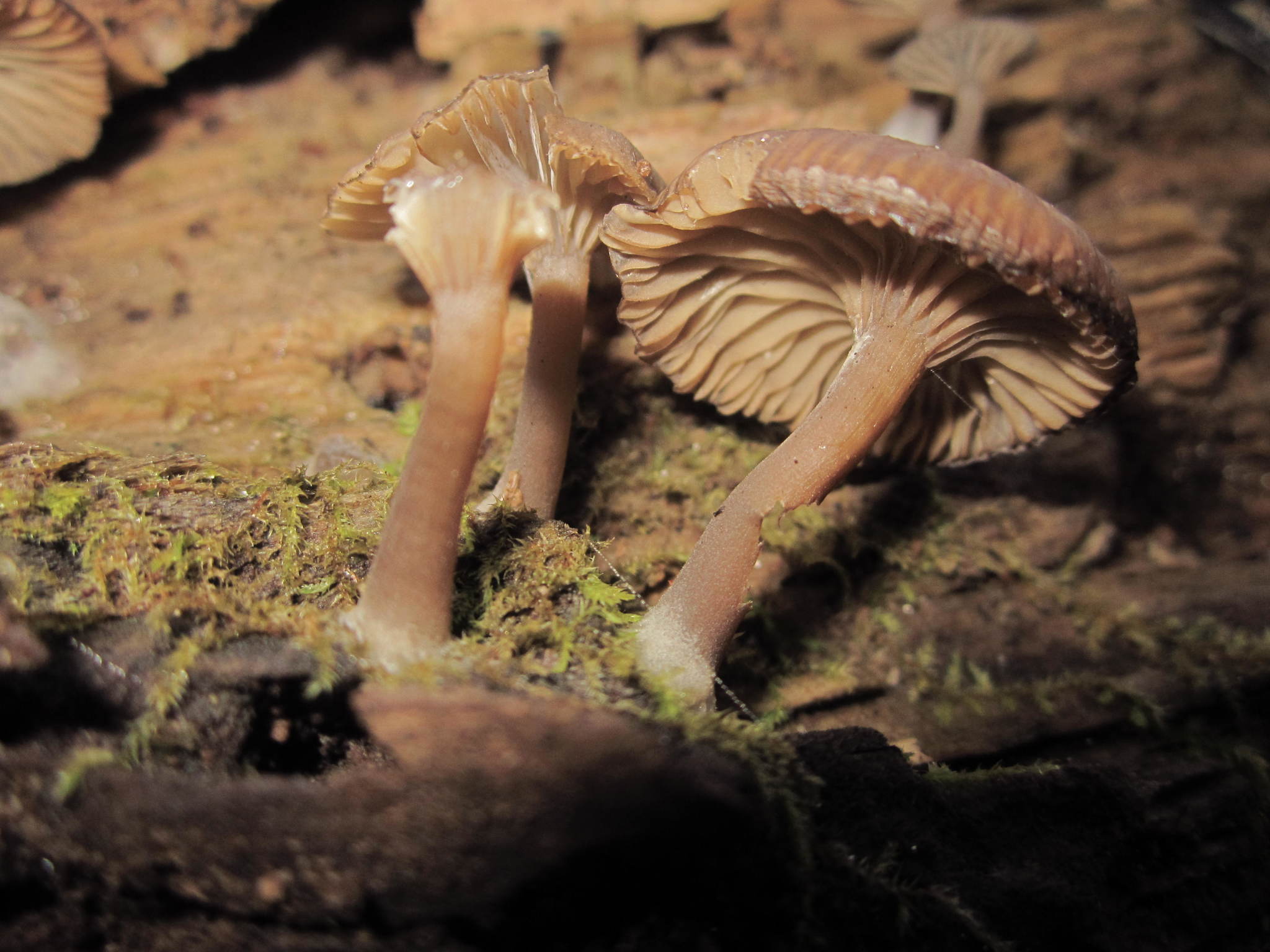
Arrhenia epichysium in Howard Co., Maryland (11/11/2014). (c) Joanne and Robert Solem, some rights reserved (CC BY-NC).
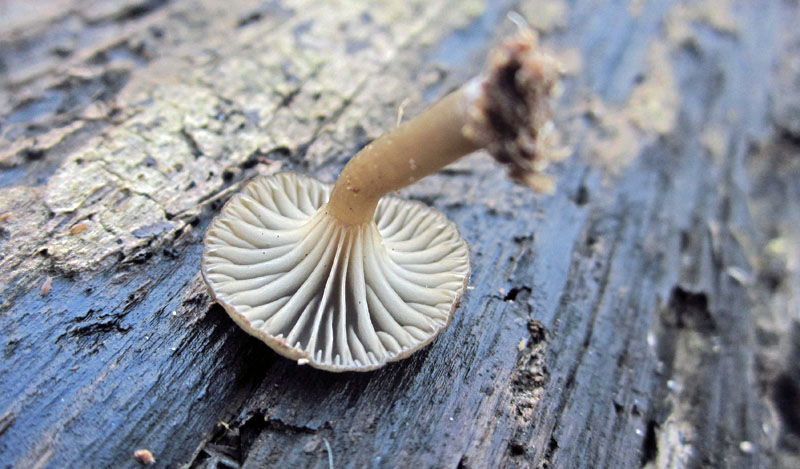
Arrhenia epichysium in Howard Co., Maryland (11/11/2014).
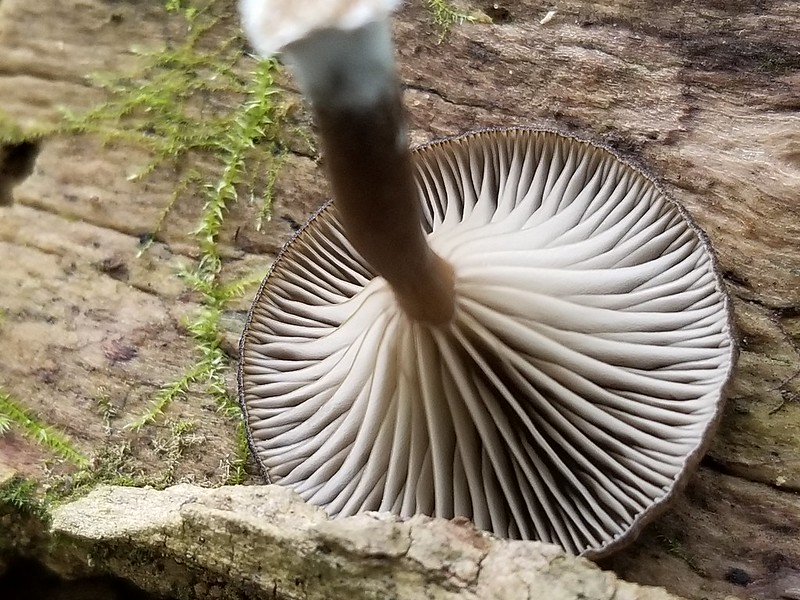
An Arrhenia epichysium in Washington Co., Maryland (10/13/2019). Determined by Jo Solem.

An Arrhenia epichysium in Washington Co., Maryland (10/13/2019). Determined by Jo Solem.
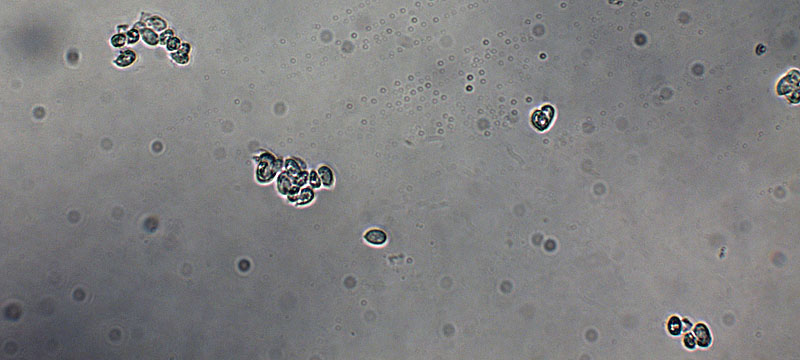
Arrhenia epichysium spores collected in Howard Co., Maryland (11/11/2014). Elliptic, smooth, hyaline; meassured 6.7 7.7 X 3.9 – 4.9 microns.
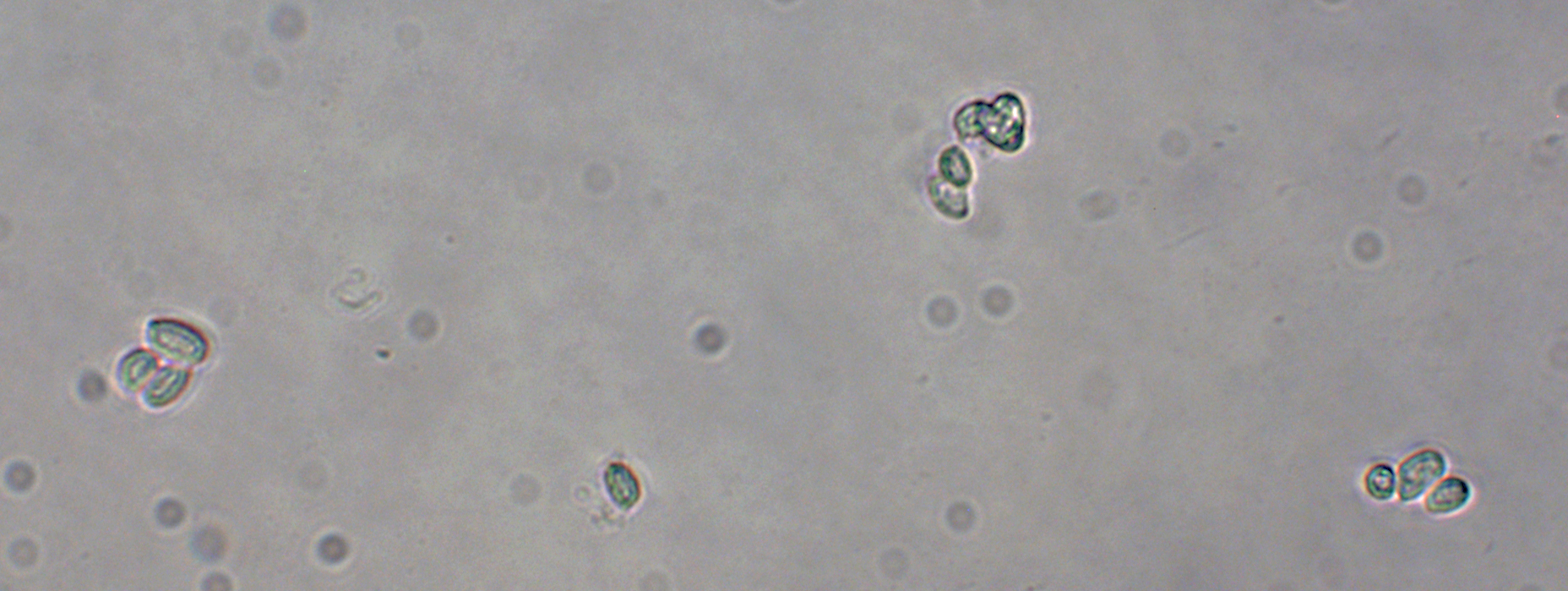
Arrhenia epichysium in Howard Co., Maryland (11/11/2014). (c) Joanne and Robert Solem, some rights reserved (CC BY-NC).
Map Snapshot


9 Records
Description
Cap: Grayish-brown, initially slightly convex with inrolled margin, becoming centrally depressed with radial lines. Gills: Pale gray-brown, decurrent. Stem: Colored like cap, mycelium at base (J. Solem, pers. comm.).
Where To Find
Habitat: Scattered or clusters, on decaying hardwoods or conifers.
Relationships
Michael Kuo states that this species is parasitic on moss.
Citations
No citations linked for this taxon yet.
Eating mushrooms can be dangerous. One should do so only with expert advice and great care. MBP accepts no liability for injury sustained in consuming fungi or other biodiversity. Use of media featured on Maryland
Biodiversity Project is only permitted with express permission of the
photographer.
Arrhenia epichysium in Howard Co., Maryland (11/11/2014).
View Record Details
Media by
Joanne Solem.
An Arrhenia epichysium in Washington Co., Maryland (10/13/2019). Determined by Jo Solem.
View Record Details
Media by
Sue Muller.
Arrhenia epichysium in Frederick Co., Maryland (10/19/2024). (c) cgreenlee285, some rights reserved (CC BY-NC).
View Record Details
Media by
cgreenlee285 via iNaturalist.
Arrhenia epichysium in Frederick Co., Maryland (10/19/2024). (c) cgreenlee285, some rights reserved (CC BY-NC).
View Record Details
Media by
cgreenlee285 via iNaturalist.
Arrhenia epichysium in Frederick Co., Maryland (10/19/2024). (c) cgreenlee285, some rights reserved (CC BY-NC).
View Record Details
Media by
cgreenlee285 via iNaturalist.
Arrhenia epichysium in Howard Co., Maryland (11/11/2014).
View Record Details
Media by
Joanne Solem.
Arrhenia epichysium in Howard Co., Maryland (11/11/2014). (c) Joanne and Robert Solem, some rights reserved (CC BY-NC).
View Record Details
Media by
Joanne Solem.
Arrhenia epichysium in Howard Co., Maryland (11/11/2014).
View Record Details
Media by
Joanne Solem.
An Arrhenia epichysium in Washington Co., Maryland (10/13/2019). Determined by Jo Solem.
View Record Details
Media by
Sue Muller.
An Arrhenia epichysium in Washington Co., Maryland (10/13/2019). Determined by Jo Solem.
View Record Details
Media by
Sue Muller.
Arrhenia epichysium spores collected in Howard Co., Maryland (11/11/2014). Elliptic, smooth, hyaline; meassured 6.7 7.7 X 3.9 – 4.9 microns.
View Record Details
Media by
Robert Solem.
Arrhenia epichysium in Howard Co., Maryland (11/11/2014). (c) Joanne and Robert Solem, some rights reserved (CC BY-NC).
View Record Details
Media by
Joanne Solem.
Source: Wikipedia
| Arrhenia epichysium | |
|---|---|

| |
Scientific classification 
| |
| Kingdom: | Fungi |
| Division: | Basidiomycota |
| Class: | Agaricomycetes |
| Order: | Agaricales |
| Family: | Hygrophoraceae |
| Genus: | Arrhenia |
| Species: | A. epichysium
|
| Binomial name | |
| Arrhenia epichysium (Pers.) Redhead, Lutzoni, Moncalvo & Vilgalys 2002
| |
| Synonyms | |
| |
Arrhenia epichysium is a species of agaric fungus in the family Hygrophoraceae.
The fruit body has small brown to dark gray caps measuring 1–3 cm (1⁄2–1+1⁄4 in) in diameter. The cap color changes to light gray to tan when it is dry. The gills are narrow and thin, placed together closely, and decurrently attached to the stipe,[1] which can be up to 5 cm (2 in) long. The flesh is grayish and watery.[2] The spores are smooth and ellipsoid, measuring 6–7.5 μm.[1] The spore print is white.[2]
Outside of its genus, it can resemble the slightly larger Pseudoclitocybe cyathiformis.[2]
It can be found on dead wood in North America (except for the Gulf Coast), lasting through May on the West Coast.[2]
References
[edit]- ^ a b Huffman DM. (2008). Mushrooms and Other Fungi of the Midcontinental United States. University of Iowa Press. p. 149. ISBN 978-1-58729-725-0.
- ^ a b c d Audubon (2023). Mushrooms of North America. Knopf. p. 388. ISBN 978-0-593-31998-7.
External links
[edit]