





Map Snapshot


78 Records
Status
Description
Citations
No citations linked for this taxon yet.
Source: Wikipedia
| Trametes hirsuta | |
|---|---|

| |
Scientific classification 
| |
| Kingdom: | Fungi |
| Division: | Basidiomycota |
| Class: | Agaricomycetes |
| Order: | Polyporales |
| Family: | Polyporaceae |
| Genus: | Trametes |
| Species: | T. hirsuta
|
| Binomial name | |
| Trametes hirsuta | |
| Synonyms | |
|
List
| |
| Trametes hirsuta | |
|---|---|
| Mycological characteristics | |
 | Pores on hymenium |
 | No distinct cap |
 | Hymenium attachment is not applicable |
| Lacks a stipe |
 | Spore print is white |
 | Ecology is saprotrophic |
 | Edibility is inedible |
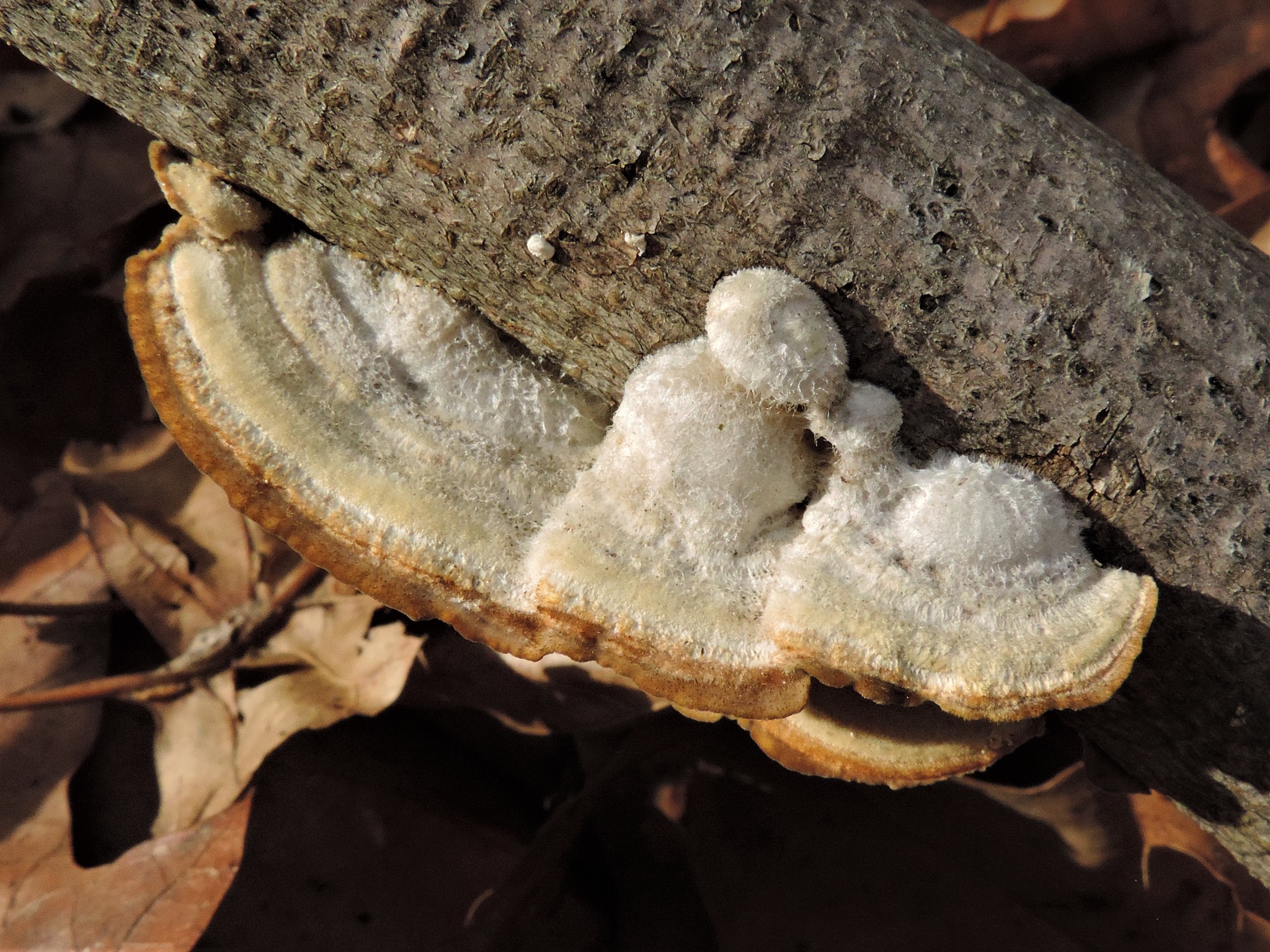
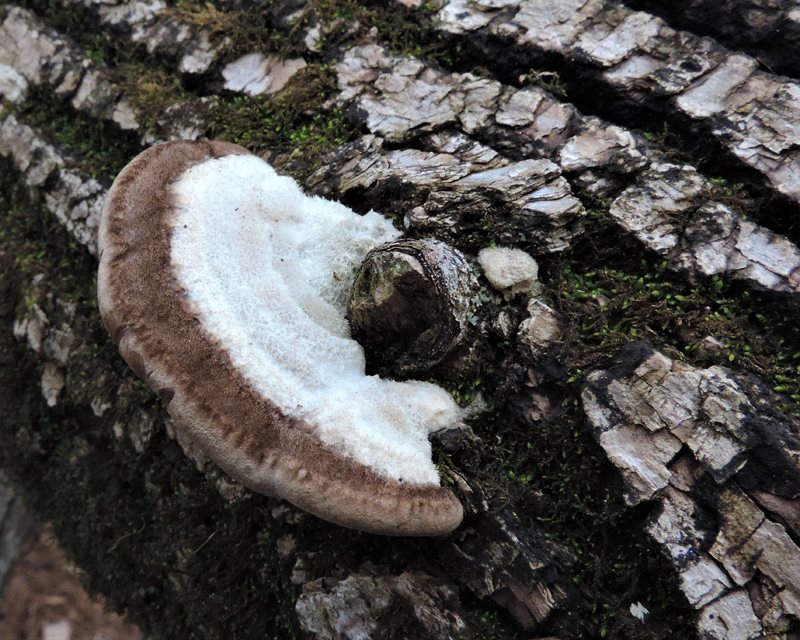
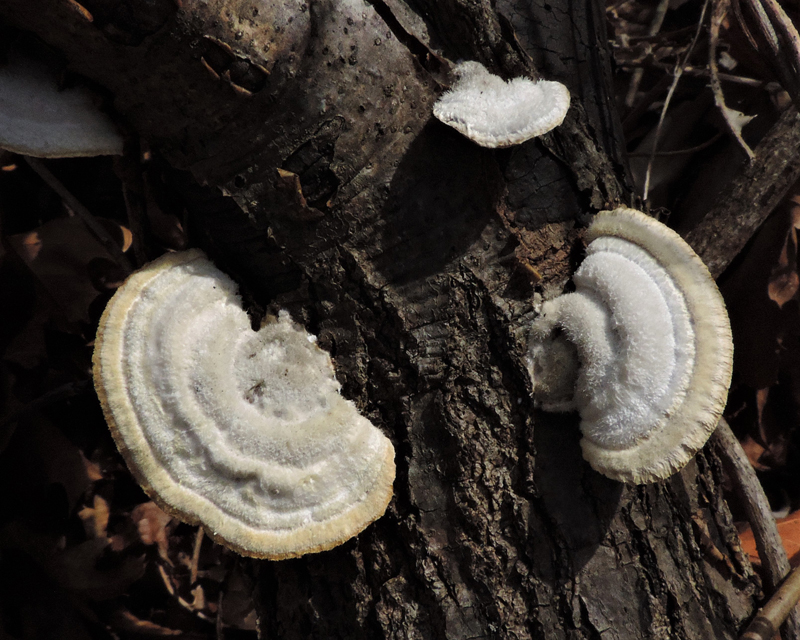
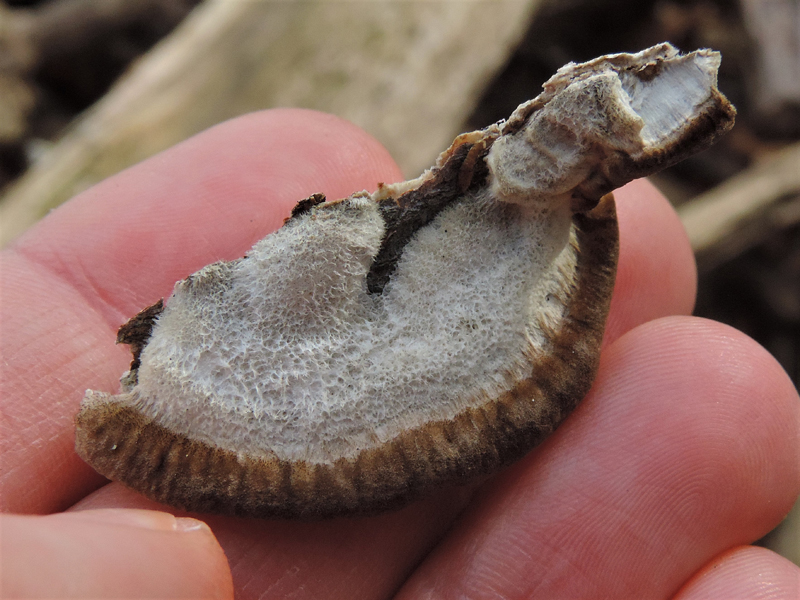
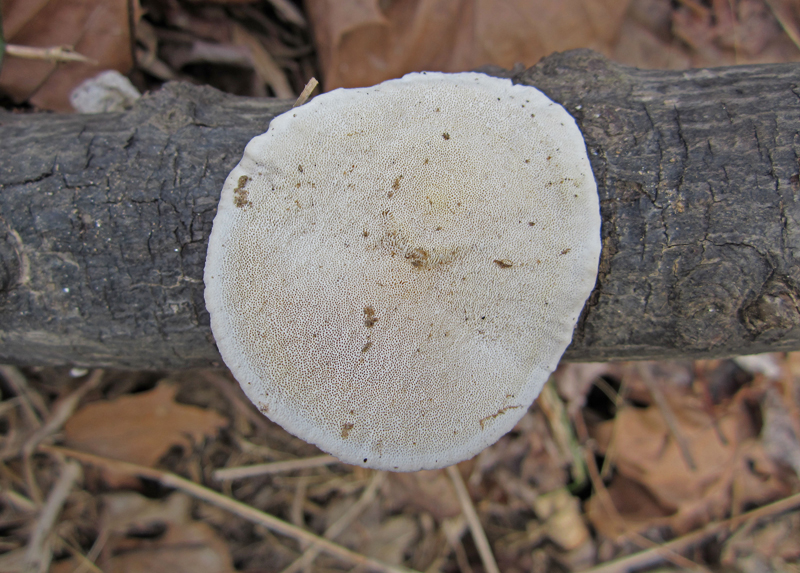
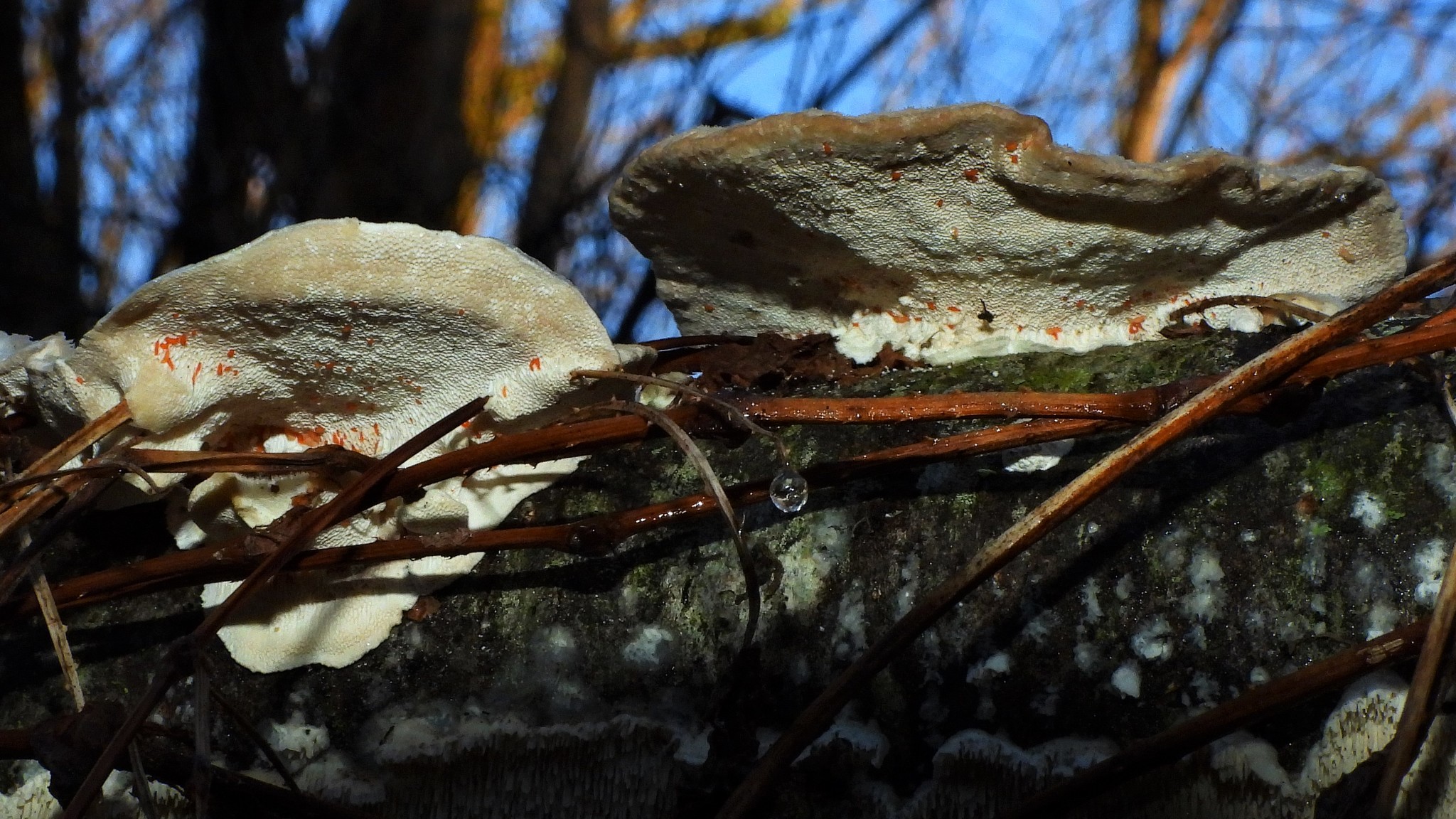
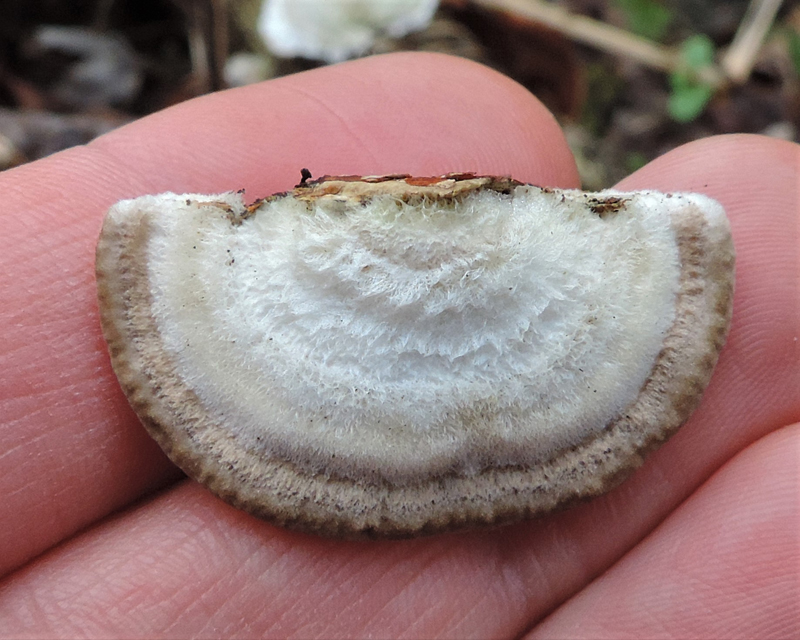
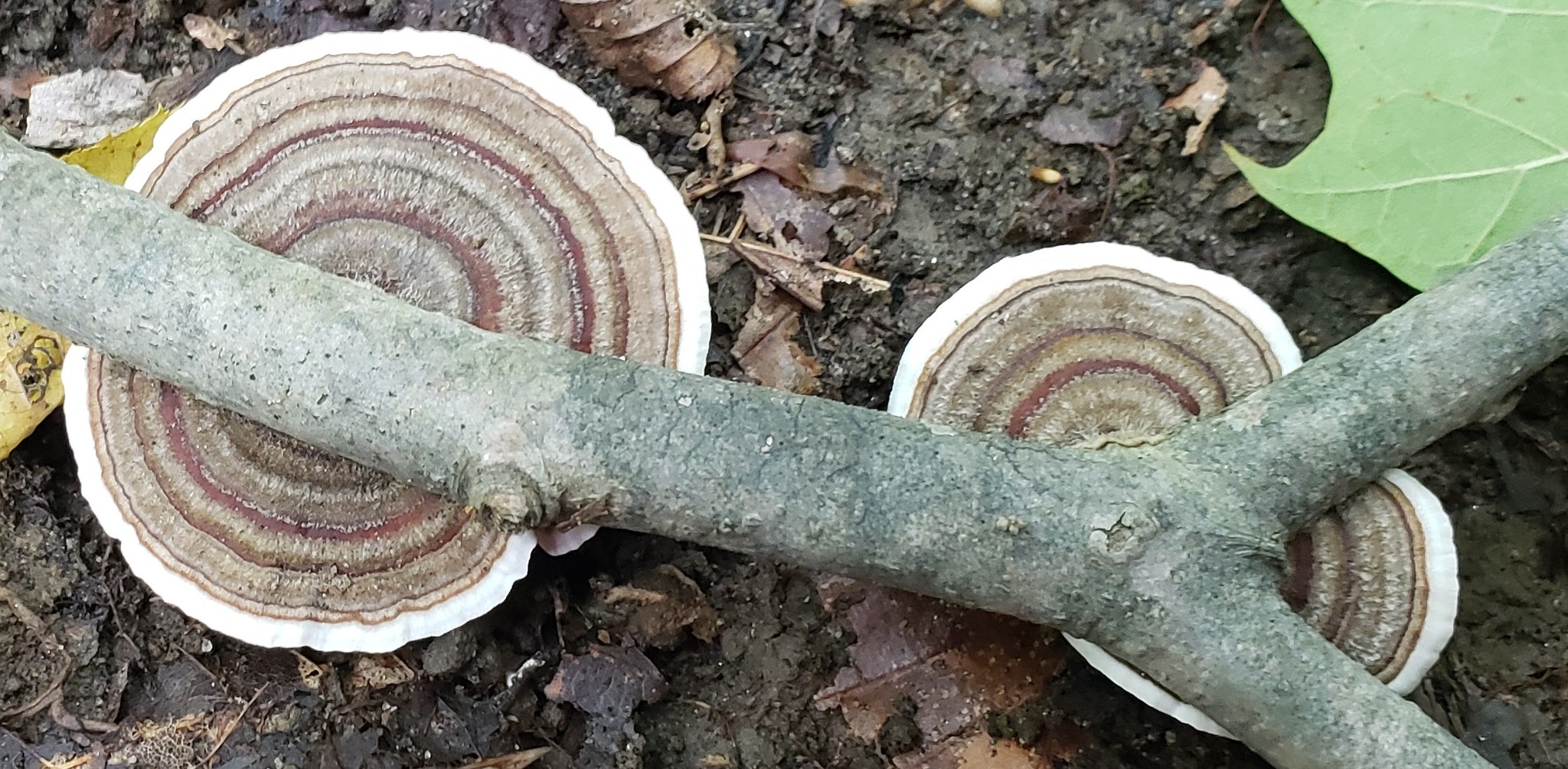
Trametes hirsuta, commonly known as hairy turkey tail[1] or hairy bracket, is a species of fungus.
Description
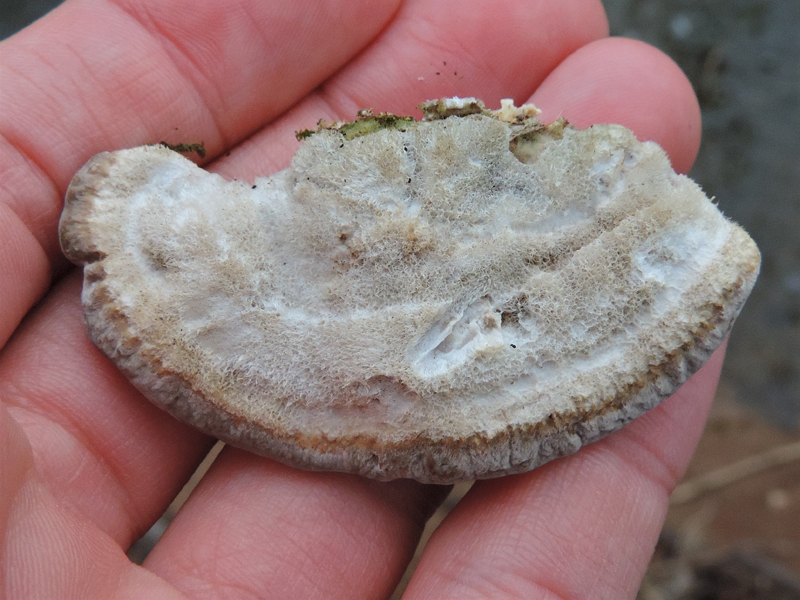
[edit]The cap is up to 15 centimetres (6 in) wide, exceptionally 30 cm.[1] It is whitish gray, with short hairs and subtle zoning, sometimes tomentose and yellowish or darker near the margin.[1] The flesh is tough, up to 5 millimetres (1⁄4 in) thick,[1] with a soft gray upper layer and a whitish lower layer separated by a black plane.[2] It is too tough for consumption.[1]
Similar species
[edit]Similar species include T. pubescens, which is unzoned, buff in colour, and without layered flesh. T. versicolor is more distinctively zoned.[2] T. occidentalis appears to be closely related.[1]
Ecology
[edit]It is found on dead wood of deciduous trees, especially beechwood. It is found all year round, persisting due to its leathery nature.[3]
Biotechnology
[edit]Lyophilized cell cultures of Trametes hirsuta yield aldehydes from alkenes, representing a biotransformation alternative to ozonolysis.[4]
See also
[edit]References
[edit]- ^ a b c d e f Arora, David (1986) [1979]. Mushrooms Demystified: A Comprehensive Guide to the Fleshy Fungi (2nd ed.). Berkeley, CA: Ten Speed Press. p. 595. ISBN 978-0-89815-170-1.
- ^ a b Trudell, Steve; Ammirati, Joe (2009). Mushrooms of the Pacific Northwest. Timber Press Field Guides. Portland, OR: Timber Press. p. 264. ISBN 978-0-88192-935-5.
- ^ Phillips, Roger (2006), Mushrooms. Pub. McMilan, ISBN 0-330-44237-6. P. 317.
- ^ Sutton, Peter; Whittall, John (2012). Practical Methods for Biocatalysis and Biotransformations 2. Chichester, West Sussex: John Wiley & Sons, Ltd. pp. 200–202. ISBN 9781119991397.
External links
[edit] Media related to Trametes hirsuta at Wikimedia Commons

 | This Polyporales-related article is a stub. You can help Wikipedia by adding missing information. |