Map Snapshot


9 Records
Citations
No citations linked for this taxon yet.
Source: Wikipedia
| Psathyrella piluliformis | |
|---|---|

| |
Scientific classification 
| |
| Kingdom: | Fungi |
| Division: | Basidiomycota |
| Class: | Agaricomycetes |
| Order: | Agaricales |
| Family: | Psathyrellaceae |
| Genus: | Psathyrella |
| Species: | P. piluliformis
|
| Binomial name | |
| Psathyrella piluliformis | |
| Synonyms[1] | |
| |

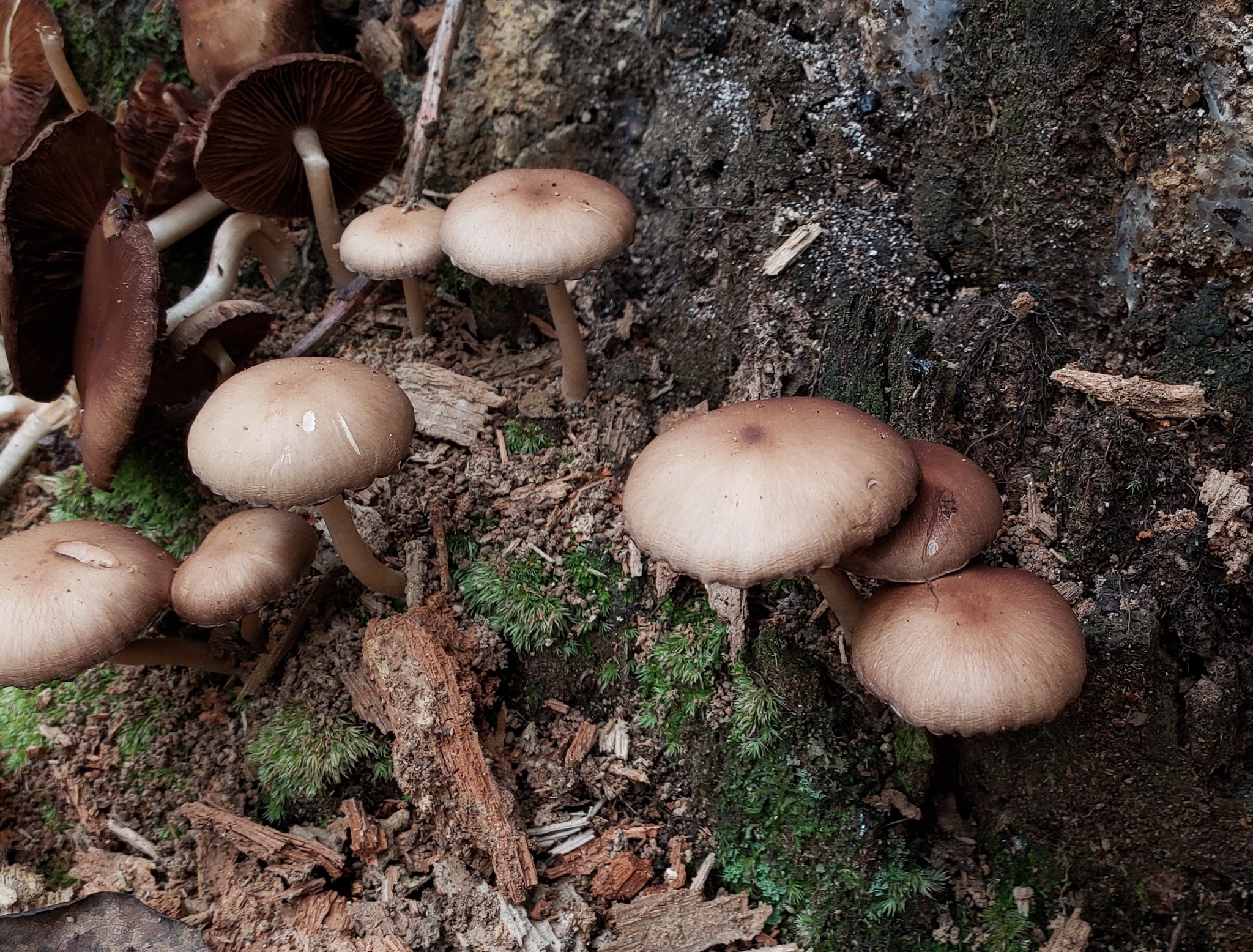
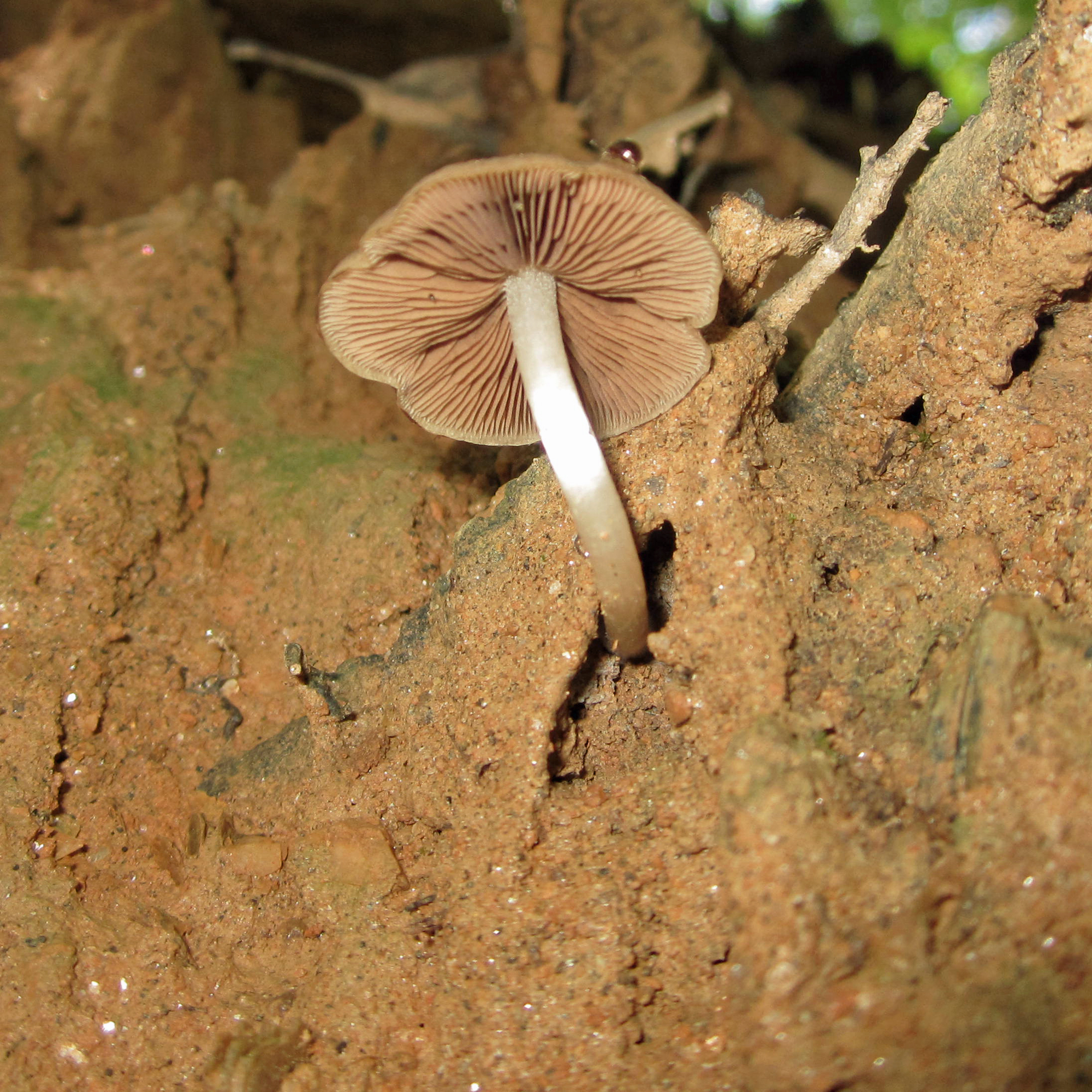
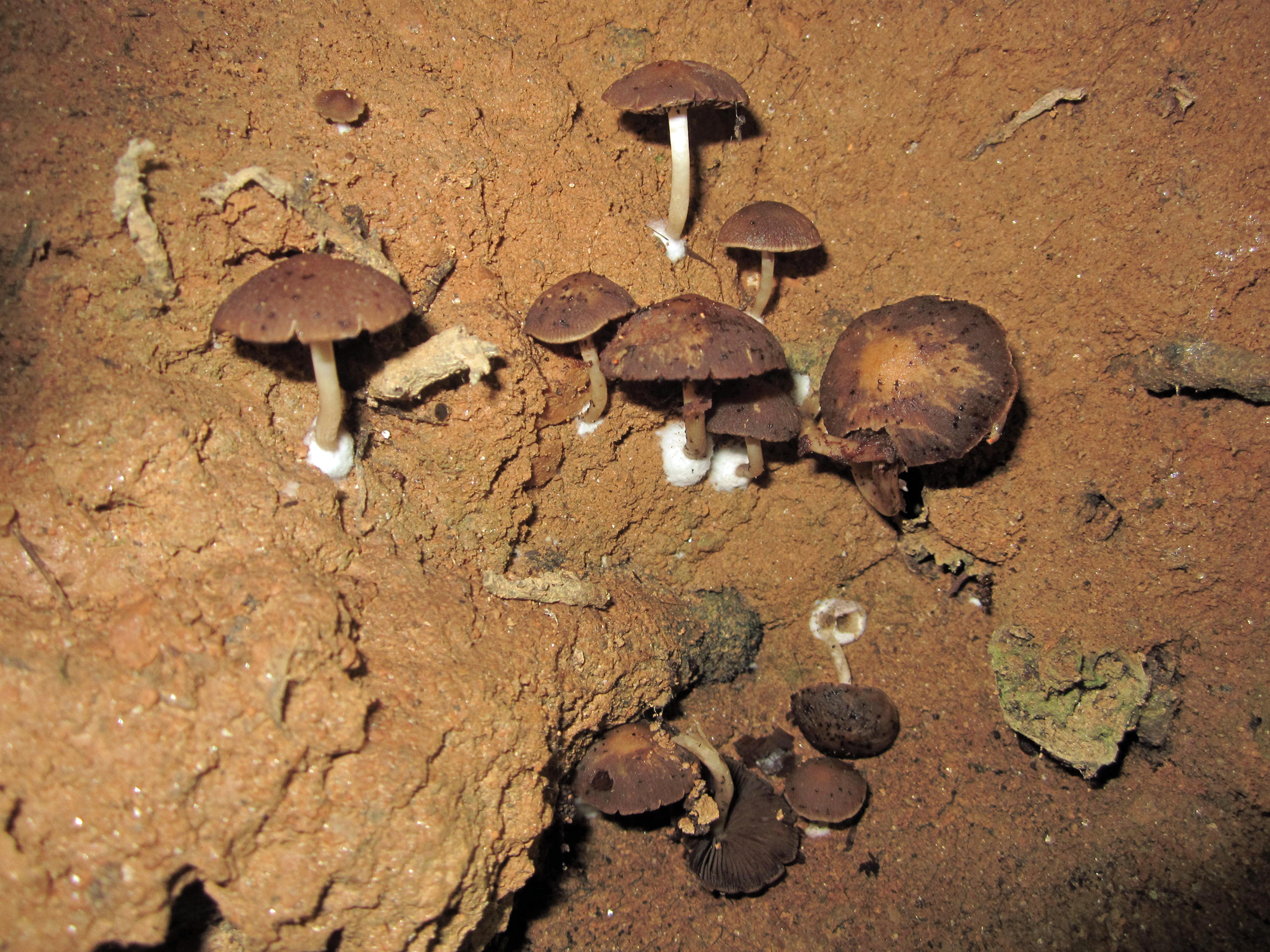
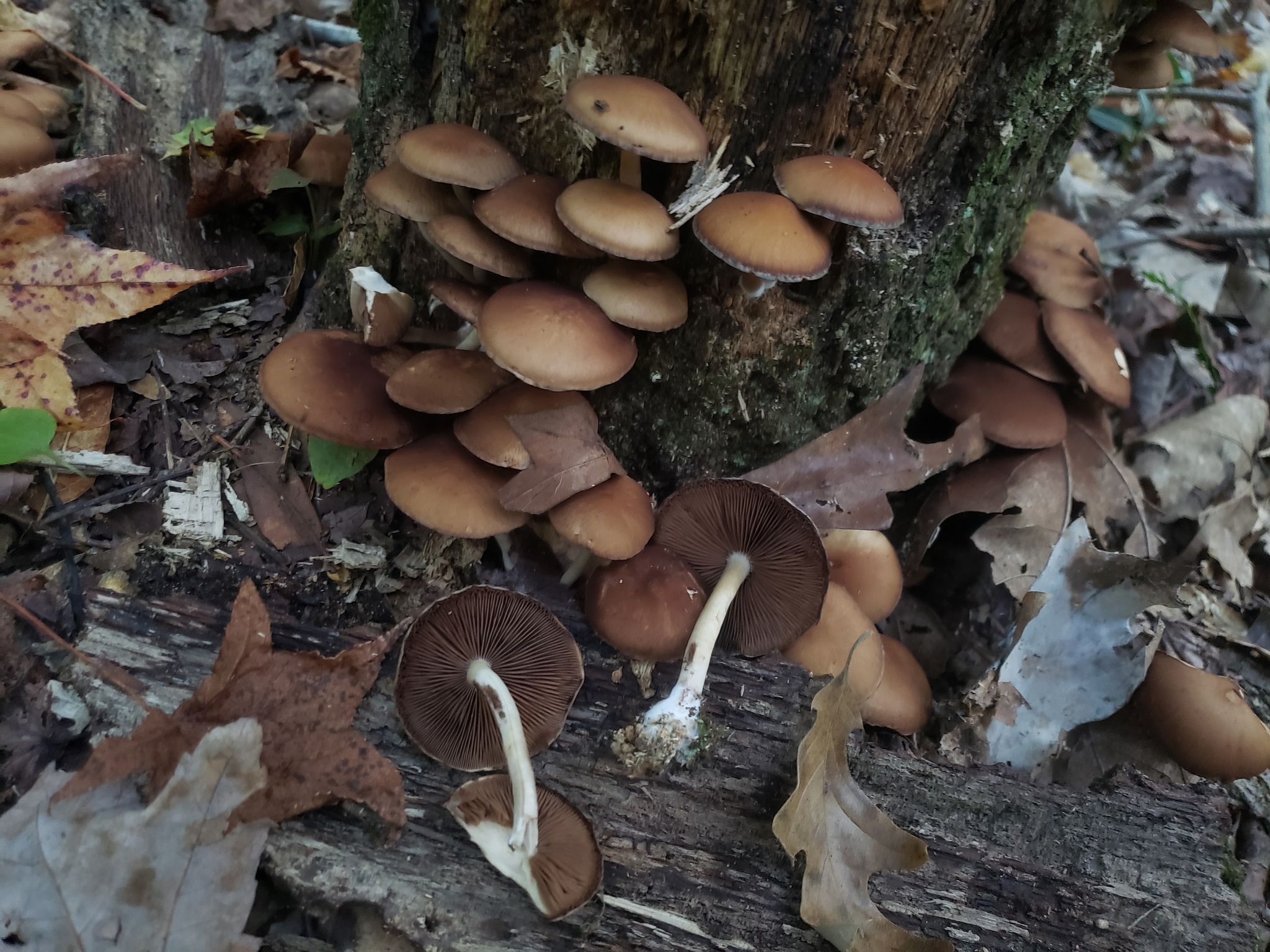
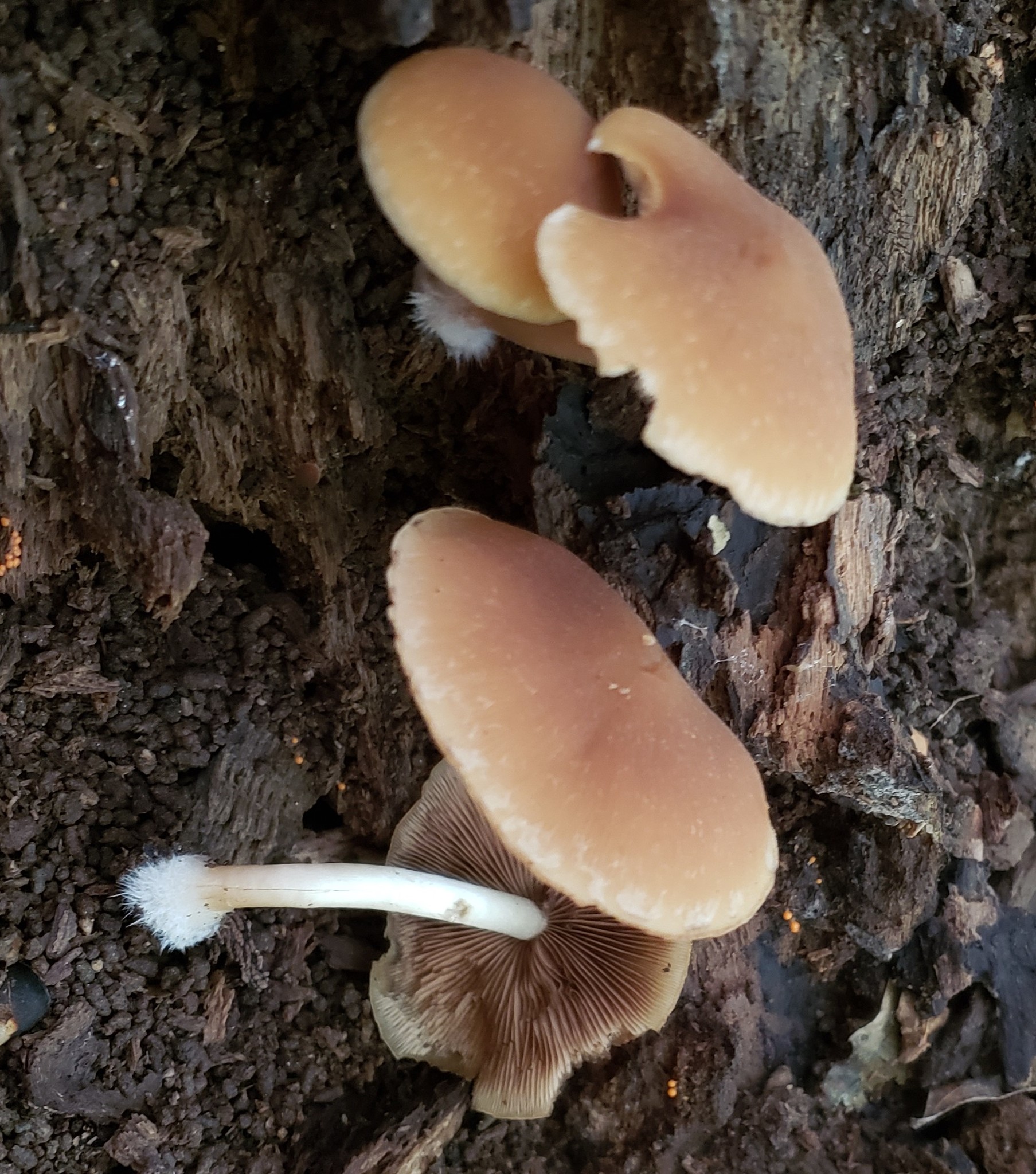
Psathyrella piluliformis, commonly known as the clustered brittlestem,[2] is a species of agaric fungus in the family Psathyrellaceae.
Description
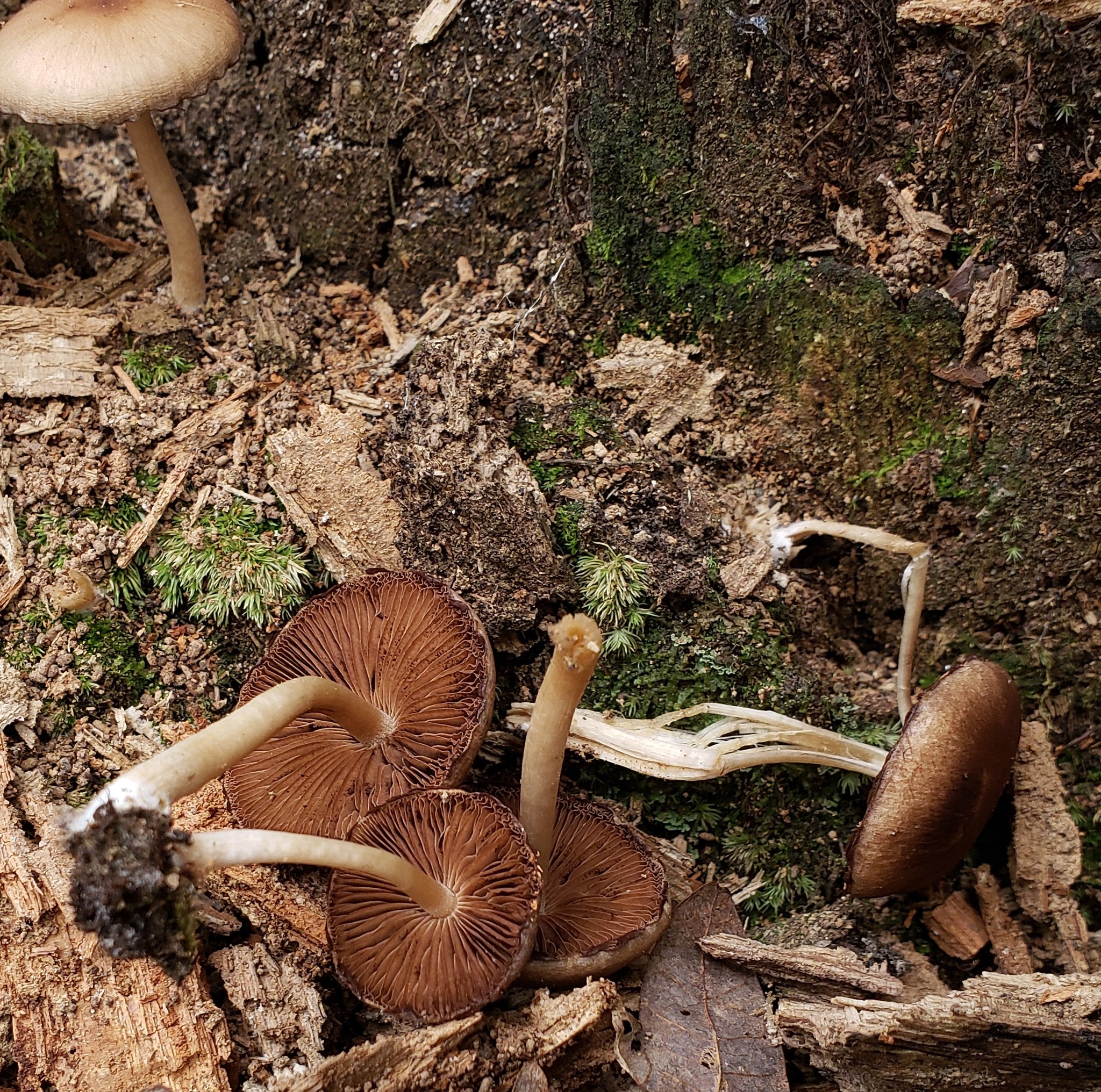
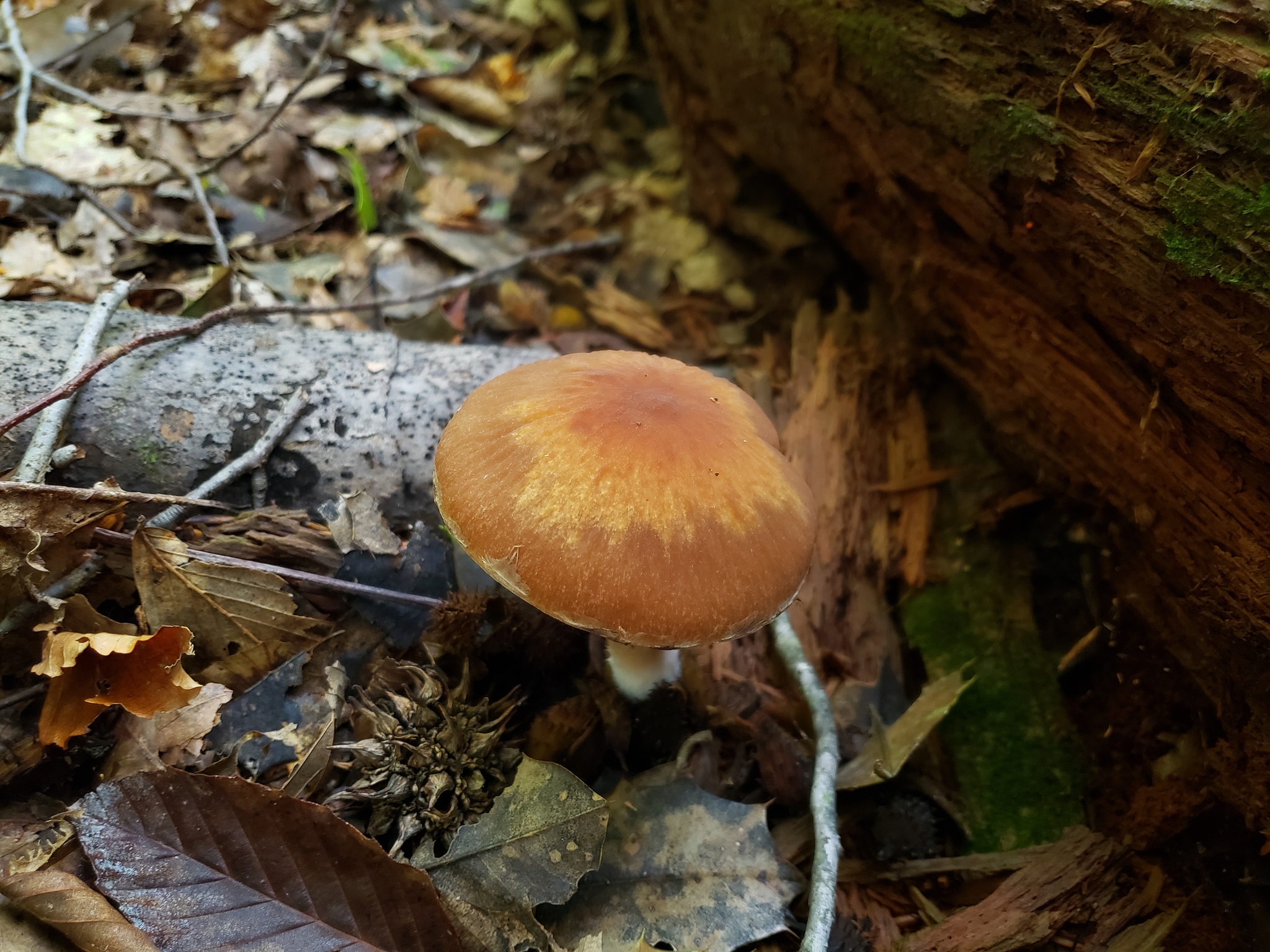
[edit]It produces fruit bodies (mushrooms) with broadly convex caps measuring 2–5 cm (3⁄4–2 inches) in diameter.[3] The caps are chestnut to reddish brown, the color fading with age and with dry weather.[3] Fragments of the partial veil may remain on the cap margin, and as a wispy band of hairs on the stipe.[3]
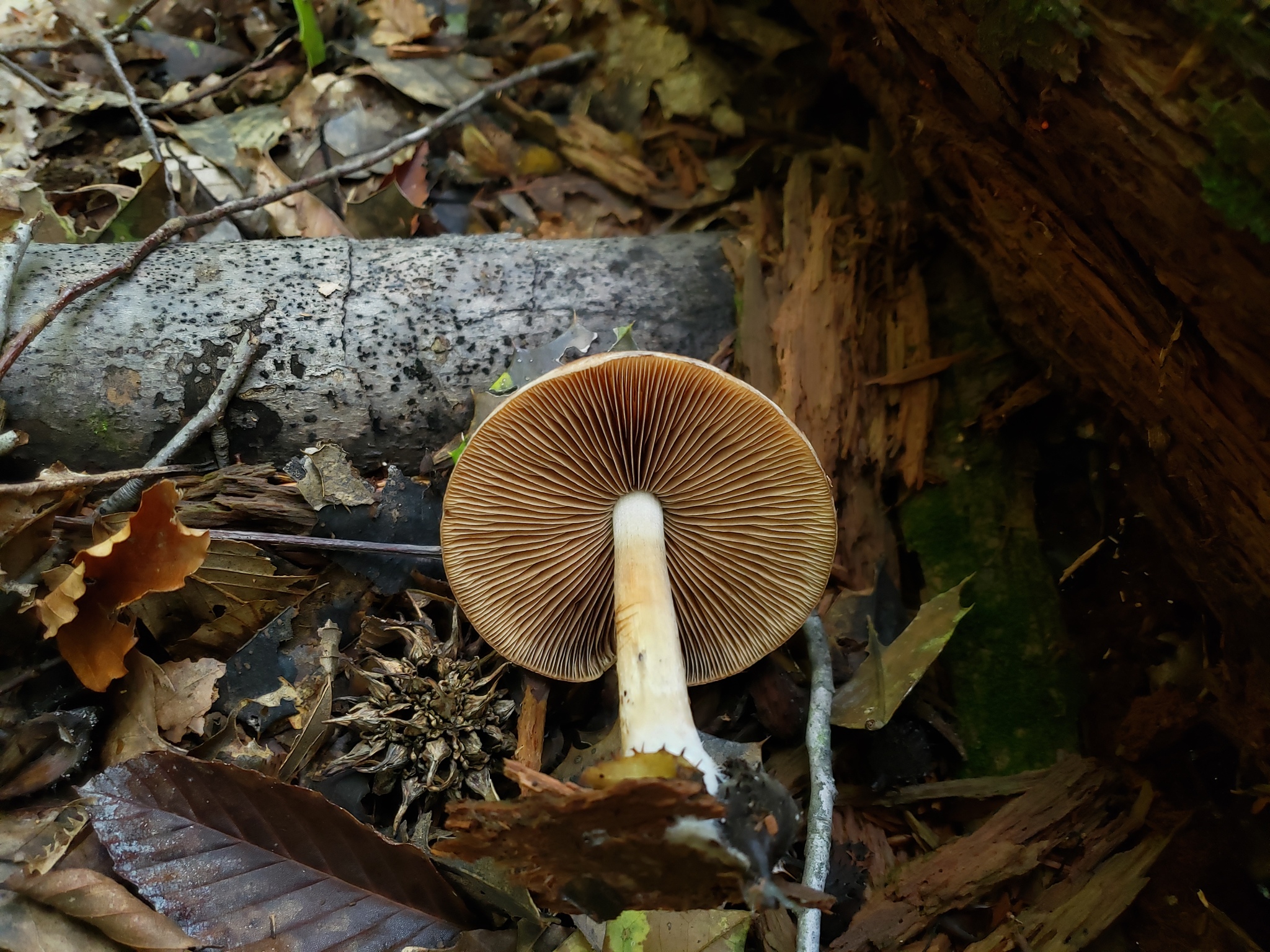
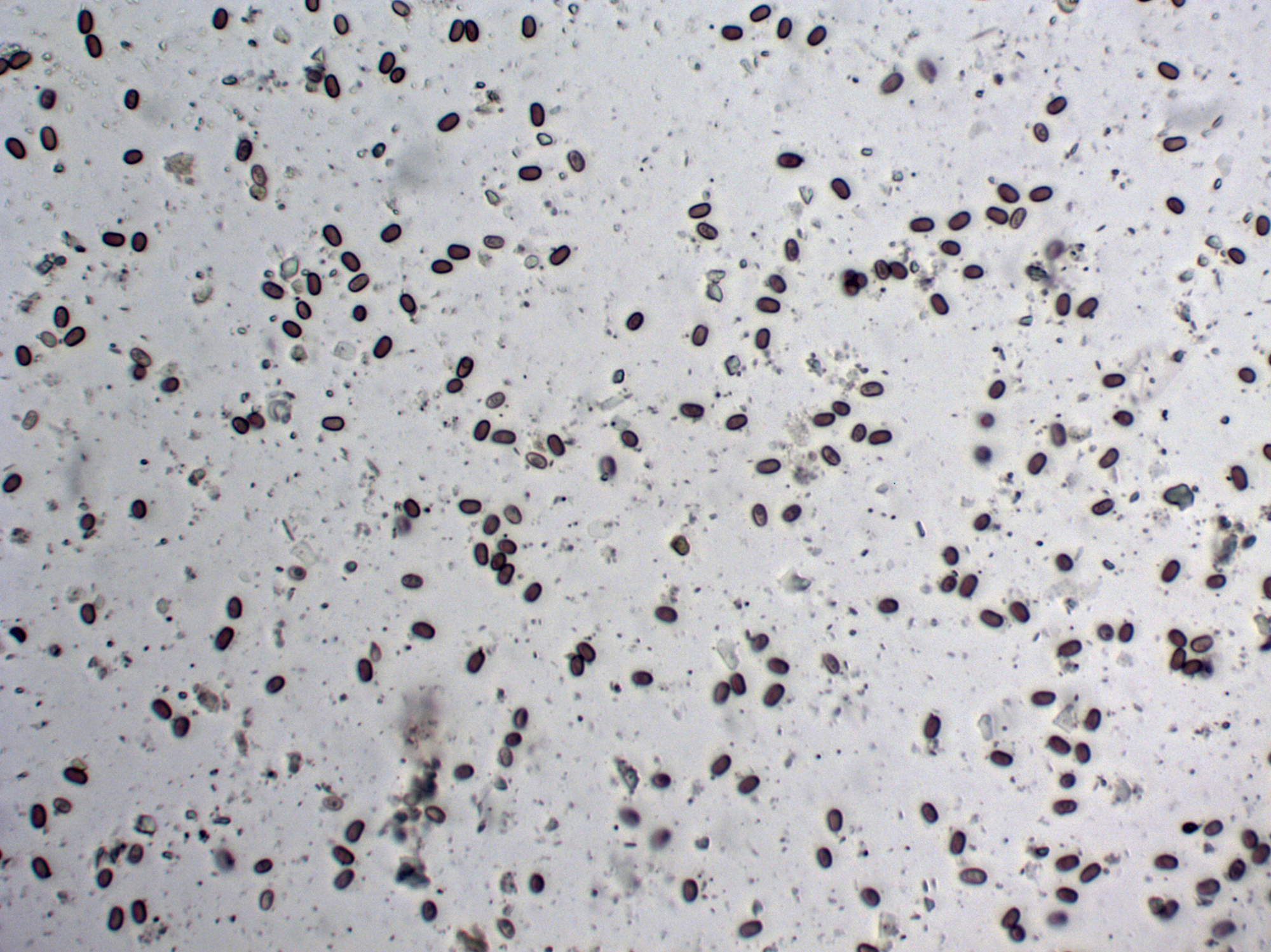
The closely spaced gills have an adnate attachment to the stipe.[3] They are initially tan until the spores mature, when the gills turn dark brown.[3] The stipe is 2–7 cm tall and 3–7 mm wide, white, smooth, hollow, and bulging at the base.[3] The spore print is dark brown, sometimes purplish.[4]
Similar species
[edit]Similar species include Psathyrella carbonicola, P. longipes, P. longistriata, P. multipedata, P. spadicea, and Parasola conopilus.[3][5]
Habitat and distribution
[edit]Fruiting occurs in clusters at the base of hardwood stumps.[3]
Uses
[edit]The species is considered edible but of low quality,[1][6] with fragile flesh and being difficult to identify.[5]
See also
[edit]References
[edit]- ^ a b "Psathyrella piluliformis, Common Stump Brittlestem mushroom". First-Nature.com. Retrieved 2021-03-04.
- ^ Siegel, Noah; Schwarz, Christian (September 1, 2024). Mushrooms of Cascadia: A Comprehensive Guide to Fungi of the Pacific Northwest. Humboldt County, CA: Backcountry Press. p. 101. ISBN 9781941624197.
- ^ a b c d e f g h Davis, R. Michael; Sommer, Robert; Menge, John A. (2012). Field Guide to Mushrooms of Western North America. Berkeley: University of California Press. pp. 235–236. ISBN 978-0-520-95360-4. OCLC 797915861.
- ^ Audubon (2023). Mushrooms of North America. Knopf. p. 609. ISBN 978-0-593-31998-7.
- ^ a b Trudell, Steve; Ammirati, Joe (2009). Mushrooms of the Pacific Northwest. Timber Press Field Guides. Portland, OR: Timber Press. pp. 203–204. ISBN 978-0-88192-935-5.
- ^ Phillips, Roger (2010). Mushrooms and Other Fungi of North America. Buffalo, NY: Firefly Books. p. 232. ISBN 978-1-55407-651-2.
External links
[edit] Media related to Psathyrella piluliformis at Wikimedia Commons