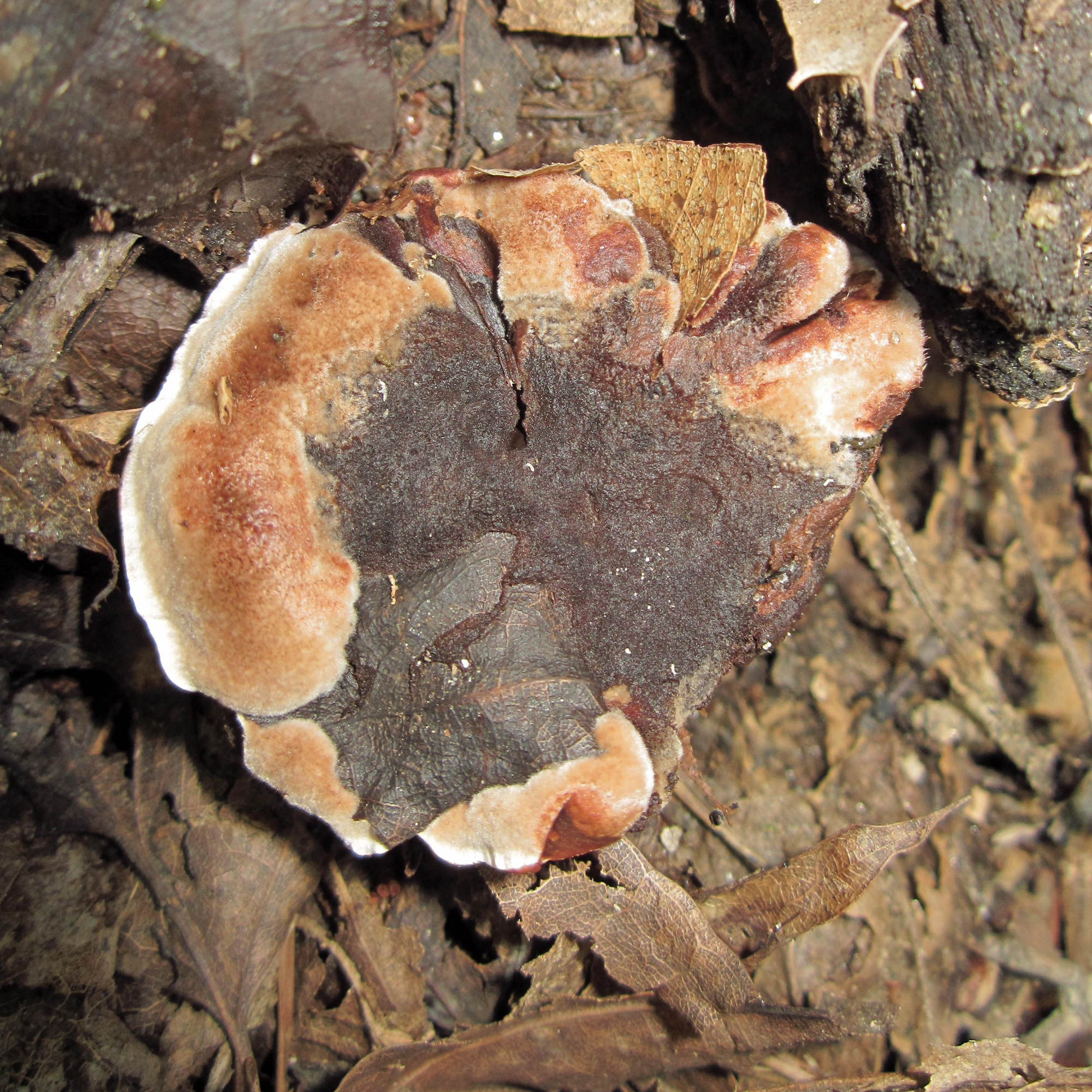
Sweetgrass Hydnellum in Howard Co., Maryland (8/7/2014). (c) Joanne and Robert Solem, some rights reserved (CC BY-NC).
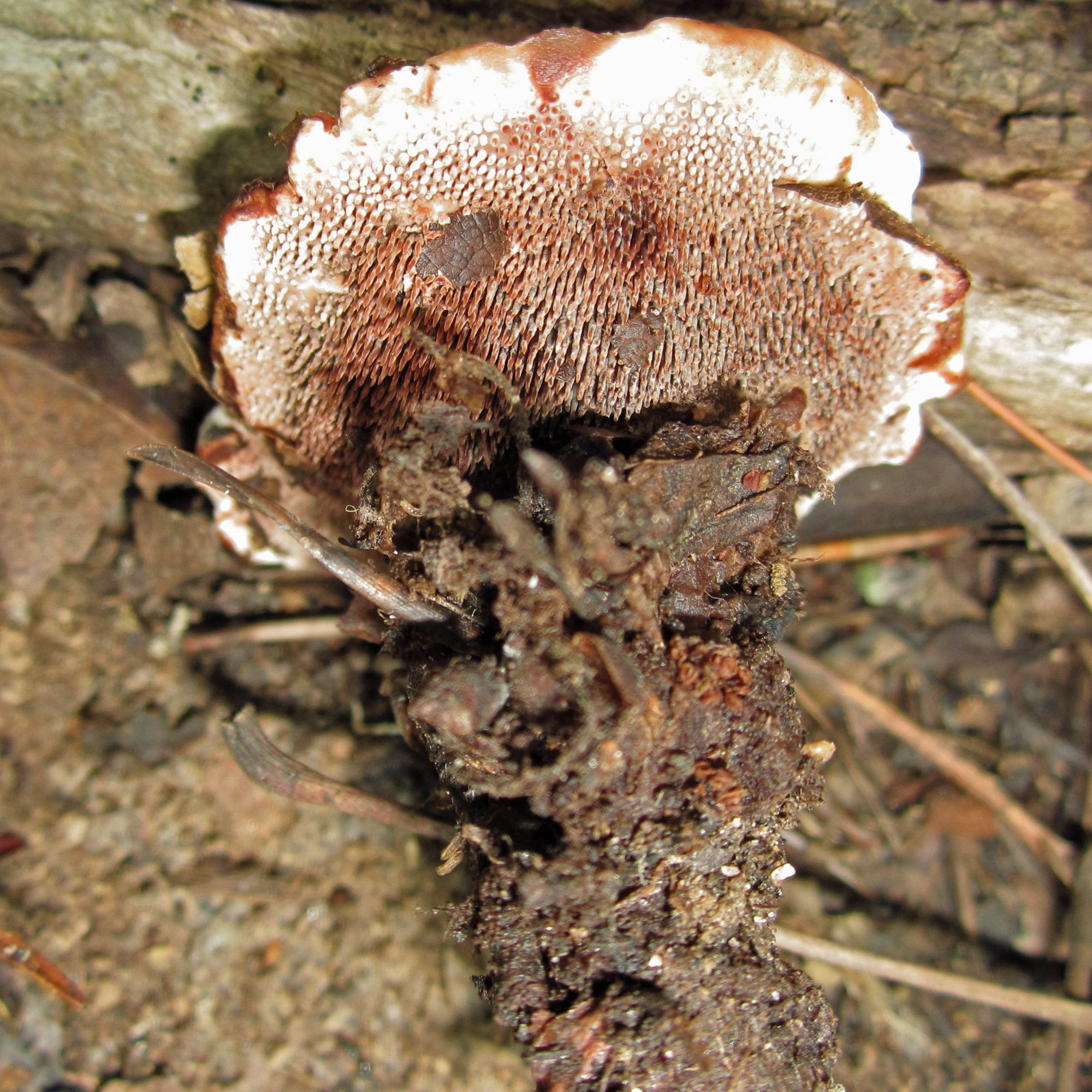
Sweetgrass Hydnellum in Howard Co., Maryland (8/7/2014). (c) Joanne and Robert Solem, some rights reserved (CC BY-NC).
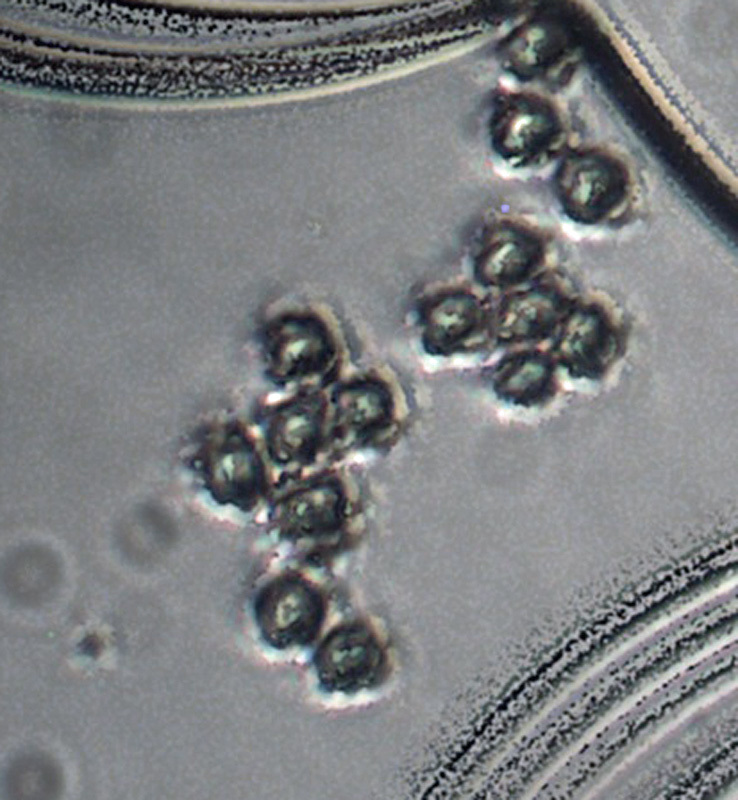
Spores collected from a Sweetgrass Hydnellum specimen in Howard Co., Maryland (8/7/2014). (c) Joanne and Robert Solem, some rights reserved (CC BY-NC).
Map Snapshot


1 Record
Citations
No citations linked for this taxon yet.
Eating mushrooms can be dangerous. One should do so only with expert advice and great care. MBP accepts no liability for injury sustained in consuming fungi or other biodiversity. Use of media featured on Maryland
Biodiversity Project is only permitted with express permission of the
photographer.
Sweetgrass Hydnellum in Howard Co., Maryland (8/7/2014). (c) Joanne and Robert Solem, some rights reserved (CC BY-NC).
View Record Details
Media by
Joanne Solem.
Sweetgrass Hydnellum in Howard Co., Maryland (8/7/2014). (c) Joanne and Robert Solem, some rights reserved (CC BY-NC).
View Record Details
Media by
Joanne Solem.
Spores collected from a Sweetgrass Hydnellum specimen in Howard Co., Maryland (8/7/2014). (c) Joanne and Robert Solem, some rights reserved (CC BY-NC).
View Record Details
Media by
Joanne Solem.
Source: Wikipedia
| Hydnellum suaveolens | |
|---|---|

| |
Scientific classification 
| |
| Kingdom: | Fungi |
| Division: | Basidiomycota |
| Class: | Agaricomycetes |
| Order: | Thelephorales |
| Family: | Bankeraceae |
| Genus: | Hydnellum |
| Species: | H. suaveolens
|
| Binomial name | |
| Hydnellum suaveolens | |
| Synonyms | |
| |
| Hydnellum suaveolens | |
|---|---|
| Mycological characteristics | |
 | Teeth on hymenium |
 | Cap is flat |
 | Hymenium is decurrent |
 | Stipe is bare |
 | Spore print is brown |
 | Ecology is mycorrhizal |
 | Edibility is inedible |
Hydnellum suaveolens, commonly known as the fragrant hydnellum mushroom,[1] is a species of fungus. It has a funnel-shaped cap that is typically between 5–15 cm (2–6 in) in diameter. As its name suggests, it has a strong odor of anise or peppermint.[1]
The species is often found beneath conifers and is inedible.[2] Gas chromatographic-mass spectral analysis of diethyl ether extracts from fresh specimens of this fungi showed p-anisaldehyde and coumarin to comprise 30% and 62% respectively of the volatile odor compounds present.[3]
References
[edit]- ^ a b Arora, David (1986) [1979]. Mushrooms Demystified: A Comprehensive Guide to the Fleshy Fungi (2nd ed.). Berkeley, California: Ten Speed Press. p. 624. ISBN 978-0-89815-170-1.
- ^ Phillips, Roger (2010). Mushrooms and Other Fungi of North America. Buffalo, NY: Firefly Books. p. 323. ISBN 978-1-55407-651-2.
- ^ Wood, William F.; DeShazer, D. A.; Largent, D. L. (1988). "The Identity and Metabolic Fate of Volatiles Responsible for the Odor of Hydnellum suaveolens". Mycologia. 80: 252–255. doi:10.1080/00275514.1988.12025530.
External links
[edit]- Roger's Mushrooms Description
 | This Agaricomycetes-related article is a stub. You can help Wikipedia by adding missing information. |