Map Snapshot


1 Record
Citations
No citations linked for this taxon yet.
Eating mushrooms can be dangerous. One should do so only with expert advice and great care. MBP accepts no liability for injury sustained in consuming fungi or other biodiversity. Use of media featured on Maryland
Biodiversity Project is only permitted with express permission of the
photographer.
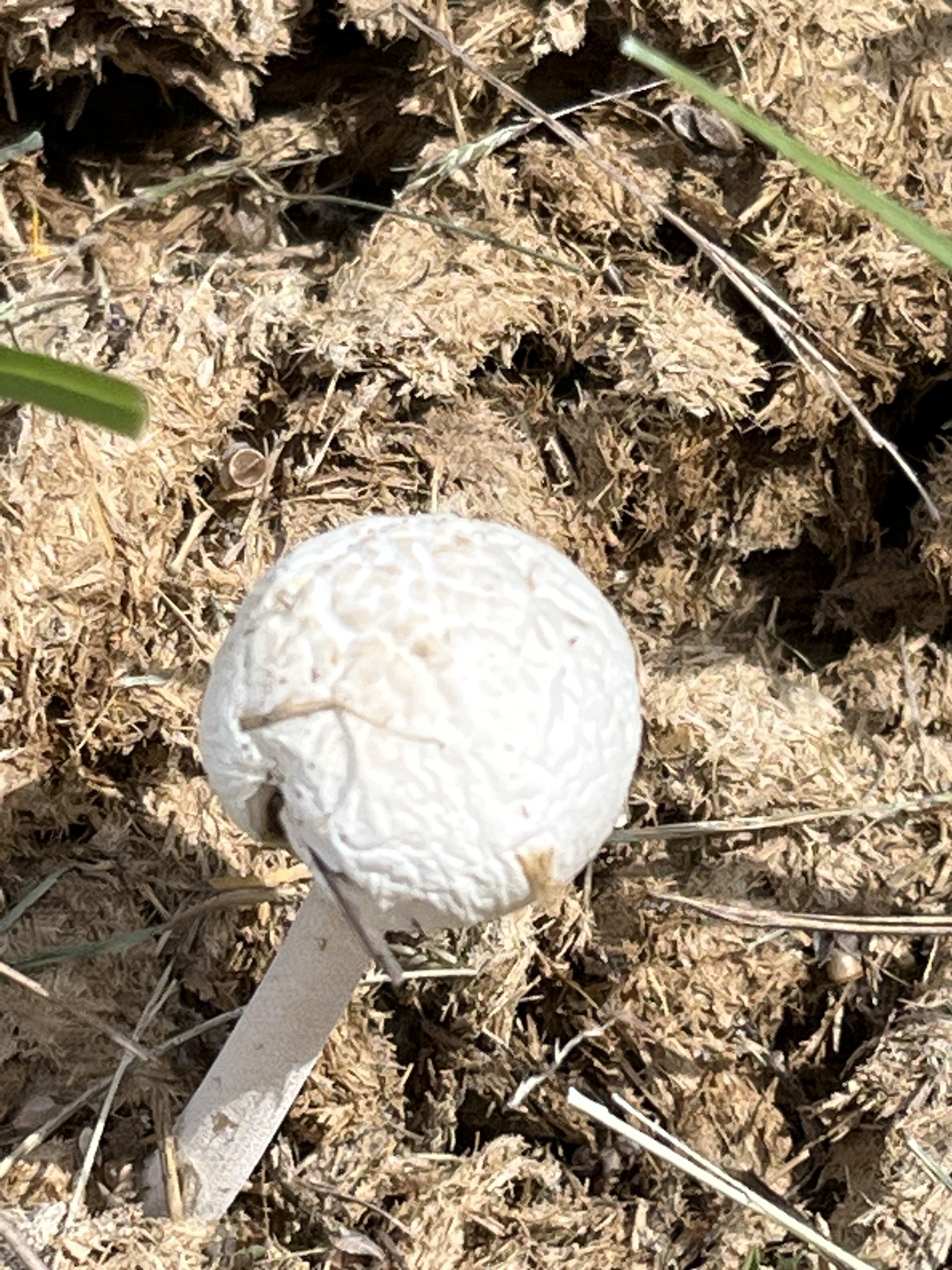
Panaeolus antillarum in Worcester Co., Maryland (8/13/2024). (c) Tony KM, some rights reserved (CC BY).
View Record Details
Media by
Tony Kooi Morphew via iNaturalist.
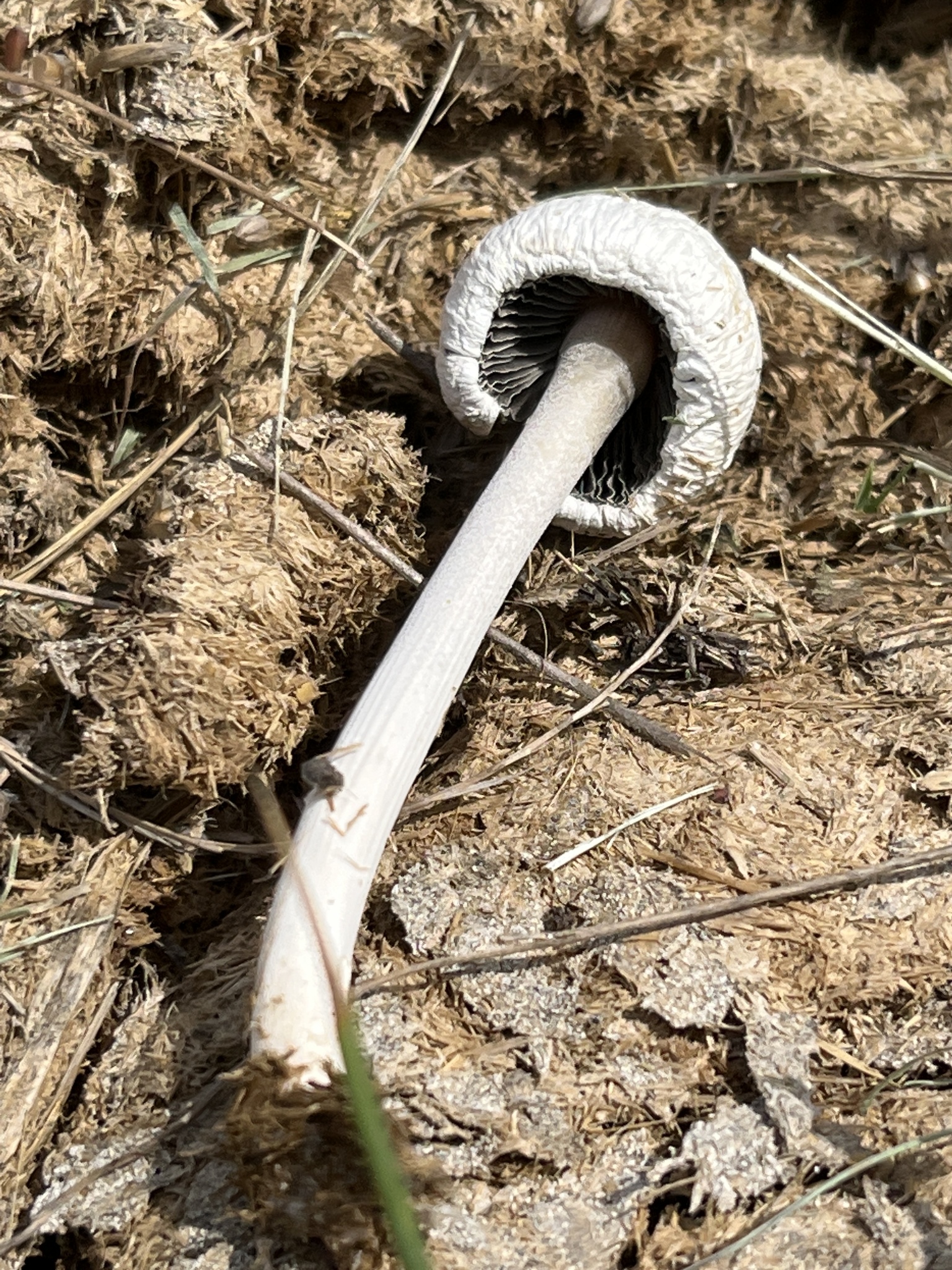
Panaeolus antillarum in Worcester Co., Maryland (8/13/2024). (c) Tony KM, some rights reserved (CC BY).
View Record Details
Media by
Tony Kooi Morphew via iNaturalist.
Source: Wikipedia
| Panaeolus antillarum | |
|---|---|

| |
Scientific classification 
| |
| Kingdom: | Fungi |
| Division: | Basidiomycota |
| Class: | Agaricomycetes |
| Order: | Agaricales |
| Family: | Bolbitiaceae |
| Genus: | Panaeolus |
| Species: | P. antillarum
|
| Binomial name | |
| Panaeolus antillarum (Fr.) Dennis
| |
| Synonyms | |
| |
| Panaeolus antillarum | |
|---|---|
| Mycological characteristics | |
 | Gills on hymenium |
 | Cap is convex |
 | Hymenium is adnexed |
 | Stipe is bare |
 | Spore print is black |
 | Ecology is saprotrophic |
 | Edibility is edible |
Panaeolus antillarum is a species of mushroom in the family Bolbitiaceae.
Description
[edit]- Cap: 3 to 6 cm, bell-shaped to convex, white to light gray or yellowish. The caps are thick, smooth, often with fine wrinkles and acquire a silver white shiny color in age.
- Gills: Gray in young specimens, turning black as the spores mature.
- Spore print: Black.[1]
- Stipe: 4 to 22 cm long and .5 to 2 cm thick, solid, sometimes slightly larger at the base.
- Taste: Fungal.
- Odor: Fungal.
- Size: Small to medium.
- Microscopic features: Spores ellipsoid, 15 - 20 (21) x 10 - 14 x 8 - 10(11) μm. Cheilocystidia cylindrical to narrowly utriform, colorless, 30 - 45 μm. Sulphidia clavate, sometimes with a stalk, 25 - 50 μm. Basidia four spored, 30 - 35 micrometers long.[2]


Similar species
[edit]It is often mistaken for Panaeolus semiovatus var. phalaenarum or Panaeolus cyanescens, the latter species can be distinguished by the thinner, grayer cap and blue bruising.[1]
Distribution and habitat
[edit]It's common and widely distributed. It grows on dung.[1] It is found from northern North America through Mexico into northern South America.[3]
Uses
[edit]It is edible but not commonly eaten.[citation needed]
See also
[edit]
References
[edit]- ^ a b c Audubon (2023). Mushrooms of North America. Knopf. p. 611. ISBN 978-0-593-31998-7.
- ^ Gerhardt, Ewald. TAXONOMISCHE REVISION DER GATTUNGEN PANAEOLUS UND PANAEOLINA. ISBN 3-510-48018-X.
- ^ Stamets, Paul (1996). Psilocybin Mushrooms of the World. Berkeley: Ten Speed Press. ISBN 0-9610798-0-0.