
Map Snapshot


40 Records
Citations
No citations linked for this taxon yet.
Source: Wikipedia
| Amydria effrentella | |
|---|---|

| |
Scientific classification 
| |
| Kingdom: | Animalia |
| Phylum: | Arthropoda |
| Clade: | Pancrustacea |
| Class: | Insecta |
| Order: | Lepidoptera |
| Family: | Tineidae |
| Genus: | Amydria |
| Species: | A. effrentella
|
| Binomial name | |
| Amydria effrentella | |
| Synonyms | |
| |
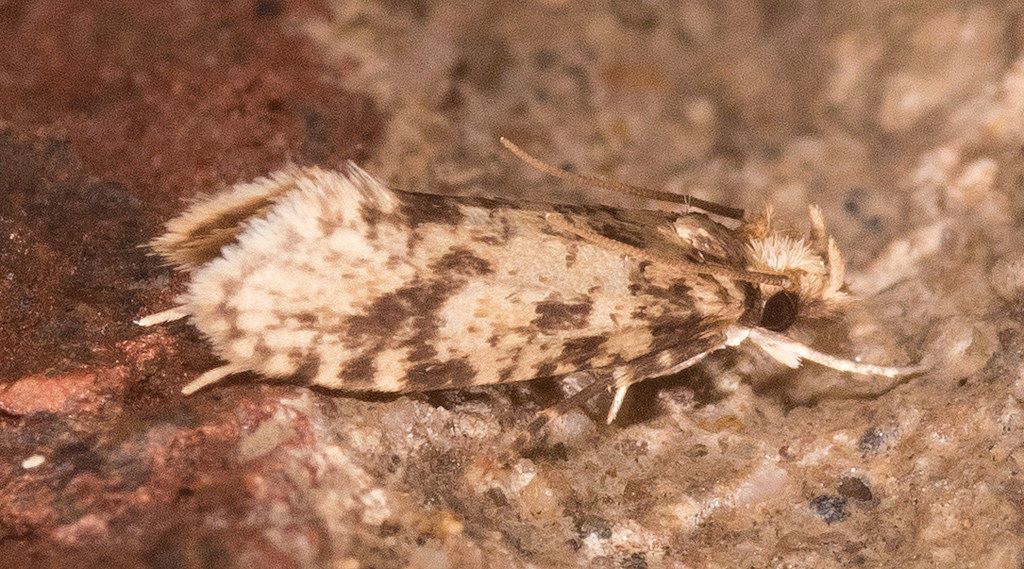
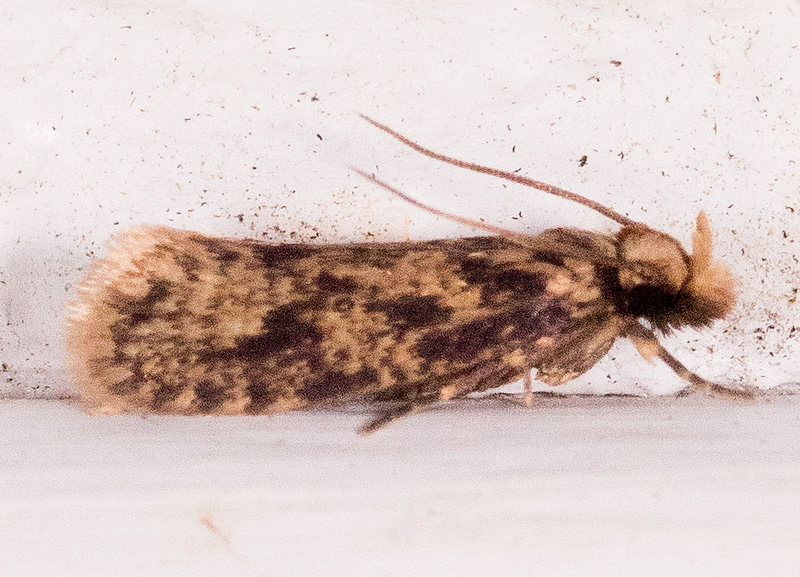
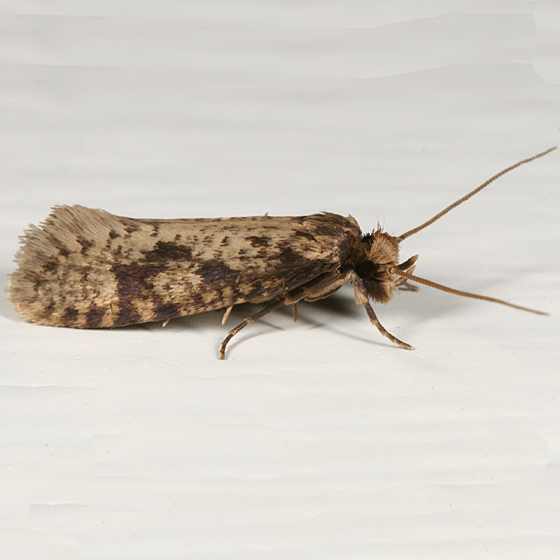
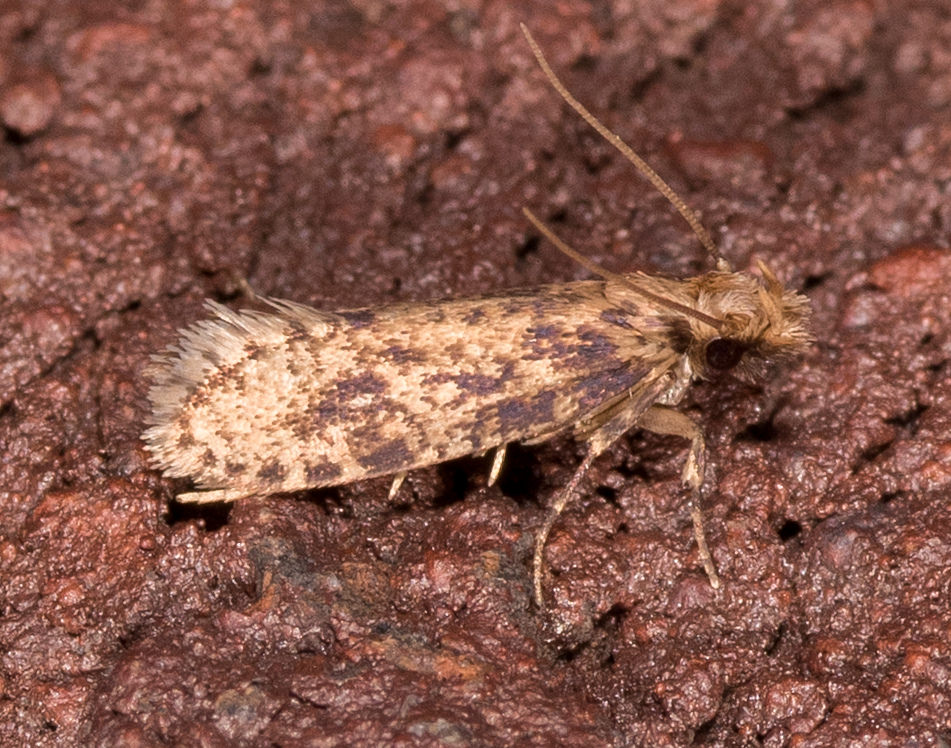
Amydria effrentella is a moth of the family Acrolophidae. It is found in North America, including Alabama, Arizona, Arkansas, California, Georgia, Illinois, Indiana, Kentucky, Maryland, Massachusetts, Minnesota, Mississippi, Nevada, New Brunswick, New Jersey, New York, North Carolina, Ohio, Quebec, Saskatchewan, South Carolina, Tennessee, Utah, West Virginia and Wisconsin.[2]
The wingspan is about 24 mm (0.94 in). The forewings are mottled and there is a dark patch at the end of the discal cell.[3]
The larvae are detritivores, feeding on decaying leaves. They have been found within the remaining leaves of branches used in older Aplodontia rufa lodges.[4]
References
[edit]- ^ Synonymic list at nearctica.com
- ^ mothphotographersgroup
- ^ Moths of North Dakota
- ^ Johnson, Norman E.; Martin, Paul (17 March 1969). "Amydria effrentella 1 from Nests of Mountain Beaver, Aplodontia rufa". Annals of the Entomological Society of America. 62 (2): 396–399. doi:10.1093/aesa/62.2.396.
 | This Acrolophidae-related article is a stub. You can help Wikipedia by adding missing information. |