


Map Snapshot


43 Records
Citations
No citations linked for this taxon yet.
Source: Wikipedia
| Dielis plumipes | |
|---|---|

| |
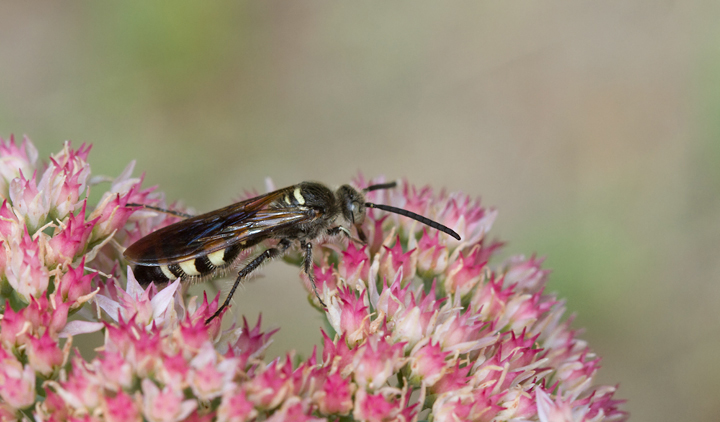
| Dielis plumipes fossulana in Florida | |
Scientific classification 
| |
| Kingdom: | Animalia |
| Phylum: | Arthropoda |
| Clade: | Pancrustacea |
| Class: | Insecta |
| Order: | Hymenoptera |
| Family: | Scoliidae |
| Tribe: | Campsomerini |
| Genus: | Dielis |
| Species: | D. plumipes
|
| Binomial name | |
| Dielis plumipes (Drury, 1770)
| |
Dielis plumipes, the feather-legged scoliid wasp, is a species of scoliid wasp in the family Scoliidae.[1]
Description and identification
[edit]Females of D. plumipes have a black scutellum and yellow bands on the first three or four tergites.[2] The setae along the pronotal collar are usually orangish.[1] Males, as in most species of the genus, have yellow bands on the first four tergites and primarily whitish setae on the body.[3] They have the pronotum entirely black, or nearly so, and are distinguished chromatically from allied species by the entirely black clypeus and by the entirely black mid and hind legs.[2]
Distribution
[edit]D. plumipes occurs in the eastern and central United States.[4] The largest populations are the central subspecies, D. p. confluenta, and the southeastern subspecies, D. p. fossulana. A third subspecies, the nominate D. p. plumipes, occurs in a small pocket along the eastern coast within the Carolinian life zone.[2]
Subspecies
[edit]There are three subspecies of D. plumipes:[5]
- Dielis plumipes confluenta (Say, 1823)
- Dielis plumipes fossulana (Fabricius, 1804)
- Dielis plumipes plumipes (Drury, 1770)
Gallery
[edit]-
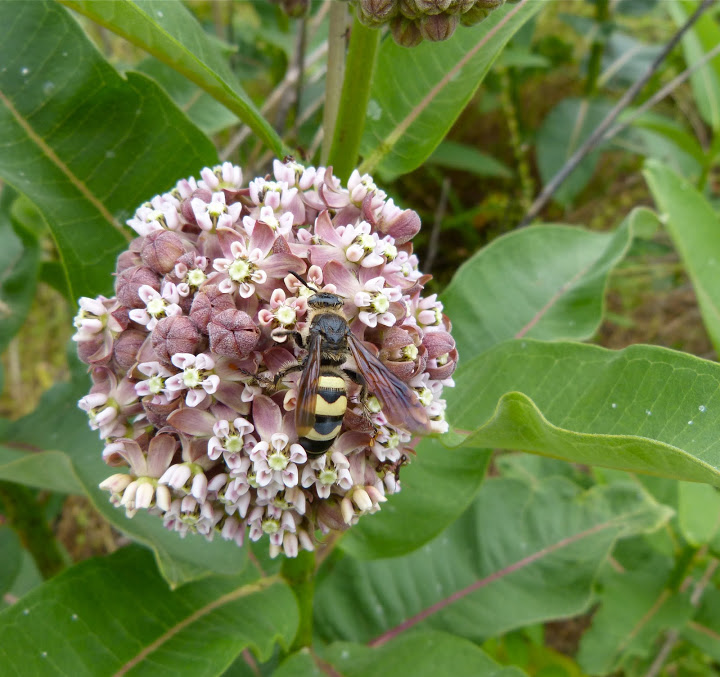
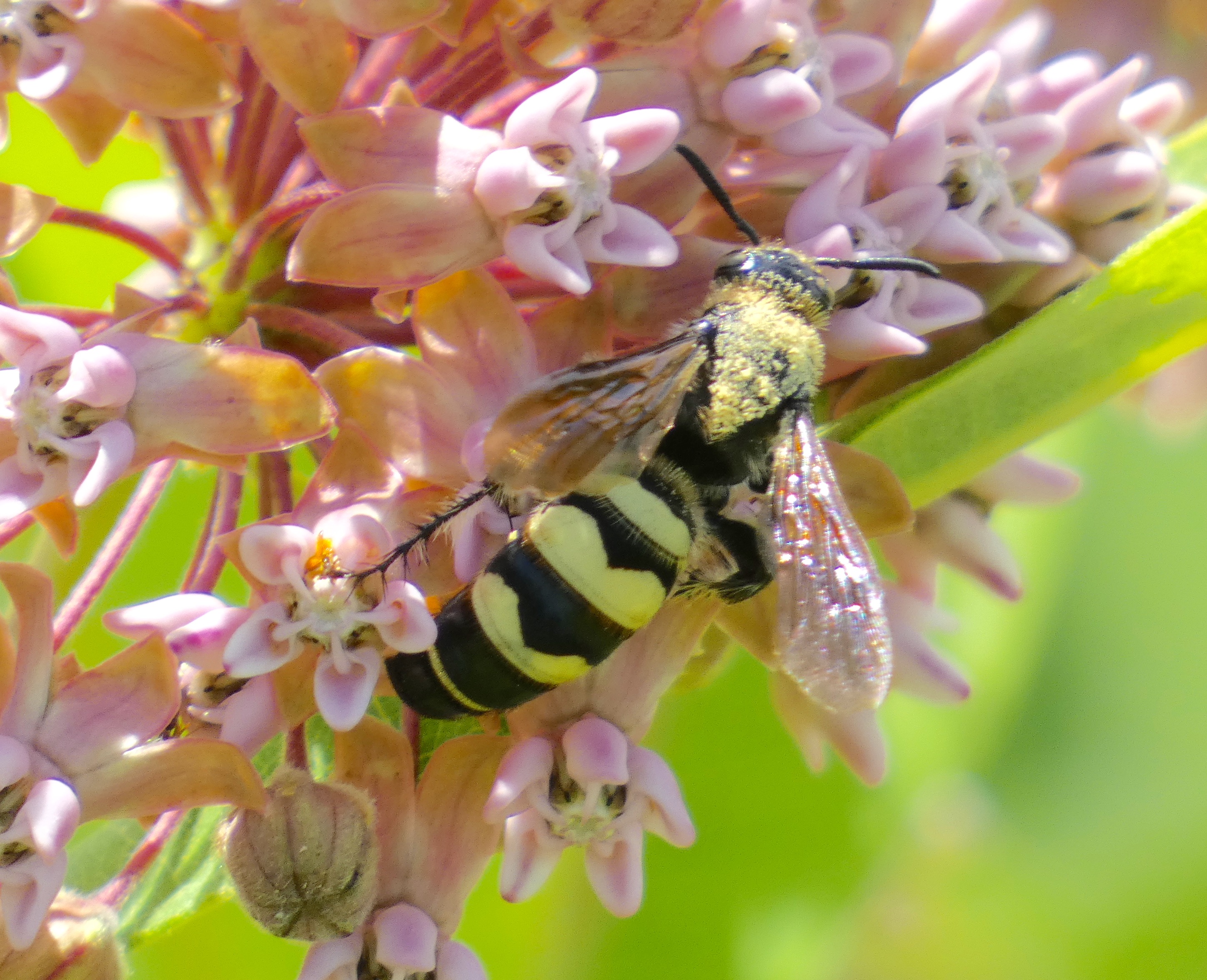
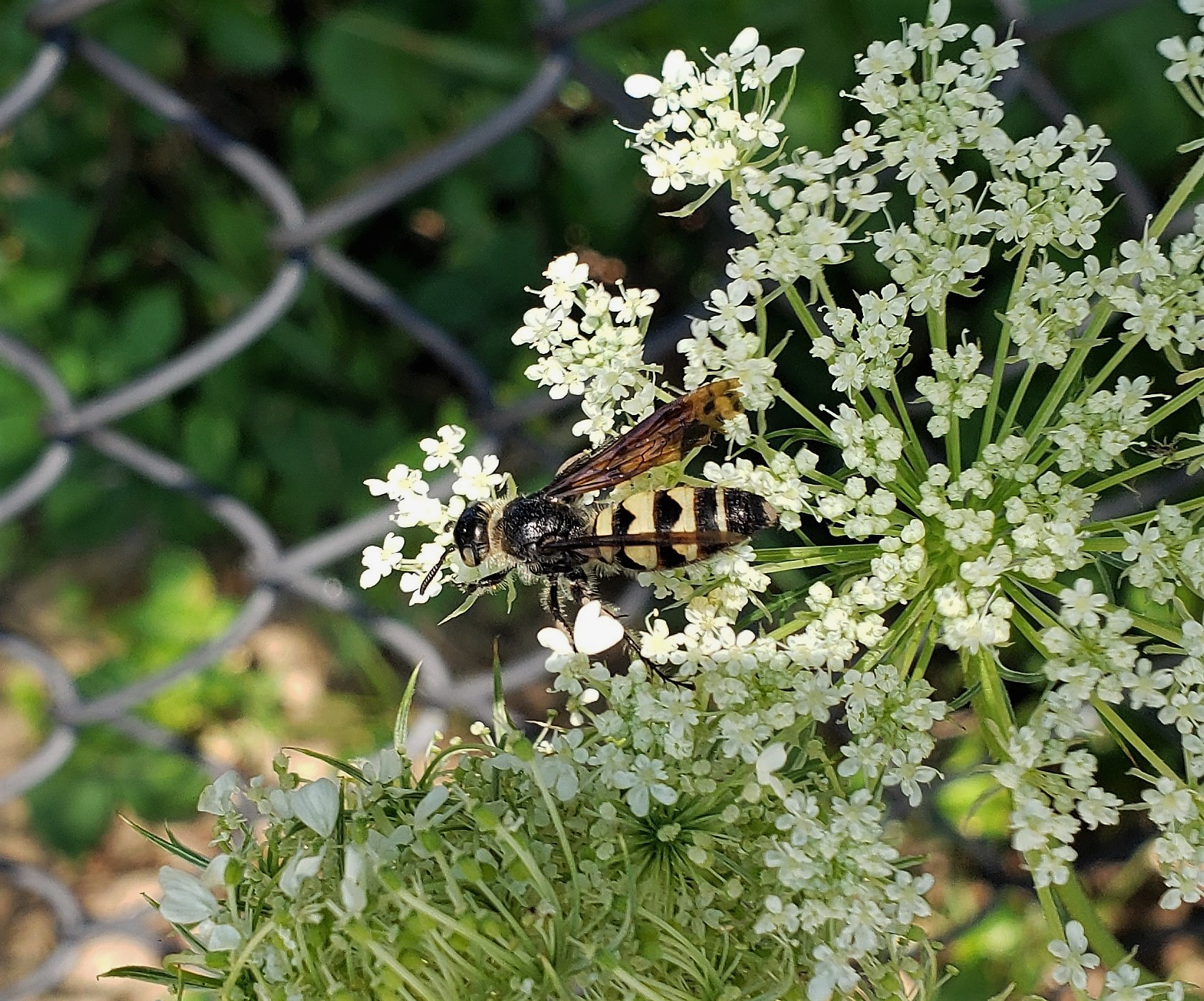
 D. plumipes confluenta female in Ontario
 -
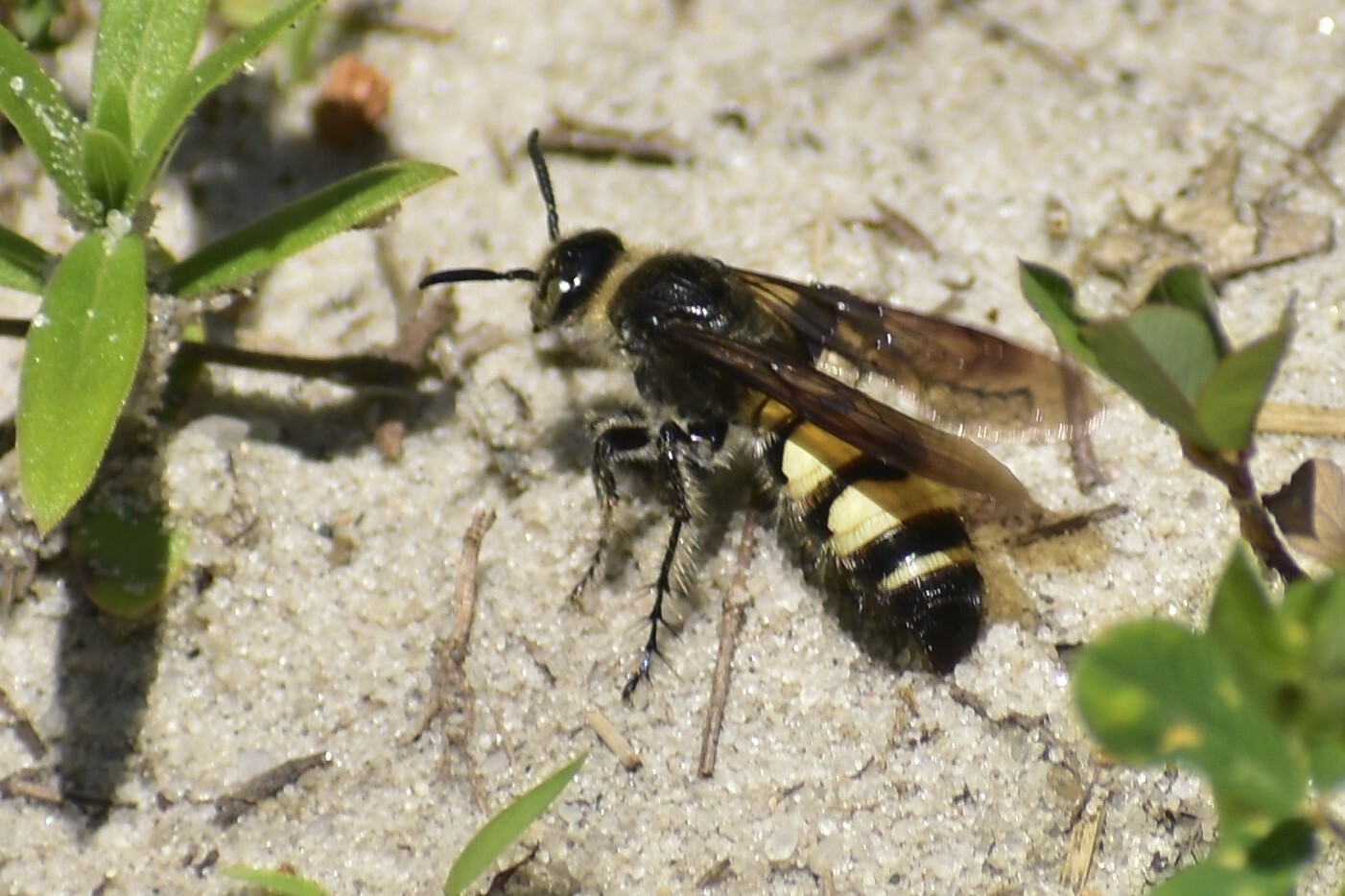
 D. plumipes fossulana female in Florida
 -
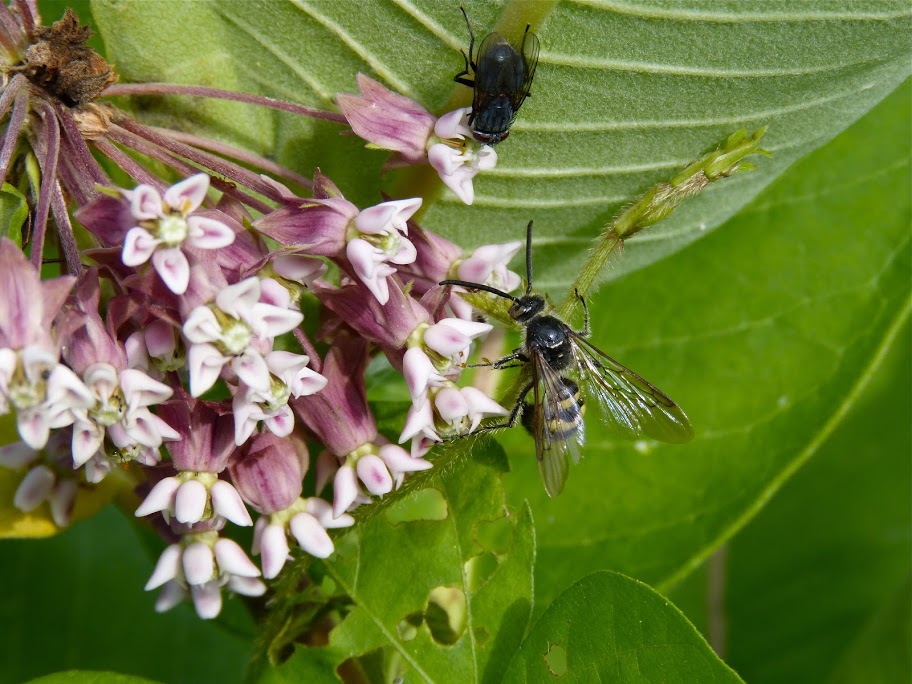
 D. plumipes fossulana male in Florida
 -
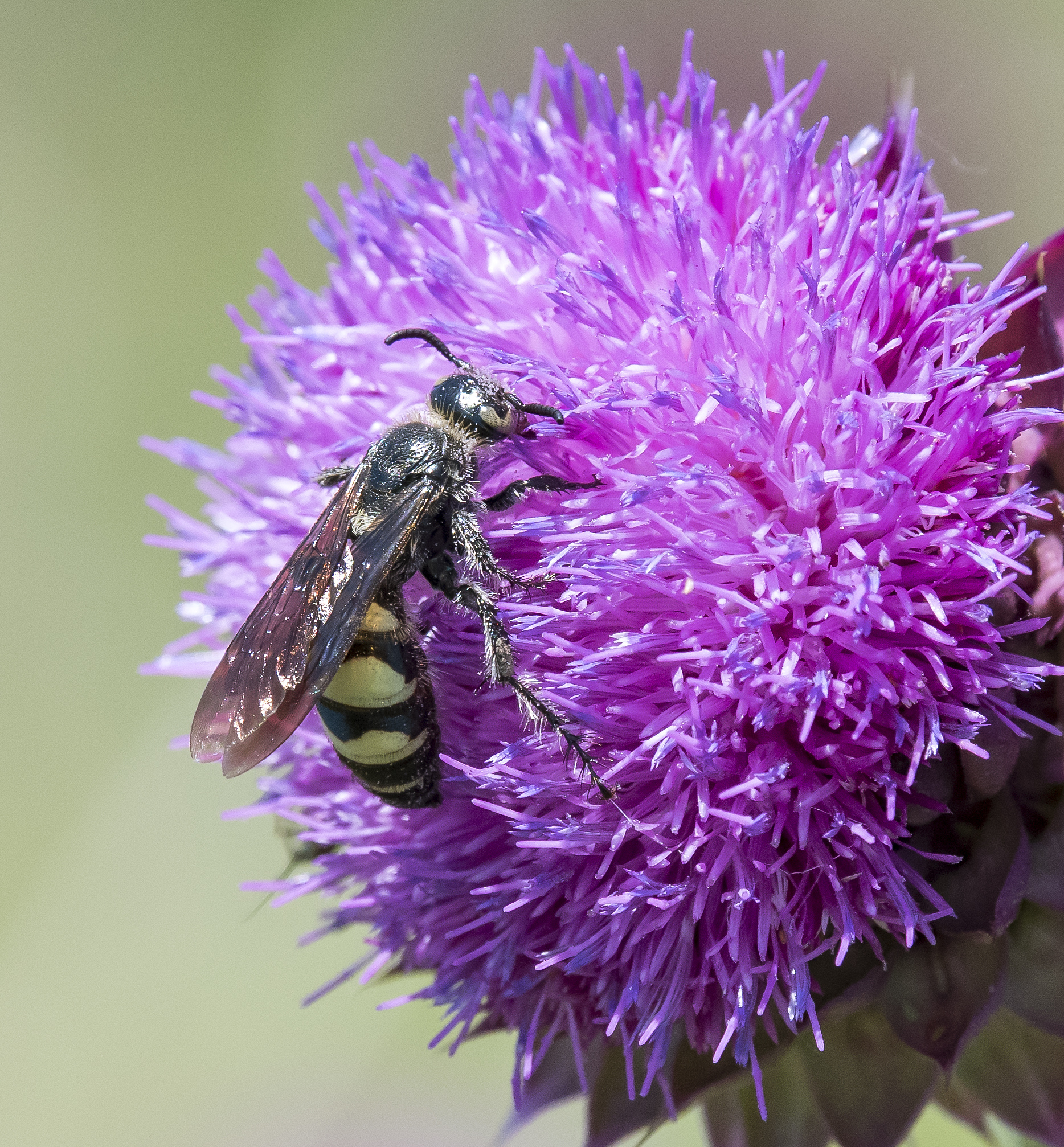
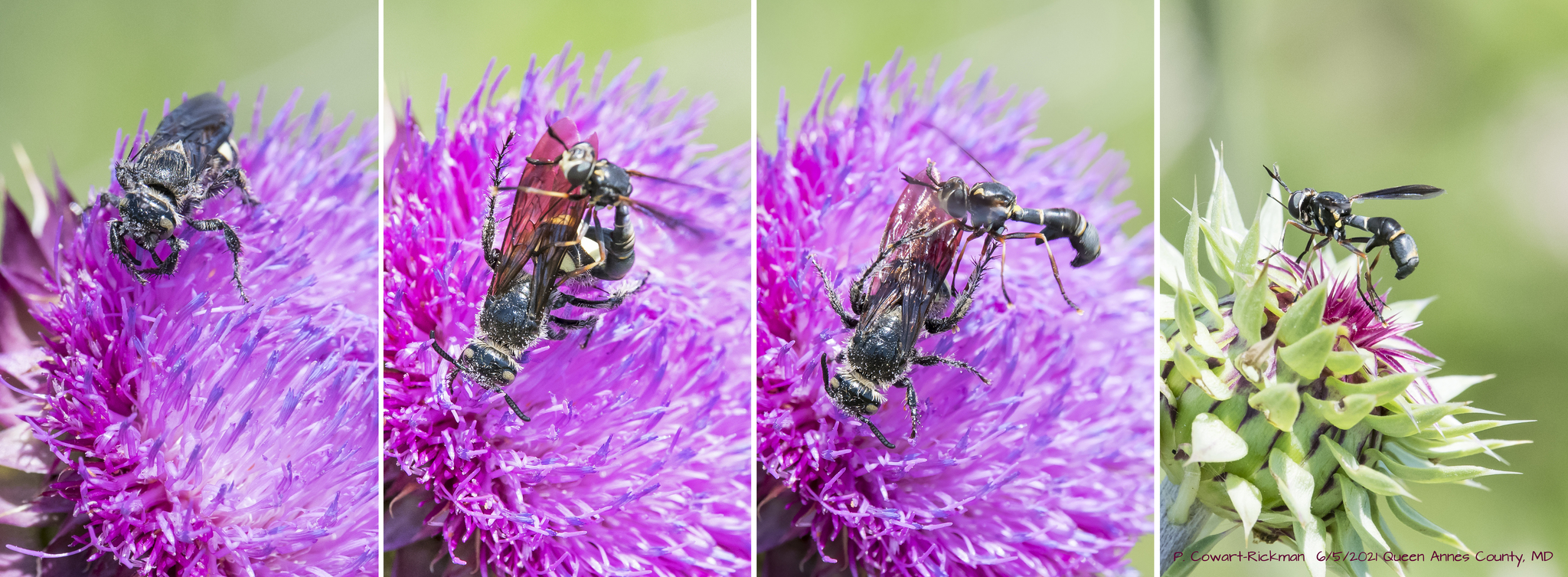
 D. plumipes plumipes female in Maryland.


References
[edit]- ^ a b Holm, Heather (2021). "Chapter 10 Scoliidae: Scoliid Wasps". Wasps: Their Biology, Diversity, and Role as Beneficial Insects and Pollinators of Native Plants. Minnetonka, MN: Pollination Press LLC. pp. 214–229. ISBN 9780991356317.
- ^ a b c Bradley, James Chester (1928). "The Species of Campsomeris (Hymenoptera-Scoliidae) of the plumipes Group, Inhabiting the United States, the Greater Antilles, and the Bahama Islands". Proceedings of the Academy of Natural Sciences of Philadelphia. 80: 313–337. Retrieved 2023-07-17.
- ^ Bradley, James Chester (1957). "The Taxa of Campsomeris (Hymenoptera: Scoliidae) Occurring in the New World". Transactions of the American Entomological Society. 83 (2): 65–77. JSTOR 25077743.
- ^ Porter, Charles C. (1981). "Scoliidae (Hymenoptera) of the Lower Río Grande Valley". The Florida Entomologist. 64 (3): 441–453. Retrieved 2023-07-17.
- ^ Osten, T. (2005). "Checkliste der Dolchwespen der Welt (Insecta: Hymenoptera, Scoliidae). Teil 1: Proscoliinae und Scoliinae: Campsomerini. Teil 2: Scoliinae: Scoliini. Teil 3: Literatur" [Checklist of the Scoliidae of the World. Part 1: Proscoliinae and Scoliinae: Campsomerini. Part 2: Scoliinae: Scoliini. Part 3: Literature] (PDF). Bericht der Naturforschenden Gesellschaft Augsburg (in German). 62 (220–221): 1–62. Retrieved 2023-07-17.
External links
[edit] Media related to Dielis plumipes at Wikimedia Commons

 | This article needs additional or more specific categories. (May 2022) |
 | This Apocrita-related article is a stub. You can help Wikipedia by adding missing information. |