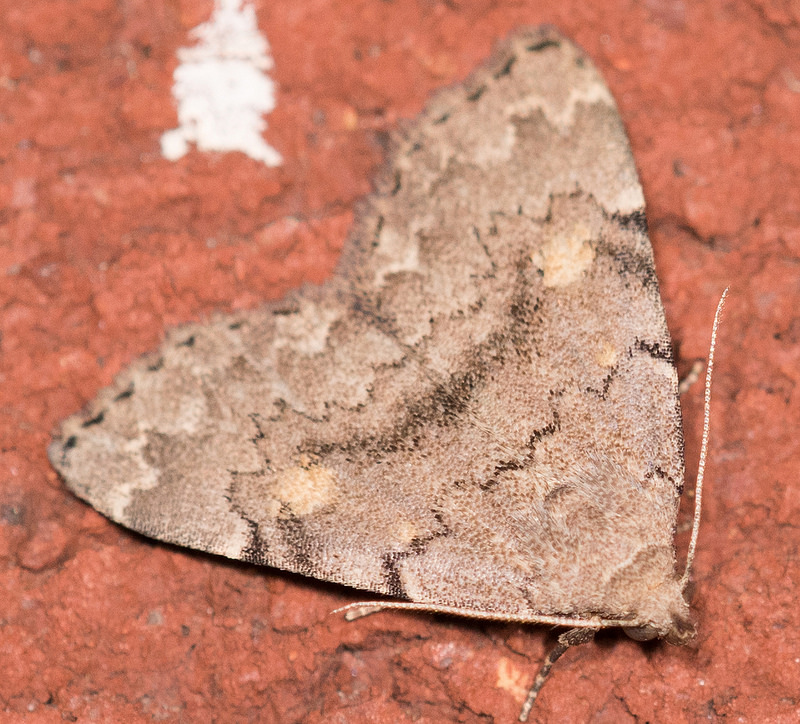
A Pale-winged Idia Moth in Frederick Co., Maryland (5/29/2015). Determined by Hugh McGuinness.

Pale-winged Idia Moth in Carroll Co., Maryland (6/6/2020). (c) emilio c, some rights reserved (CC BY-NC).
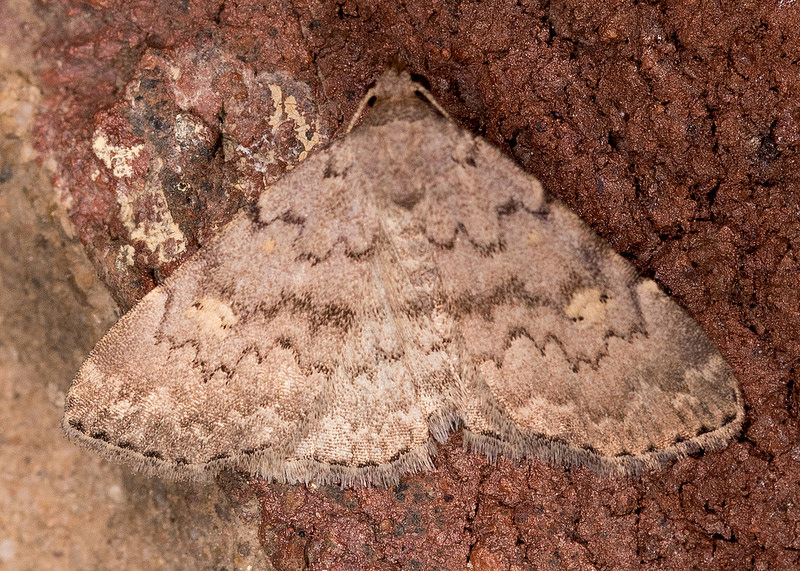
A possible Pale-winged Idia Moth in Frederick Co., Maryland (6/29/2016). Determined by Hugh McGuinness.
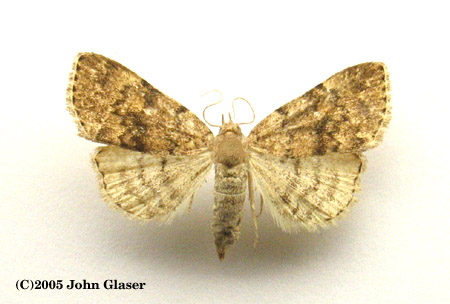
Pale-winged Idia Moth.
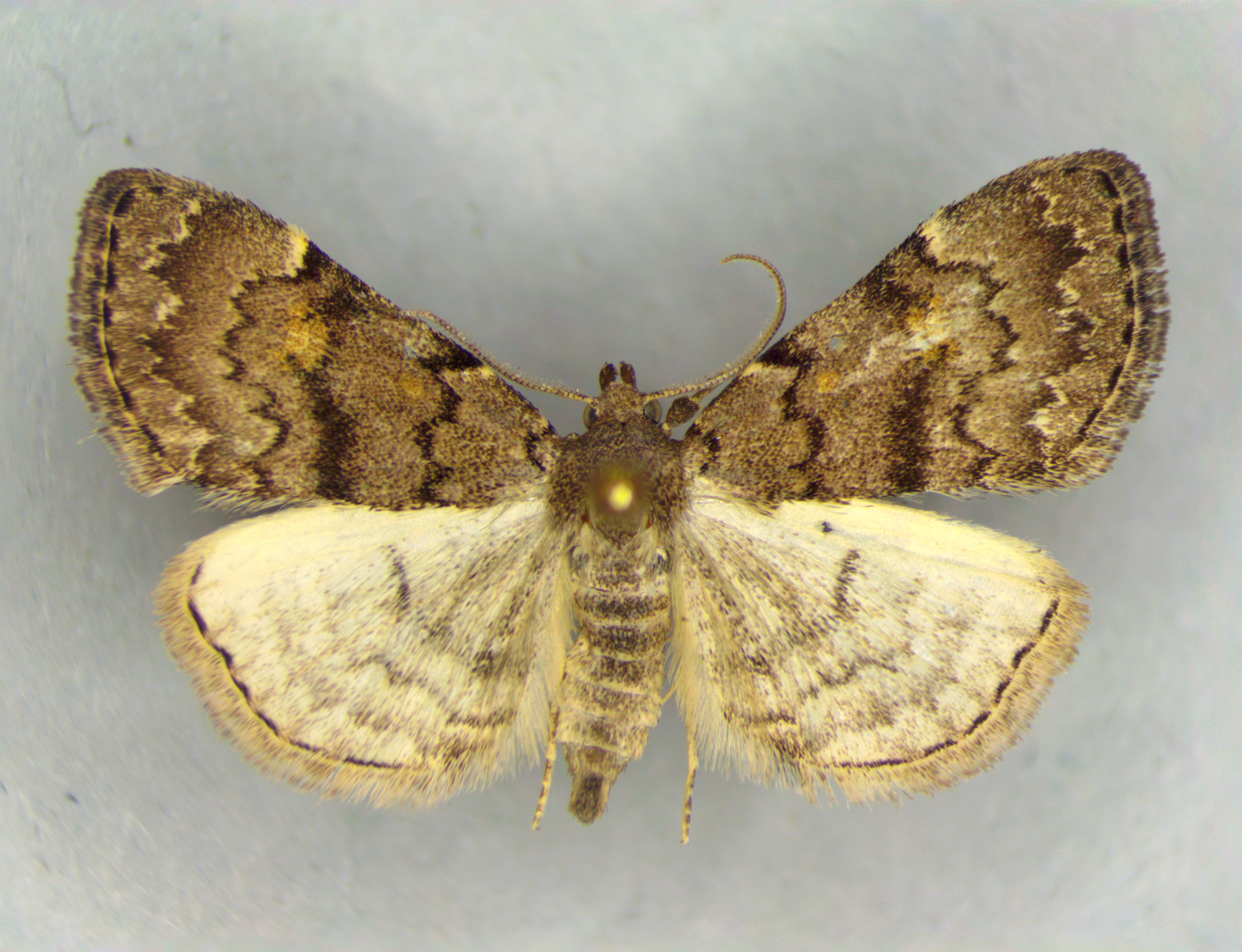
Pale-winged Idia Moth in Howard Co., Maryland (Date obscured). (c) Timothy Reichard, all rights reserved.
Map Snapshot


90 Records
Status
Despite being well known, this uncommon species is undescribed and lacks a valid scientific name. Forbes misassociated the name Epizeuxis concisa, a synonym of our similar
Description
The Pale-winged Idia Moth is best distinguished by its dirty white hindwing, which contrasts against the forewing ground color. The forewing medial band is strongly expressed. The hindwing is darker and the forewing medial band less strongly expressed in the Common Idia Moth, neither as contrasting against the forewing ground color.
Relationships
Larval host plants are unknown, though the caterpillars may include dead leaves, as those of related species do.
Citations
No citations linked for this taxon yet.
Use of media featured on Maryland
Biodiversity Project is only permitted with express permission of the
photographer.
A Pale-winged Idia Moth in Frederick Co., Maryland (5/29/2015). Determined by Hugh McGuinness.
View Record Details
Media by
Mark Etheridge.
Pale-winged Idia Moth in Carroll Co., Maryland (6/6/2020). (c) emilio c, some rights reserved (CC BY-NC).
View Record Details
Media by
Emilio Concari.
A possible Pale-winged Idia Moth in Frederick Co., Maryland (6/29/2016). Determined by Hugh McGuinness.
View Record Details
Media by
Mark Etheridge.
Pale-winged Idia Moth.
View Record Details
Media by
John Glaser.
Pale-winged Idia Moth in Howard Co., Maryland (Date obscured). (c) Timothy Reichard, all rights reserved.
View Record Details
Media by
Timothy Reichard.
Source: Wikipedia
| Idia concisa | |
|---|---|
.jpg)
| |
Scientific classification 
| |
| Kingdom: | Animalia |
| Phylum: | Arthropoda |
| Clade: | Pancrustacea |
| Class: | Insecta |
| Order: | Lepidoptera |
| Superfamily: | Noctuoidea |
| Family: | Erebidae |
| Genus: | Idia |
| Species: | I. concisa
|
| Binomial name | |
| Idia concisa Forbes, 1954
| |
Idia concisa, the pale-winged idia (also known as Idia sp. nr. aemula since it has not been formally described) is a litter moth of the family Erebidae. The species was first described by William Trowbridge Merrifield Forbes in 1954.[1] It is widespread across much of eastern North America.
The wingspan is about 20 mm. Adults are on wing from May to October. There is one generation in the north-east.
Larvae have been reared on the dead leaves of cherry.
References
[edit]- ^ Savela, Markku (July 5, 2019). "Idia concisa". Lepidoptera and Some Other Life Forms. Retrieved January 27, 2020.
- Wagner, David L.; Schweitzer, Dale F.; Sullivan, J. Bolling & Reardon, Richard C. (2011). Owlet Caterpillars of Eastern North America. Princeton University Press. ISBN 978-0691150420.
- Robinson, E. & Anweiler, G. G. "Species Details Idia sp. nr. aemula". University of Alberta Museums. E.H. Strickland Entomological Museum. Retrieved November 14, 2020.
 | This Herminiinae article is a stub. You can help Wikipedia by adding missing information. |