Map Snapshot


3 Records
Status
Relationships
Citations
No citations linked for this taxon yet.
Source: Wikipedia
| Asterophora lycoperdoides | |
|---|---|

| |
Scientific classification 
| |
| Kingdom: | Fungi |
| Division: | Basidiomycota |
| Class: | Agaricomycetes |
| Order: | Agaricales |
| Family: | Lyophyllaceae |
| Genus: | Asterophora |
| Species: | A. lycoperdoides
|
| Binomial name | |
| Asterophora lycoperdoides | |
| Synonyms[1] | |
|
Species synonymy
| |
| Asterophora lycoperdoides | |
|---|---|
| Mycological characteristics | |
 | Gills on hymenium |
 | Cap is convex |
 | Hymenium attachment is irregular or not applicable |
 | Stipe is bare |
 | Spore print is white |
 | Ecology is parasitic |
 | Edibility is inedible |
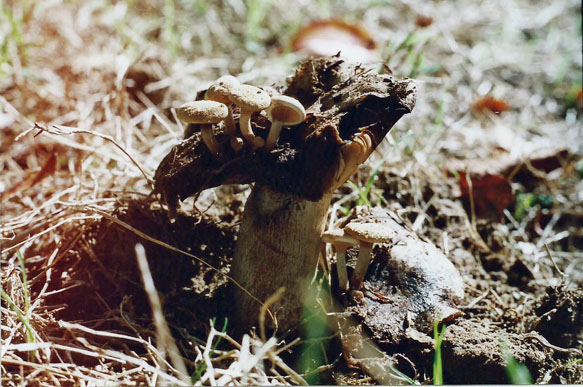
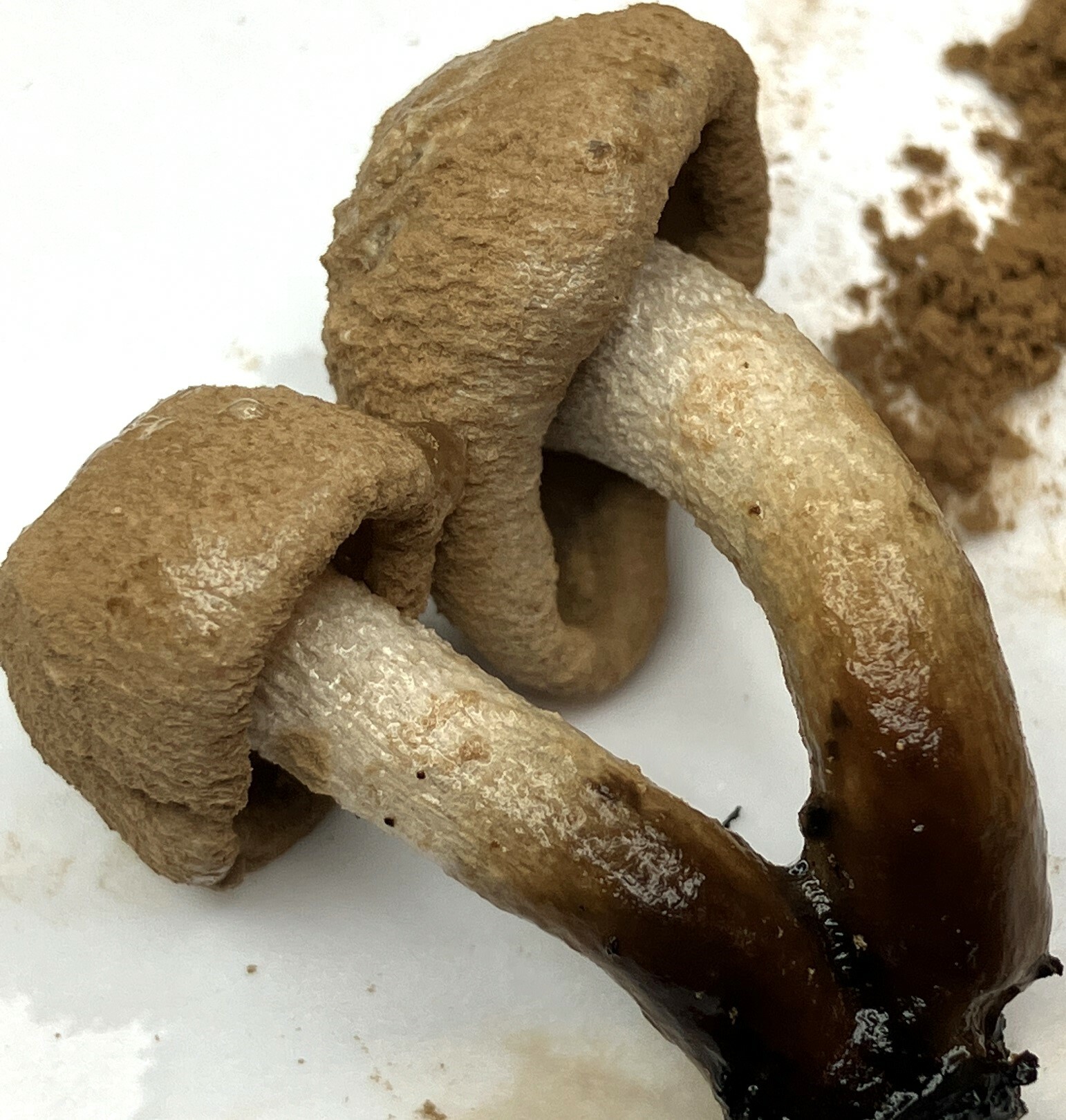
Asterophora lycoperdoides, commonly known as the star bearer, or powdery piggyback mushroom,[2] is a species of fungus in the Lyophyllaceae family. It grows as a parasite, mostly on Russula species, and is found in North America and Europe.[3]
Taxonomy
[edit]The species was first named as Agaricus lycoperdonoides by French mycologist Jean Baptiste Francois Pierre Bulliard in 1784.
Description
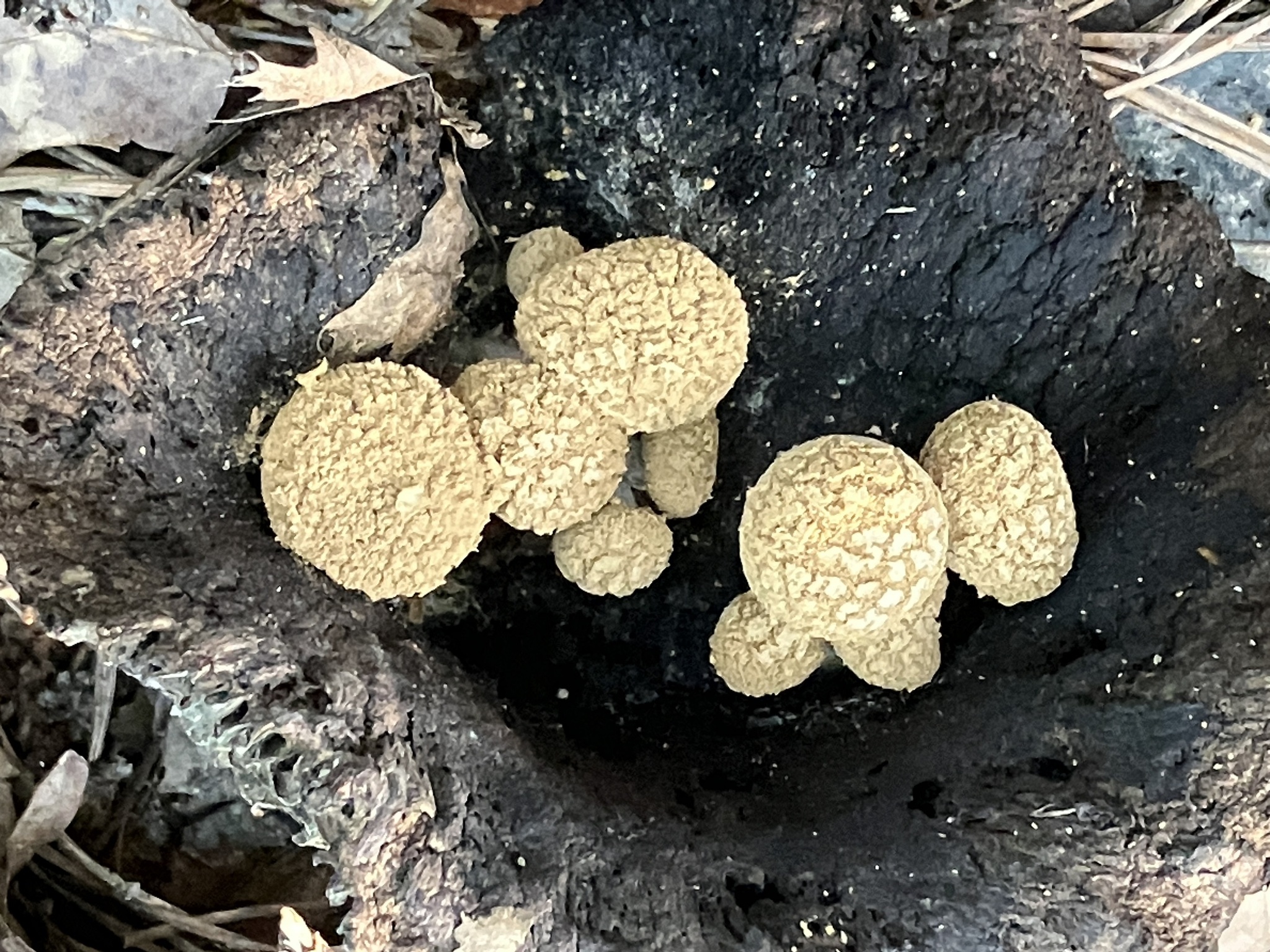
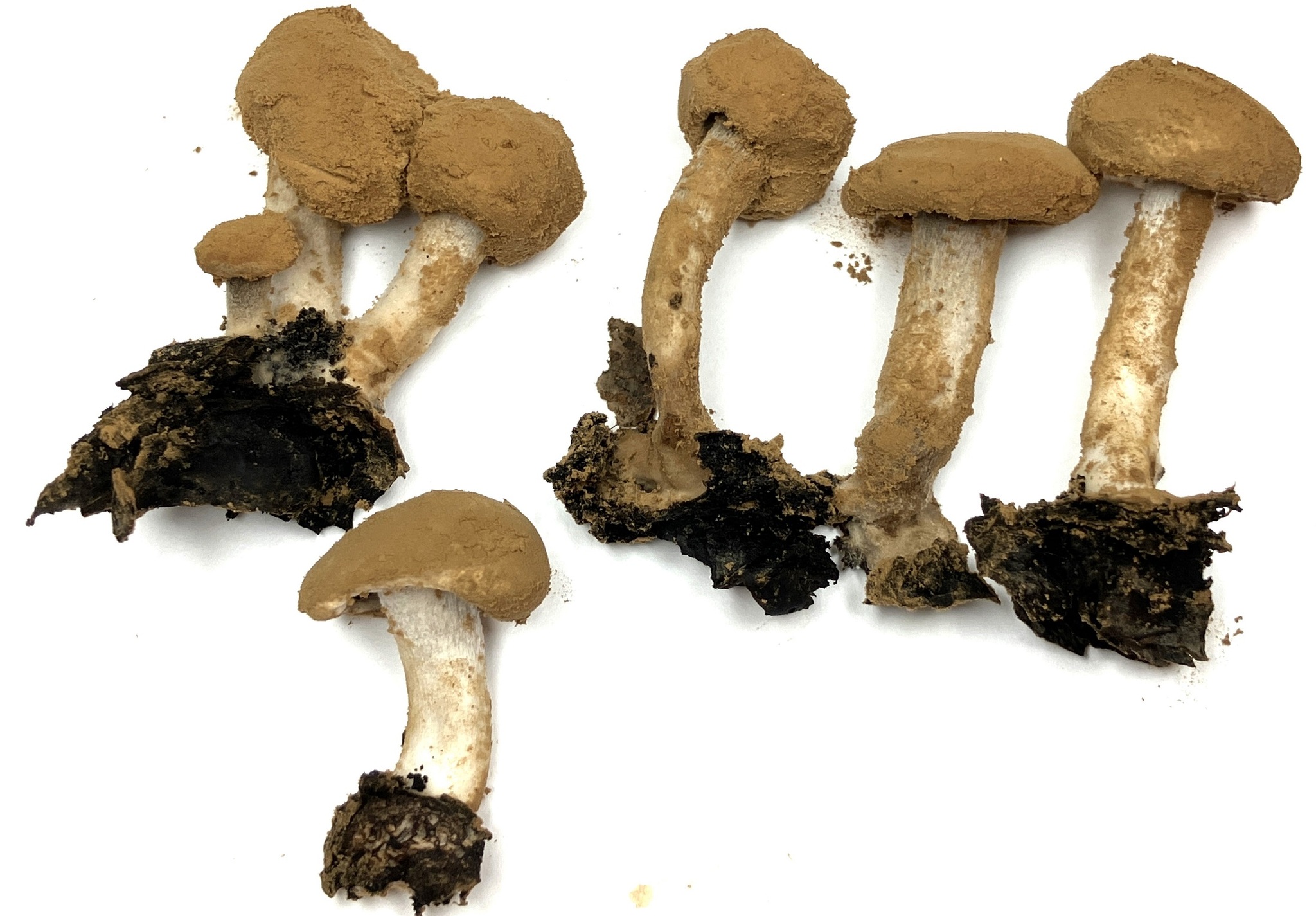
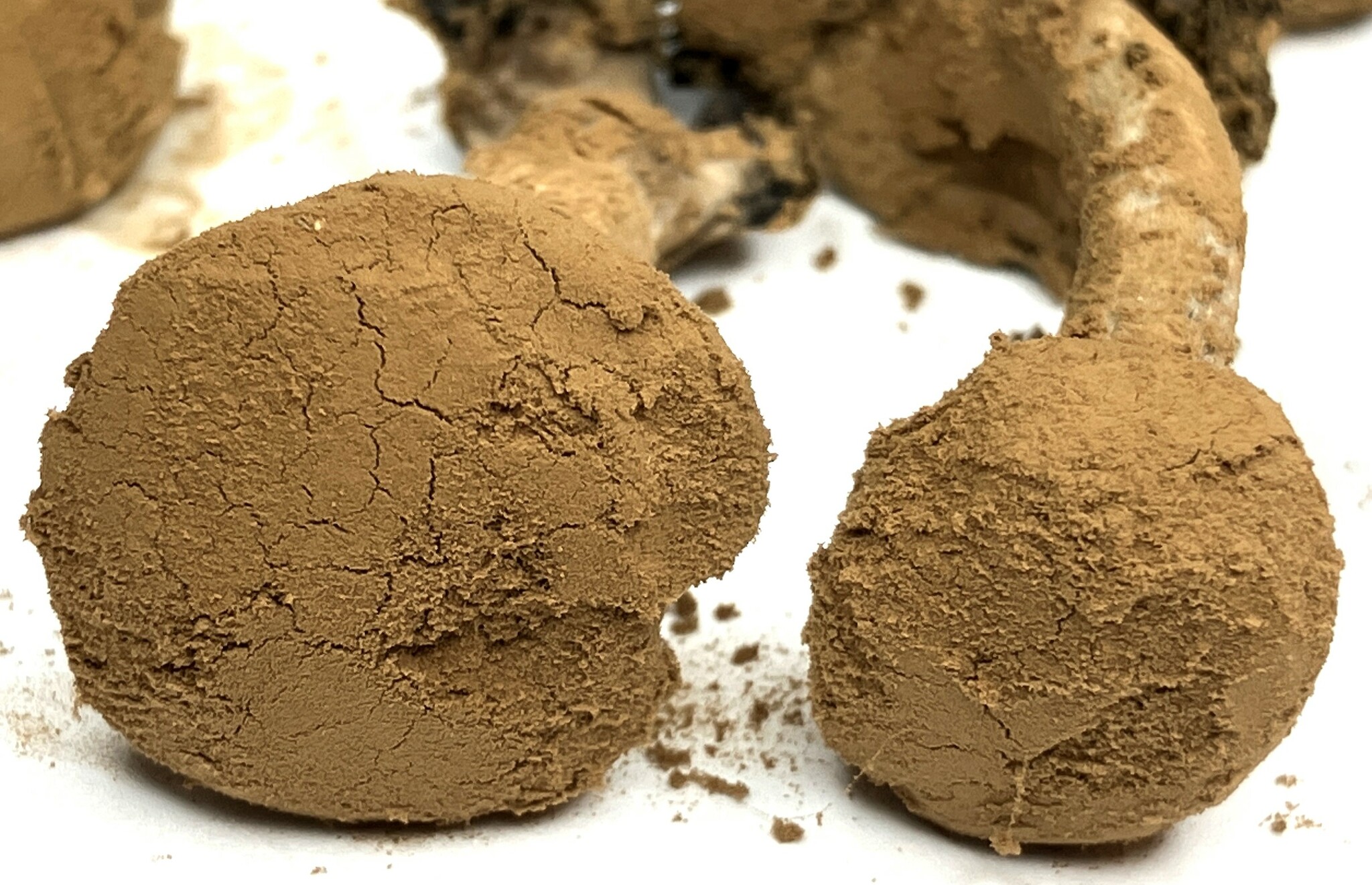
[edit]The cap is white but soon covered in brown powder, growing up to 2 centimetres (3⁄4 in) wide.[4] The gills are adnate and fairly distant, sometimes forked. The stems are up to 5 cm (2 in) long.[4]
Asexual spores are produced on the mushrooms cap which enable the organism to clone itself easily. The spores, called chlamydospores,[3] are star-shaped, hence the name 'star bearer'. It is regarded as nonpoisonous but inedible.[5][6]
Asterophora parasitica is similar but has more conic caps, its gills are typically more developed, and its chlamydospores are fusiform rather than star-shaped.[7]
Habitat and distribution
[edit]It grows as a parasite on other mushrooms, mainly those in the genus Russula.[4] It can be found from July to September in eastern North America, somewhat later on the West Coast.[4] It can be found August to November in temperate Europe, and can be locally common.[3]
References
[edit]- ^ "Asterophora lycoperdoides (Bull.) Ditmar 1809". MycoBank. International Mycological Association. Retrieved 2010-12-23.
- ^ "Asterophora lycoperdoides, Powdery Piggyback mushroom". first-nature.com. Retrieved 2023-09-11.
- ^ a b c Laessoe, Thomas; Petersen, Jens H. (2019). Fungi of Temperate Europe. Vol. 1. Princeton University Press. p. 281. ISBN 978-0-691-18037-3.
- ^ a b c d Audubon (2023). Mushrooms of North America. Knopf. p. 504. ISBN 978-0-593-31998-7.
- ^ Miller Jr., Orson K.; Miller, Hope H. (2006). North American Mushrooms: A Field Guide to Edible and Inedible Fungi. Guilford, CN: FalconGuide. p. 134. ISBN 978-0-7627-3109-1.
- ^ Phillips, Roger (2010) [2005]. Mushrooms and Other Fungi of North America. Buffalo, NY: Firefly Books. pp. 92–93. ISBN 978-1-55407-651-2.
- ^ Trudell, Steve; Ammirati, Joe (2009). Mushrooms of the Pacific Northwest. Timber Press Field Guides. Portland, OR: Timber Press. pp. 305–306. ISBN 978-0-88192-935-5.
External links
[edit]