

Map Snapshot


10 Records
Relationships
Citations
No citations linked for this taxon yet.
Source: Wikipedia
| Andricus dimorphus | |
|---|---|

| |
| Andricus dimorphus galls on bur oak | |
Scientific classification 
| |
| Kingdom: | Animalia |
| Phylum: | Arthropoda |
| Clade: | Pancrustacea |
| Class: | Insecta |
| Order: | Hymenoptera |
| Family: | Cynipidae |
| Genus: | Andricus |
| Species: | A. dimorphus
|
| Binomial name | |
| Andricus dimorphus (Beutenmuller, 1913)
| |
| Synonyms | |
| |
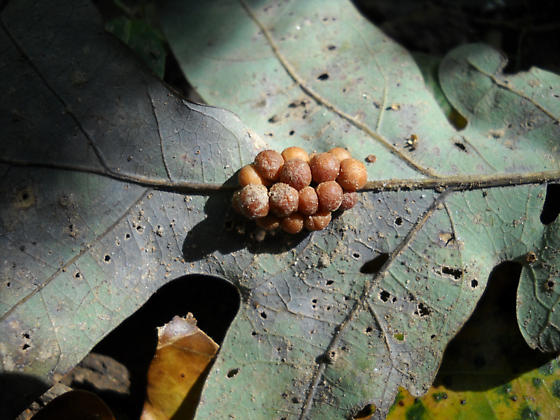
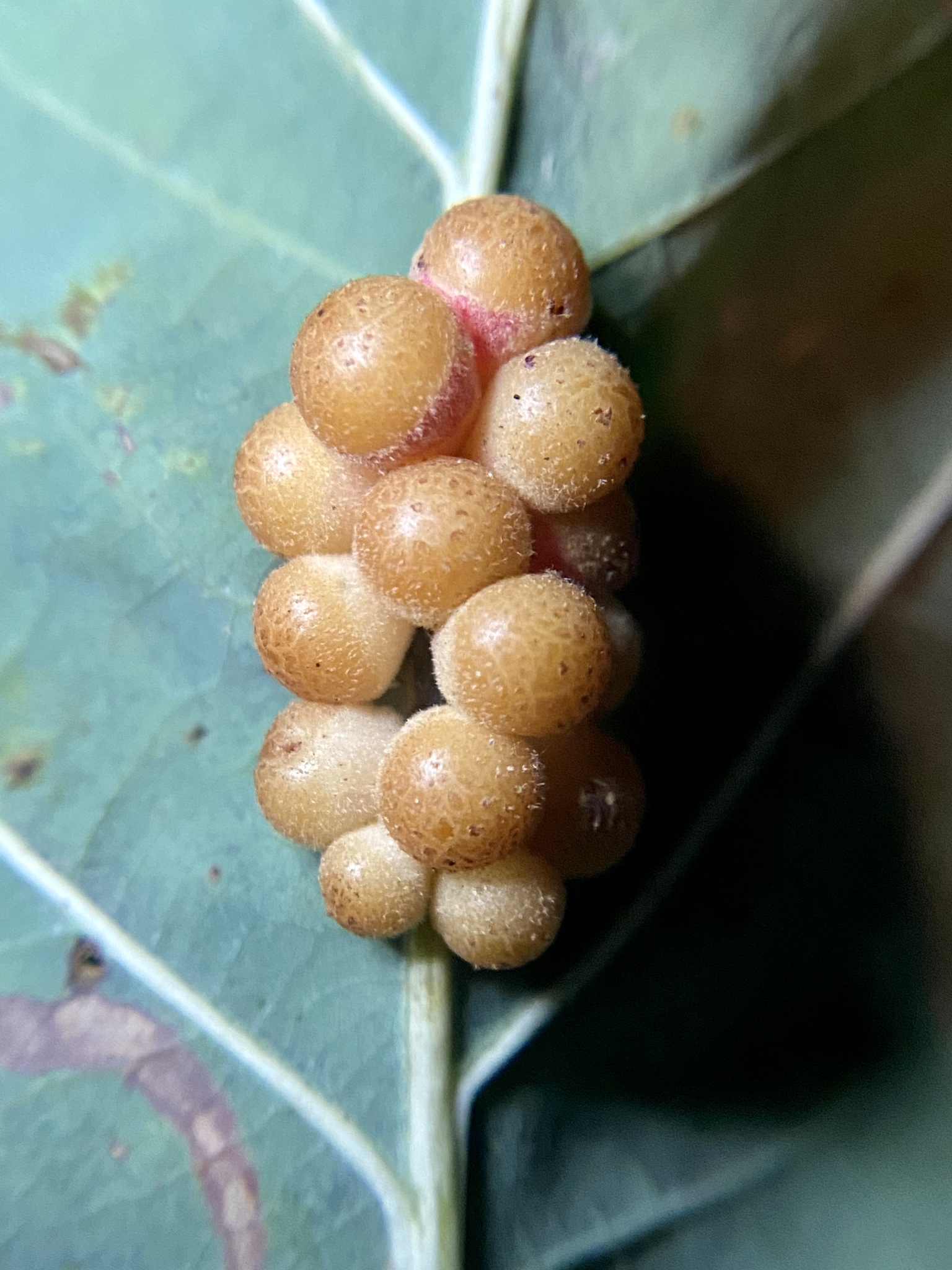
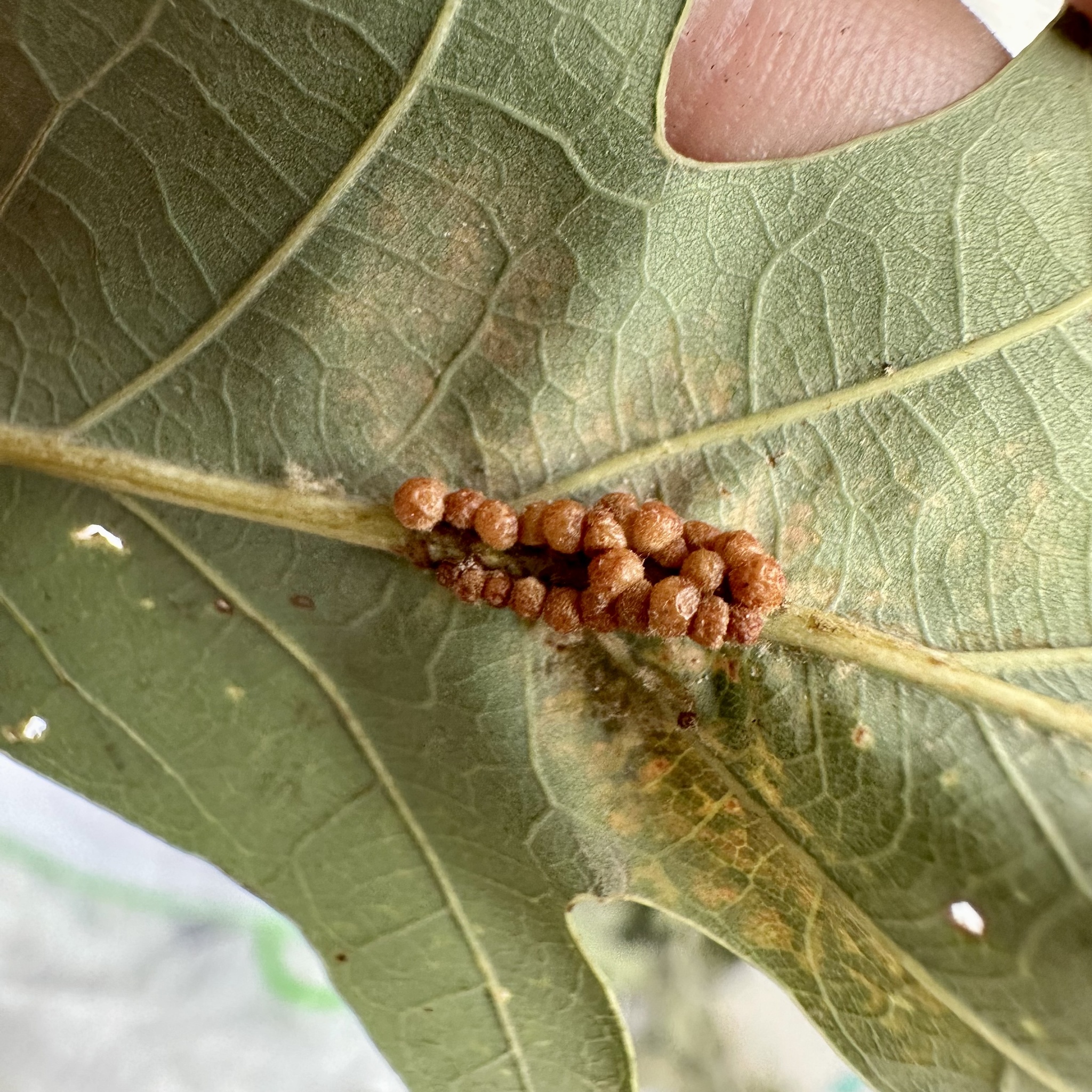
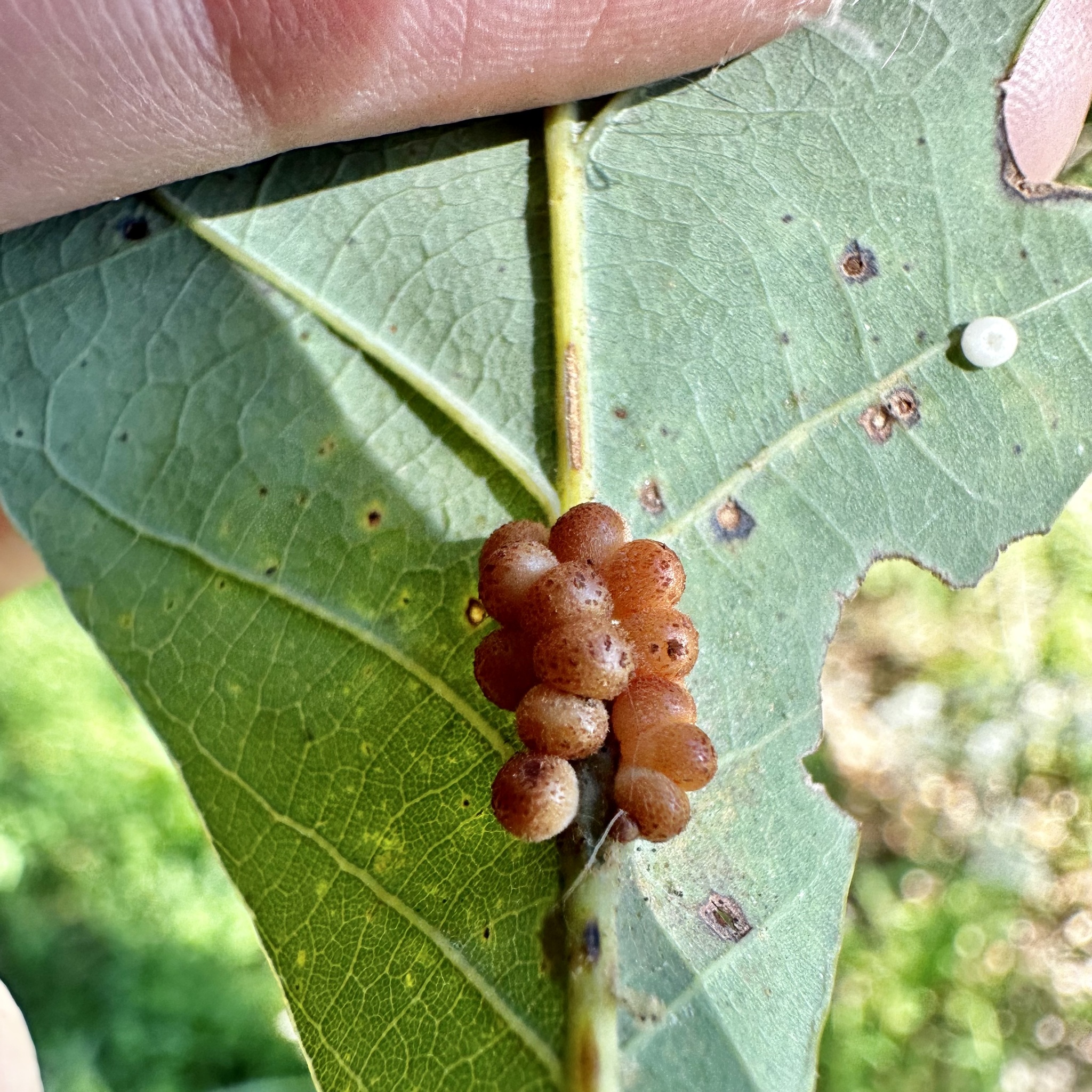
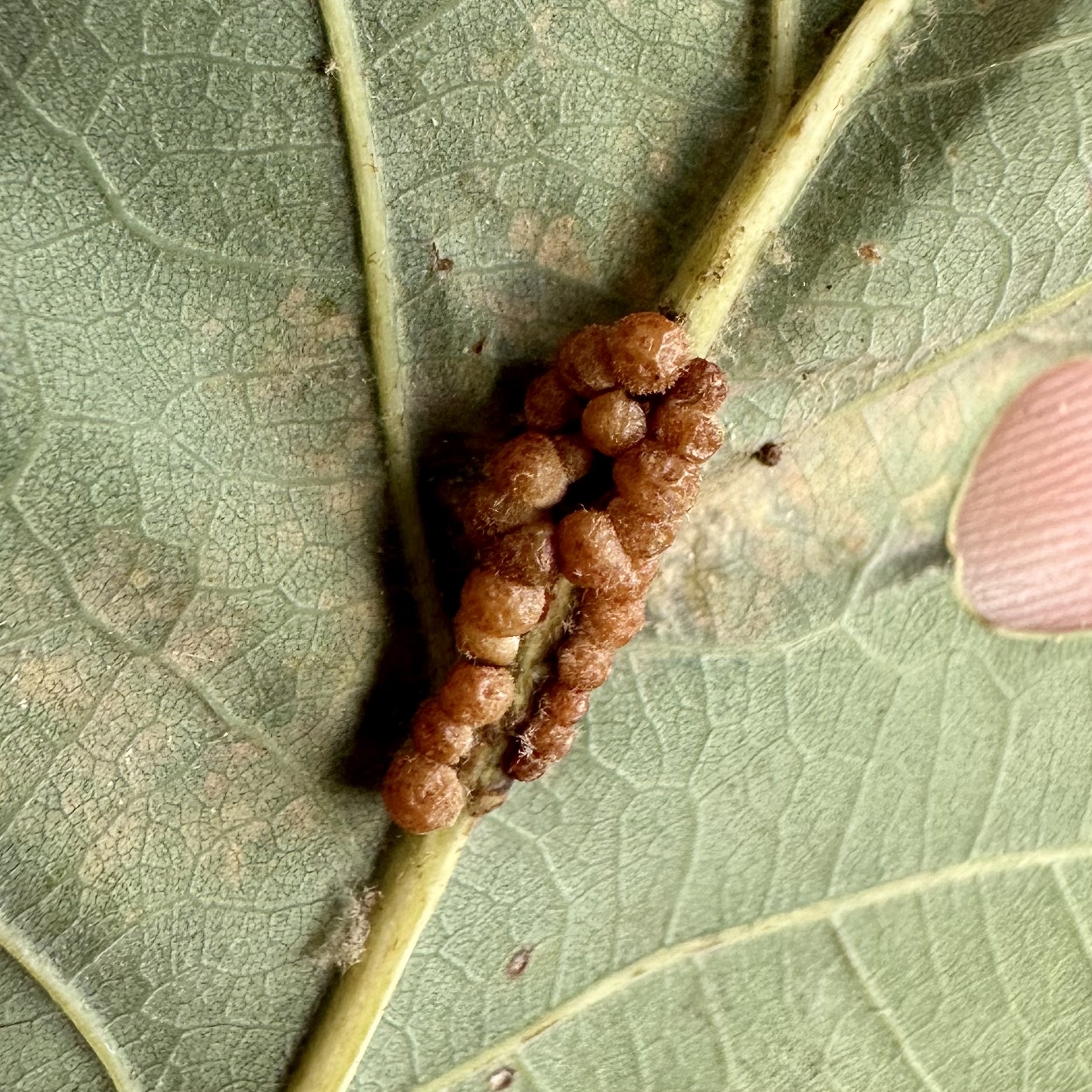
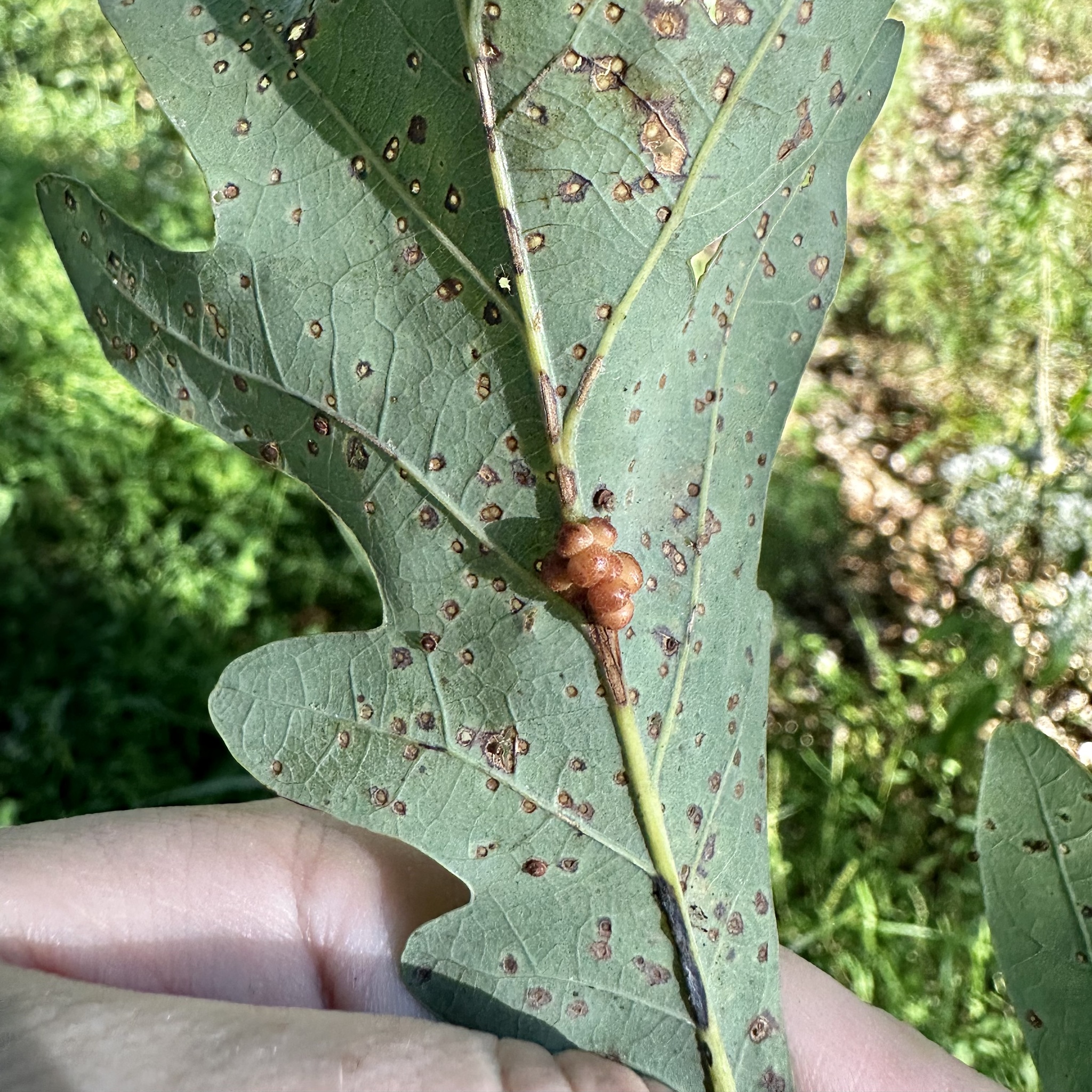
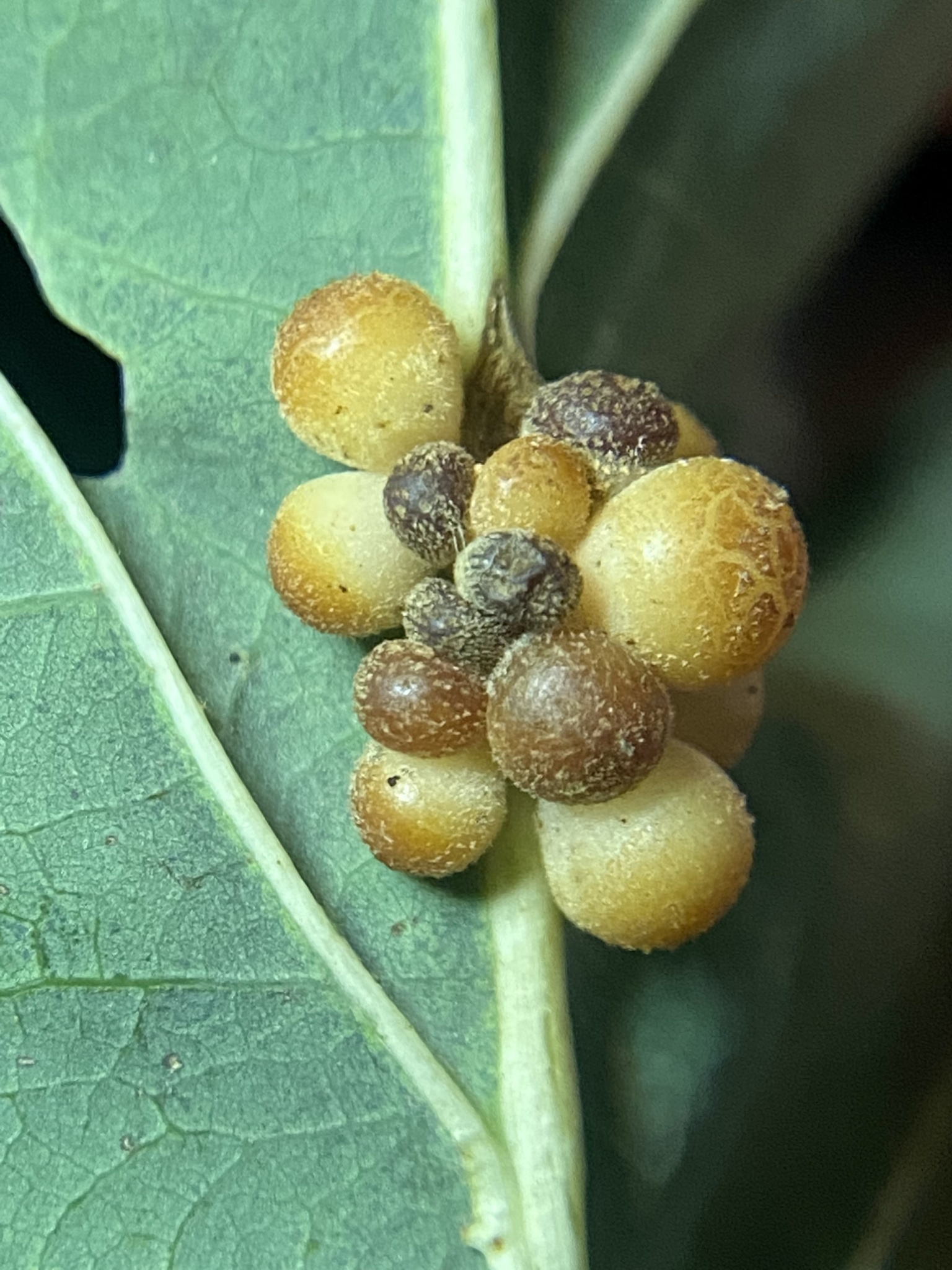
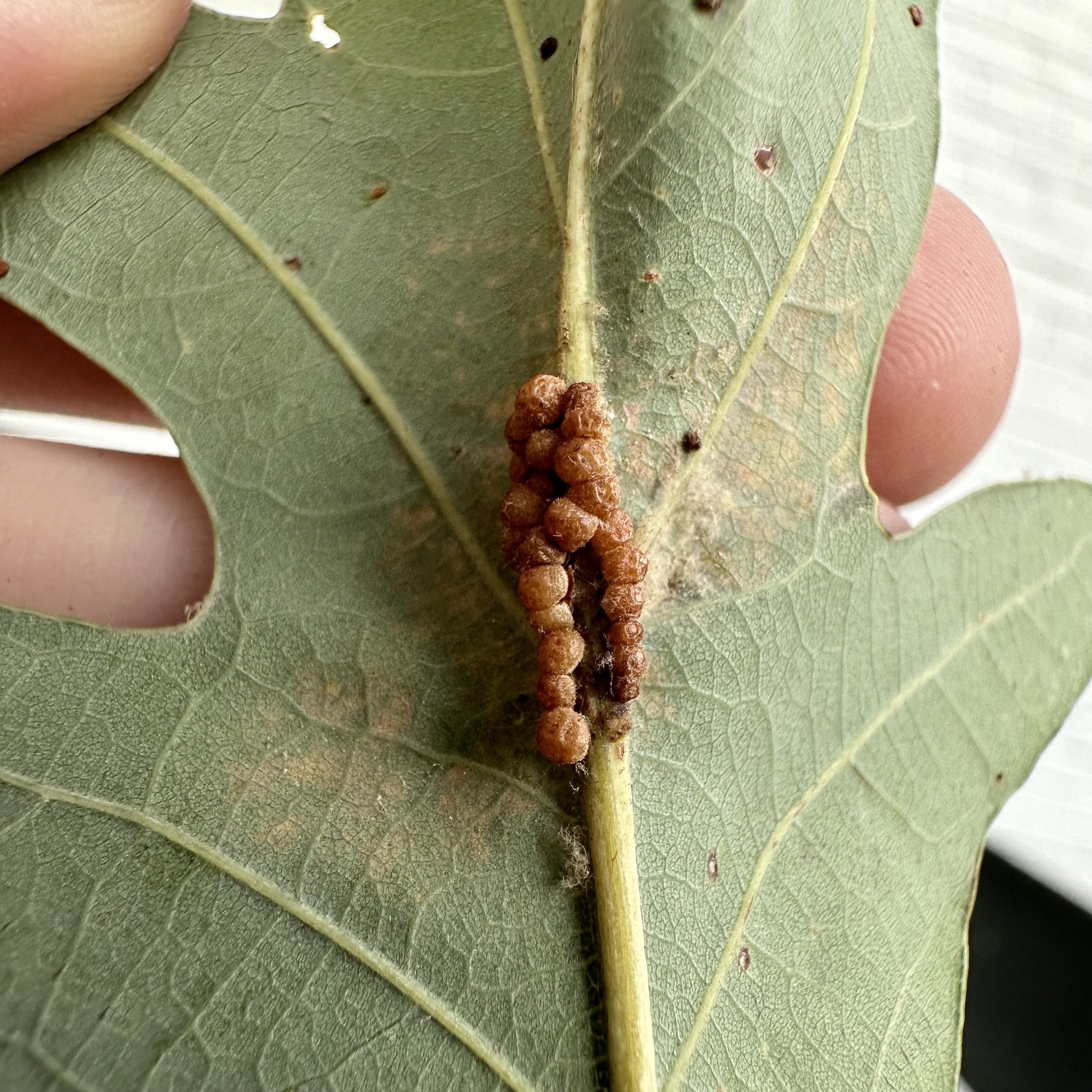
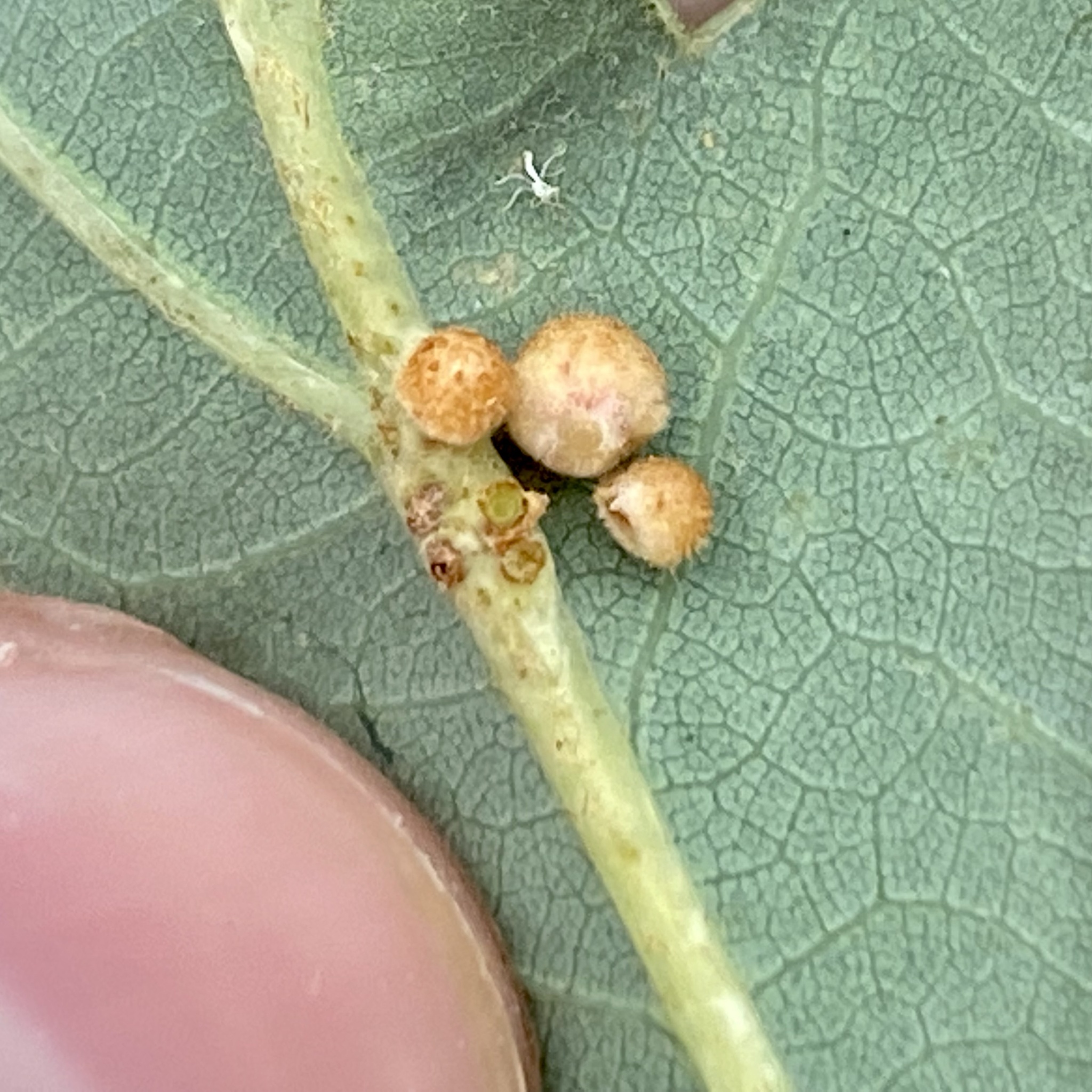
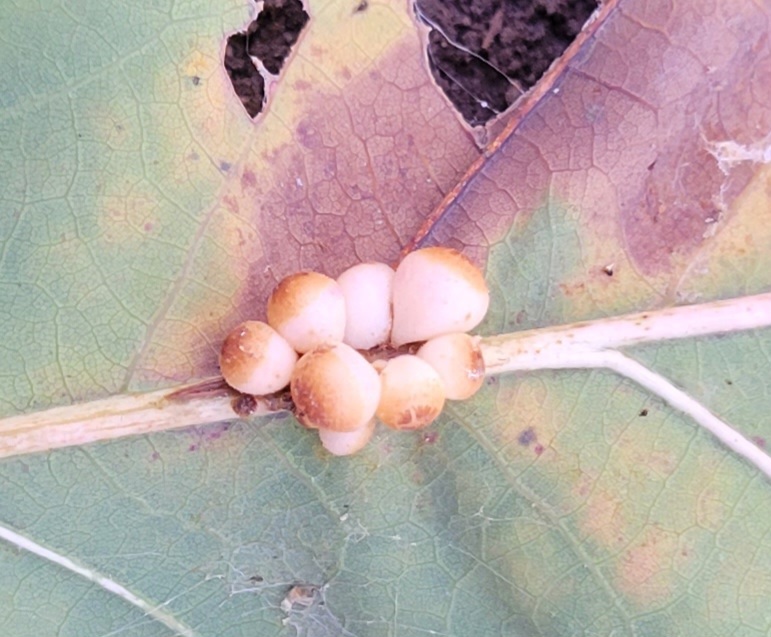
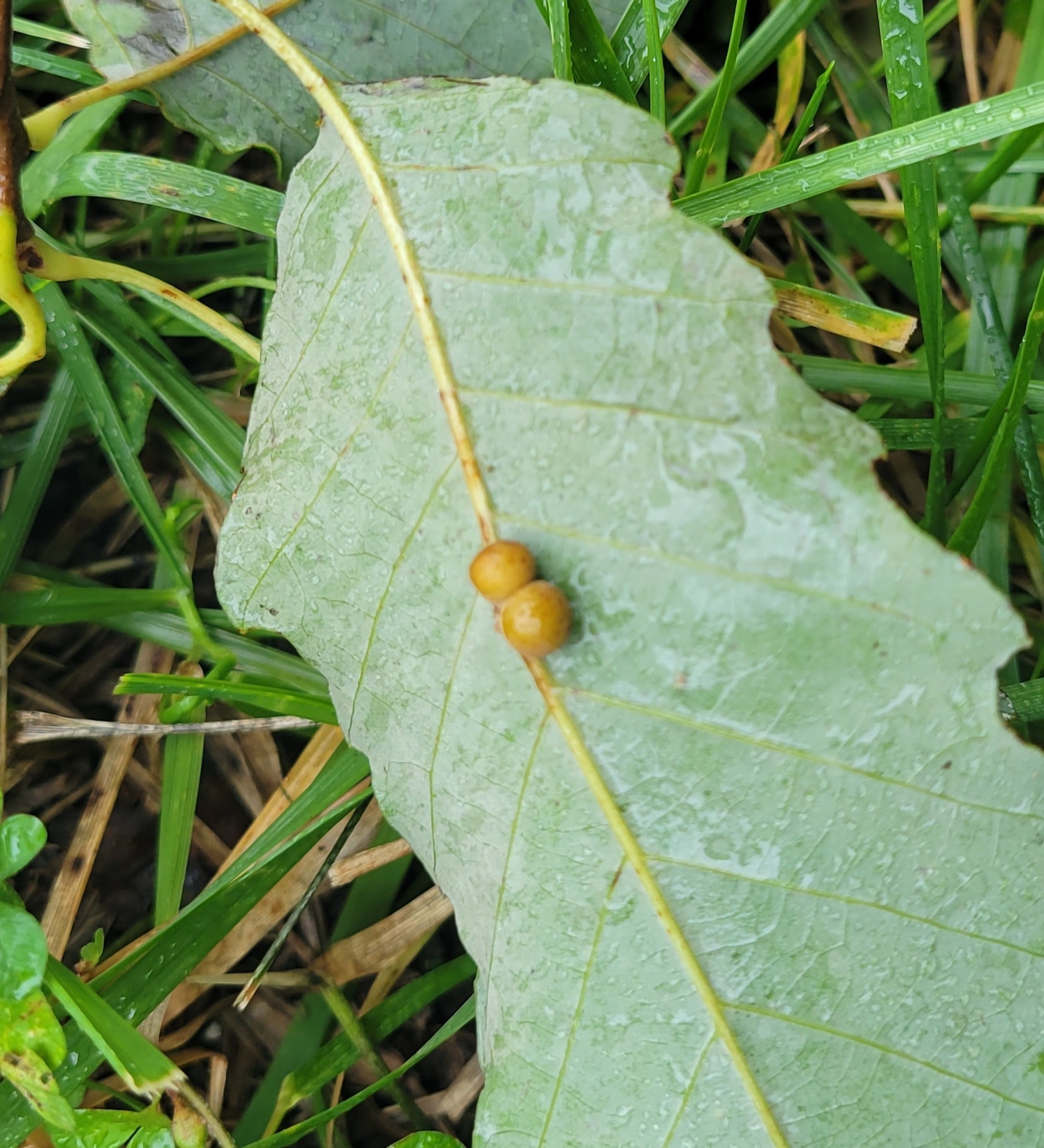
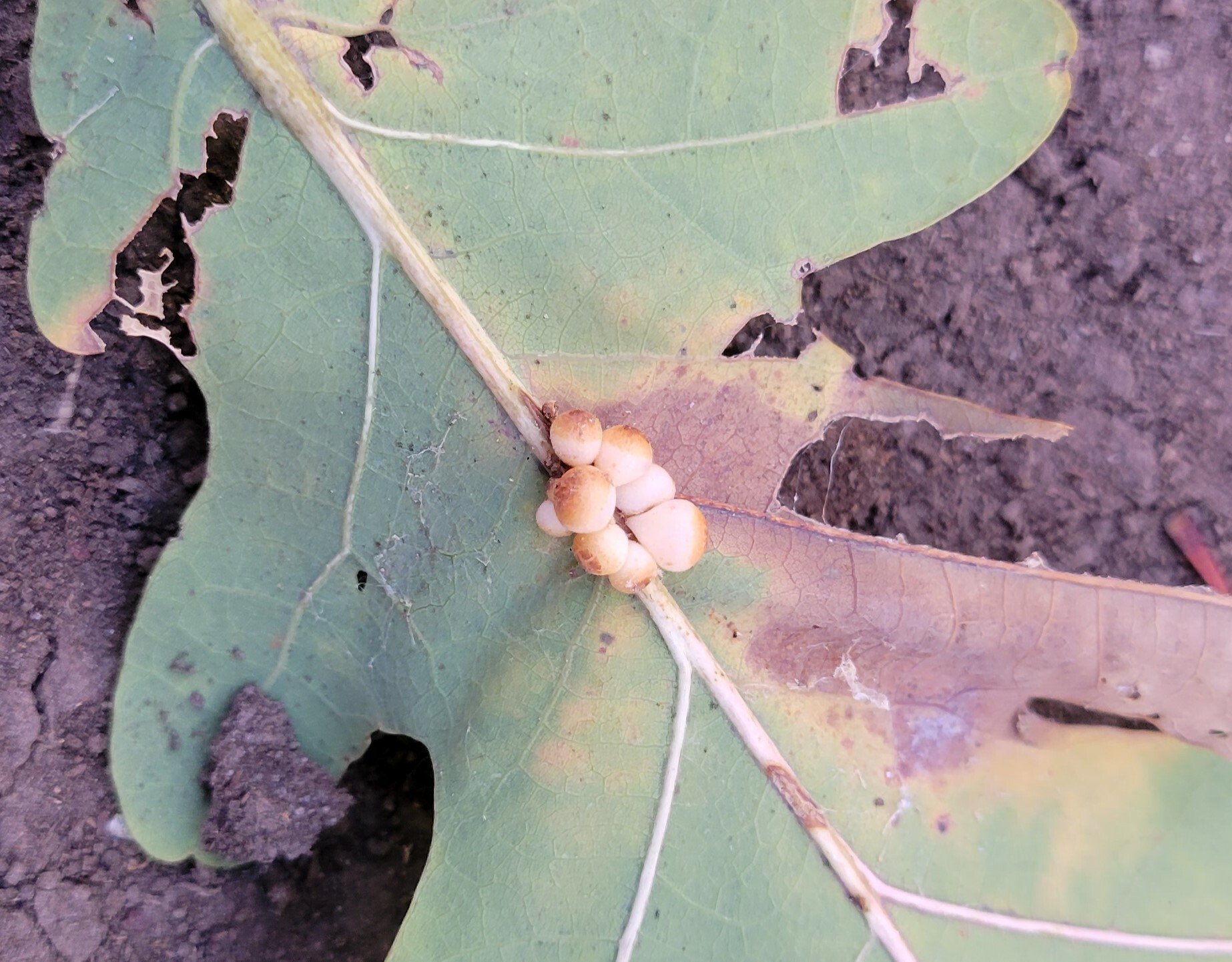
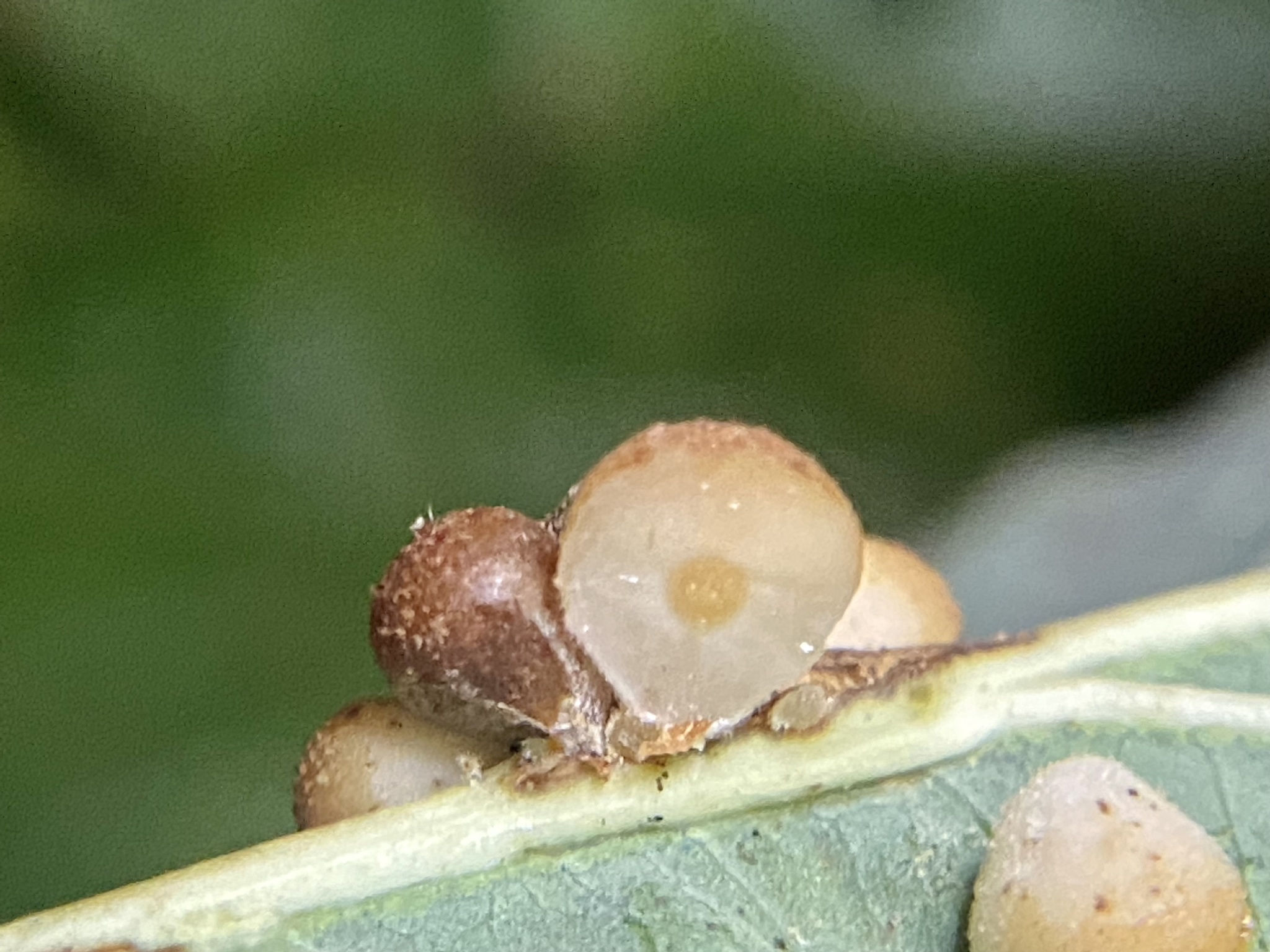
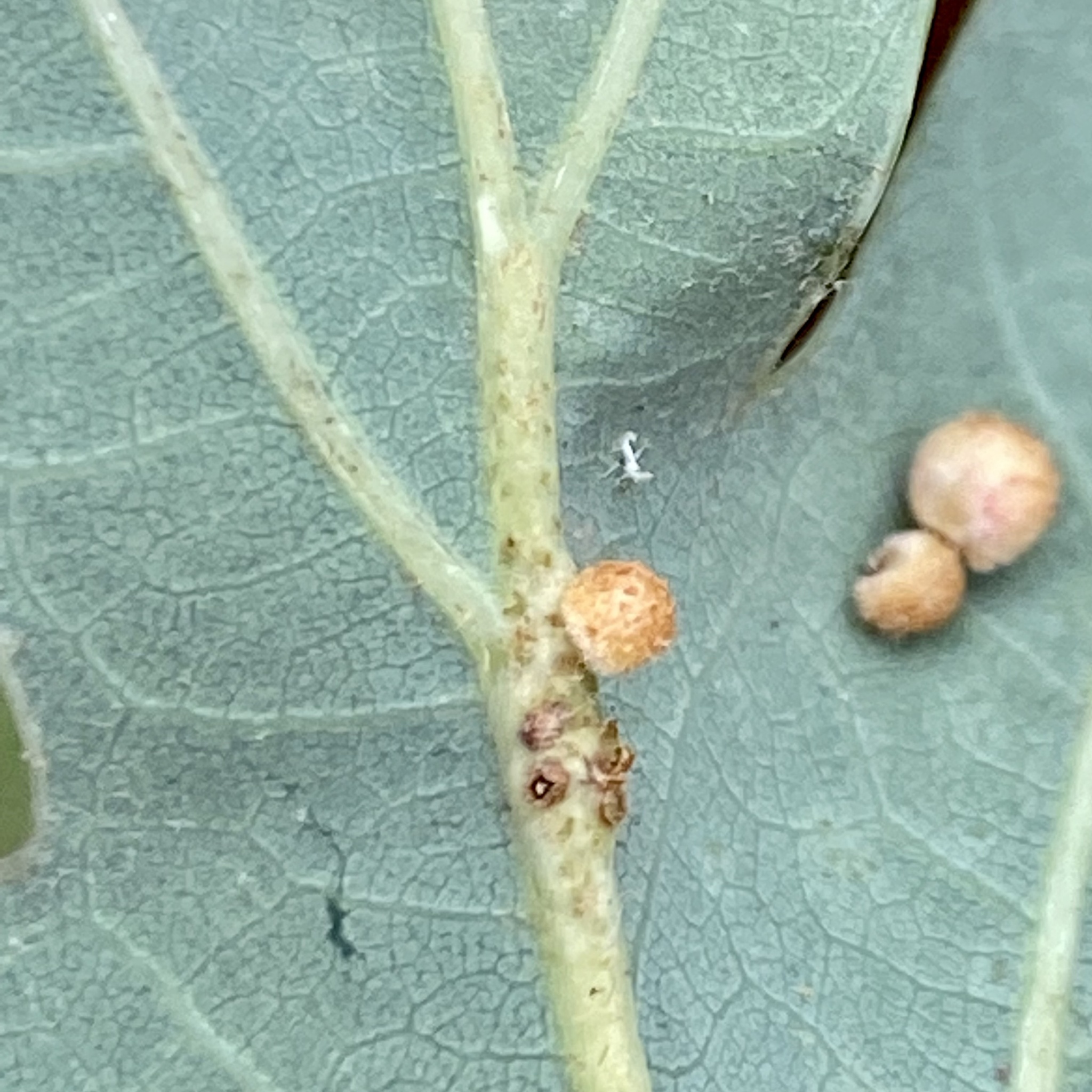
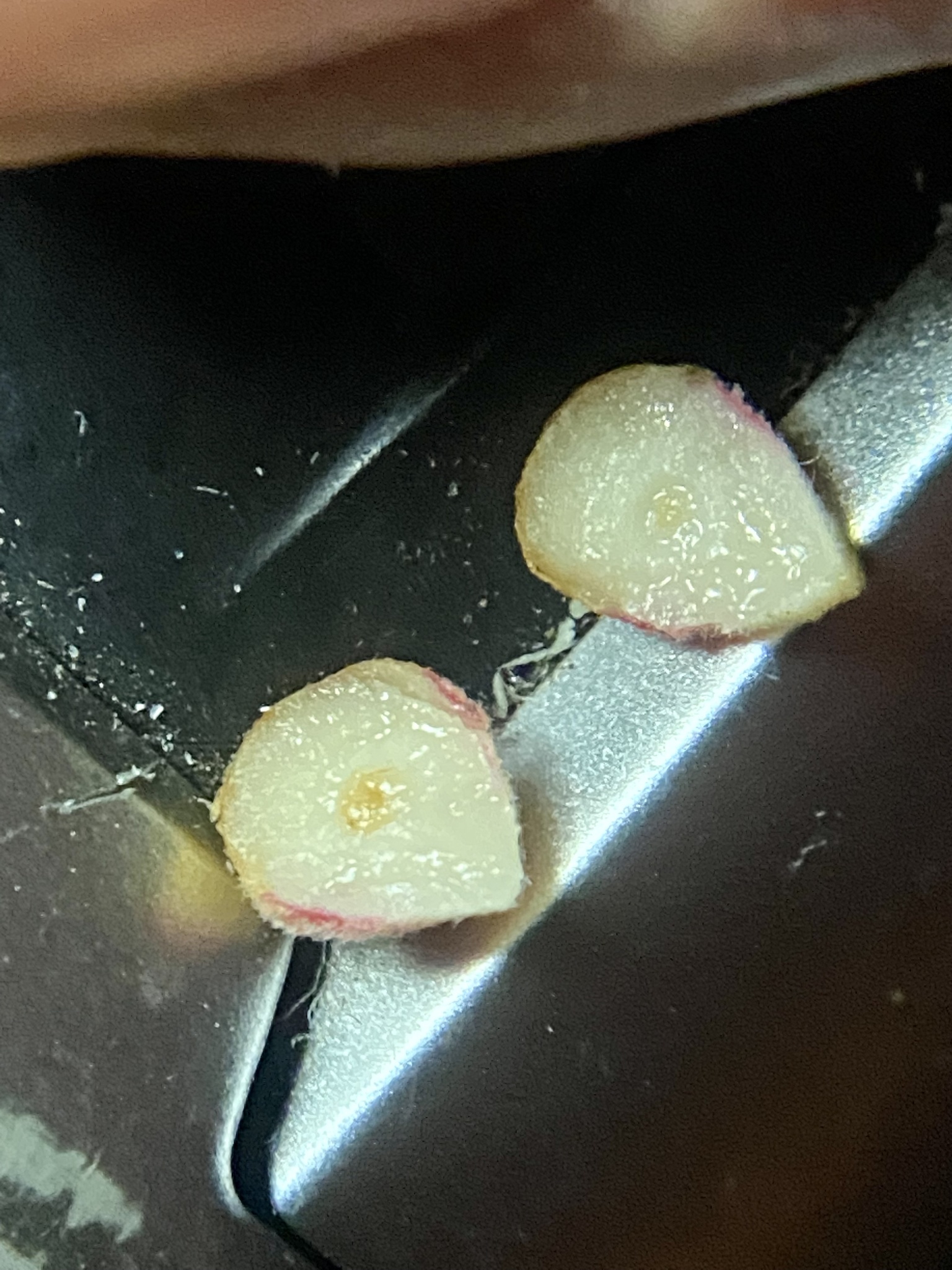
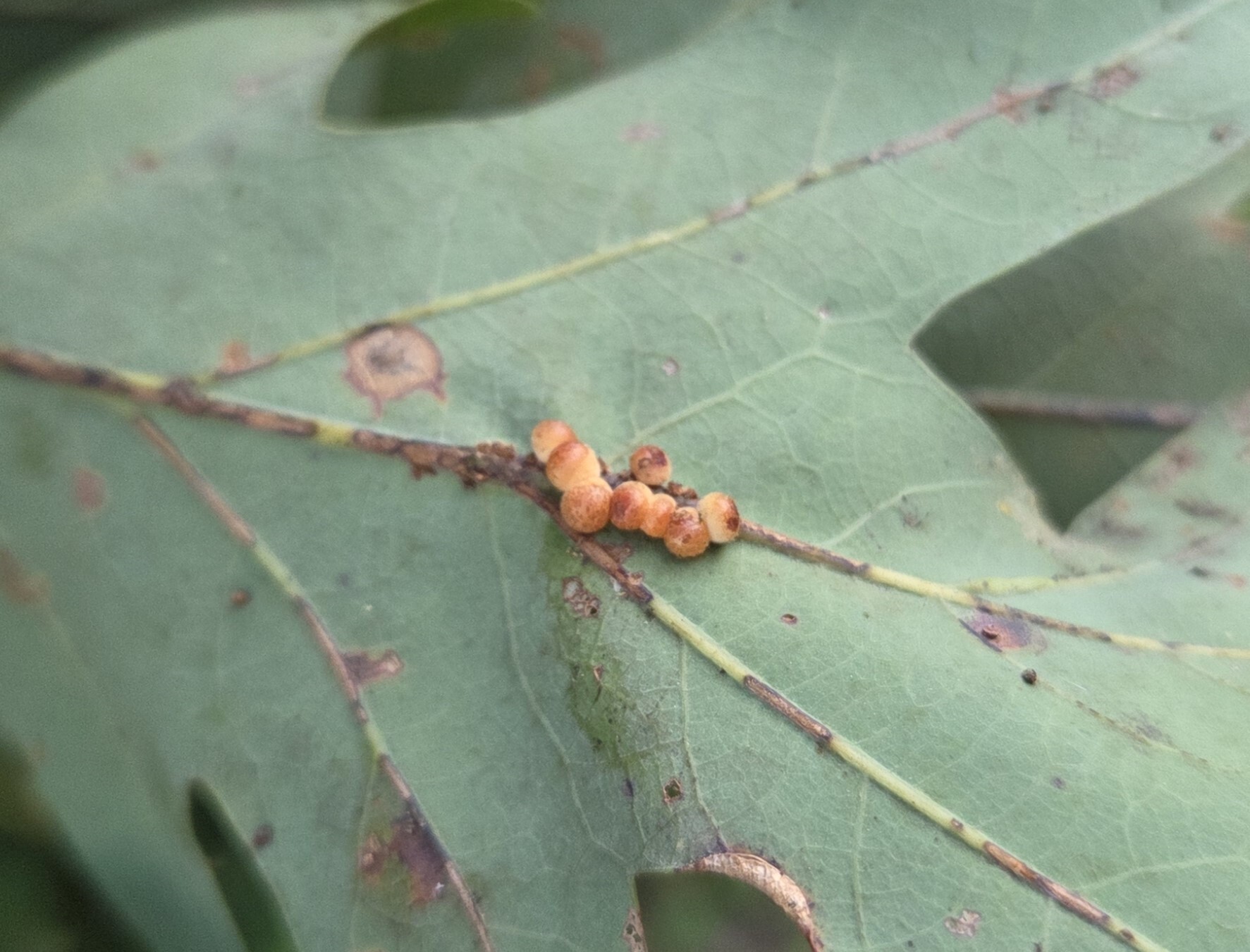
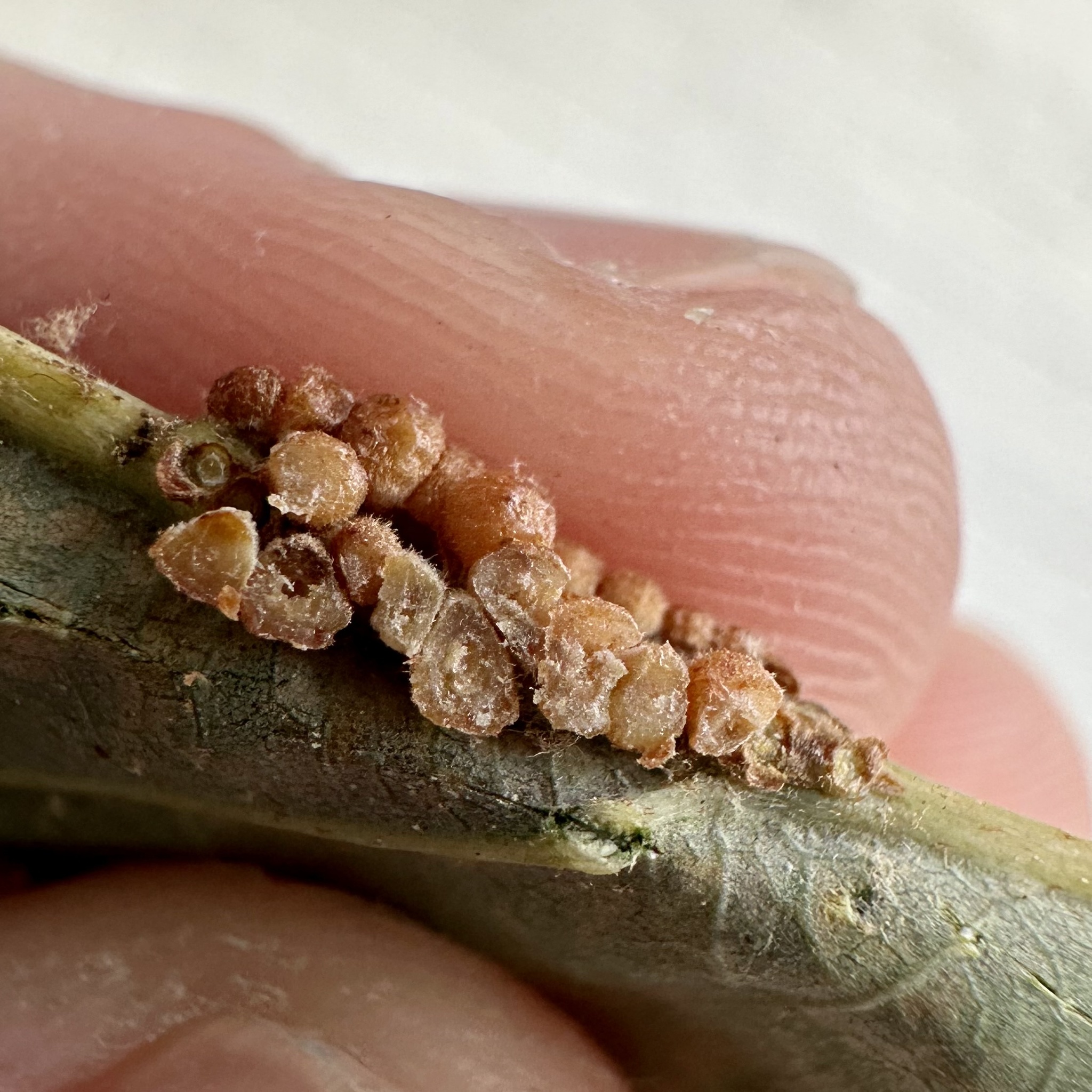
Andricus dimorphus, also called the clustered midrib gall wasp, is a species of oak gall wasp in the family Cynipidae. Galls in which the larvae live and feed are formed in clusters along the midrib on the underside of oak leaves.[1]
Range
[edit]This species has been found throughout central and eastern North America where its host species occur.[1][2][3]
Description
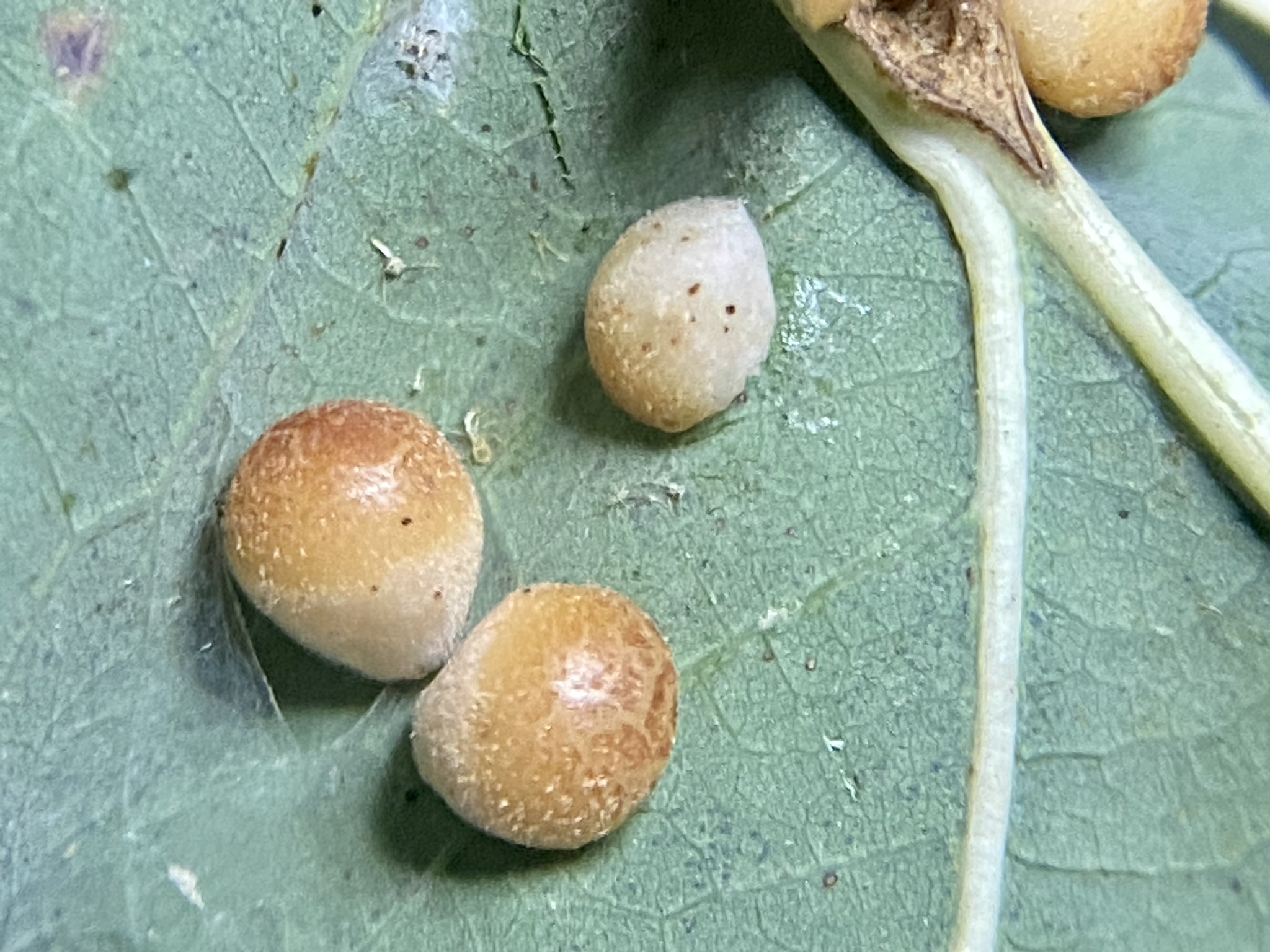
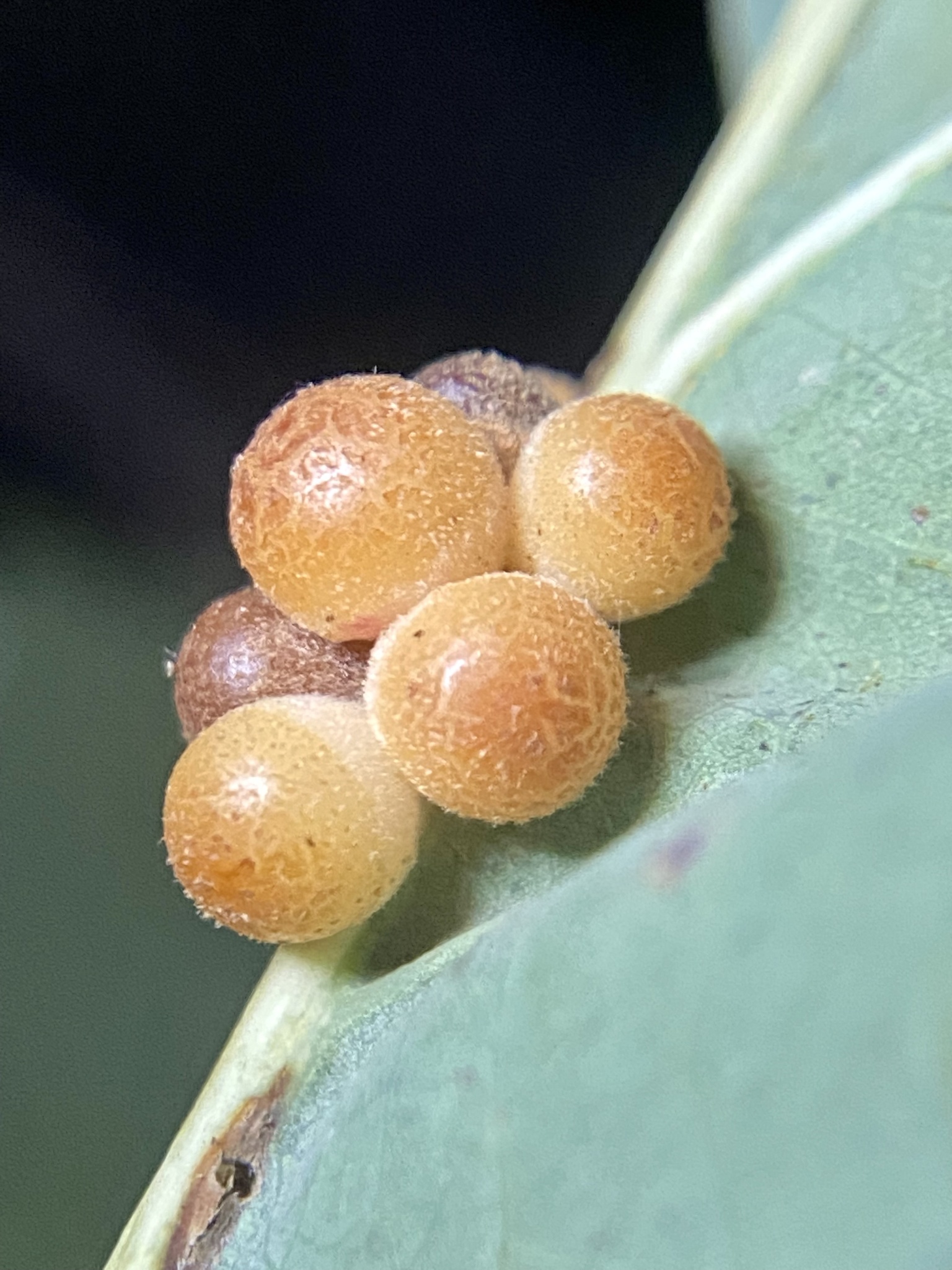
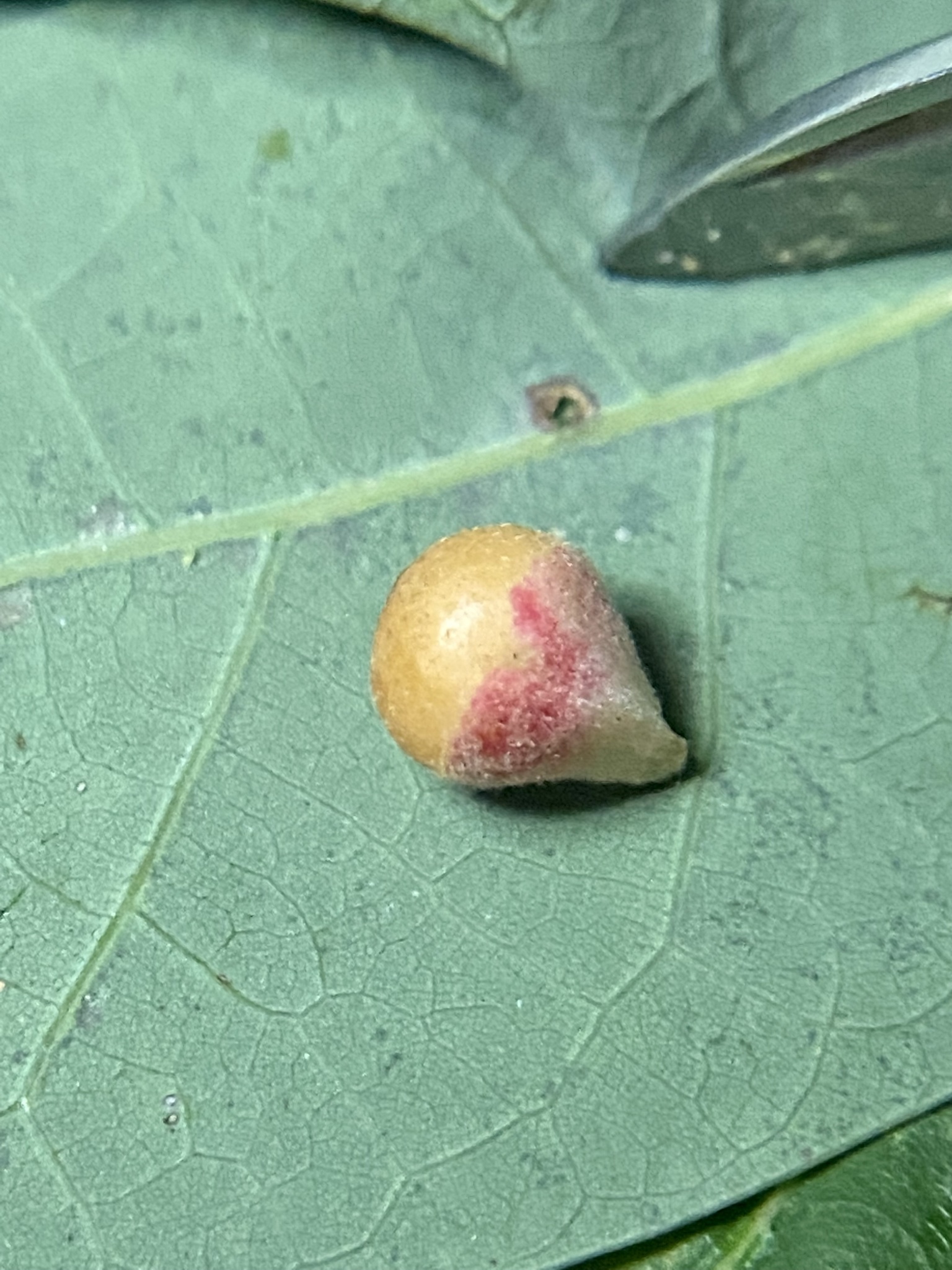
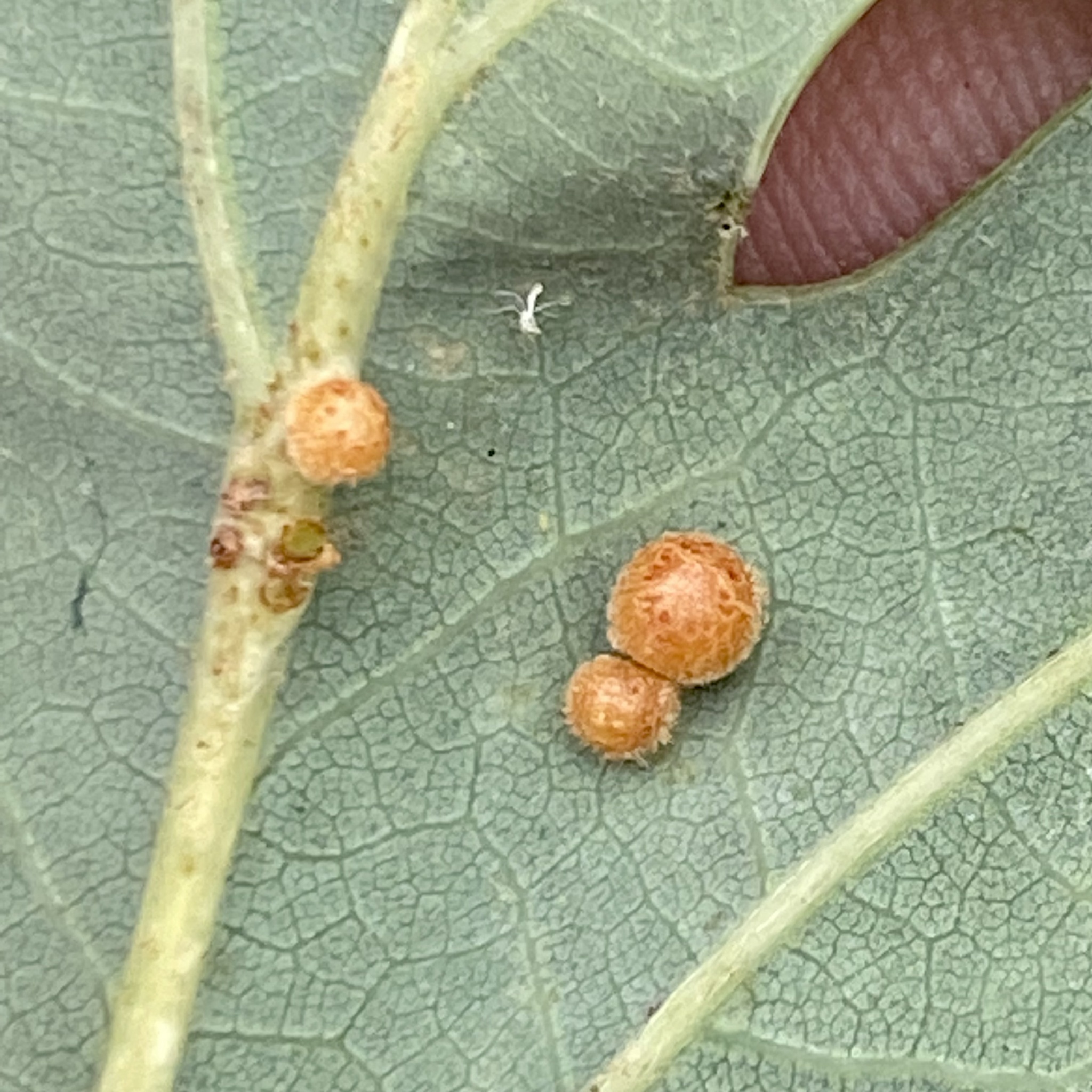
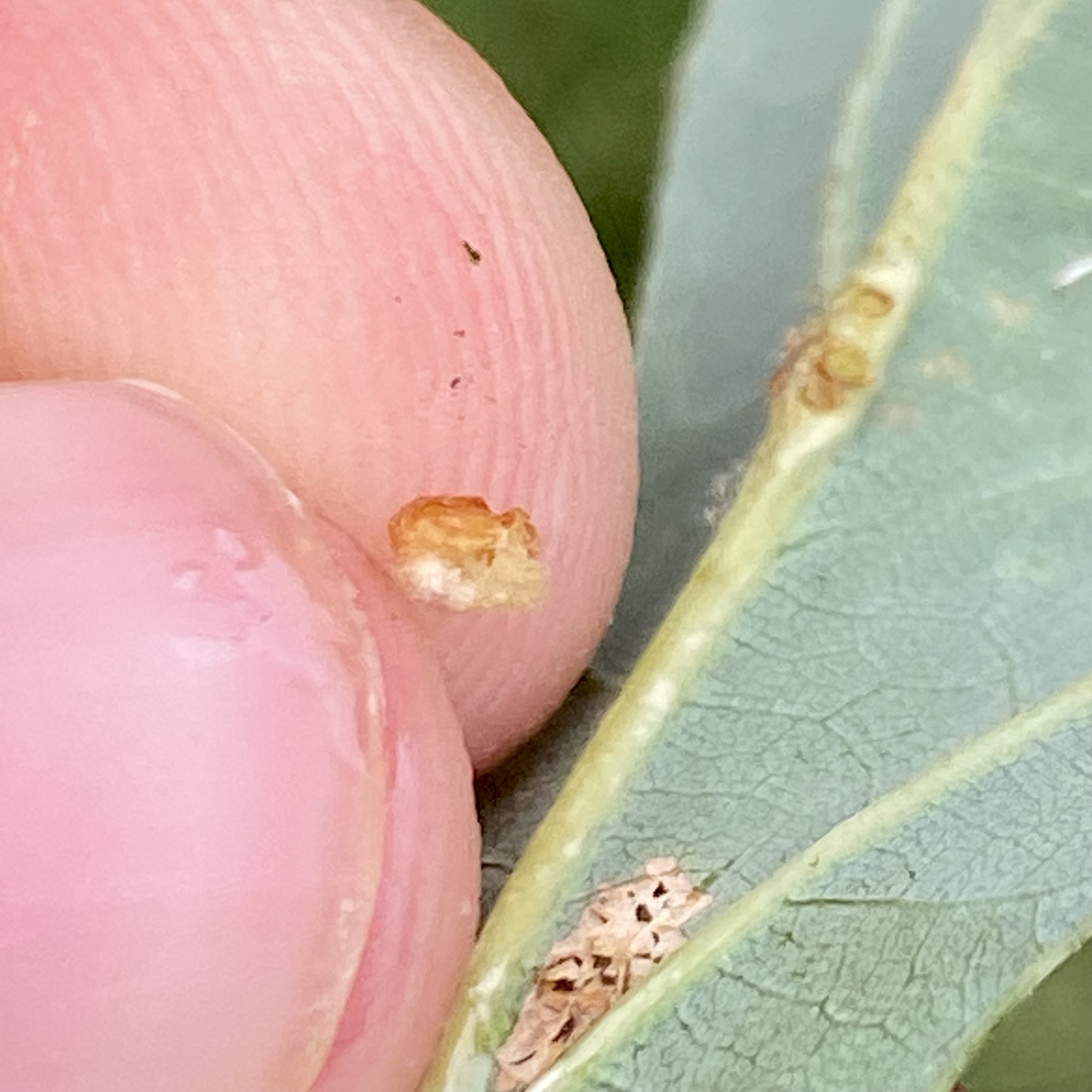
[edit]Confirmed hosts of the clustered midrib gall wasp are white oak species, including Quercus macrocarpa, Q. alba, Q. prinoides, and Q. bicolor.[1][2] Clusters of up to 50 globular (but with a pointed base), red-brown galls are formed along the midrib on the underside of leaves beginning in late summer.[1][2][3] The galls readily detach from the leaf, particularly when mature.[1][2][3] Adults emerge from the galls the following year.[2][3] Inquilines and parasitoids may inhabit the galls.[4]
Taxonomy
[edit]This species was first described by William Beutenmuller in 1913 with the name Cynips dimorphus.[2] According to Clarence Gillette, William Ashmead had already used this name by 1889 for a species that produces galls similar to those of Beutenmuller's Cynips dimorphus.[5] This species was later transferred to the genus Adleria which itself was subsequently included within Andricus.[6]
References
[edit]- ^ a b c d e Weld, L. Hart. (1959). Cynipid galls of the Eastern United States. Ann Arbor, Mich.
- ^ a b c d e f Beutenmuller, William (1913). "Descriptions of new Cynipidae". Transactions of the American Entomological Society. 39: 243–248.
- ^ a b c d Gillette, C.P. (1890). "The gall-producing Cynipidae of Iowa". Proceedings of the Iowa Academy of Sciences. 1: 110–114.
- ^ Ward, Anna K. G.; Sheikh, Sofia I.; Forbes, Andrew A. (2020-11-01). "Diversity, Host Ranges, and Potential Drivers of Speciation Among the Inquiline Enemies of Oak Gall Wasps (Hymenoptera: Cynipidae)". Insect Systematics and Diversity. 4 (6). doi:10.1093/isd/ixaa017.
- ^ Gillette, C. P. (1889). "Notes on Certain Cynipidae With Descriptions of New Species". Psyche: A Journal of Entomology. 5 (156): 183–188. doi:10.1155/1889/26024.
- ^ Melika, G. & Abrahamson, W.G. (2002) Review of the World Genera of Oak Cynipid Wasps (Hymenoptera: Cynipidae: Cynipini). In: Melika, G. & Thuróczy, C. (Eds.), Parasitic Wasps: Evolution, Systematics, Biodiversity and Biolog-ical Control. International Symposium: “Parasitic Hymenoptera: Taxonomy and Biological Control” (14–17 May 2001, Kõszeg, Hungary). Agroinform, Budapest, pp. 150–190.