

Map Snapshot


8 Records
Description
Where To Find
Citations
No citations linked for this taxon yet.
Source: Wikipedia
| Rhizomarasmius pyrrhocephalus | |
|---|---|
_R.H._Petersen_330892.jpg)
| |
Scientific classification 
| |
| Kingdom: | Fungi |
| Division: | Basidiomycota |
| Class: | Agaricomycetes |
| Order: | Agaricales |
| Family: | Physalacriaceae |
| Genus: | Rhizomarasmius |
| Species: | R. pyrrhocephalus
|
| Binomial name | |
| Rhizomarasmius pyrrhocephalus (Berk.) R.H.Petersen (2000)
| |
Rhizomarasmius pyrrhocephalus is a taxon of fungus. It serves as the type species of its genus.
Taxonomy
[edit]The genus Rhizomarasmius was split from Marasmius due to morphological differences such as the cystidia and the rooting stipe (hence the prefix rhizo).[1] Rhizomarasmius pyrrhocephalus is the type species.
Etymology
[edit]The genus name is a combination of the prefix Rhizo, from the Ancient Greek ῥίζα (rhíza, "root"), and the Greek marasmos (μαρασμός; "drying out; withering").[2]
The specific epithet combines the Ancient Greek pyrrho (πῦρ • pyr; "fire")[3] and cephalus ("head").[4]
Description
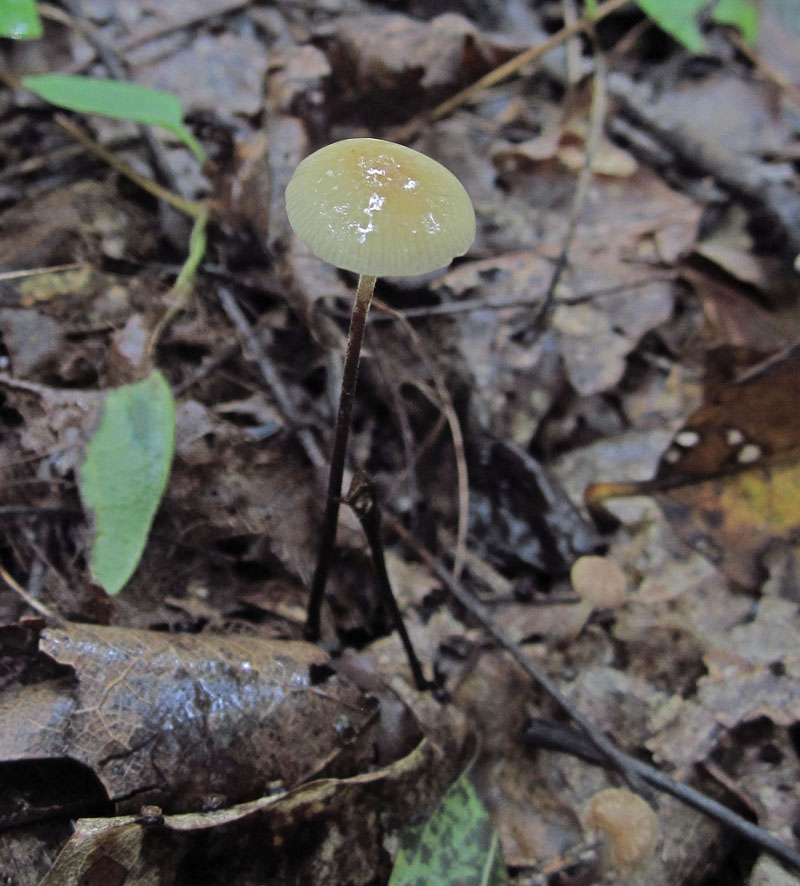
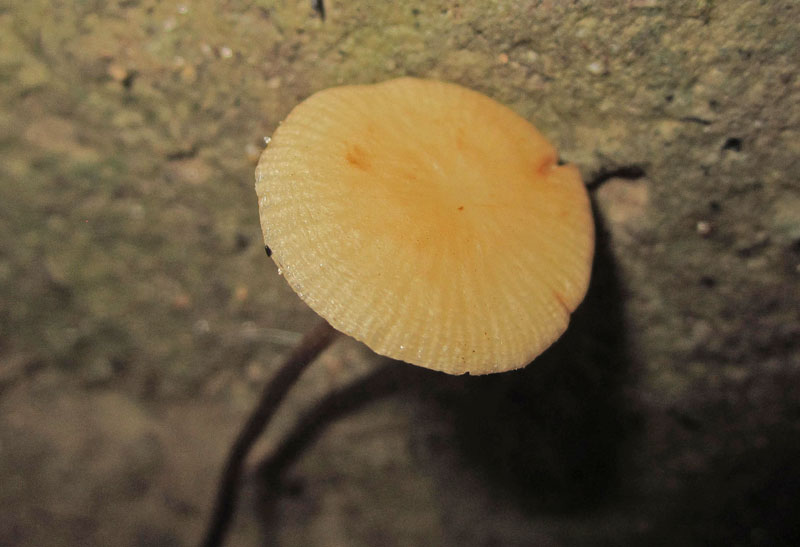
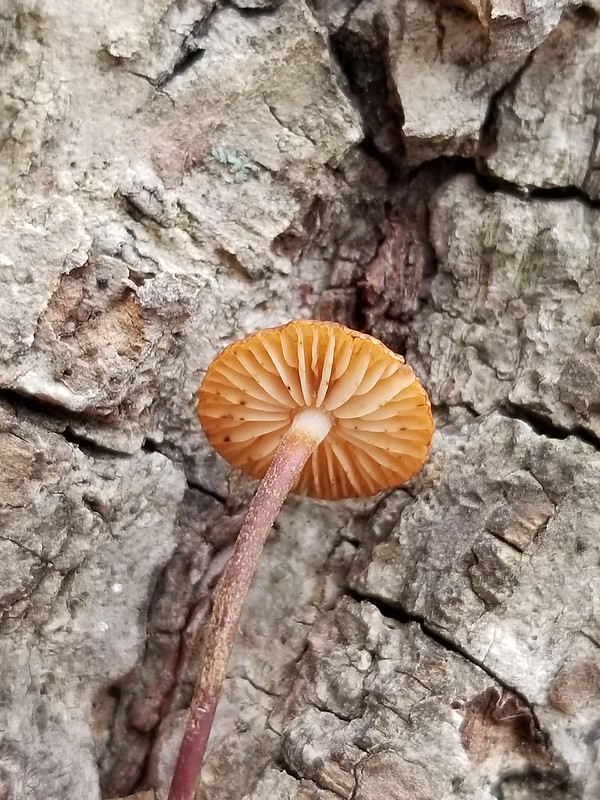
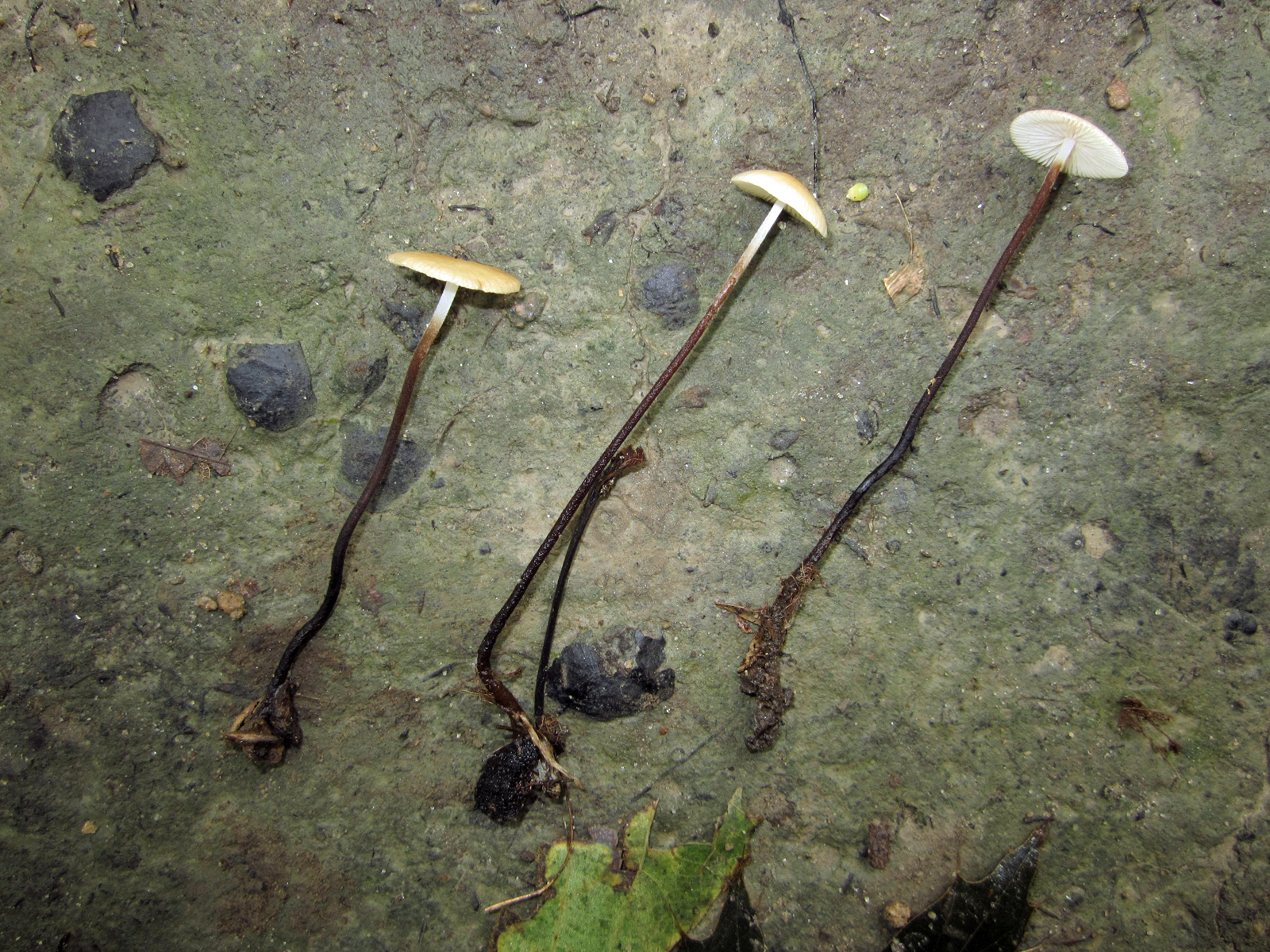
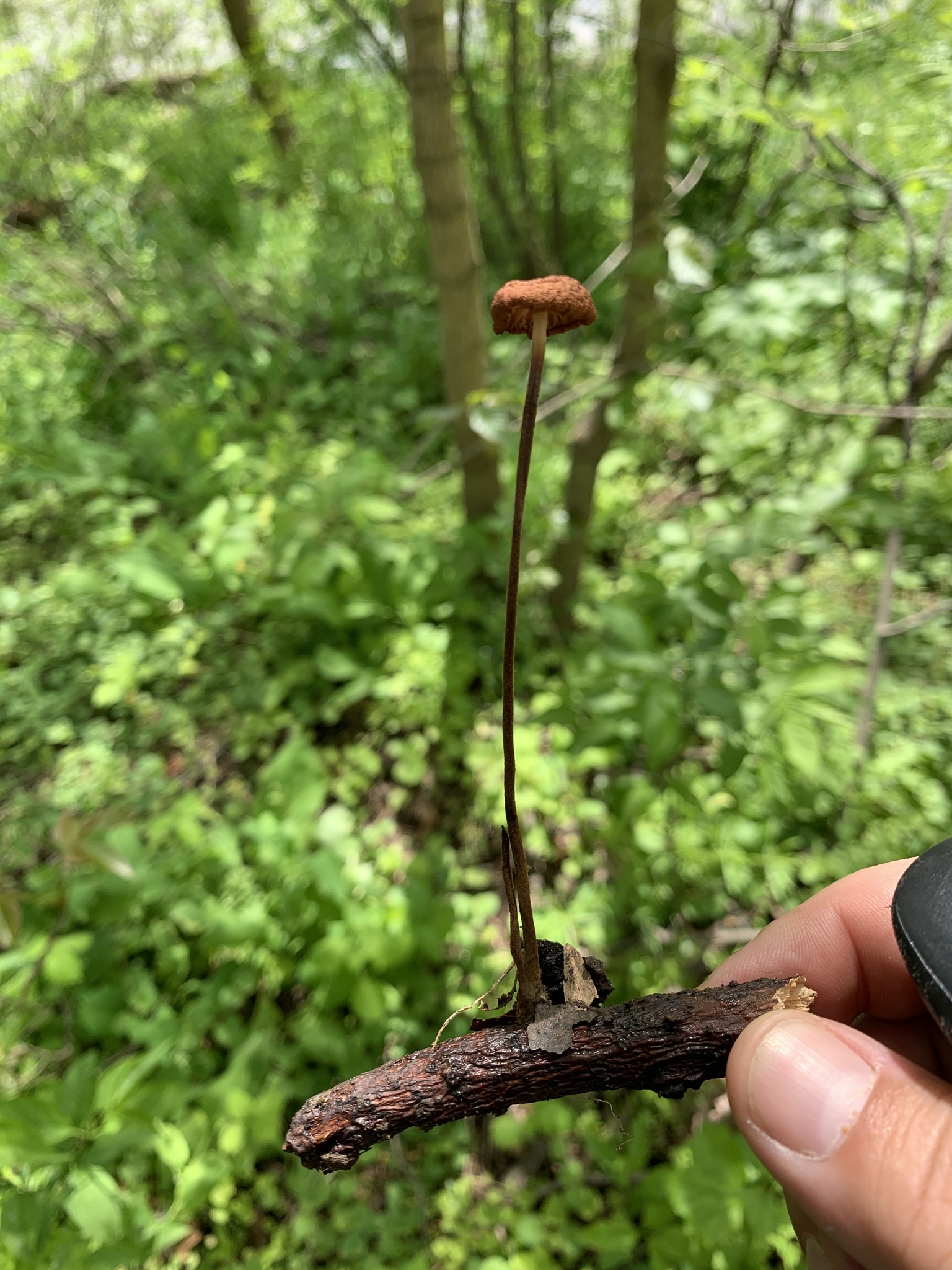
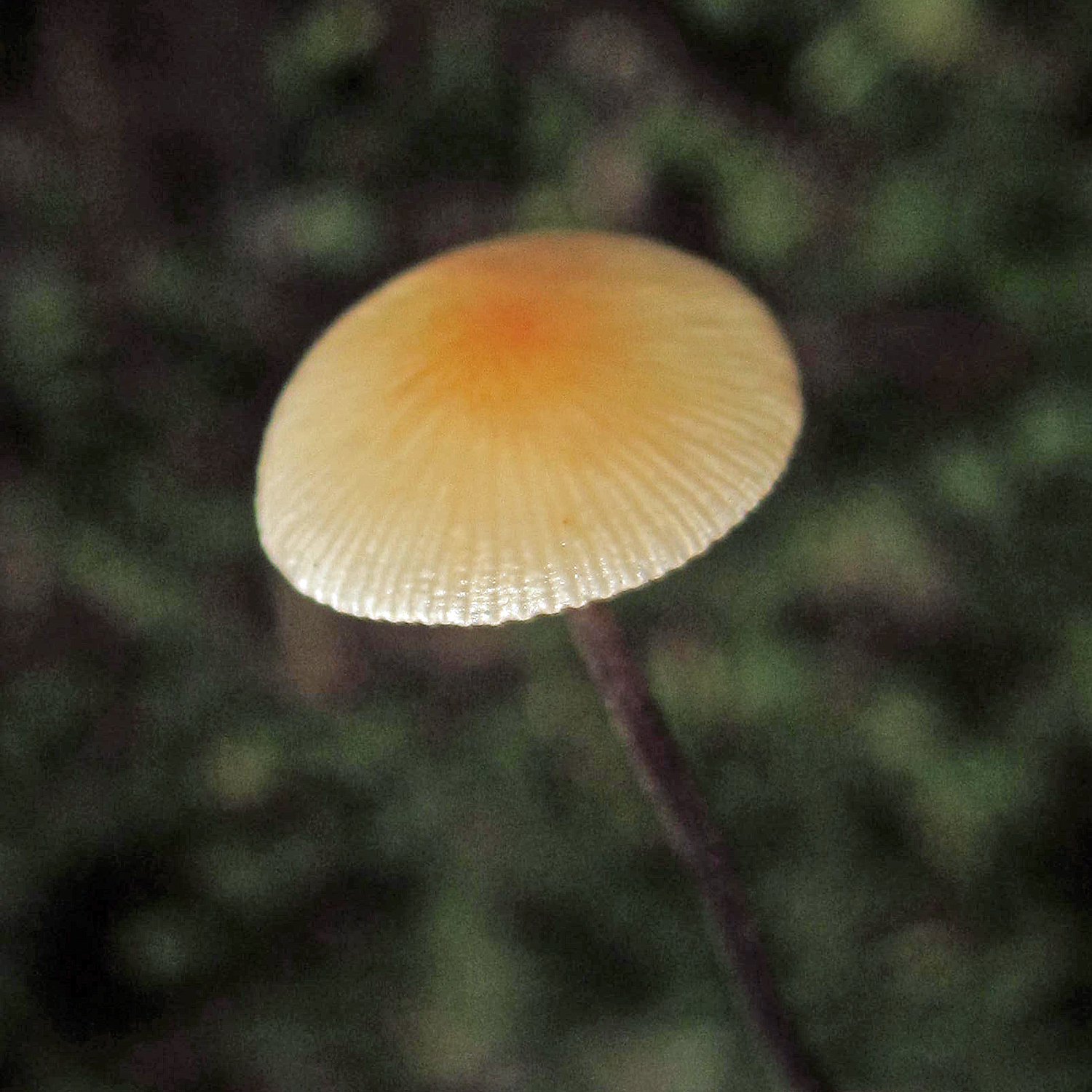
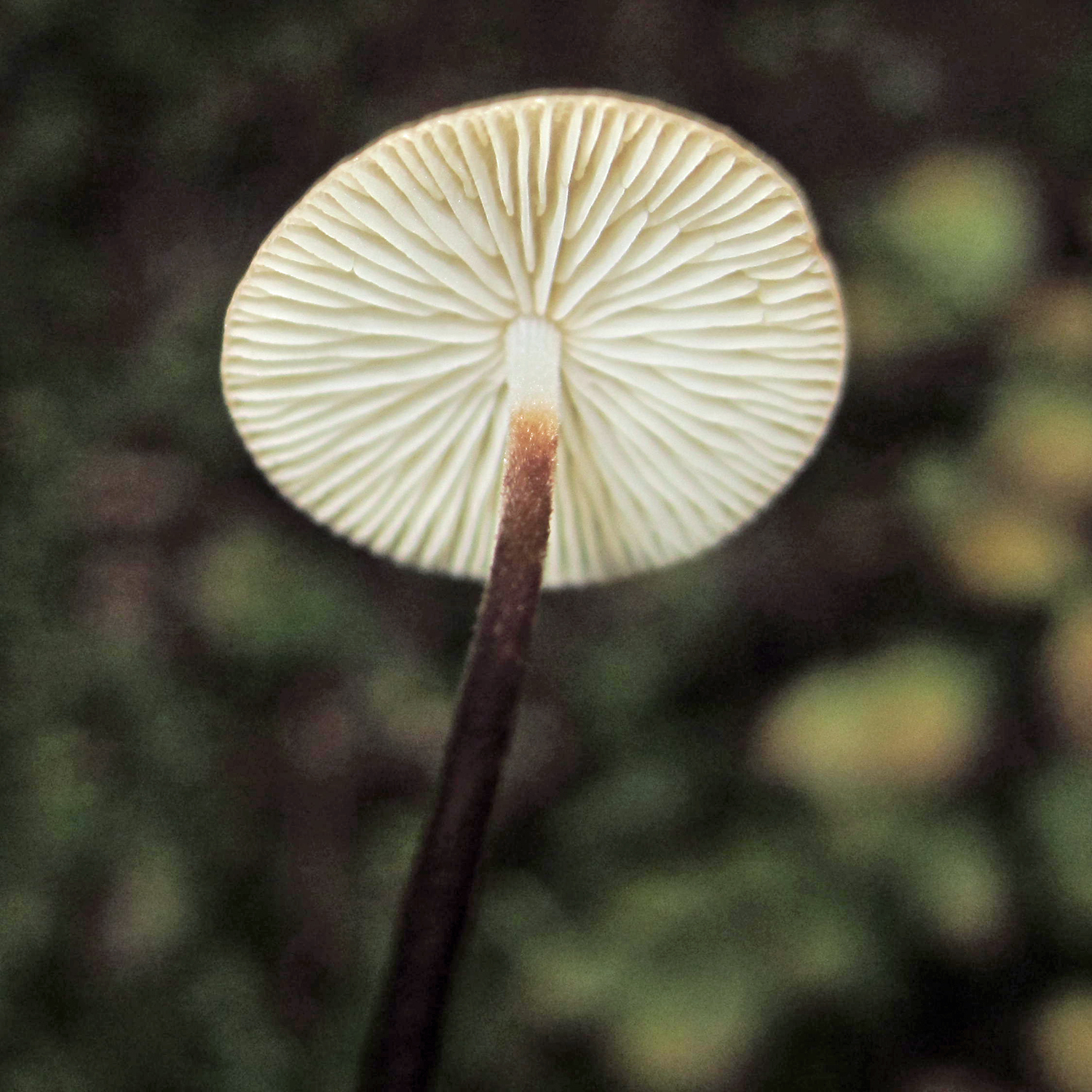
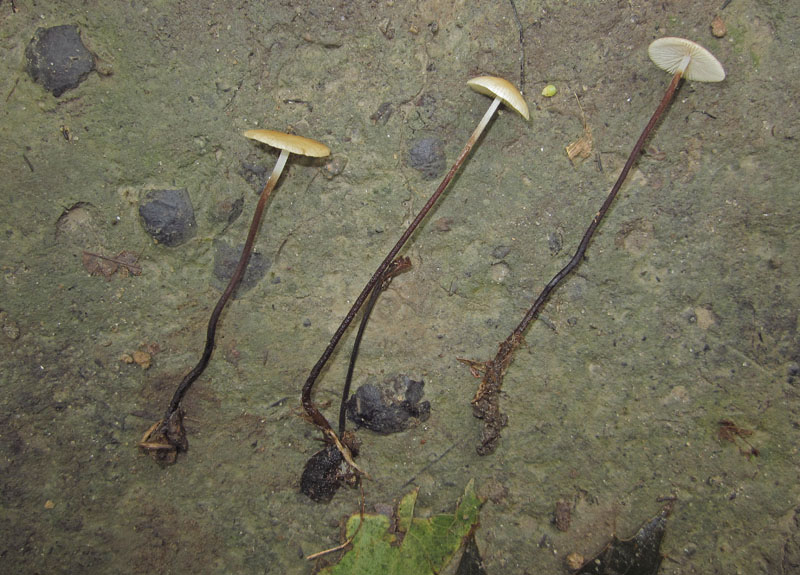
[edit]The orange-colored cap is 1–2.5 centimetres (1⁄2–1 in) wide. Its rooted black stipe has velvety hairs[5] and is up to 9 cm (3+1⁄2 in) long.[6] It has adnate gills and a white spore print,[6] not unlike Marasmius species.
Similar species
[edit]It can resemble Marasmius sullivantii, Marasmiellus biformis and M. subnudus.[6]
Distribution and habitat
[edit]This mushroom is known mainly from eastern North America, and grows from May to October on leaf litter and wood.[6]
References
[edit]- ^ Petersen, RH (2000). "Rhizomarasmius, gen. nov. (Xerulaceae, Agaricales)". Mycotaxon. 75: 333–342. ISSN 0093-4666.
- ^ "Woodhouse's English-Greek Dictionary Page Image". artflsrv04.uchicago.edu. Retrieved 2024-01-04.
- ^ "Woodhouse's English-Greek Dictionary Page Image". artflsrv04.uchicago.edu. Retrieved 2024-01-04.
- ^ "Woodhouse's English-Greek Dictionary Page Image". artflsrv04.uchicago.edu. Retrieved 2024-01-04.
- ^ Bessette, Alan E.; Bessette, Arleen R.; Hopping, Michael W. (23 February 2018). A Field Guide to Mushrooms of the Carolinas. Southern Gateways Guides. University of North Carolina Press. ISBN 978-1-4696-3854-6.
- ^ a b c d Audubon (2023). Mushrooms of North America. Knopf. p. 452. ISBN 978-0-593-31998-7.