
Map Snapshot


3 Records
Description
Citations
No citations linked for this taxon yet.
Source: Wikipedia
| Coprinellus domesticus | |
|---|---|
_Vilgalys,_Hopple_%26_Johnson.jpg)
| |
Scientific classification 
| |
| Kingdom: | Fungi |
| Division: | Basidiomycota |
| Class: | Agaricomycetes |
| Order: | Agaricales |
| Family: | Psathyrellaceae |
| Genus: | Coprinellus |
| Species: | C. domesticus
|
| Binomial name | |
| Coprinellus domesticus (Bolton) Vilgalys, Hopple & Jacq.Johnson (2001)
| |
| Synonyms[1] | |
| |
| Coprinellus domesticus | |
|---|---|
| Mycological characteristics | |
 | Gills on hymenium |

 | Cap is ovate or campanulate |

 | Hymenium is adnexed or free |

 | Stipe is bare or has a ring |
 | Spore print is black |
 | Ecology is saprotrophic |
 | Edibility is not recommended |
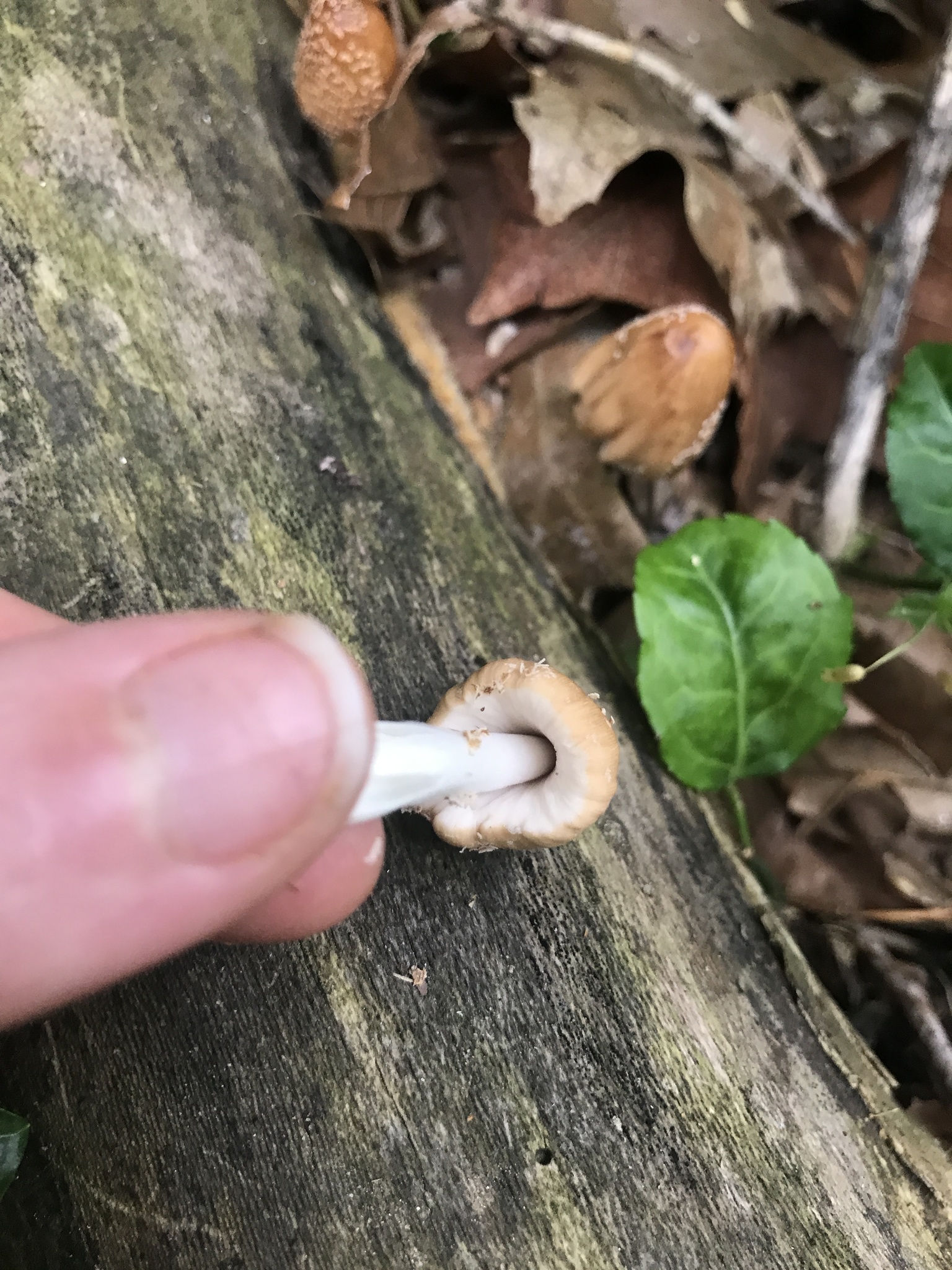
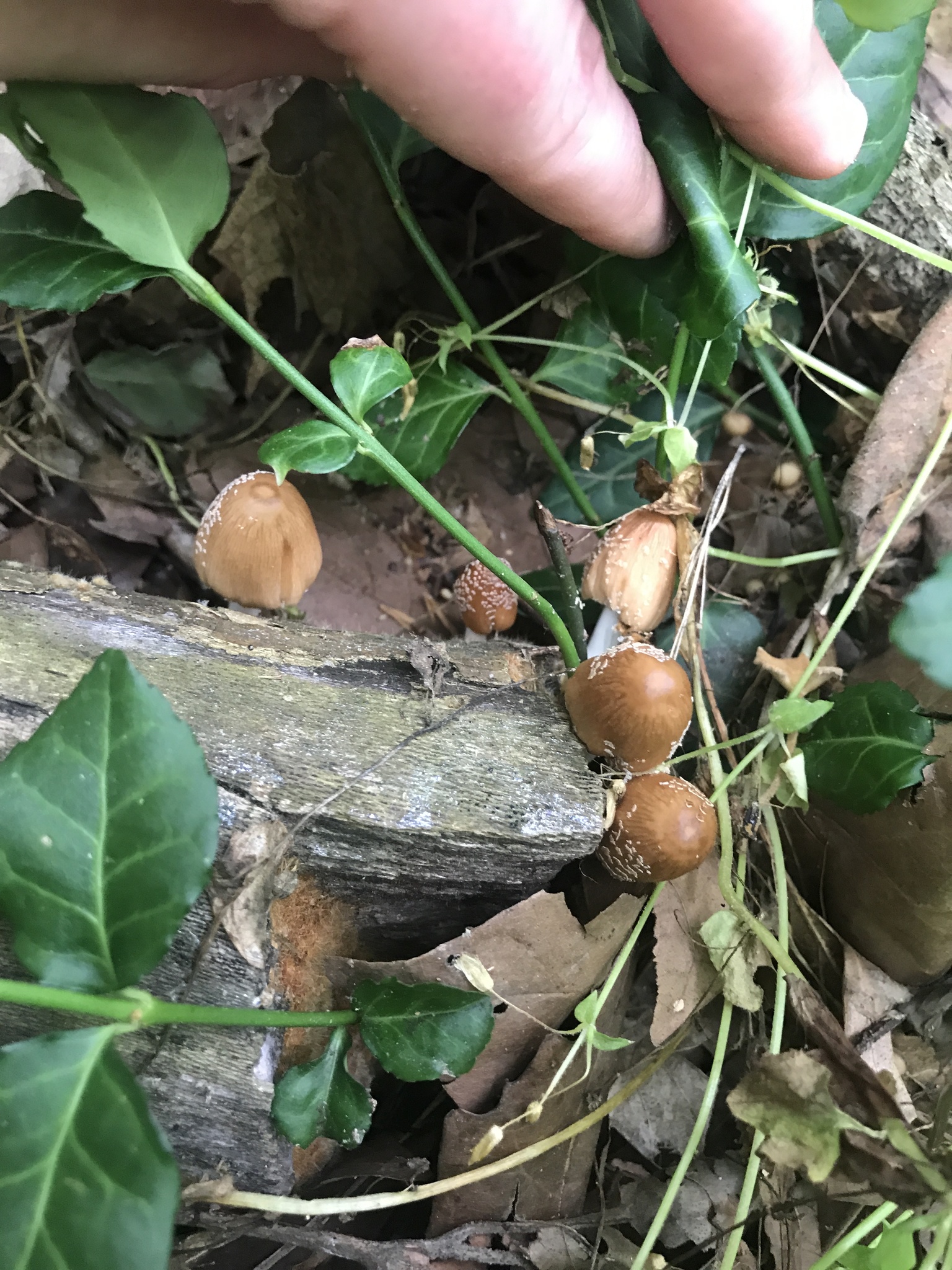
Coprinellus domesticus, commonly known as the domestic inky cap,[2] or firerug inkcap,[3] is a species of mushroom in the family Psathyrellaceae.
Taxonomy
[edit]First described as Agaricus domesticus by James Bolton in 1788, it was later known as Coprinus domesticus before it was transferred to the genus Coprinellus in 2001.[4]
Description
[edit]The cap is yellowish, thin and grooved, grows up to 5 centimetres (2 in) tall prior in a shape resembling a closed umbrella before expanding[2] to nearly flat. The gills are adnexed, close, and whitish before darkening. The stem is up to 10 cm (4 in) long and 8 millimetres (3⁄8 in) wide. The spore print is black.[5]
The firerug inkcap gets its name from the bright orange carpet of hyphae grown around the mushroom.[6] The covering is known as an ozonium, which resembles an aboveground mycelium.[6] The ozonium is not always present and can also grow in the absence of any mushrooms.[7]
Spores are 6-9 x 3.5-5 µm, elliptical, smooth, with an eccentric pore. Basidia are 4-spored; surrounded by 4-6 brachybasidia. Pleurocystidia are subglobose to subcylindric; up to 120 x 65 µm. Cheilocystidia variously shaped; up to 100 x 60 µm.[6]
-
 The bright orange ozonium

Similar species
[edit]Coprinellus radians is identical in every aspect except for its larger spore size.[7] These are the only two species that are known to form this ozonium.[7]
Microscopy may be required to distinguish related species in the group.[5]
Habitat and distribution
[edit]The species is saprophyte, growing gregariously or in small clusters (occasionally alone) on decaying hardwood logs.[6]
It is present worldwide. It grows on hardwood stumps, logs, and debris in North America from May to September in the East and November to April near the West Coast.[5]
Uses
[edit]Although it is difficult to identify, it has been said to be edible.[2]
References
[edit]- ^ "GSD Species Synonymy: Coprinellus domesticus (Bolton) Vilgalys, Hopple & Jacq. Johnson". Species Fungorum. CAB International. Retrieved 2015-02-24.
- ^ a b c Arora, David (1986) [1979]. Mushrooms Demystified: A Comprehensive Guide to the Fleshy Fungi (2nd ed.). Berkeley, CA: Ten Speed Press. pp. 349–50. ISBN 978-0-89815-170-1.
- ^ "Recommended English Names for Fungi in the UK-Revised". Scottish Fungi. Retrieved 2015-02-24.
- ^ Redhead SA, Vilgalys R, Moncalvo J-M, Johnson J, Hopple JS Jr (2001). "Coprinus Pers. and the disposition of Coprinus species sensu lato". Taxon. 50 (1): 203–241. doi:10.2307/1224525.
- ^ a b c Audubon (2023). Mushrooms of North America. Knopf. p. 594. ISBN 978-0-593-31998-7.
- ^ a b c d Kuo, Michael (2008). "Coprinellus domesticus: The Retro Inky (MushroomExpert.Com)". www.mushroomexpert.com. Retrieved 2026-03-11.
- ^ a b c "Coprinellus domesticus: The Ultimate Mushroom Guide". Mushroom Identification - Ultimate Mushroom Library. Retrieved 2023-02-09.