Map Snapshot


1 Record
Status
Citations
No citations linked for this taxon yet.
Source: Wikipedia
| Cunninghamella | |
|---|---|

| |
| Cunninghamella echinulata | |
Scientific classification 
| |
| Kingdom: | Fungi |
| Division: | Mucoromycota |
| Class: | Mucoromycetes |
| Order: | Mucorales |
| Family: | Cunninghamellaceae |
| Genus: | Cunninghamella Matr. (1903) |
| Type species | |
| Cunninghamella africana Matr. 1903
| |
| Species | |
|
See text | |
| Synonyms[1] | |
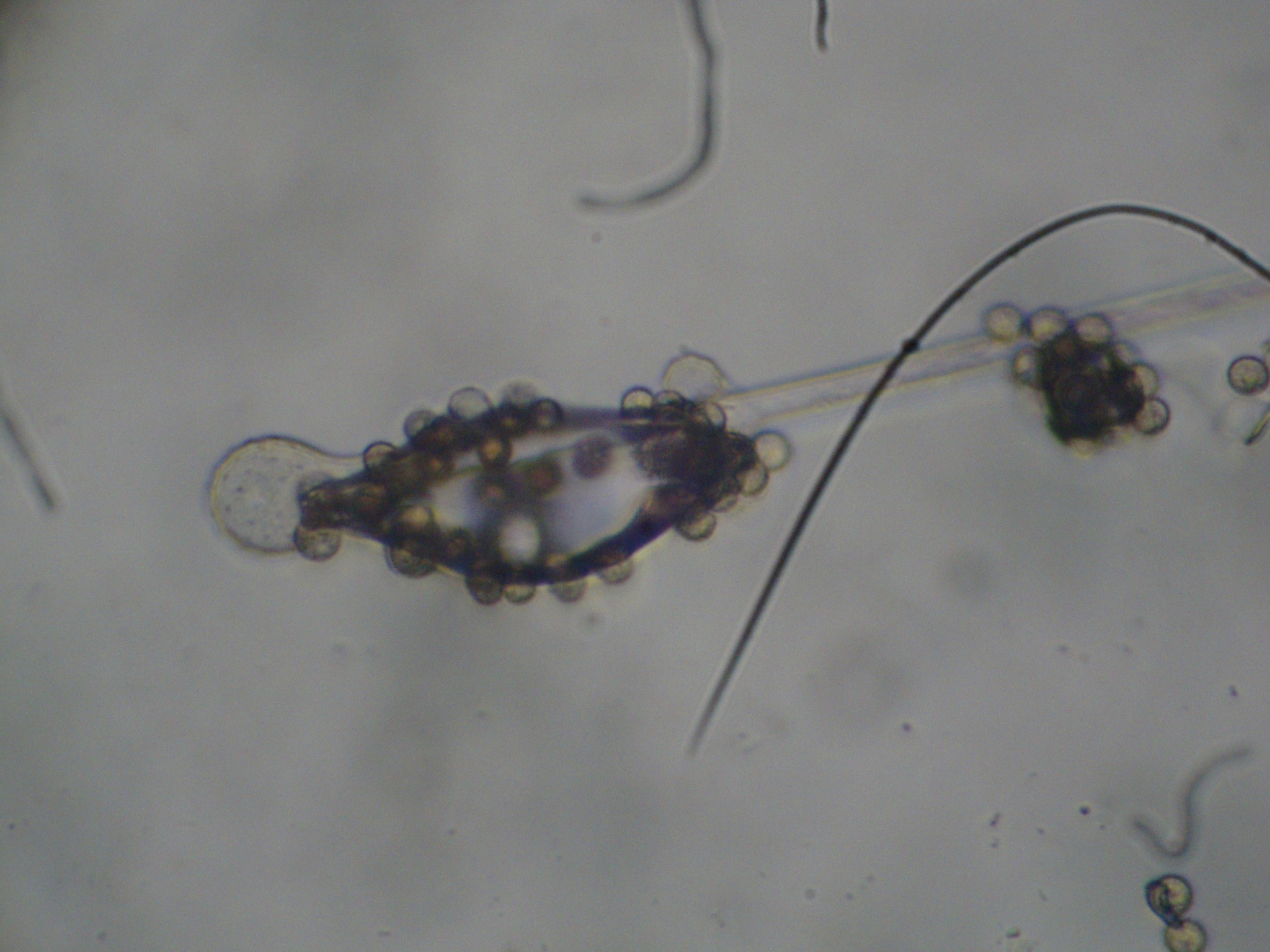
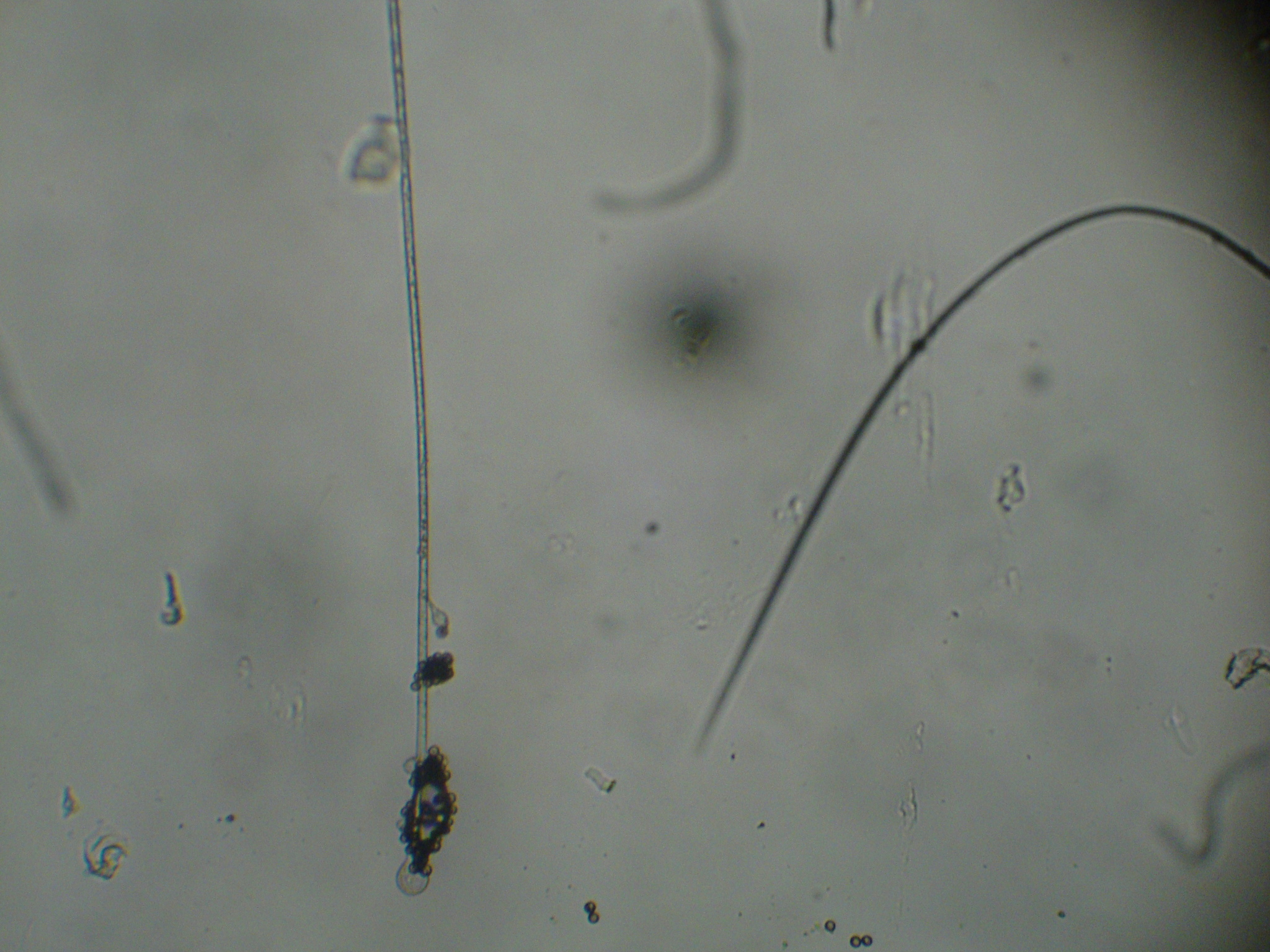
Cunninghamella is a genus of fungi in the order Mucorales, and the family Cunninghamellaceae.[2] The genus was circumscribed by French mycologist Alphonse Louis Paul Matruchot in Ann. Mycol. Vol.1 on page 47 in 1903.[3]
The genus name of Cunninghamella is in honour of David Douglas Cunningham (1843–1914), who was a Scottish doctor and researcher who worked extensively in India on various aspects of public health and medicine.[4]
Species
[edit]As of 2015[update], Index Fungorum lists 13 valid species of Cunninghamella:[5]
- Cunninghamella bertholletiae
- Cunninghamella binarieae R.Y.Zheng 2001
- Cunninghamella blakesleeana
- Cunninghamella candida Yosh.Yamam. 1929
- Cunninghamella clavata R.Y.Zheng & G.Q.Chen 1998
- Cunninghamella echinulata (Thaxt.) Thaxt. ex Blakeslee 1905
- Cunninghamella elegans Lendn. 1905
- Cunninghamella homothallica Komin. & Tubaki 1952
- Cunninghamella intermedia K.B.Deshp. & Mantri 1966
- Cunninghamella multiverticillata R.Y.Zheng & G.Q. Chen 2001
- Cunninghamella phaeospora Boedijn 1959
- Cunninghamella polymorpha Pišpek 1929
- Cunninghamella septata R.Y.Zheng 2001
- Cunninghamella vesiculosa P.C.Misra 1966
Uses
[edit]Members of this genus are often used in studies investigating the metabolism of drugs, because these species metabolize a wide range of drugs in manners similar to mammalian enzyme systems.[6] Many species are also capable of oxidizing polycyclic aromatic hydrocarbons, a class of stable organic molecules that tends to persist in the environment and contains many known carcinogenic and mutagenic compounds.[7]
The presence of a cytochrome P450 has been demonstrated in C. bainieri.[8]
References
[edit]- ^ "Synonymy: Cunninghamella Matr". Species Fungorum. CAB International. Retrieved 21 September 2015.
- ^ Cunninghamella at the U.S. National Library of Medicine Medical Subject Headings (MeSH)
- ^ Matruchot L. (1903). "Une Mucorinée purement conidienne. Cunninghamella africana". Annales Mycologici (in French). 1: 45–60.
- ^ Burkhardt, Lotte (2022). Eine Enzyklopädie zu eponymischen Pflanzennamen [Encyclopedia of eponymic plant names] (pdf) (in German). Berlin: Botanic Garden and Botanical Museum, Freie Universität Berlin. doi:10.3372/epolist2022. ISBN 978-3-946292-41-8. S2CID 246307410. Retrieved 27 January 2022.
- ^ "Species Fungorum (version 26th August 2015). In: Species 2000 & ITIS Catalogue of Life". Retrieved 21 September 2015.
- ^ Asha S, Vidyavathi M (2009). "Cunninghamella--a microbial model for drug metabolism studies--a review". Biotechnol. Adv. 27 (1): 16–29. doi:10.1016/j.biotechadv.2008.07.005. PMID 18775773.
- ^ Cerniglia, Carl E. (1992). "Biodegradation of polycyclic aromatic hydrocarbons". Biodegradation. 3 (2–3): 351–368. doi:10.1007/BF00129093. S2CID 25516145.
- ^ Aryl hydrocarbon hydroxylase activity in the fungus Cunninghamella bainieri: Evidence for the presence of cytochrome P-450. J.P. Ferris, L.H. MacDonald, M.A. Patrie and M.A. Martin, Archives of Biochemistry and Biophysics, Volume 175, Issue 2, August 1976, pages 443-452, doi:10.1016/0003-9861(76)90532-4
 | This Zygomycota-related article is a stub. You can help Wikipedia by adding missing information. |