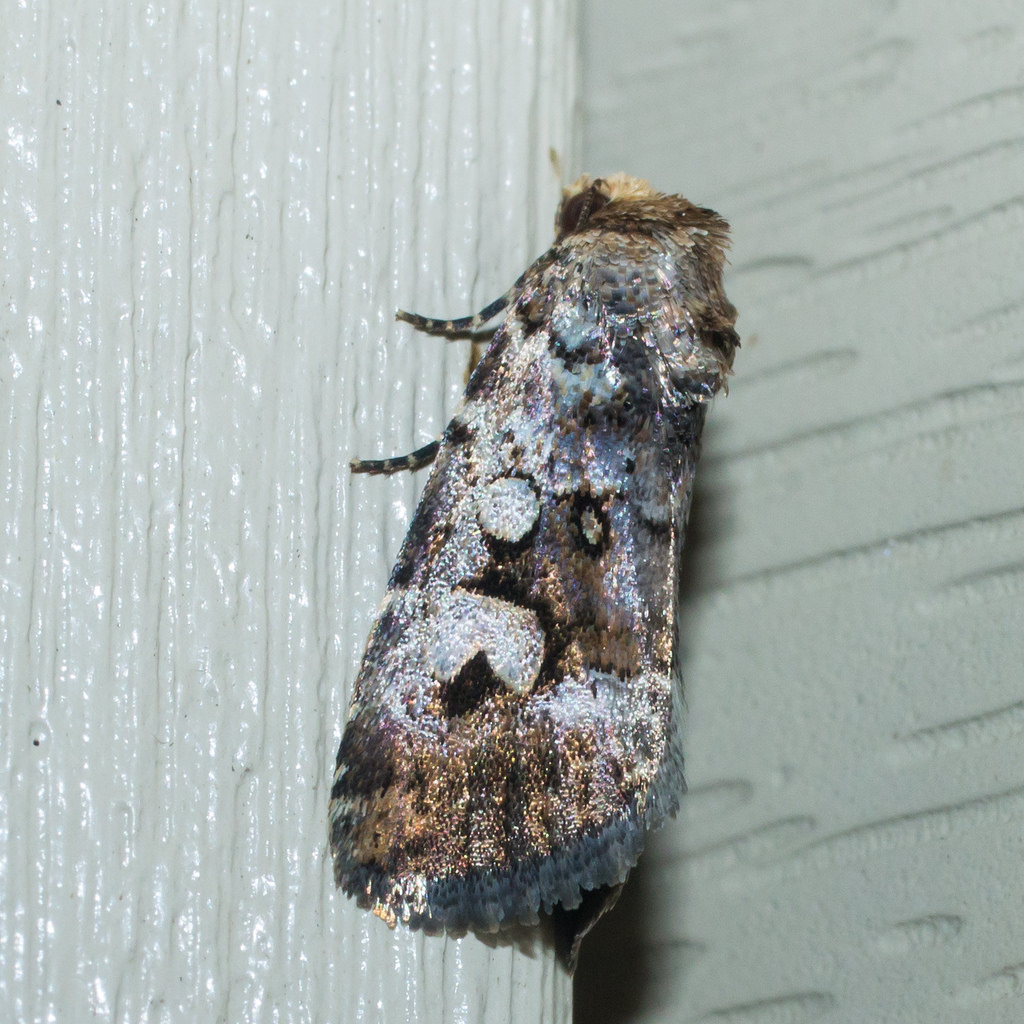
Elaphria festivoides complex in Anne Arundel Co., Maryland (7/18/2015).
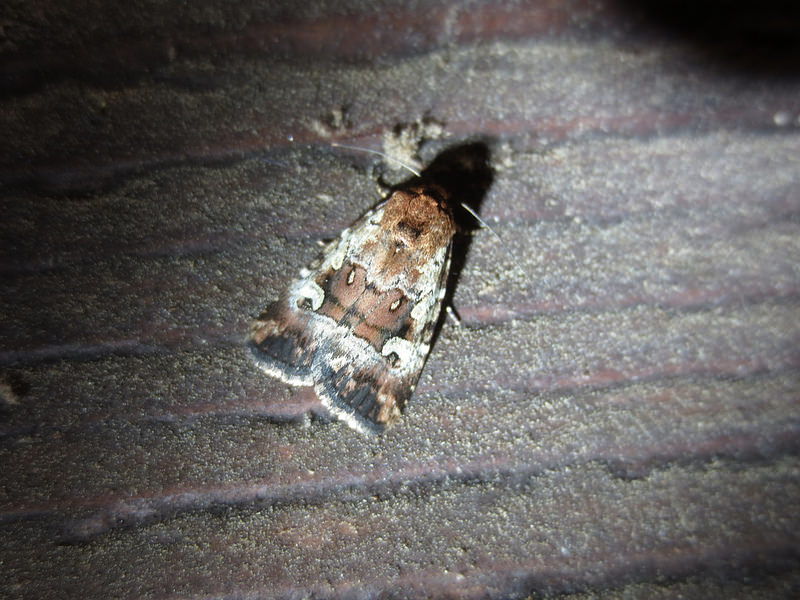
Elaphria festivoides complex in St. Mary's Co., Maryland (7/15/2016).
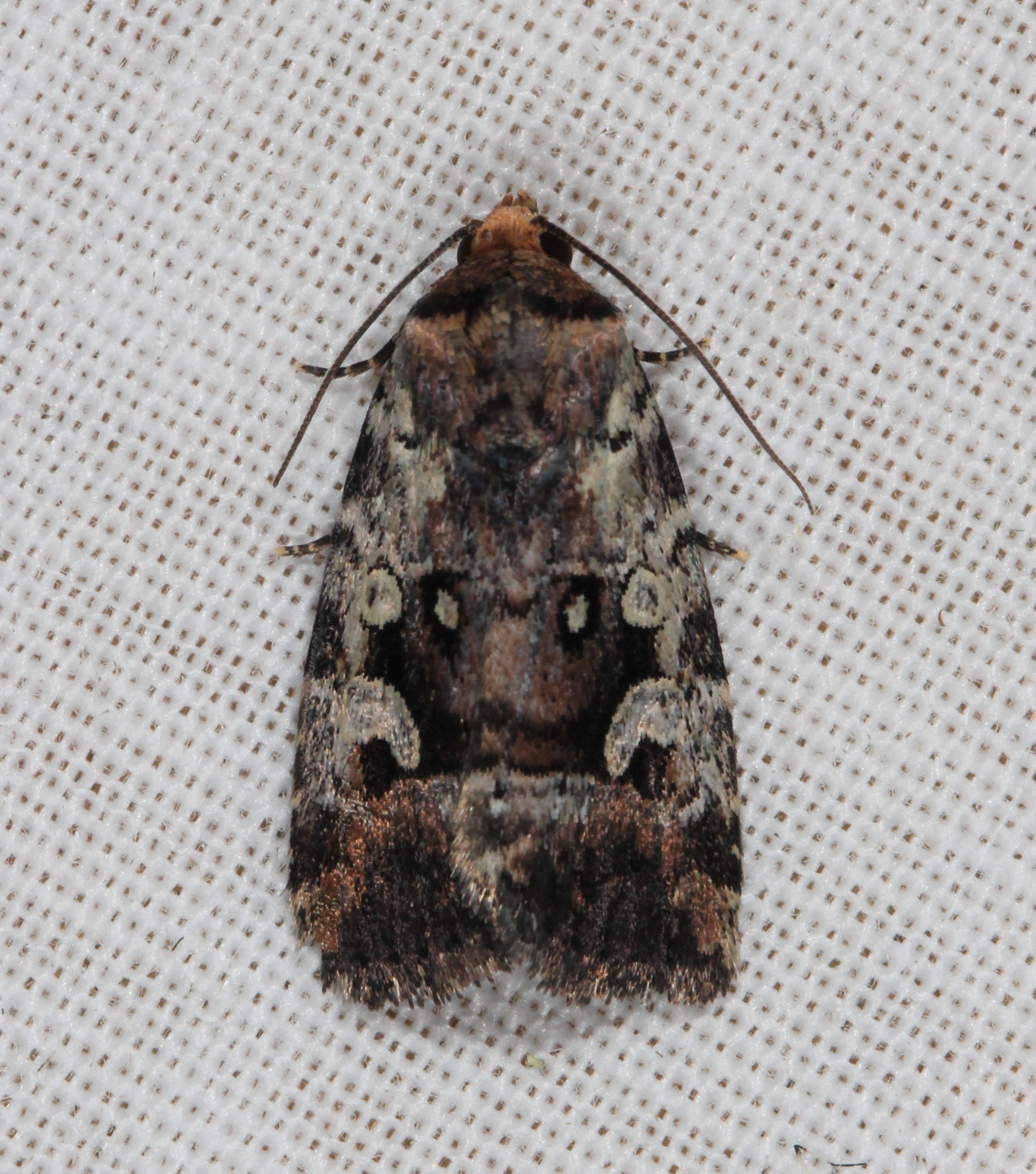
Elaphria festivoides complex in Harford Co., Maryland (7/7/2021).
.jpg "A male <em>Elaphria festivoides</em> complex in Howard Co., Maryland (5//2002). (Photo ID: 62934 - Psn: 100)")
A male Elaphria festivoides complex in Howard Co., Maryland (5//2002).
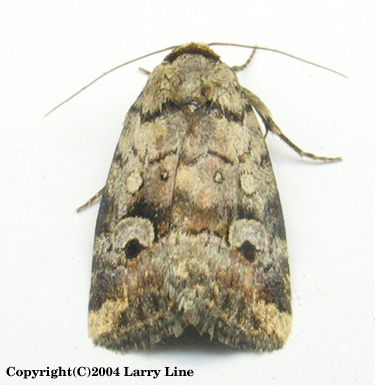
A male Elaphria festivoides complex in Howard Co., Maryland (5/2/2004).
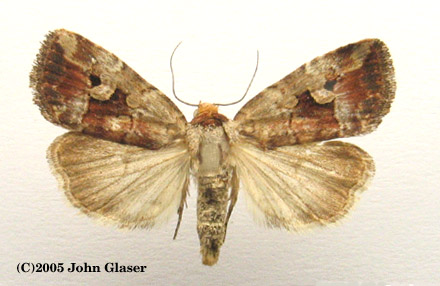
Elaphria festivoides complex collected in Kent Co., Maryland (7/24/2003).
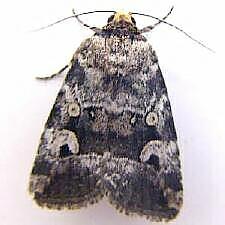
Elaphria festivoides complex.
Map Snapshot


12 Records
Status
The Elaphria festivoides complex includes 3 similar, named species, Elaphria cornutinis, E. alapallida (Pale-winged Midget), and E. festivoides (Festive Midget), and possibly a fourth, unnamed species closely related to E. alapallida in Texas and Oklahoma, represented by the DNA barcode cluster BOLD:ACE4740. These species can be distinguished from other eastern Elaphria species by the large, exaggeratedly curved, kidney-shaped reniform spot on the forewing. Only E. cornutinis and E. alapallida have been confirmed in Maryland. E. festivoides is a southeastern species that ranges northward to North Carolina and may not reach Maryland. However, this species should be looked for and potentially confirmed from collected specimens.
Identification of adults of the species in Maryland is challenging, and photo record identification should usually be left at the species complex. Certain identification requires a combination of forewing and hindwing color patterns, presence or absence of hair pencils on the ventral side of the base of the abdomen of males, genital characters seen in dissections, habitat, and flight time. From the more limited information in photo records, flight times can be suggestive. E. cornutinis and E. alapallida have three flights in total per year. In the inland coastal plain of Anne Arundel County, E. cornutinis flies first in mid-April and is worn and tattered by late May. E. alapallida flies next in early May, simultaneous with E. cornutinis, and continues into the first half of June. Finally, E. cornutinis has a second flight from July to August, while E. alapallida has only its one spring flight. One can study the summer flight of E. cornutinis to get a feel for its forewing pattern, which often has the base and costal area less completely suffused with pale colors, has darker, less-reddish shades of brown, especially in the dorsal half of the medial area, and has the transverse lines more conspicuously edged in black, than forewings of E. alapallida. Still, variation and wear disallow many specimens from being confidently identified, and these should be left identified at the species complex rank. If E. festivoides is found in Maryland, it would be expected to add two more flights, one in early spring simultaneous with the other two species, and a late flight in September to October after the summer flight of E. cornutinis. Its forewing looks similar to that of E. alapallida and tends to have a less conspicuous claviform spot, but the differences may be subtler than variation within the species, so determinations should be made from collected specimens. Information on identification is given in a two-part revision of the species complex: Saluke & Pogue (2000) (link) and Pogue & Sullivan (2003) (link).
Identification of adults of the species in Maryland is challenging, and photo record identification should usually be left at the species complex. Certain identification requires a combination of forewing and hindwing color patterns, presence or absence of hair pencils on the ventral side of the base of the abdomen of males, genital characters seen in dissections, habitat, and flight time. From the more limited information in photo records, flight times can be suggestive. E. cornutinis and E. alapallida have three flights in total per year. In the inland coastal plain of Anne Arundel County, E. cornutinis flies first in mid-April and is worn and tattered by late May. E. alapallida flies next in early May, simultaneous with E. cornutinis, and continues into the first half of June. Finally, E. cornutinis has a second flight from July to August, while E. alapallida has only its one spring flight. One can study the summer flight of E. cornutinis to get a feel for its forewing pattern, which often has the base and costal area less completely suffused with pale colors, has darker, less-reddish shades of brown, especially in the dorsal half of the medial area, and has the transverse lines more conspicuously edged in black, than forewings of E. alapallida. Still, variation and wear disallow many specimens from being confidently identified, and these should be left identified at the species complex rank. If E. festivoides is found in Maryland, it would be expected to add two more flights, one in early spring simultaneous with the other two species, and a late flight in September to October after the summer flight of E. cornutinis. Its forewing looks similar to that of E. alapallida and tends to have a less conspicuous claviform spot, but the differences may be subtler than variation within the species, so determinations should be made from collected specimens. Information on identification is given in a two-part revision of the species complex: Saluke & Pogue (2000) (link) and Pogue & Sullivan (2003) (link).
Where To Find
Information on identification is given in a two-part revision of the species complex: Saluke & Pogue (2000) (BHL link: https://www.biodiversitylibrary.org/page/16185894) and Pogue & Sullivan (2003) (BHL link: https://www.biodiversitylibrary.org/page/16195612).
Citations
No citations linked for this taxon yet.
Use of media featured on Maryland
Biodiversity Project is only permitted with express permission of the
photographer.
Elaphria festivoides complex in Anne Arundel Co., Maryland (7/18/2015).
View Record Details
Media by
Timothy Reichard.
Elaphria festivoides complex in St. Mary's Co., Maryland (7/15/2016).
View Record Details
Media by
Tyler Bell.
Elaphria festivoides complex in Harford Co., Maryland (7/7/2021).
View Record Details
Media by
Dave Webb.
A male Elaphria festivoides complex in Howard Co., Maryland (5//2002).
View Record Details
Media by
Larry Line.
A male Elaphria festivoides complex in Howard Co., Maryland (5/2/2004).
View Record Details
Media by
Larry Line.
Elaphria festivoides complex collected in Kent Co., Maryland (7/24/2003).
View Record Details
Media by
John Glaser.
Elaphria festivoides complex.
View Record Details
Media by
Bob Patterson.