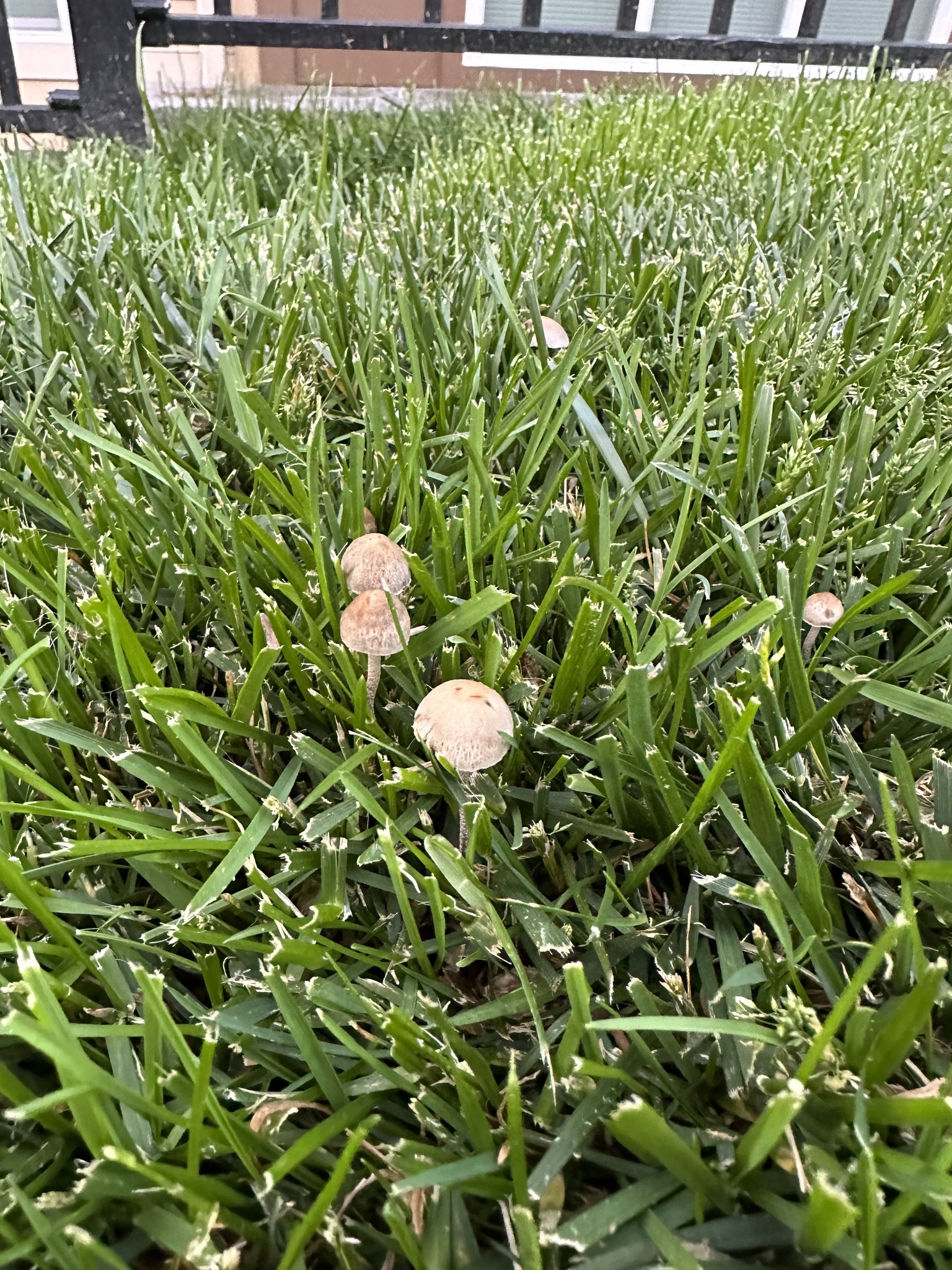
Turf Mottlegill in Baltimore Co., Maryland (4/29/2023). (c) drmiked, some rights reserved (CC BY-NC)
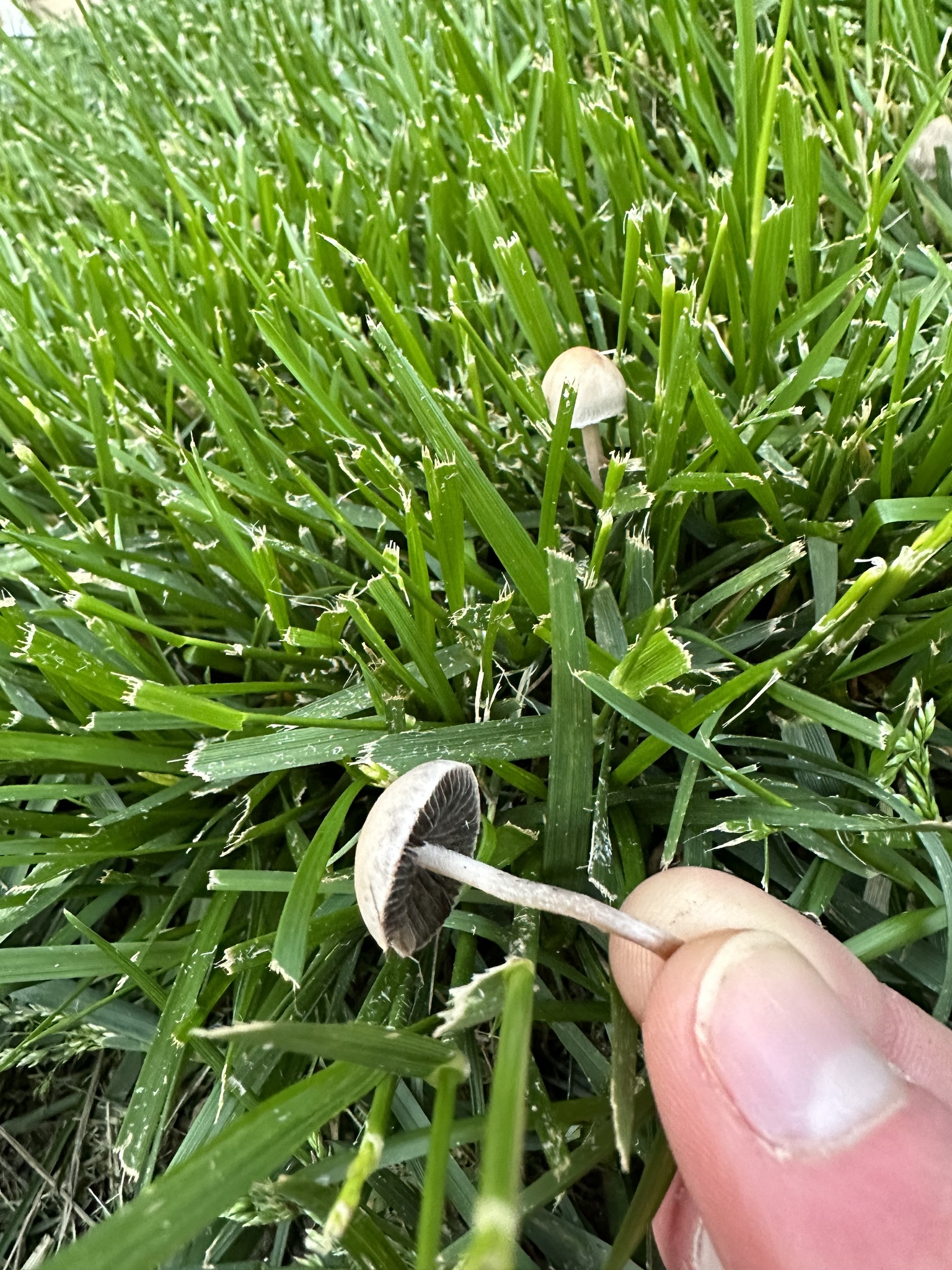
Turf Mottlegill in Baltimore Co., Maryland (4/29/2023). (c) drmiked, some rights reserved (CC BY-NC)
Map Snapshot


1 Record
Citations
No citations linked for this taxon yet.
Eating mushrooms can be dangerous. One should do so only with expert advice and great care. MBP accepts no liability for injury sustained in consuming fungi or other biodiversity. Use of media featured on Maryland
Biodiversity Project is only permitted with express permission of the
photographer.
Turf Mottlegill in Baltimore Co., Maryland (4/29/2023). (c) drmiked, some rights reserved (CC BY-NC)
View Record Details
Media by
drmiked via iNaturalist.
Turf Mottlegill in Baltimore Co., Maryland (4/29/2023). (c) drmiked, some rights reserved (CC BY-NC)
View Record Details
Media by
drmiked via iNaturalist.
Source: Wikipedia
| Panaeolus fimicola | |
|---|---|

| |
Scientific classification 
| |
| Kingdom: | Fungi |
| Division: | Basidiomycota |
| Class: | Agaricomycetes |
| Order: | Agaricales |
| Family: | Bolbitiaceae |
| Genus: | Panaeolus |
| Species: | P. fimicola
|
| Binomial name | |
| Panaeolus fimicola | |
| Synonyms[1][2][3][4] | |
| |
| Panaeolus fimicola | |
|---|---|
| Mycological characteristics | |
 | Gills on hymenium |
 | Cap is convex |
 | Hymenium is adnexed |
 | Stipe is bare |
 | Spore print is black |
 | Ecology is saprotrophic |
 | Edibility is psychoactive |
Panaeolus fimicola, commonly known as the turf mottlegill[5] or grass mottlegill,[6] is a widespread but rarely identified "little brown mushroom" which sometimes contains small amounts of the hallucinogen psilocybin. Panaeolus ater is a synonym.[1]
Description
[edit]- Cap: (1)1.5— 3.5(4) cm, Campanulate then convex to plane, obtuse, dingy gray to blackish, often with reddish or hazel tones, hygrophanous, pallid grey to yellowish when dry, smooth, with a narrow brown marginal band, slightly striate at the margin when moist. Flesh thin and grayish.
- Gills: Adnate, close to crowded, at first gray-olivacous, becoming mottled and darkening to black with age, edges remaining whitish.
- Spores: Blackish gray.
- Stipe: (4)6 — 8(10) cm x 1 — 2(3) mm, equal, slender, slightly enlarging at the base, hollow, fragile, dingy white to clay, becoming brownish towards the base in age, smooth, white-pruinose at the apex, obsoletely slightly silky-striate, ring absent. Flesh is dirty ochraceous-buff; fragile.
- Taste: Not distinctive.
- Odor: Not distinctive.
- Microscopic features: Spores 10.8 — 14.2 X 6.9—9.5, ellipsoid or lemon shaped, basidia 4 spored. Gill edge cystidia fusiform, typically with long necks, gill face cystidia absent.
Habitat and formation
[edit]Panaeolus fimicola can be found growing solitary to scattered in soil or dung, fertilized lawns and other grassy places, late spring to mid-fall. It is widespread and common across the Americas, as well as Europe and Africa. It has also been found in Turkey.[7] Panaeolus fimicola will often appear during or after cold rain.[citation needed]
See also
[edit]
References
[edit]- ^ a b Gerhardt, E. (1996). "Taxonomische Revision der Gattungen Panaeolus und Panaeolina (Fungi, Agaricales, Coprinaceae)". Bibliotheca Botanica. 147: 1–149.
- ^ "Panaeolus ater (J.E. Lange) Kühner & Romagn. (1953)". MycoBank. International Mycological Association. Retrieved 2015-10-30.
- ^ "Panaeolus fimicola (Fr.) Quél. (1872)". MycoBank. International Mycological Association. Retrieved 2015-10-30.
- ^ "Panaeolus fimicola var. ater J.E. Lange (1940)". MycoBank. International Mycological Association. Retrieved 2015-10-30.
- ^ "Panaeolus fimicola, Turf Mottlegill, identification". www.first-nature.com. Retrieved 2020-07-26.
- ^ Siegel, Noah; Schwarz, Christian (September 1, 2024). Mushrooms of Cascadia: A Comprehensive Guide to Fungi of the Pacific Northwest. Humboldt County, CA: Backcountry Press. p. 104. ISBN 9781941624197.
- ^ Kaya, Abdullah (2015). "Contributions to the macrofungal diversity of Atatürk Dam Lake basin". Turkish Journal of Botany. 39: 162–172. doi:10.3906/bot-1404-70. hdl:11492/3076.
- Stamets, Paul (1996). Psilocybin Mushrooms of the World. Berkeley: Ten Speed Press. ISBN 0-9610798-0-0.