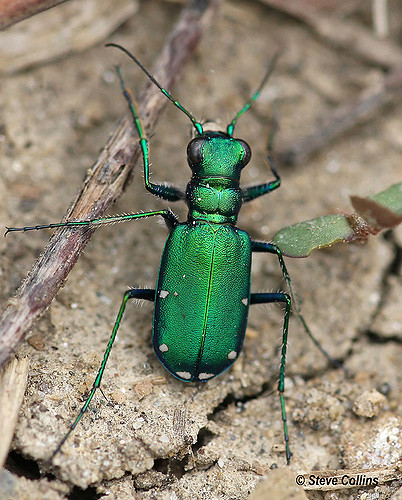
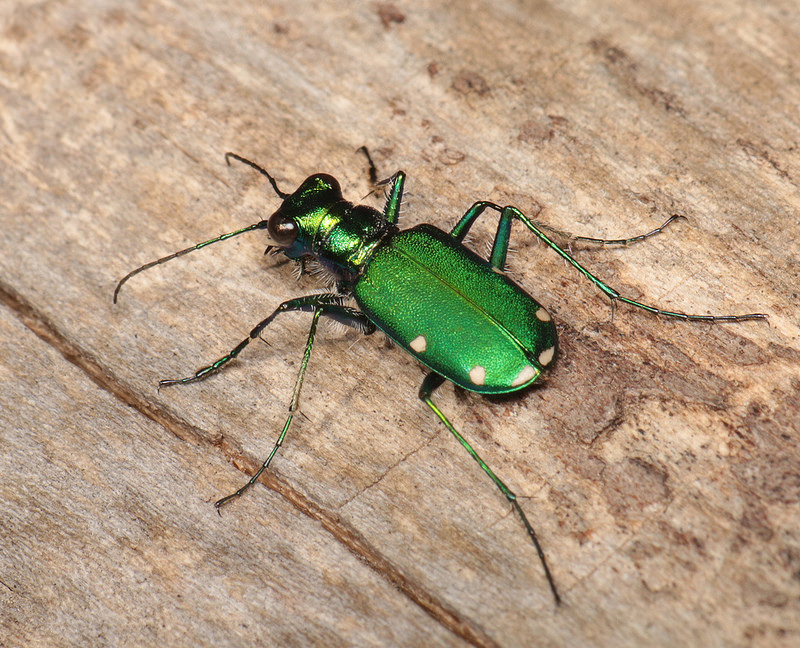
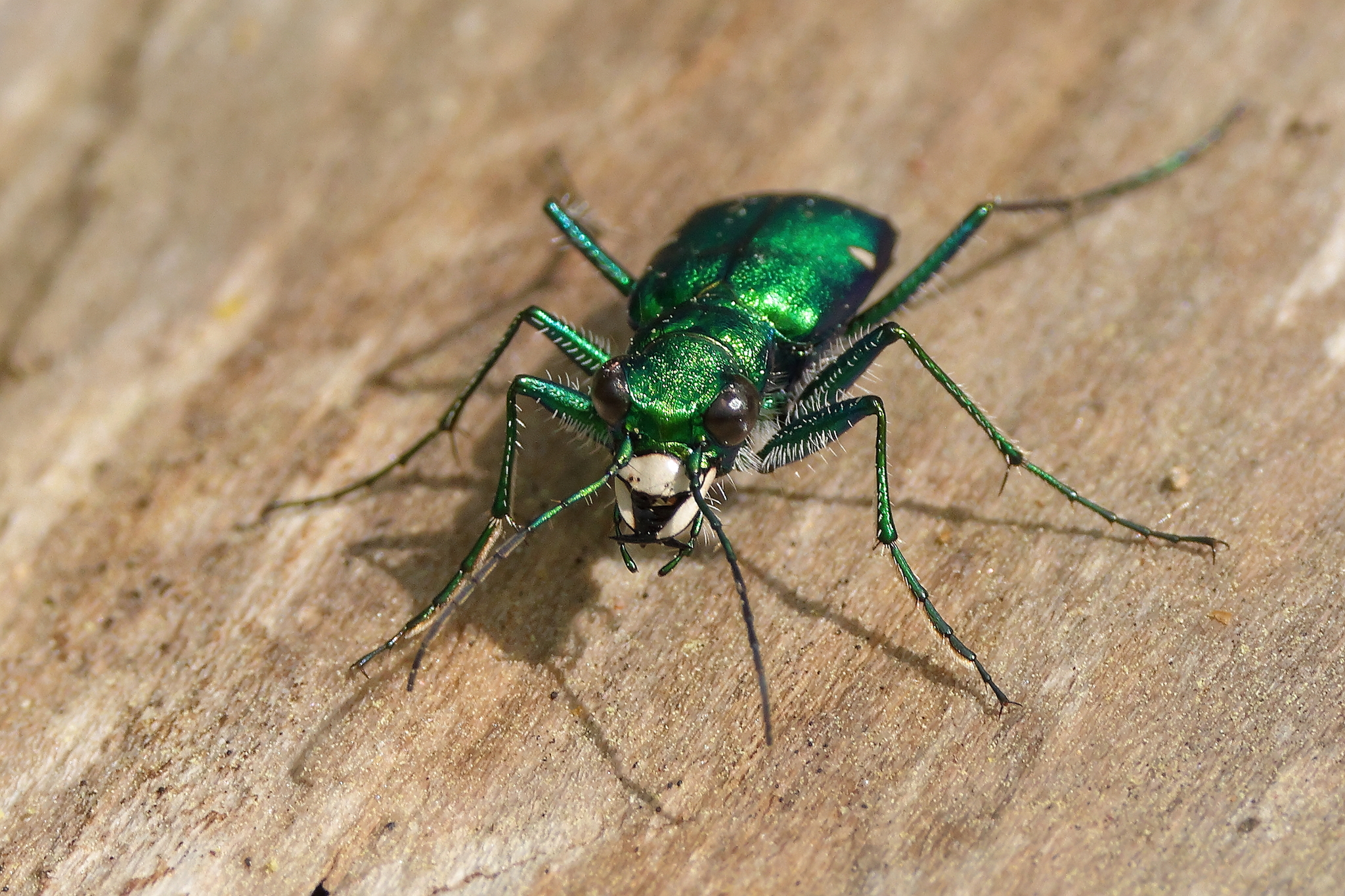
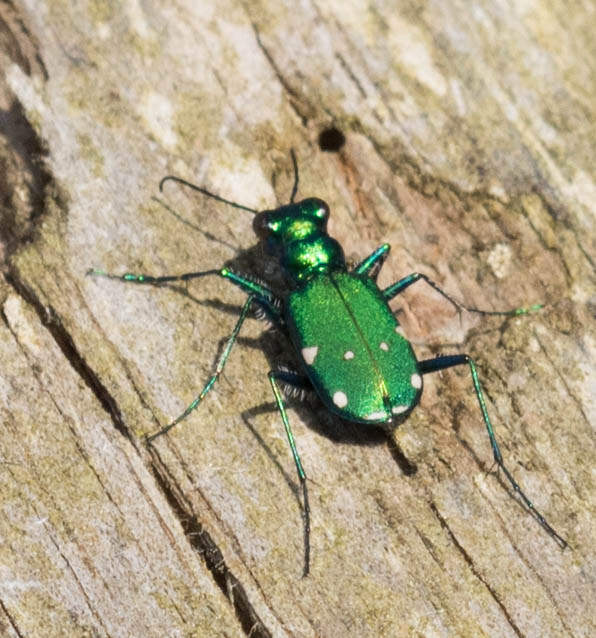
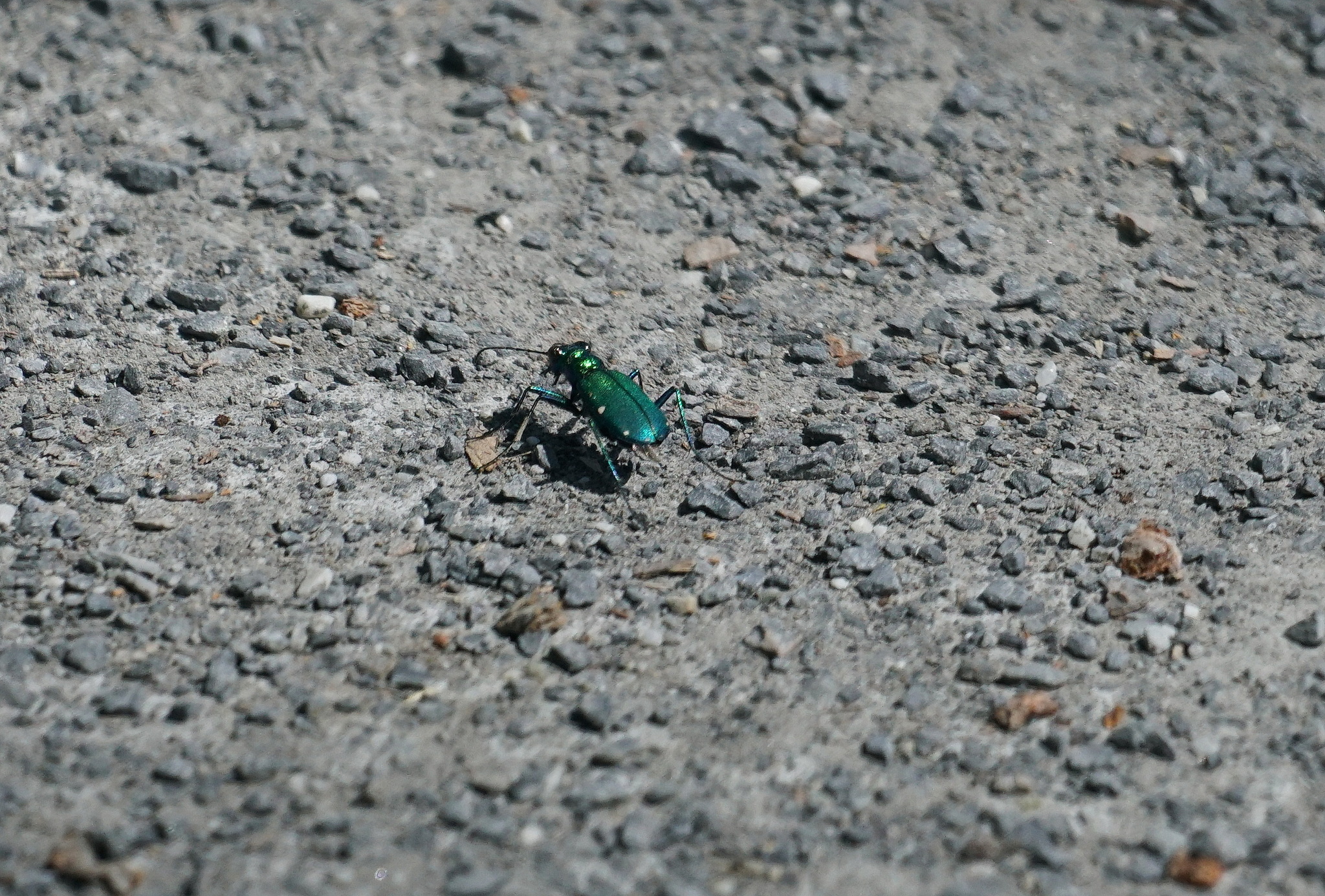
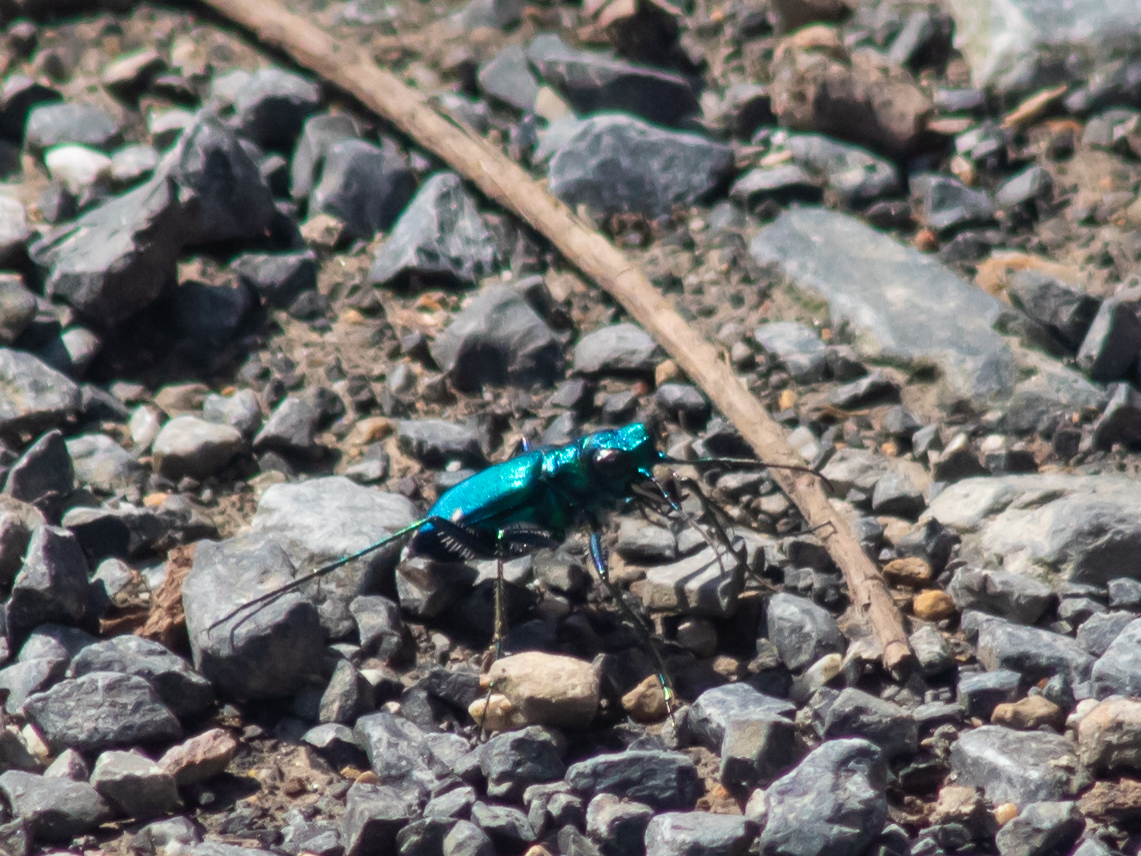
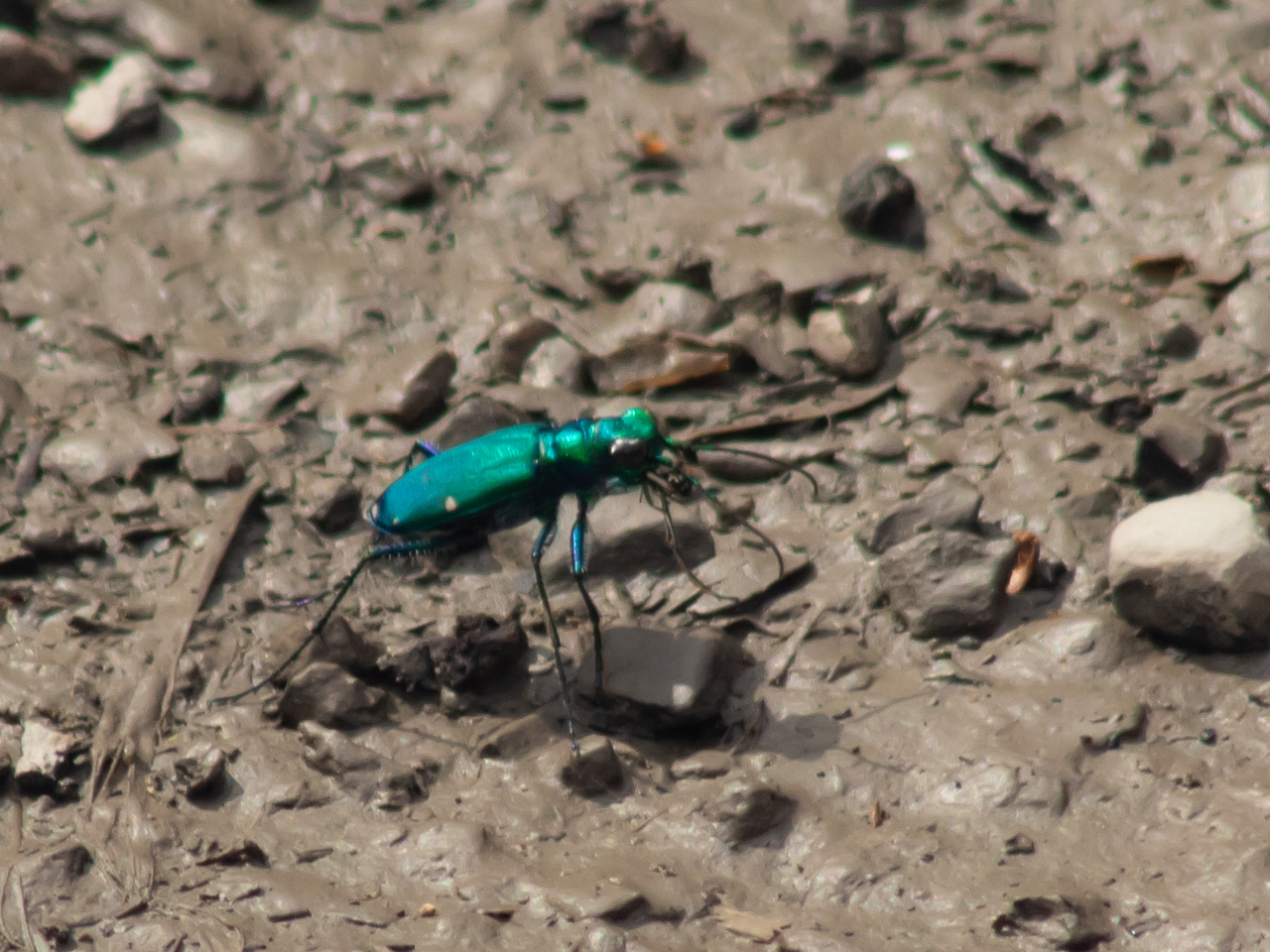
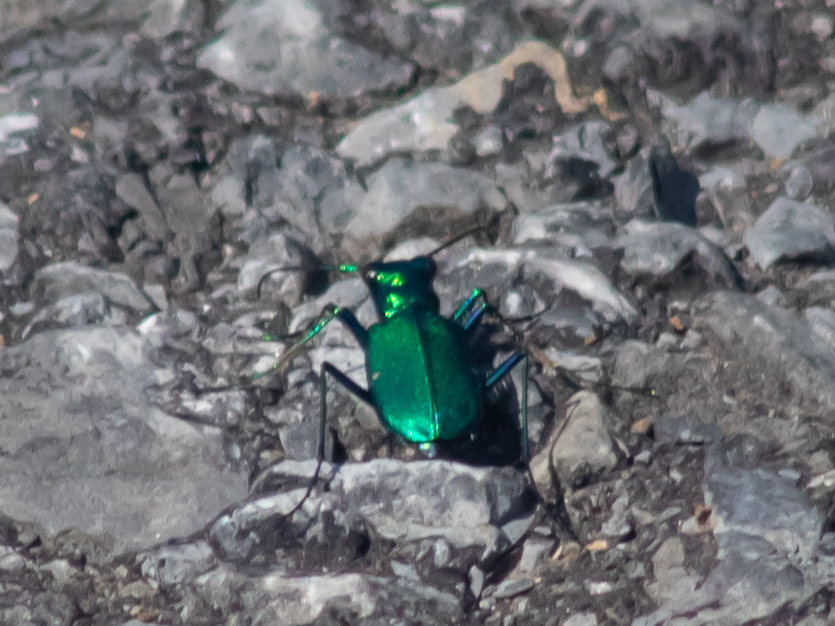
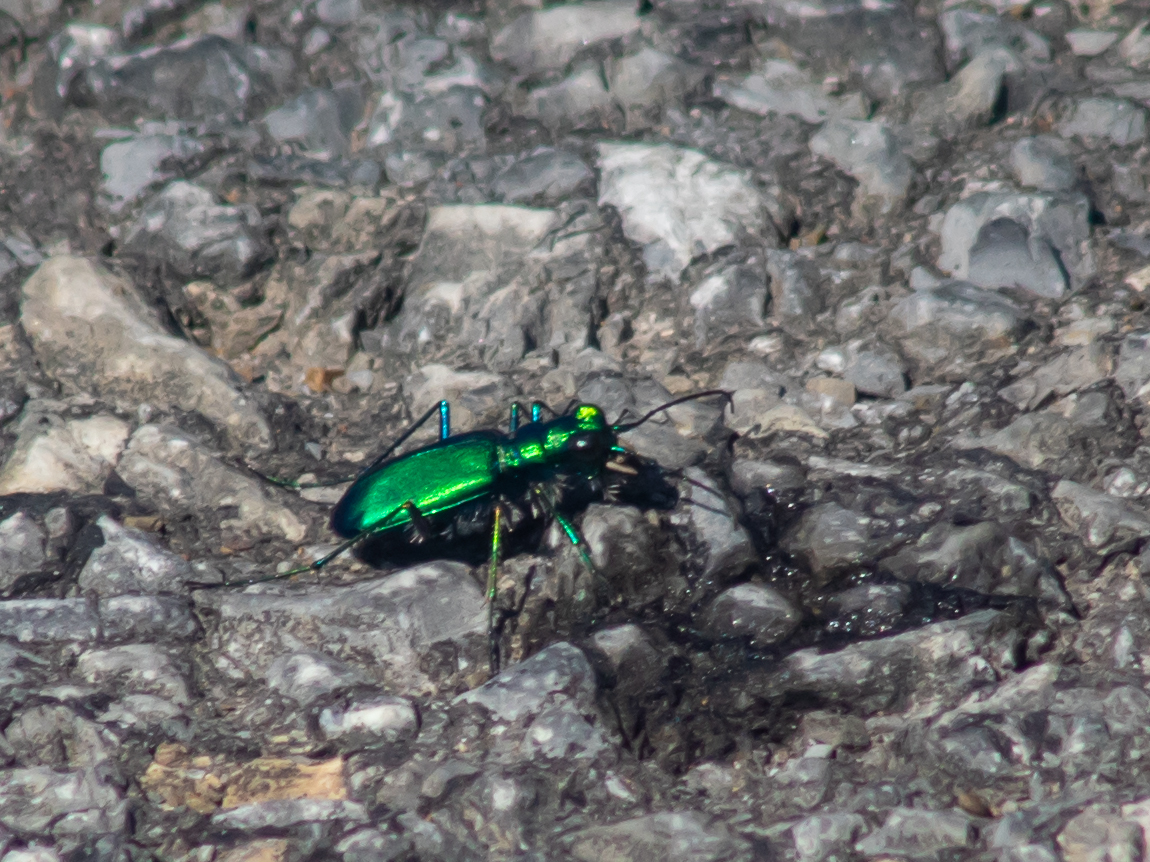
The brightly metallic green Cicindela sexguttata is possibly one of the most common (or at least one of the most conspicuous) species of tiger beetles in eastern North America. It can be found in a wide range of habitats within forested landscapes, including trails, roads, meadows, natural openings, powerlines, and many similar habitats with at least dappled direct sunlight. This species occurs in every county in Maryland, and is often noticed even by casual observers.
Description
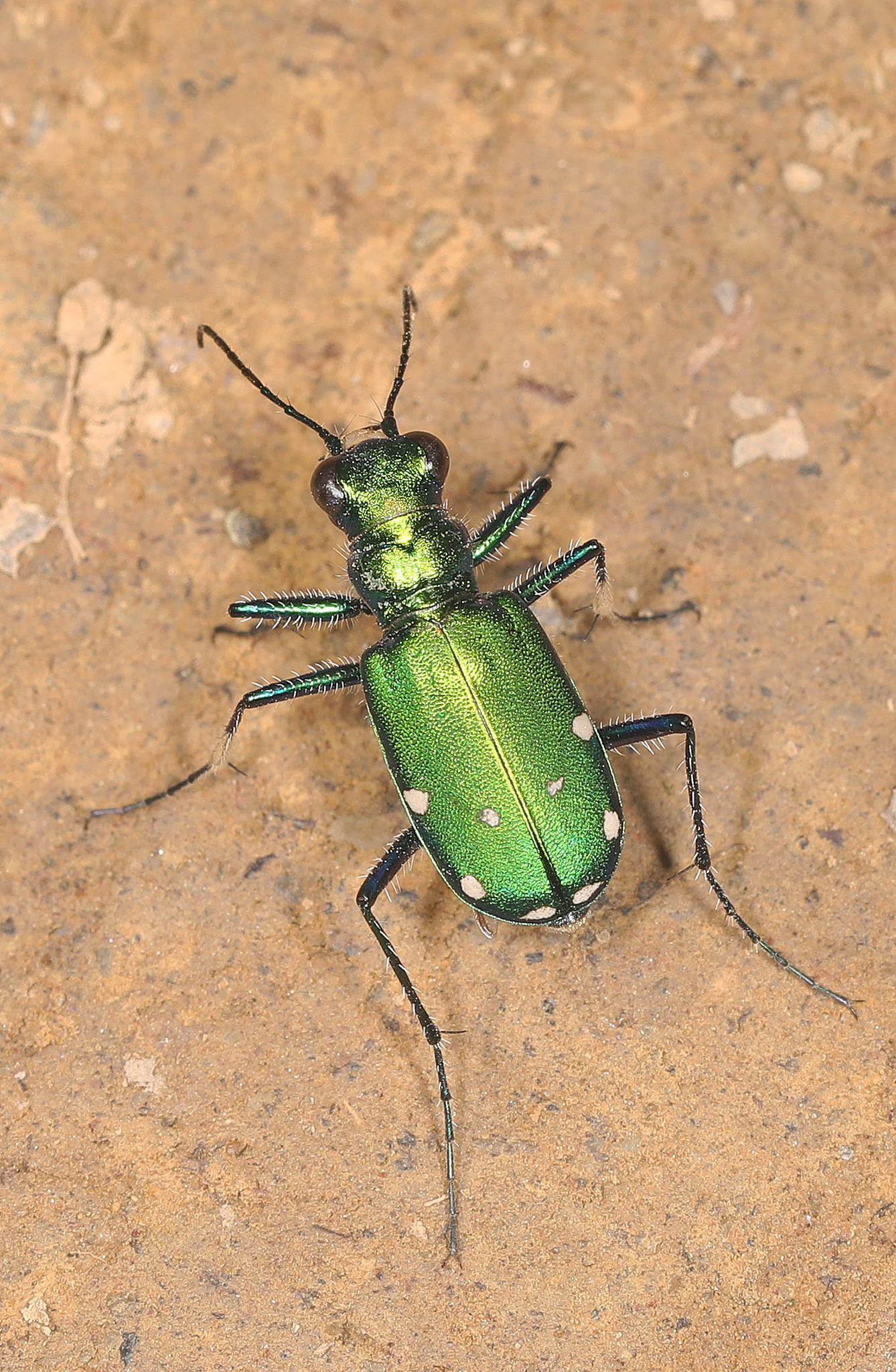
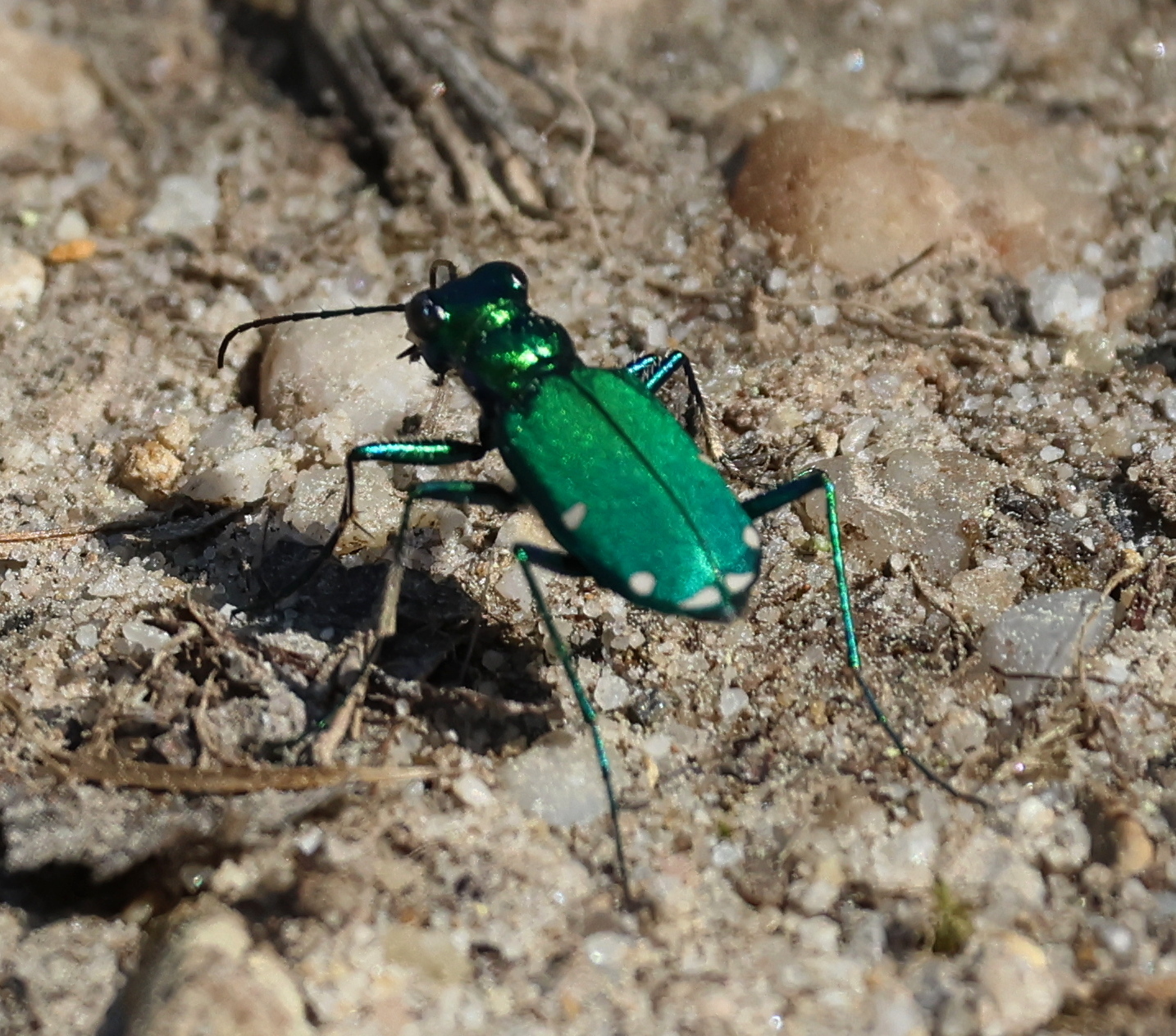
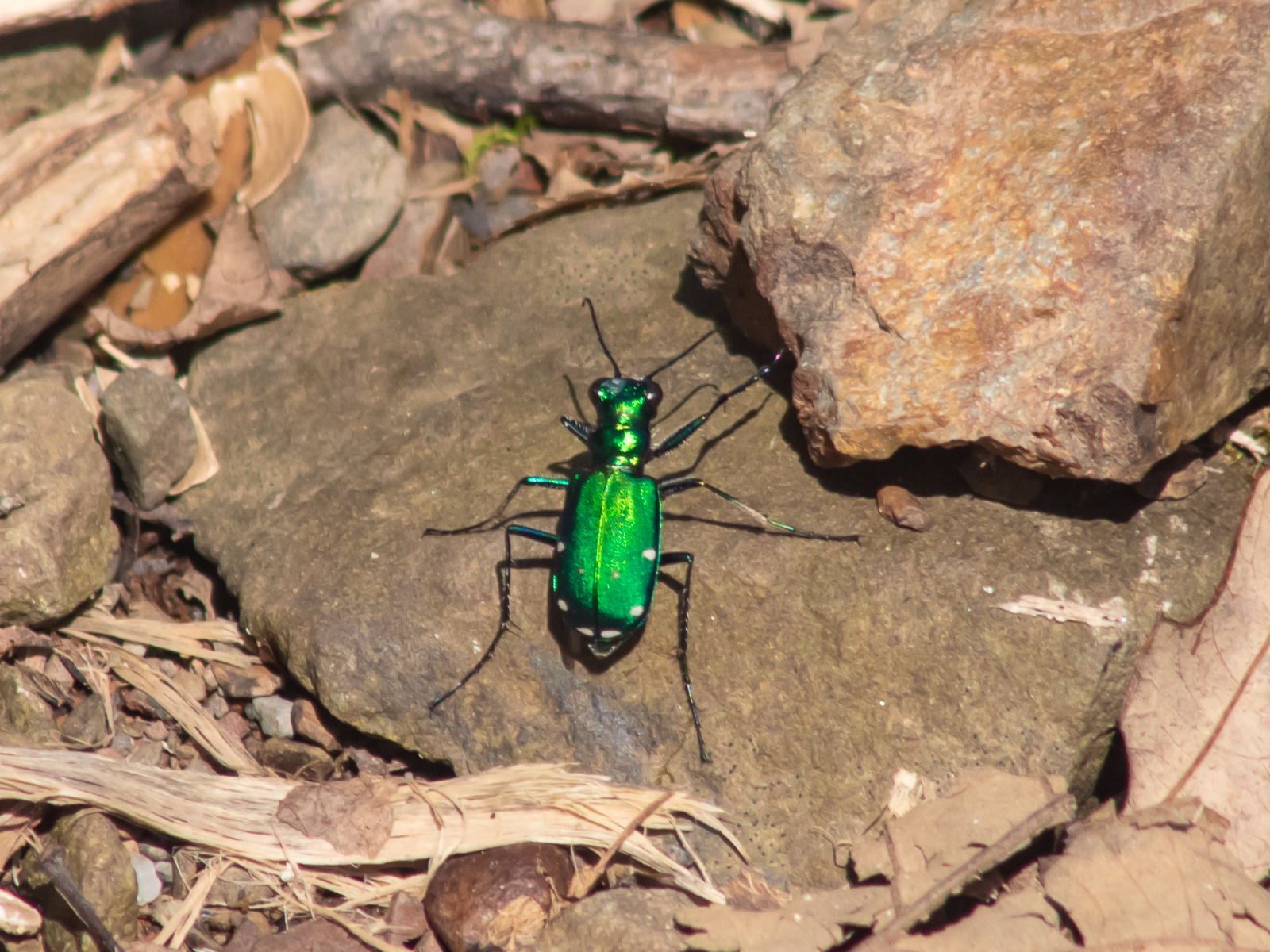
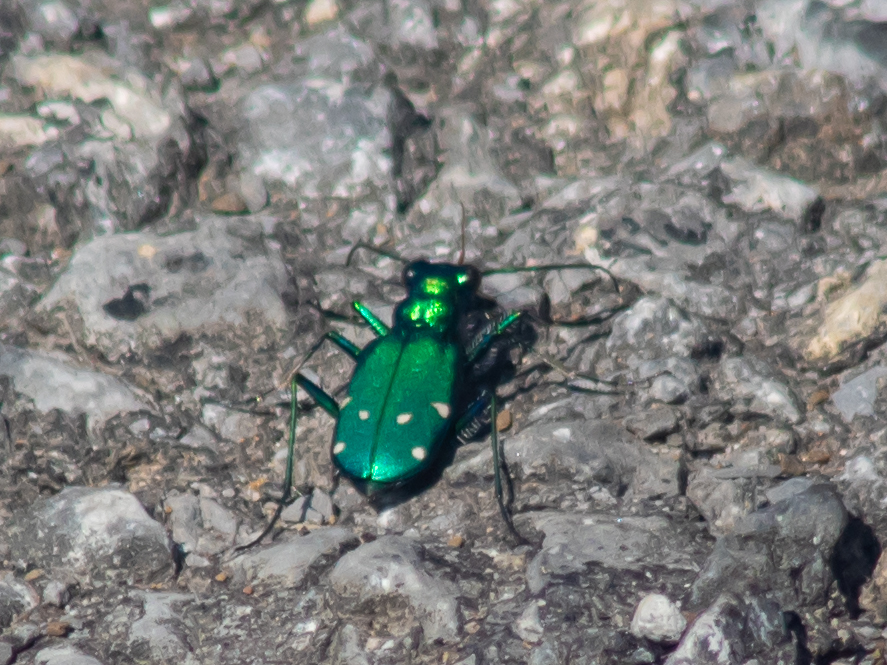
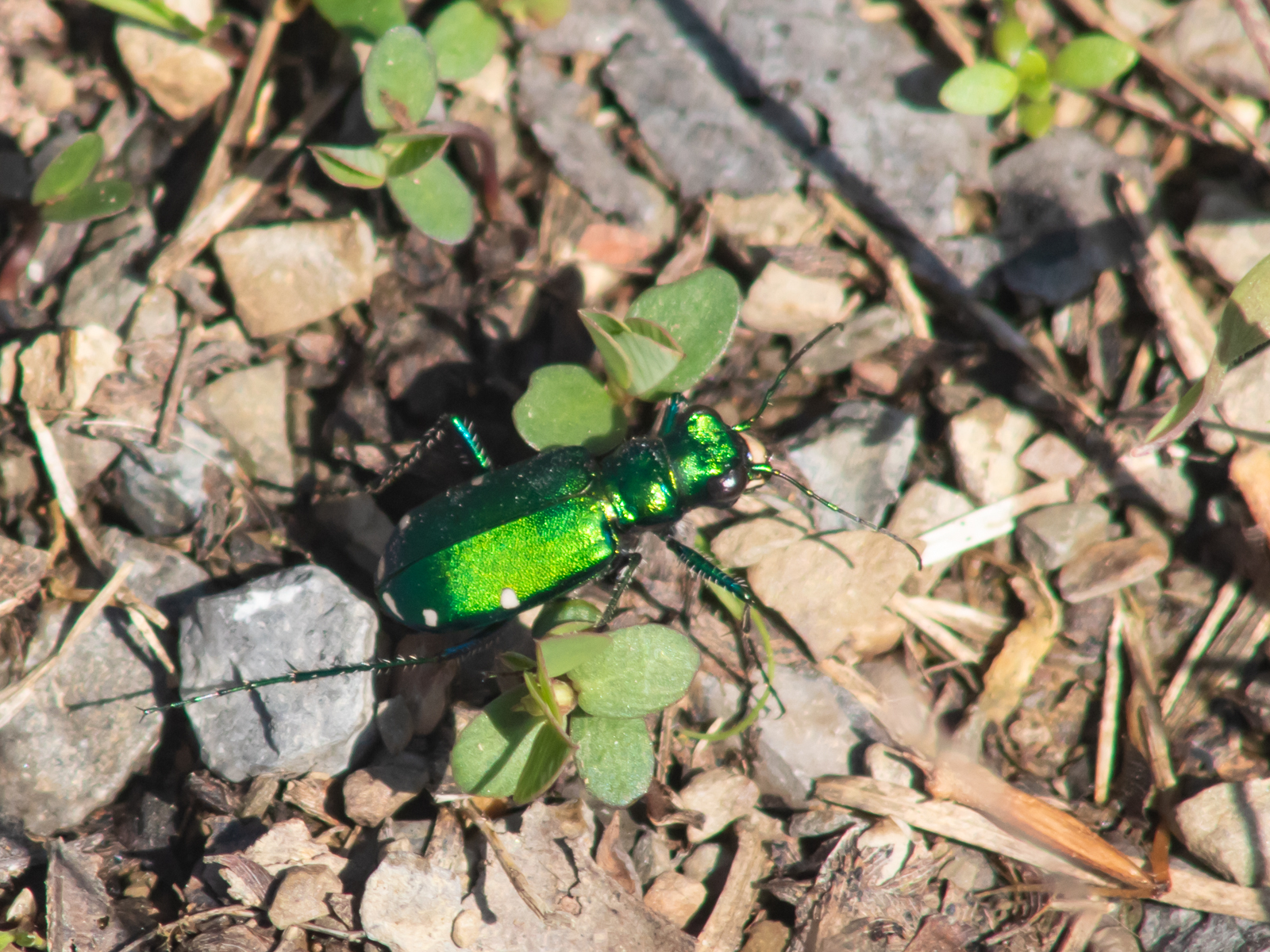
Cicindela sexguttata can be distinguished from its more uncommon relative, C. patruela by noting the extent and shape of maculations, the sculpturing of the integument, and the extent of white setae on the body. C. patruela shows a complete middle band, reaching to the edge of the elytron, while the maculations are normally broken into spots or absent on sexguttata. C. patruela generally has a duller, less reflective body coloration, while sexguttata is a more brilliant, metallic emerald green or bluish. Cicindela patruela has more extensive, dense whitish appressed setae along the metacoxae and sides of the abdomen, while this feature is much less developed on sexguttata.
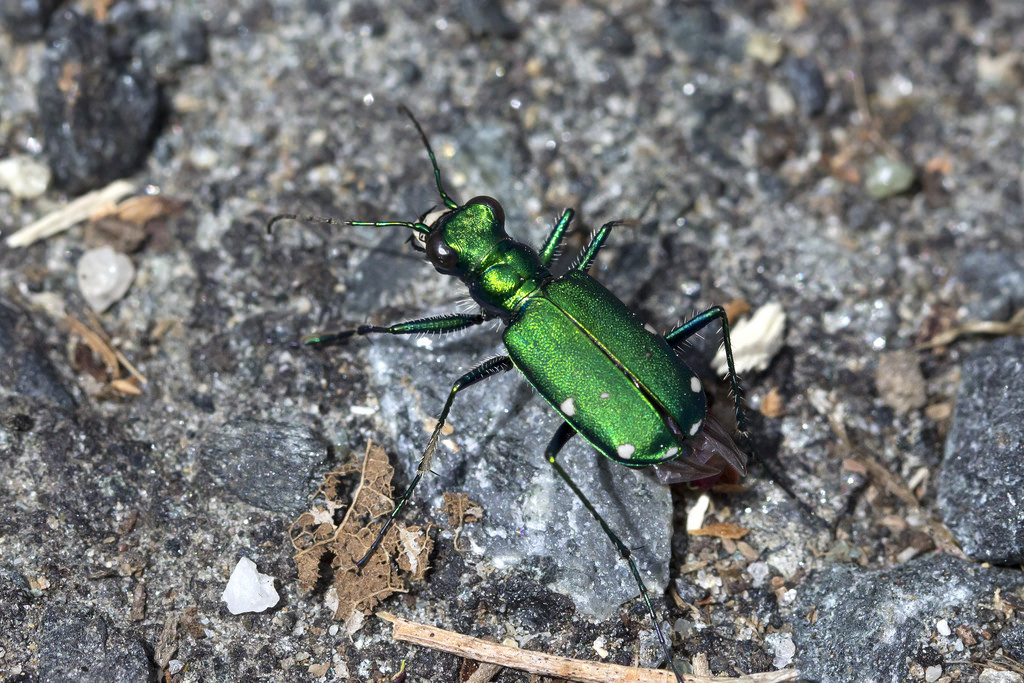
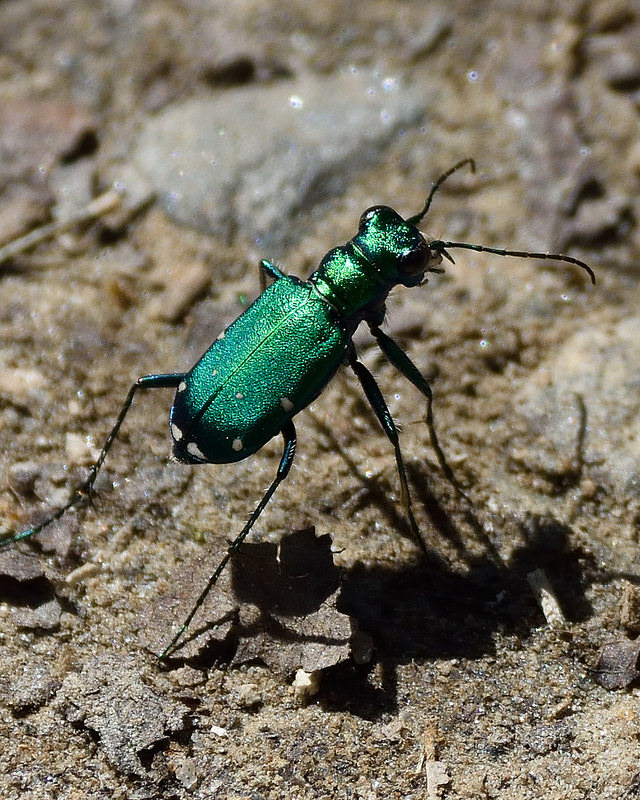
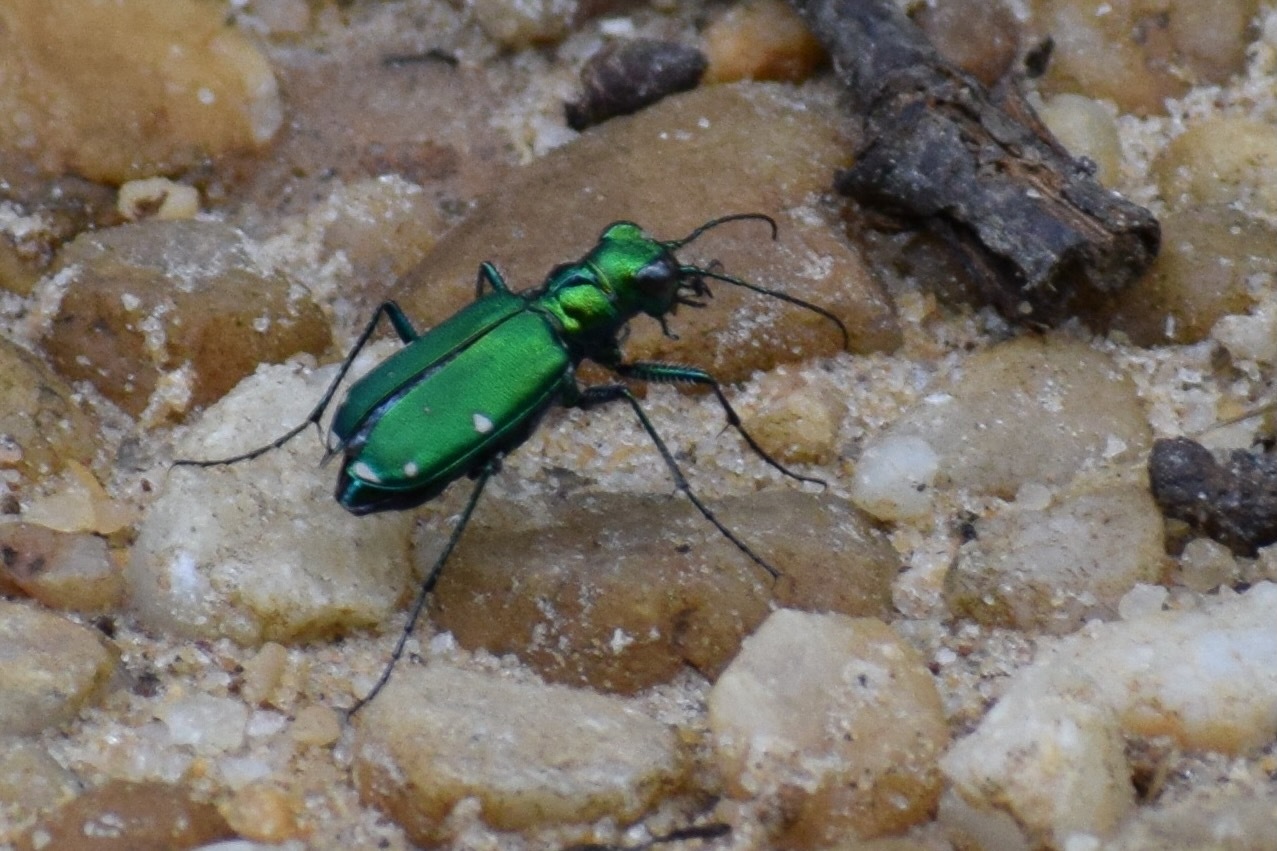
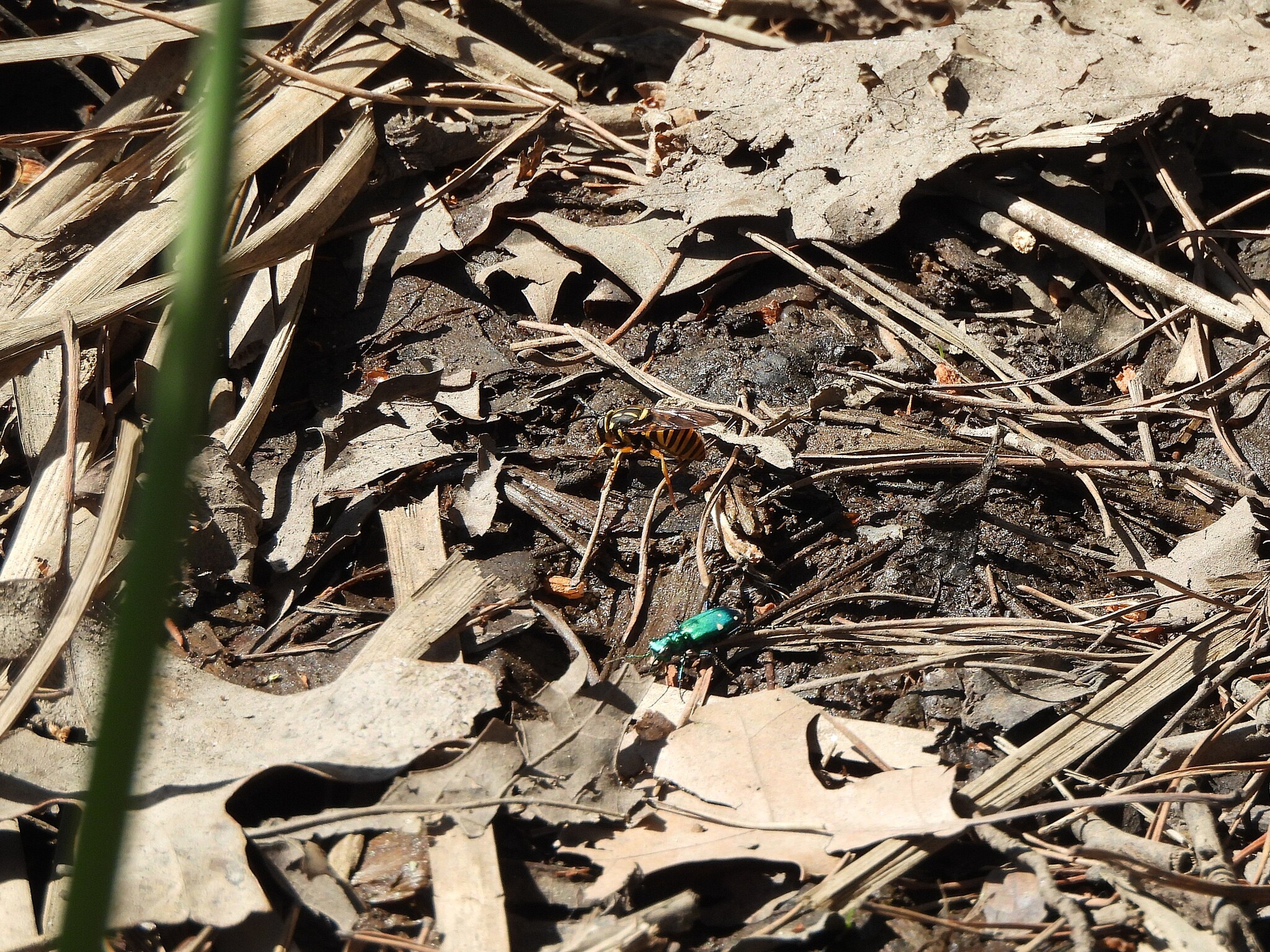
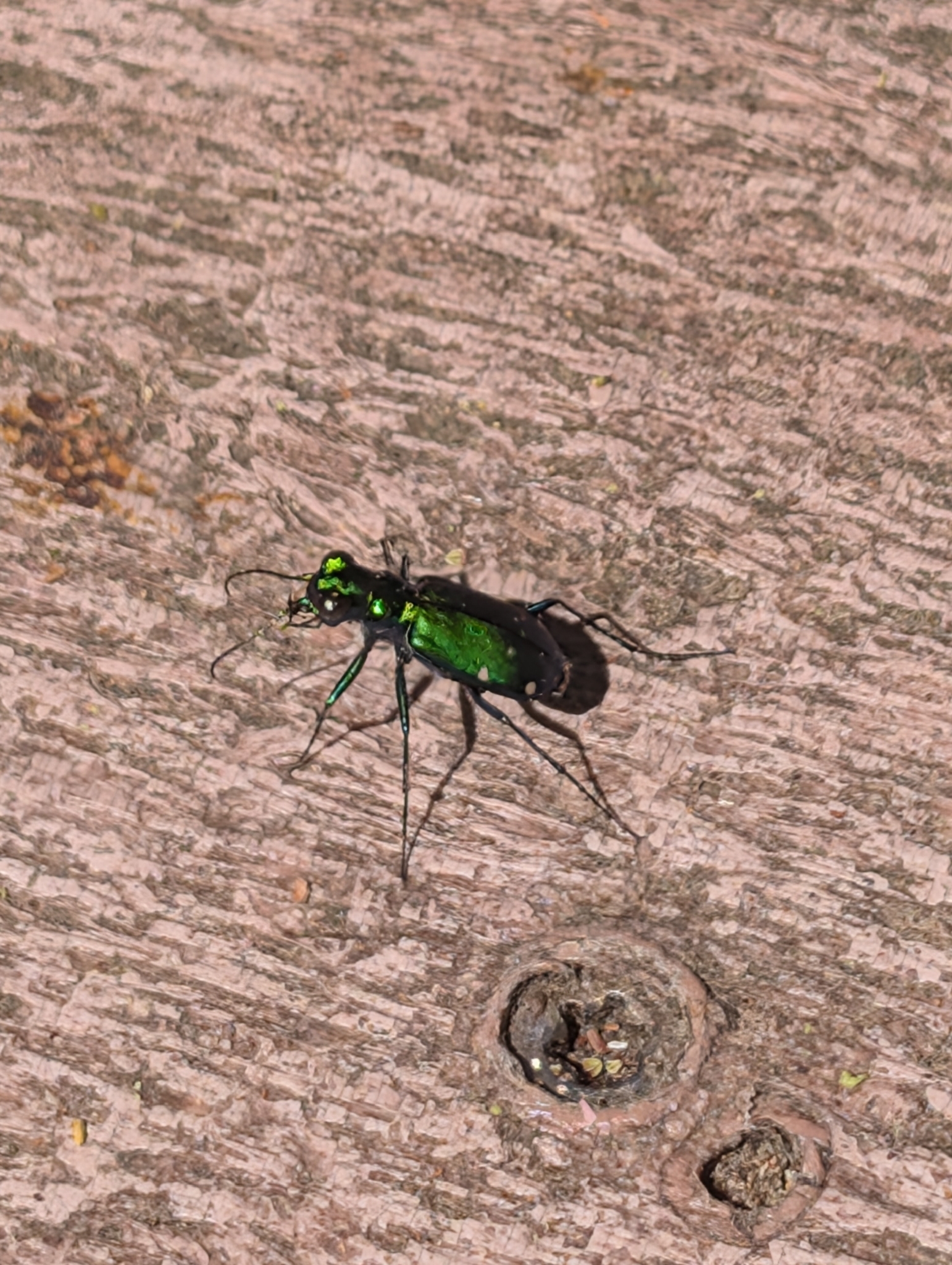
Six-spotted Tiger Beetle in Anne Arundel Co., Maryland (4/10/2021). (c) Sergei Drovetski, all rights reserved.
View Record Details
Media by
Sergei Drovetski.
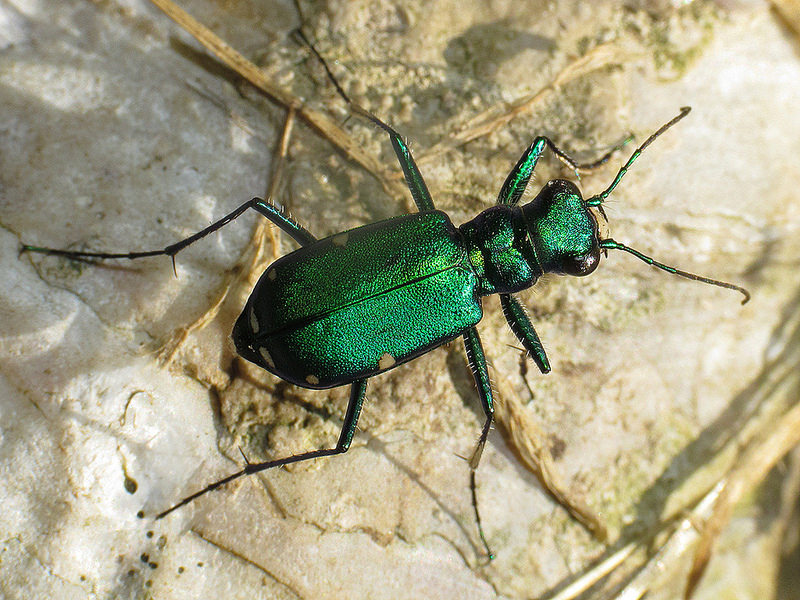
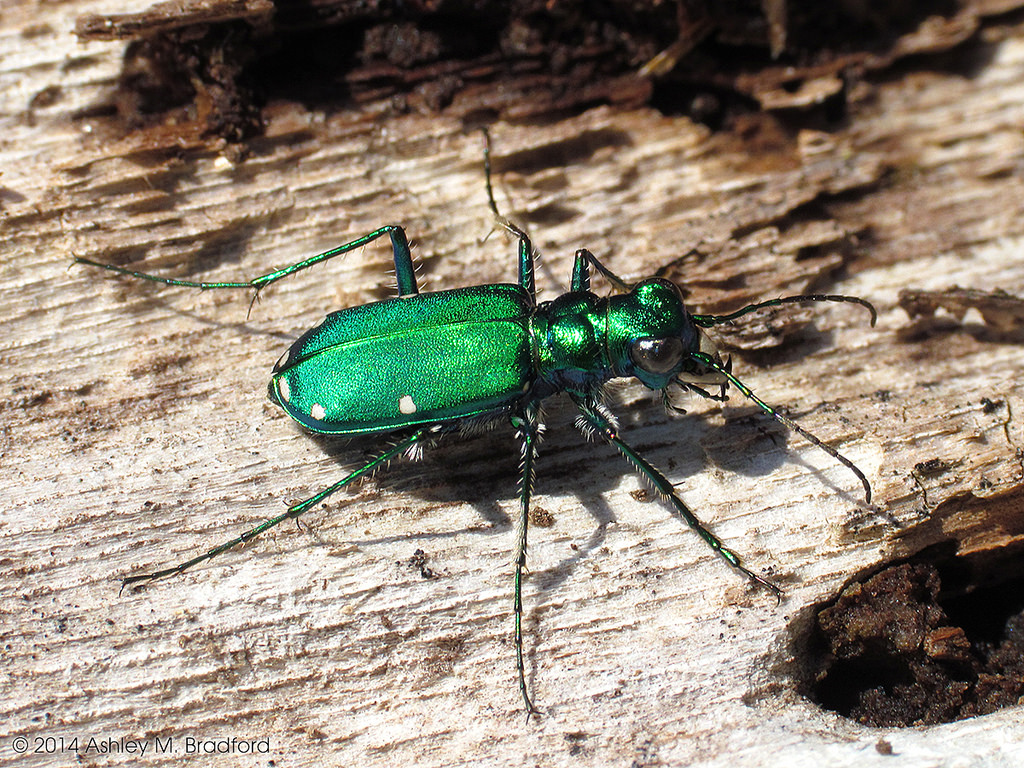
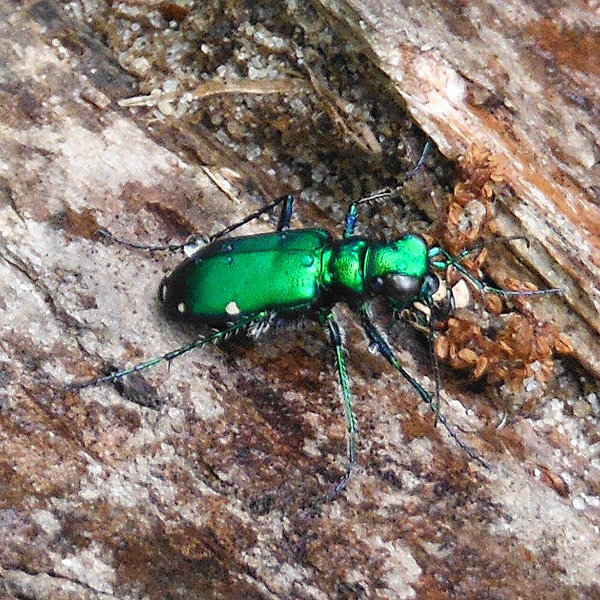
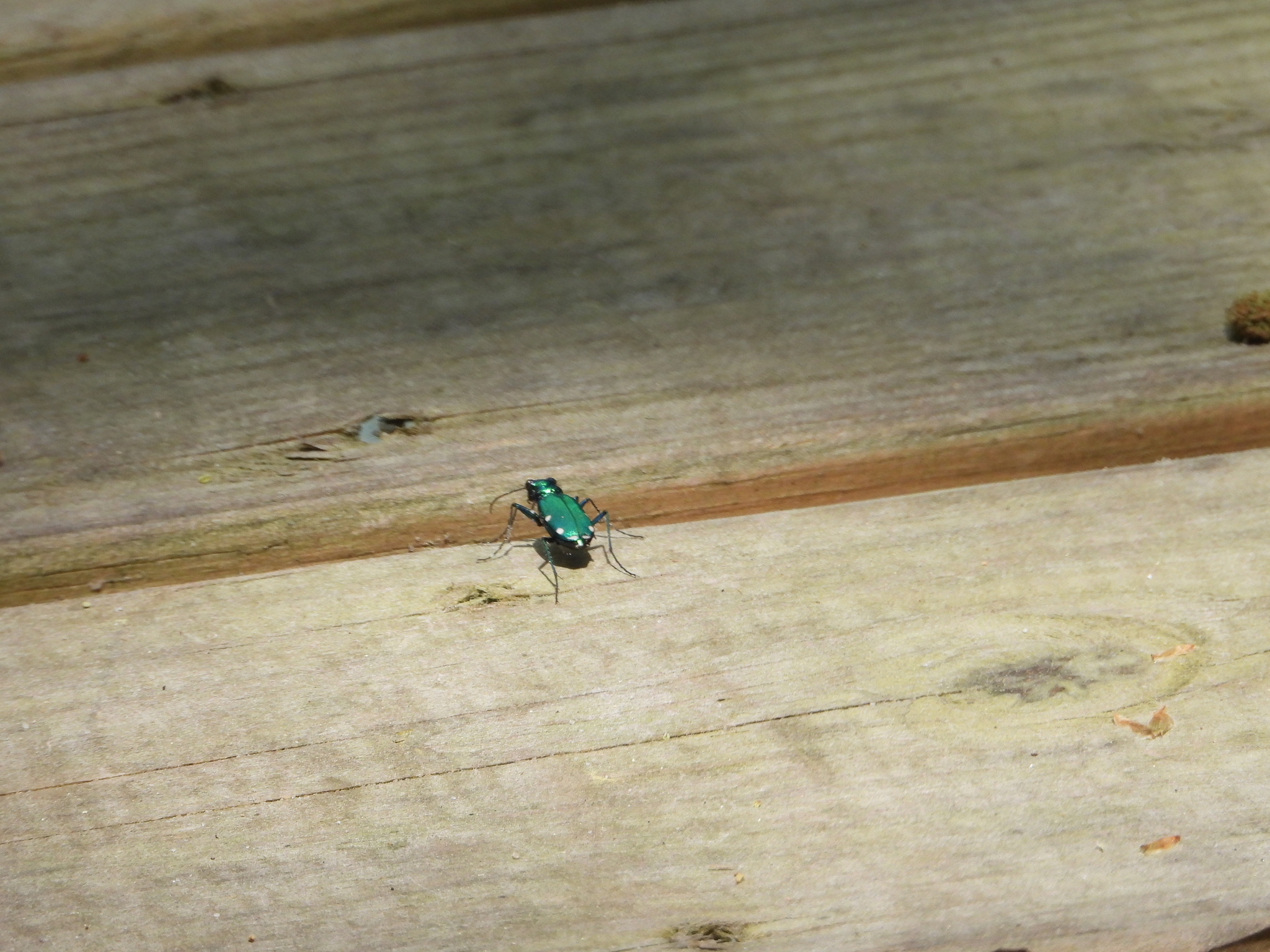
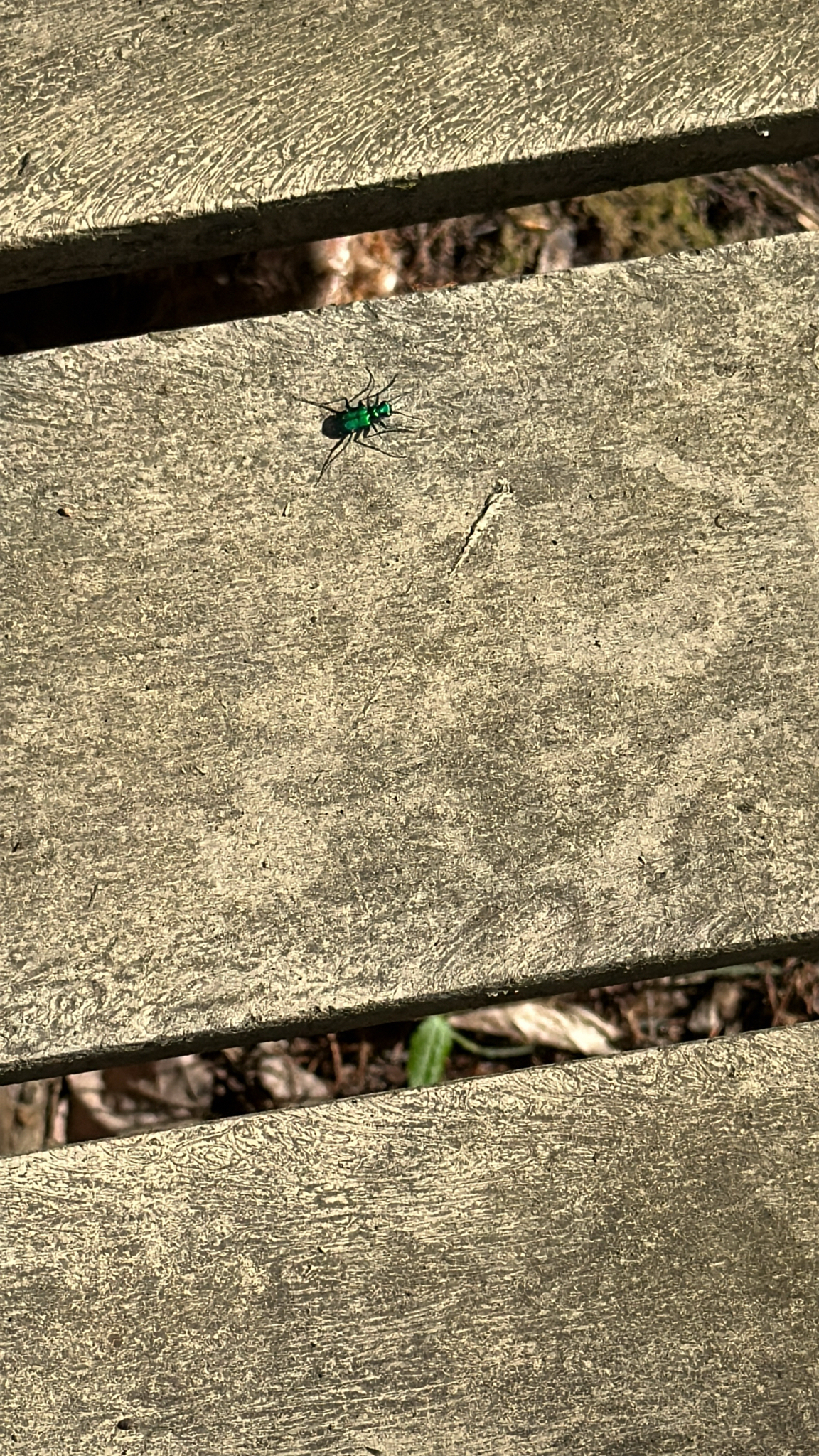
A Six-spotted Tiger Beetle at Andelot Farm, Kent Co., Maryland (6/7/2014). New county record found by many parties during the Andelot Farm Bioblitz.
View Record Details
Media by
Ashley Bradford.
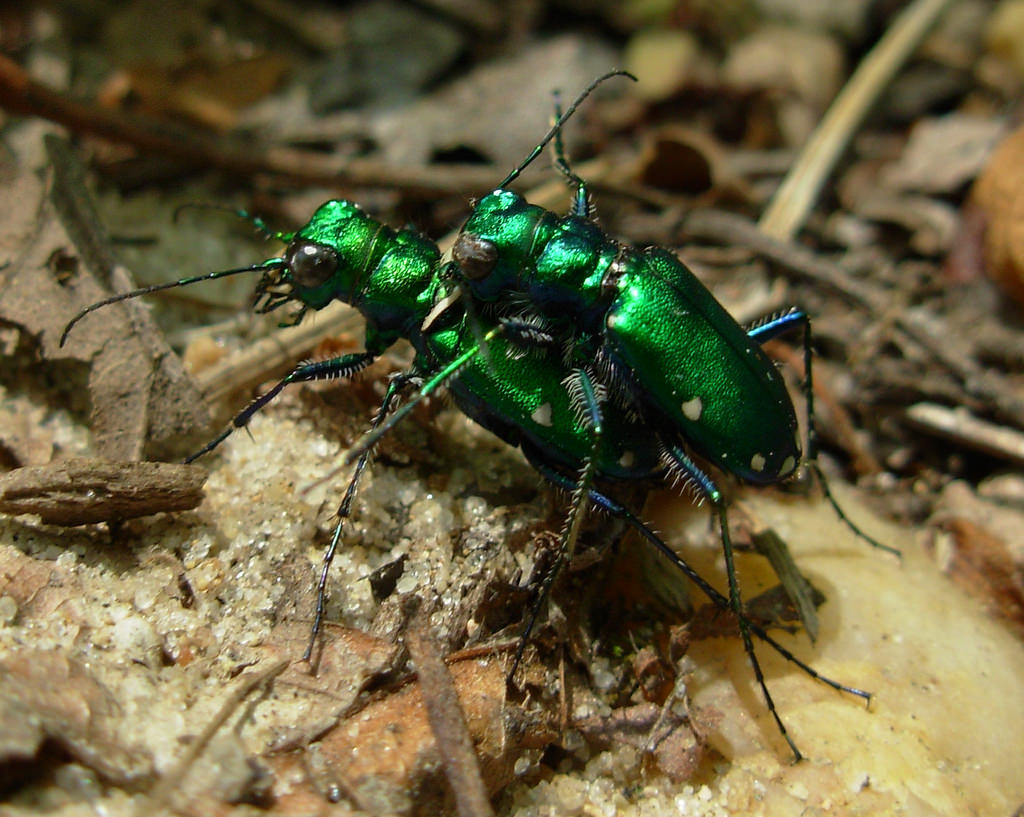
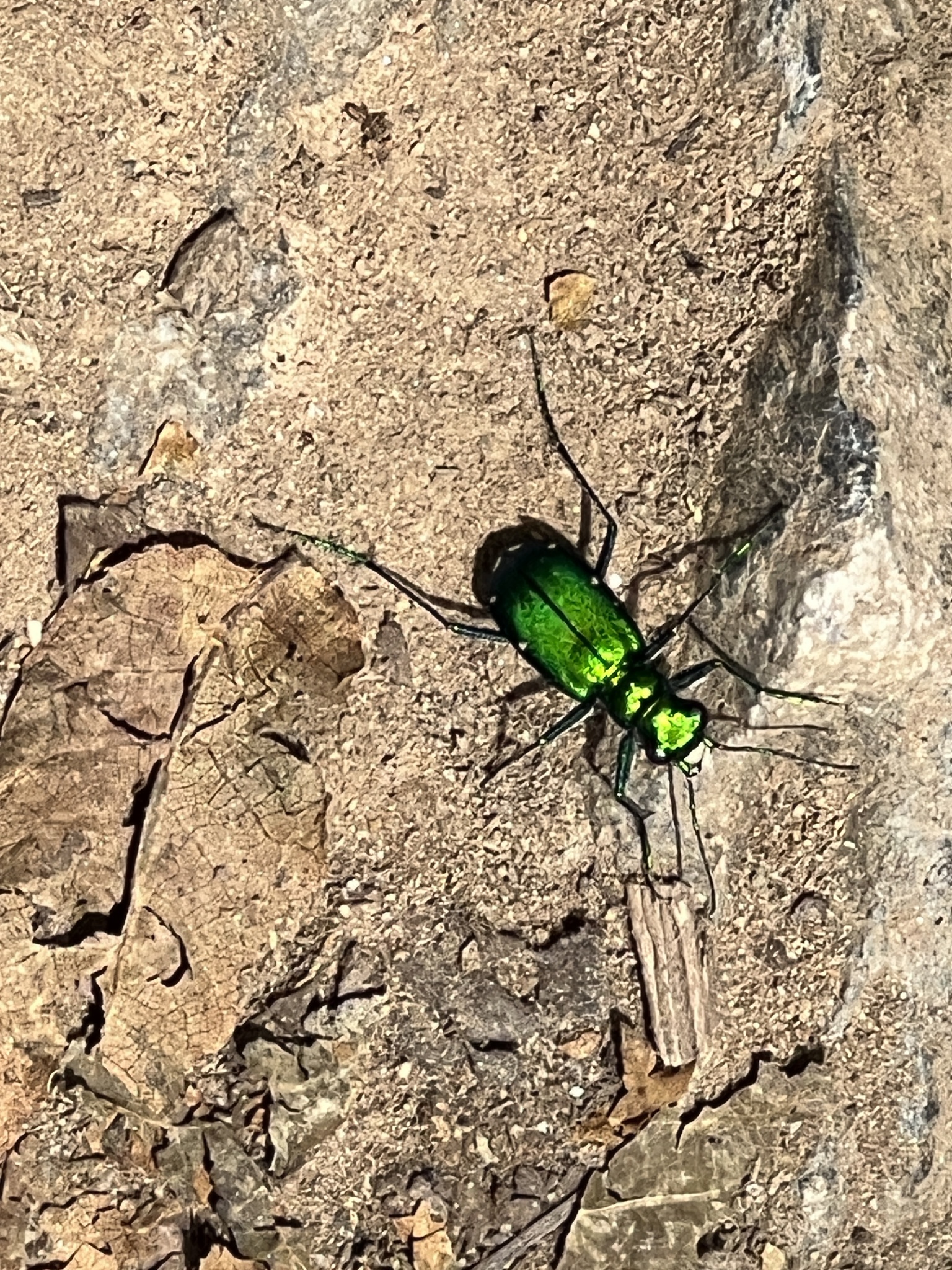
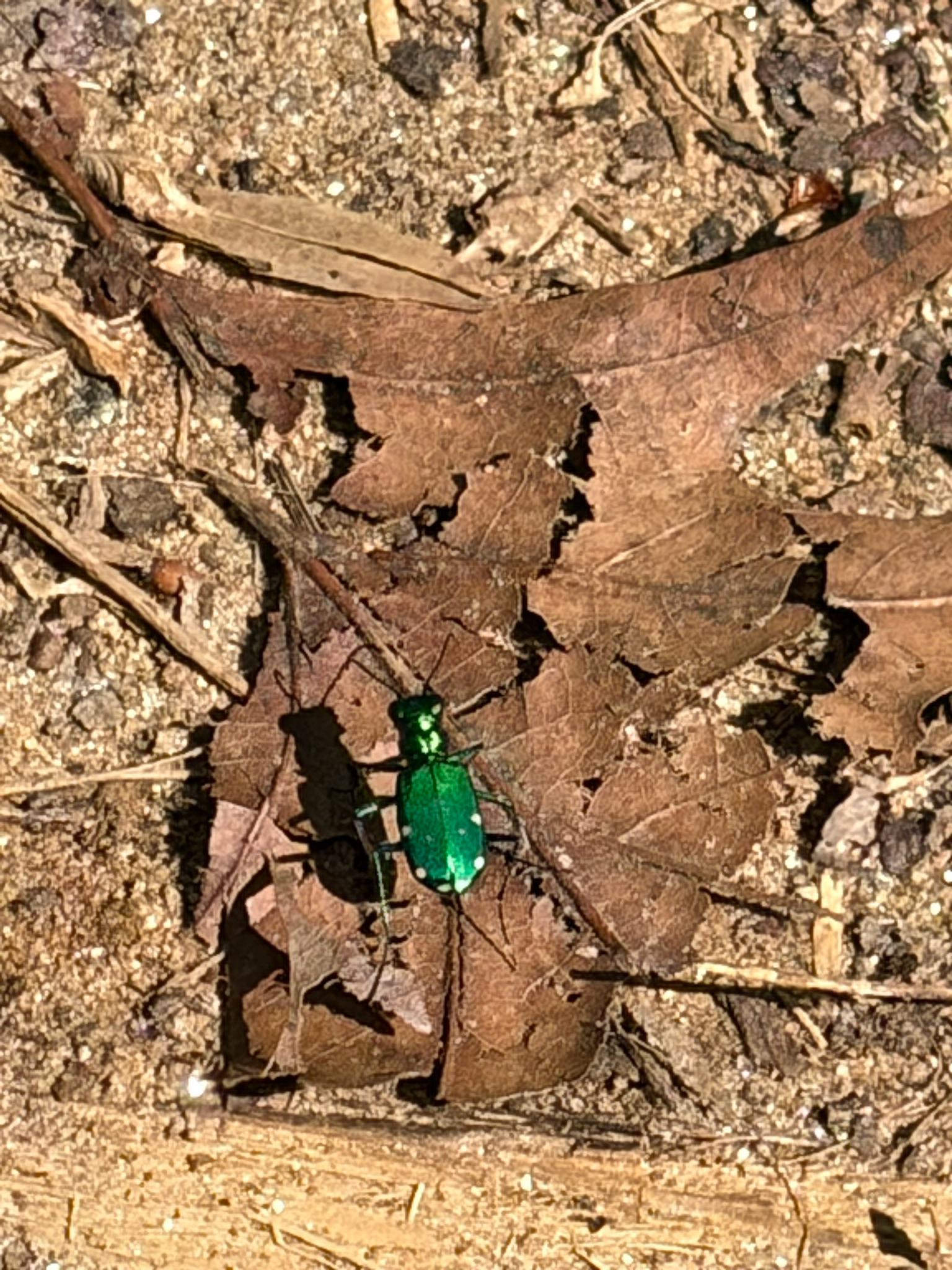
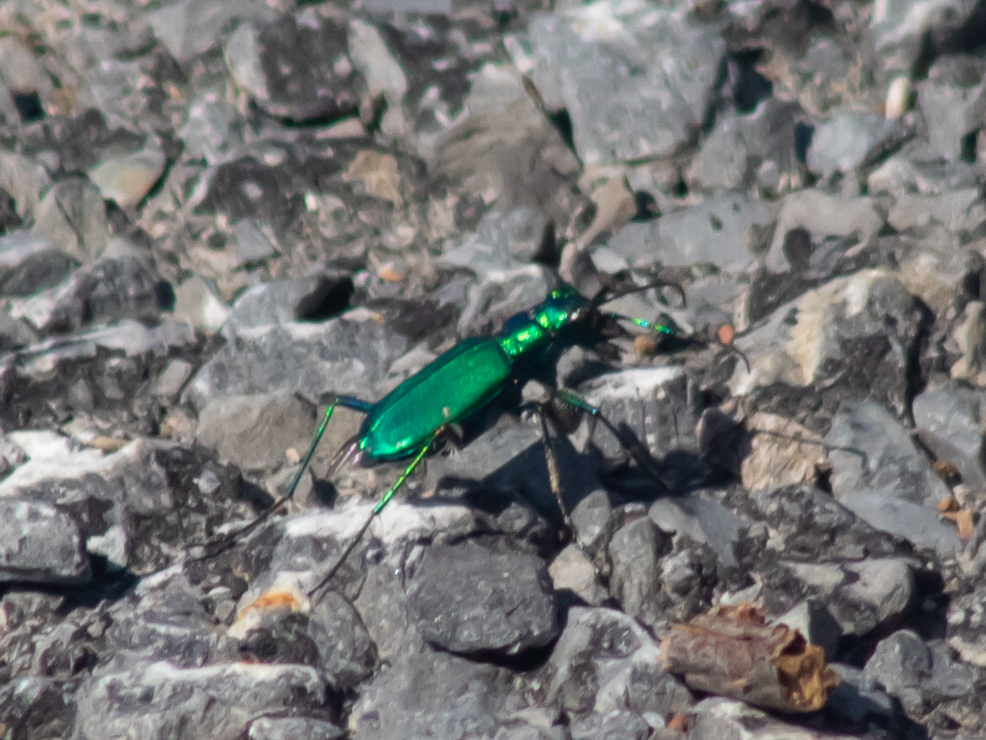
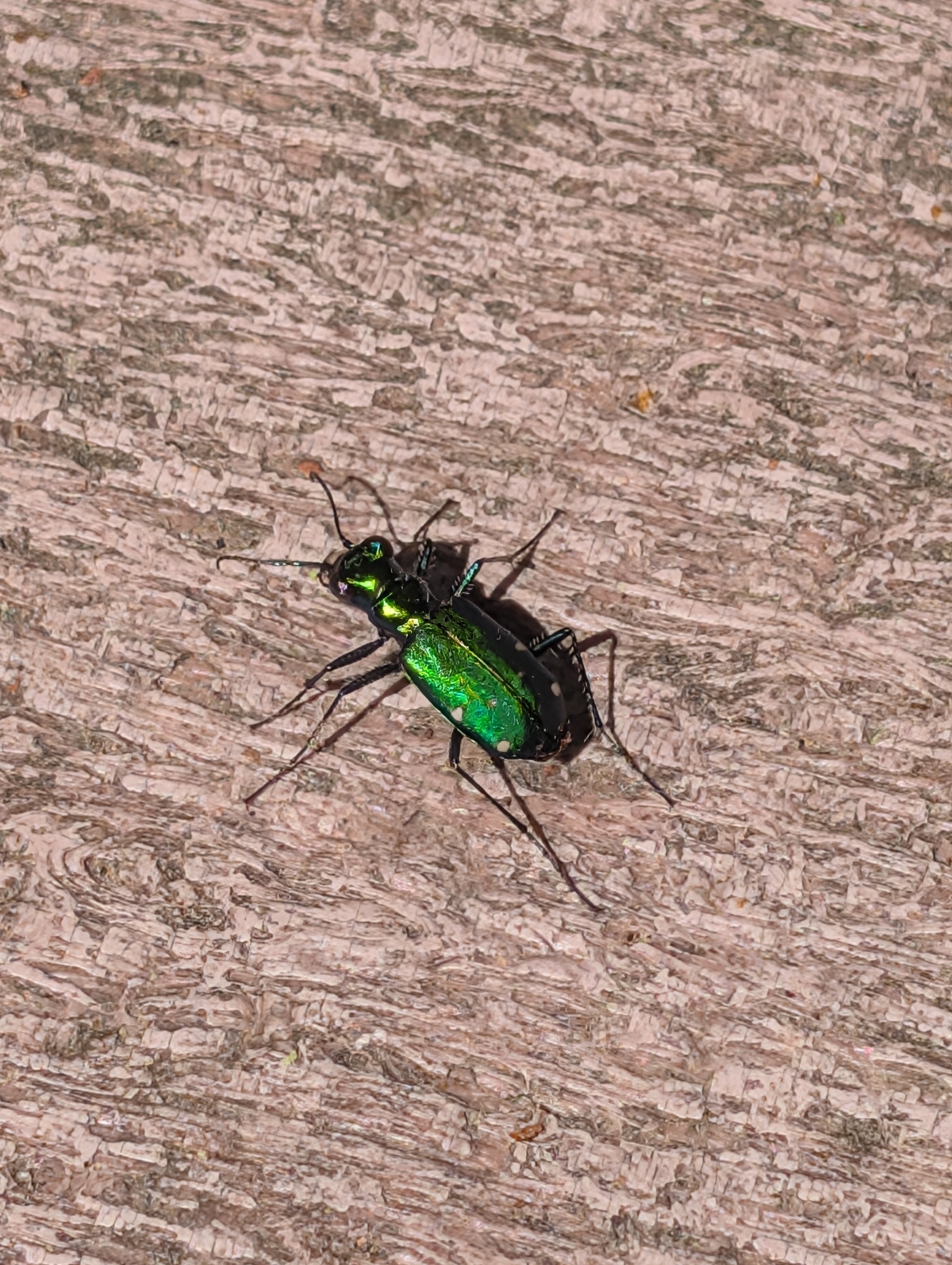
Six-spotted Tiger Beetle in Prince George's Co., Maryland (4/24/2021). (c) Sergei Drovetski, all rights reserved.
View Record Details
Media by
Sergei Drovetski.
The six-spotted tiger beetle, also known as the six-spotted green tiger beetle (Cicindela sexguttata), is a common North American species of tiger beetle in the Cicindelinae subfamily. It is common in many areas of the states, and is well known. It is recognized for its bright green color and its flight pattern. The beetle is largely harmless to humans and may live as long as three years.[citation needed]
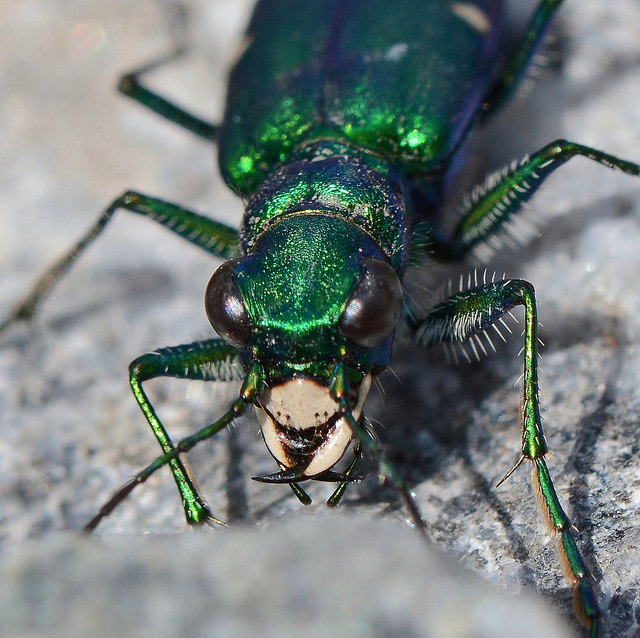
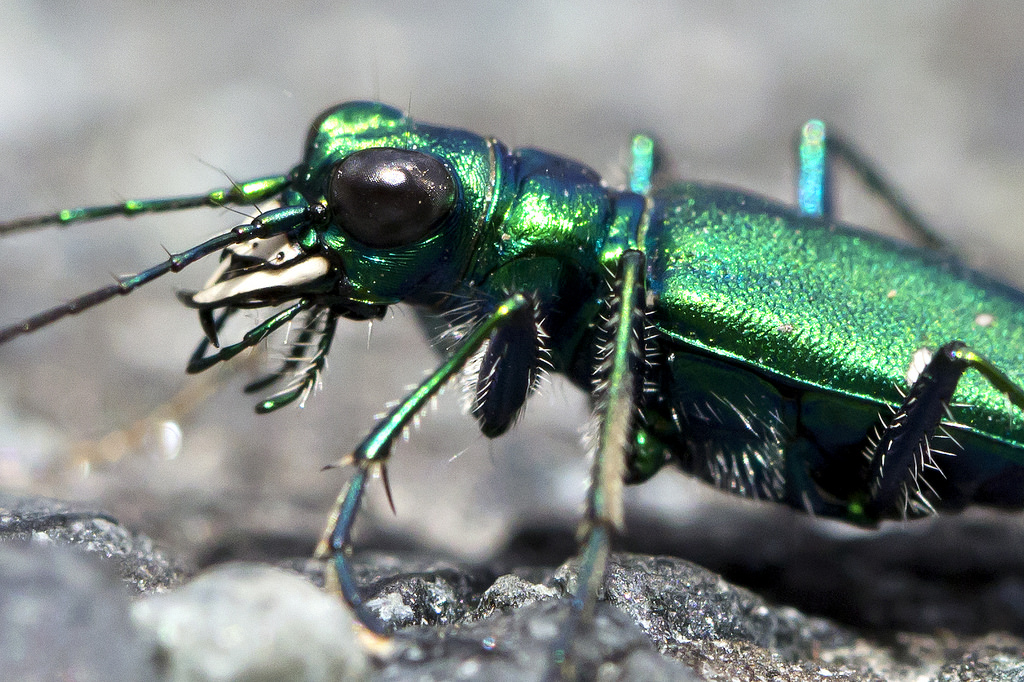
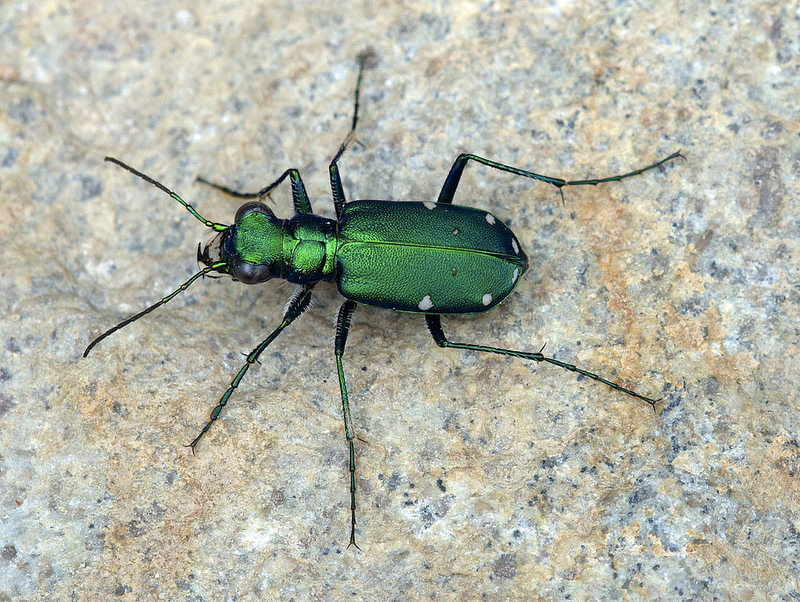
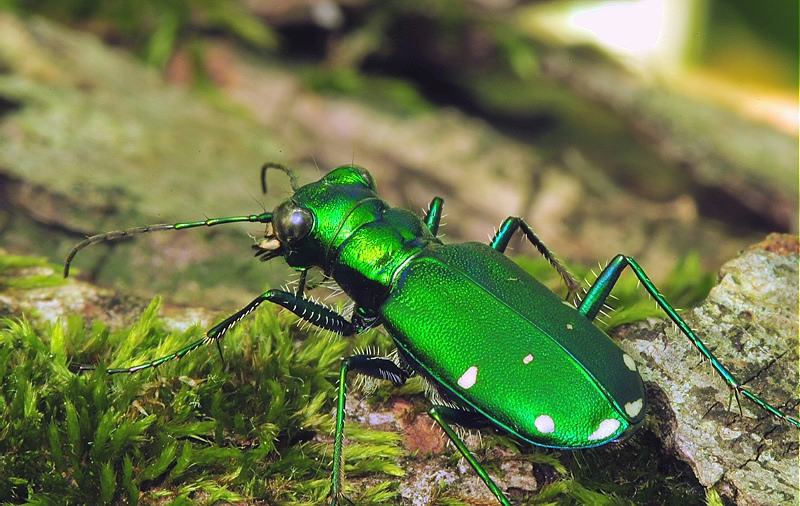
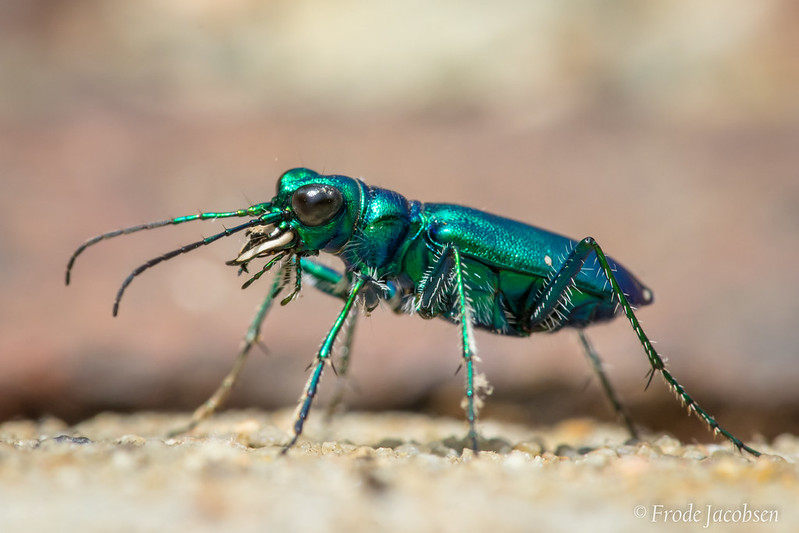
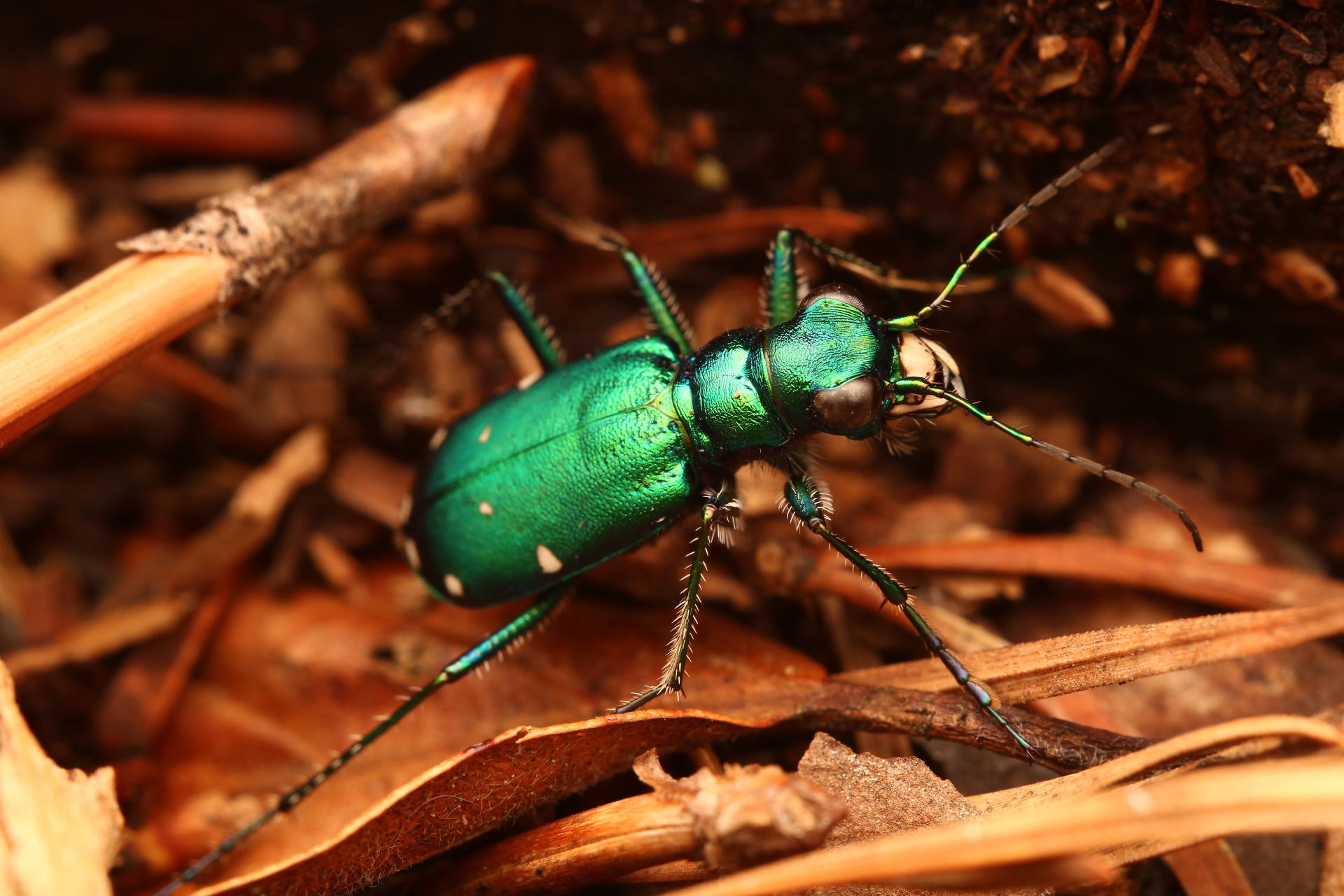
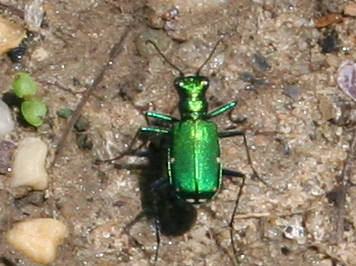
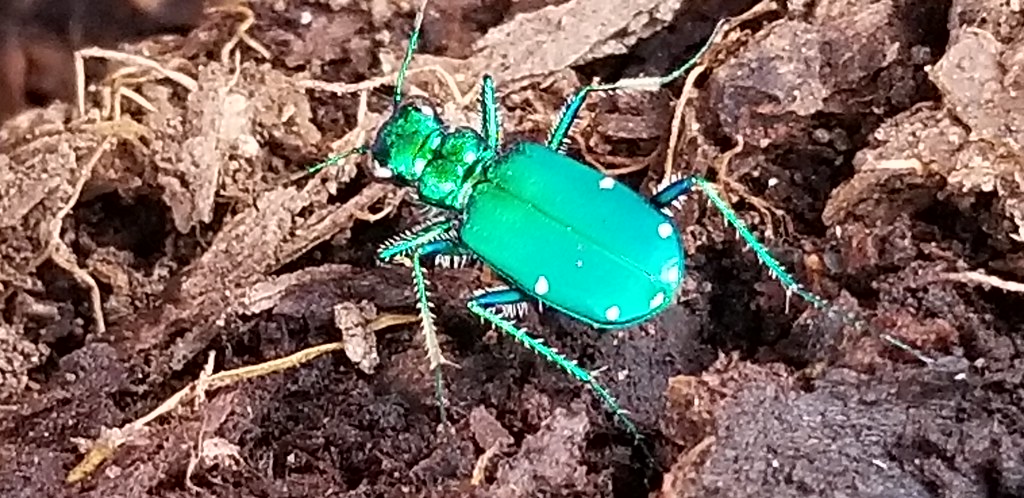
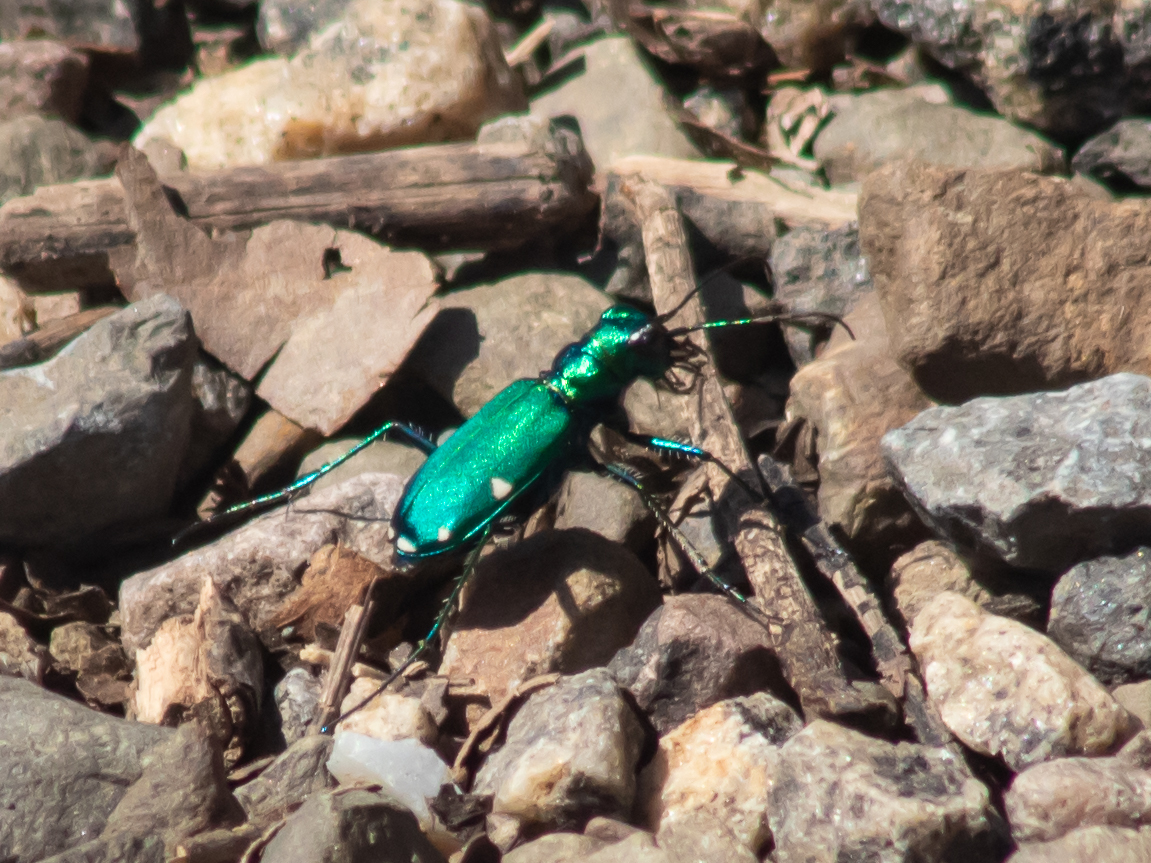
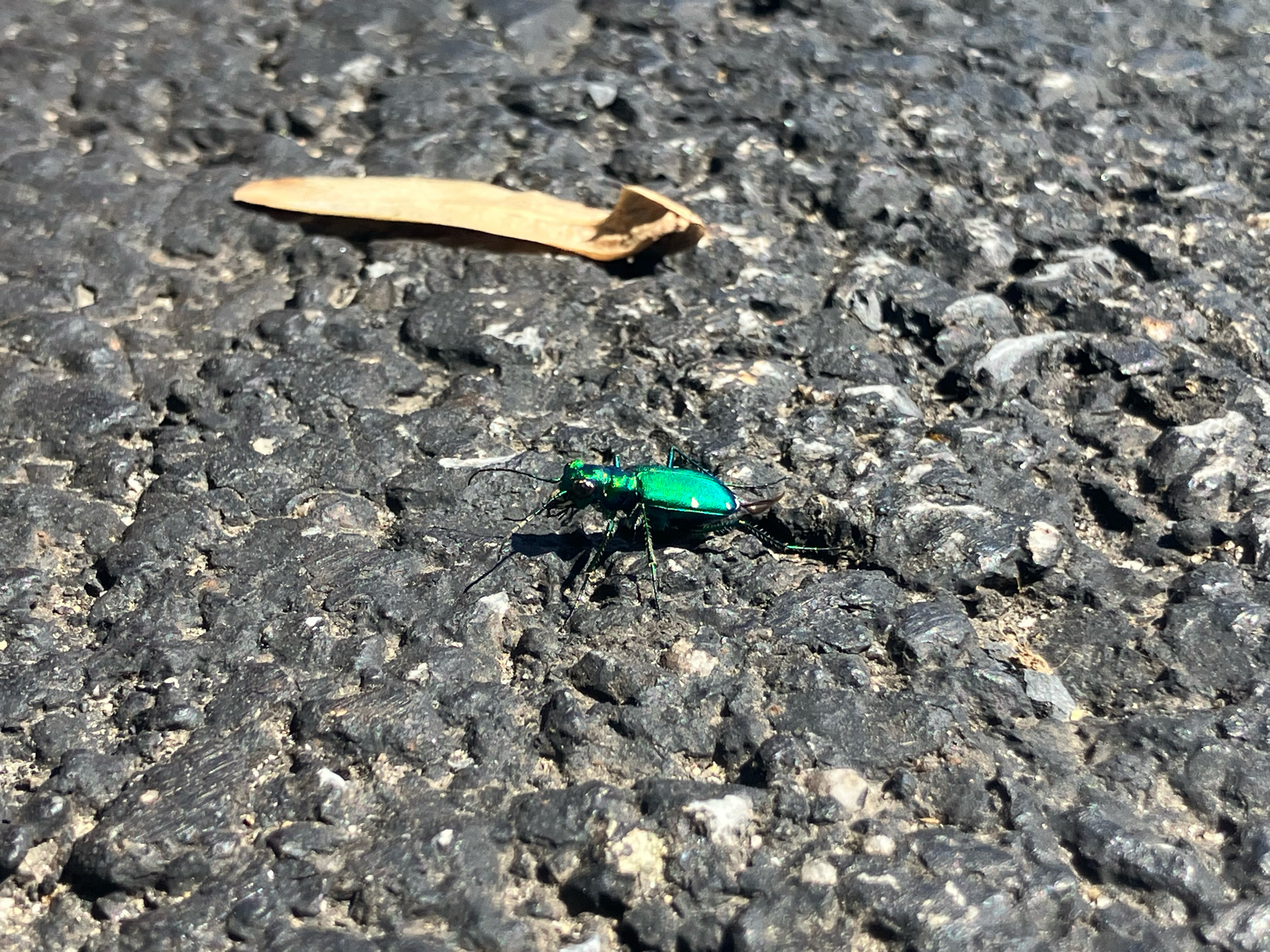
They are commonly found in deciduous forests in between Minnesota,[2] southeastern Canada[1] and south to eastern Texas,[3] excluding the Florida Panhandle,[1] and are easily recognizable by their large, white, overlapping mandibles. The adult is 12–14 mm (1/2-5/8") in length,[4][page needed] and has fairly long legs. The mandibles give these attractive insects a ferocious appearance. While tiger beetles are voracious predators of small arthropods, they do not bite humans unless handled. Both the common name and the species name refer to the six small white spots on the beetle's metallic-green to metallic-blue-green elytra. This is not always the case, however, as some individuals may have more spots,[5] fewer spots, or none at all, presumably due to genetic variation. This species is associated with wooded areas and they are often found in sunlit patches clear of undergrowth such as dirt paths and fallen logs where they hunt caterpillars, ants, spiders, and many other kinds of arthropods. Although tiger beetles are not gregarious, many beetles may sometimes be seen in one suitable hunting area. The female lays her eggs in sandy patches, and the larvae burrow into the ground after they hatch. Here they lie in wait until small arthropods pass by, at which time the larvae lunge out of their burrows at their prey. The beetles develop as larvae for about one year before pupating, and the insect has a total lifespan of just under five years.[citation needed]







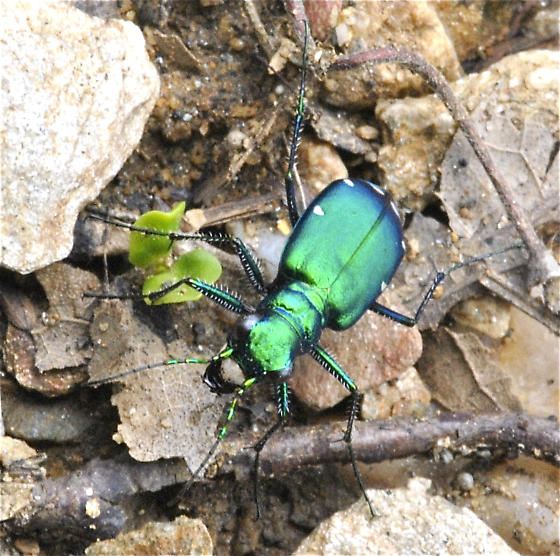
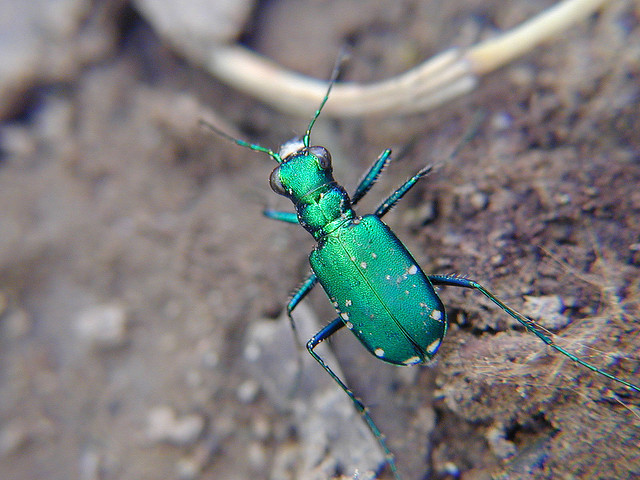
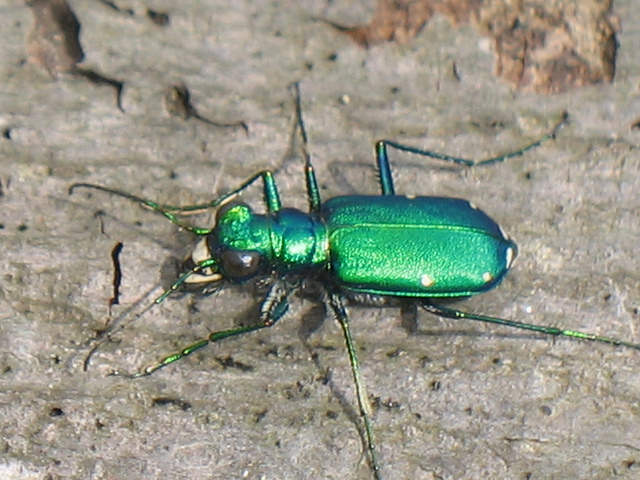
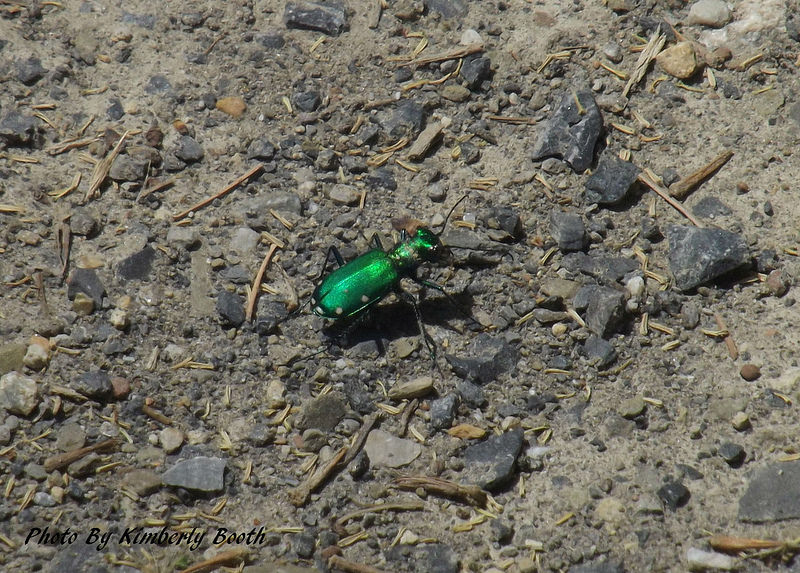

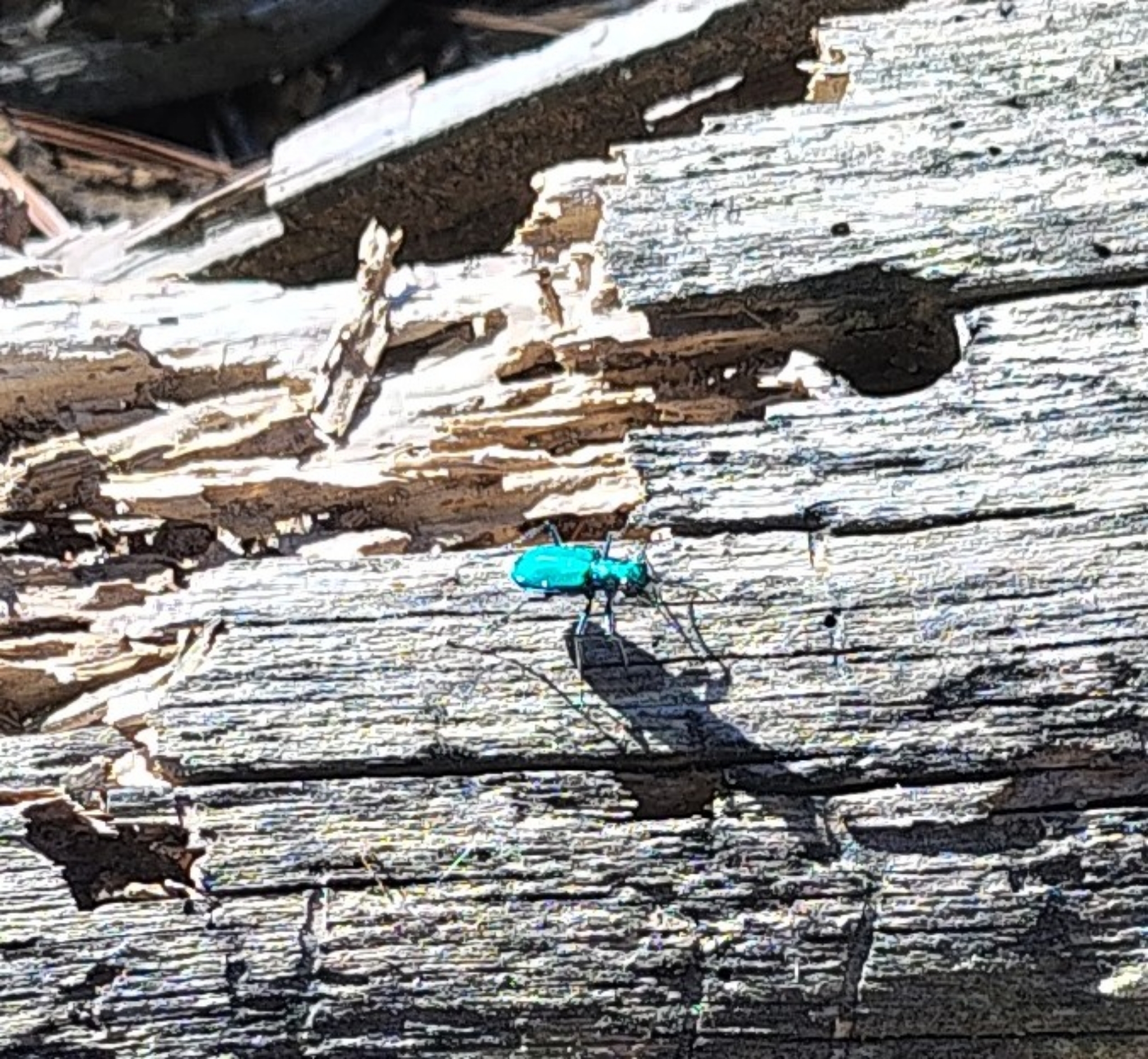

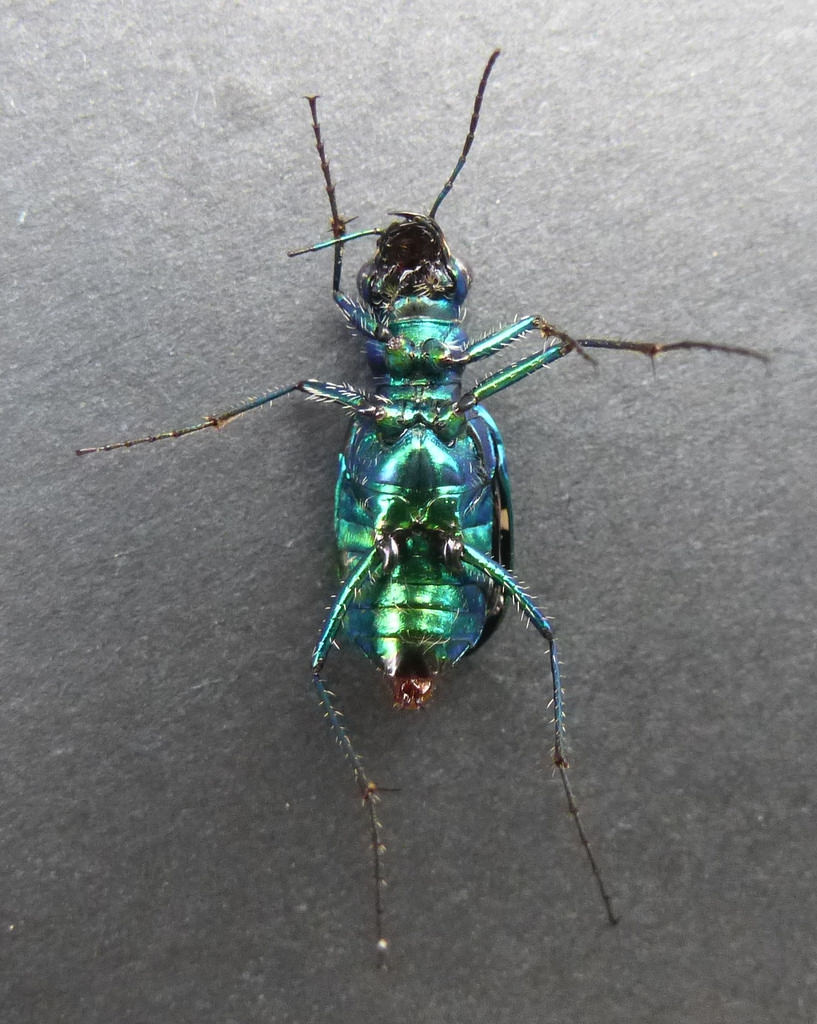


 Adult
Adult Adult
Adult Adult, Belleplain State Forest, New Jersey


_in_townsend_tn.jpg)
 Media related to Cicindela sexguttata at Wikimedia Commons
 Data related to Cicindela sexguttata at Wikispecies
