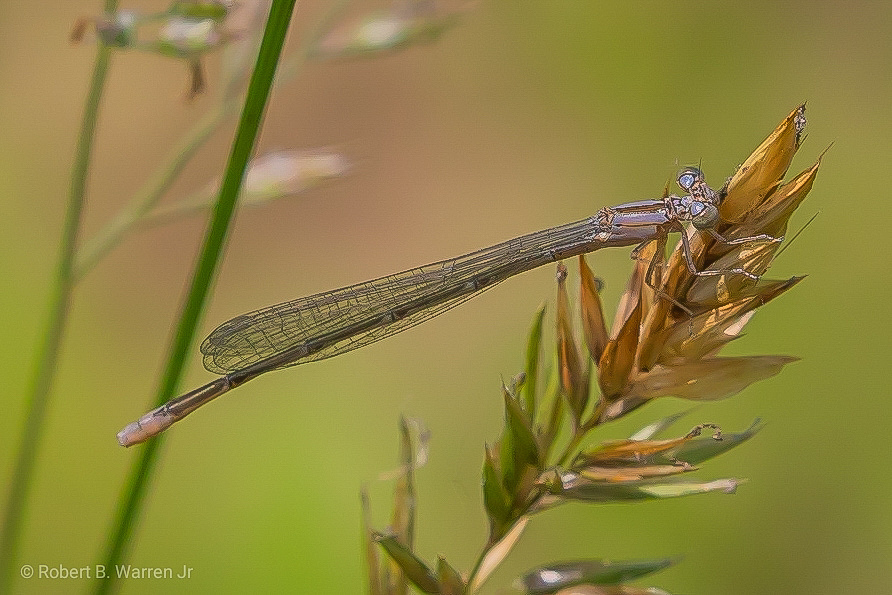
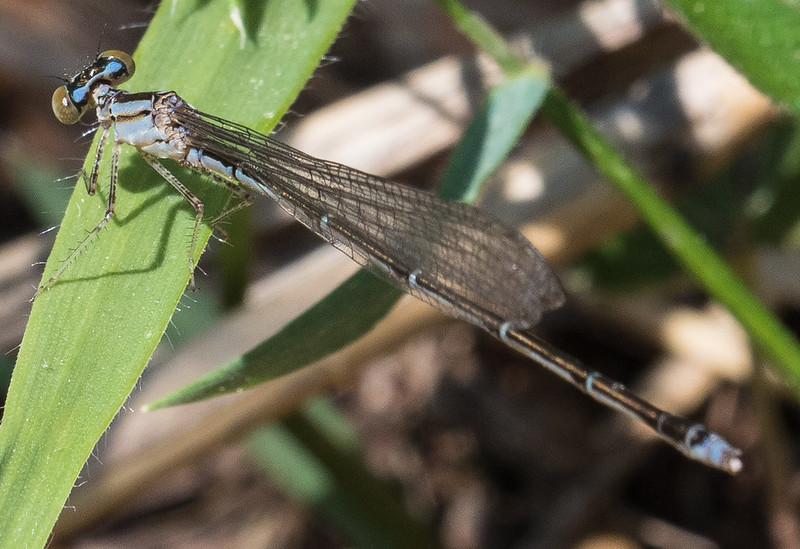
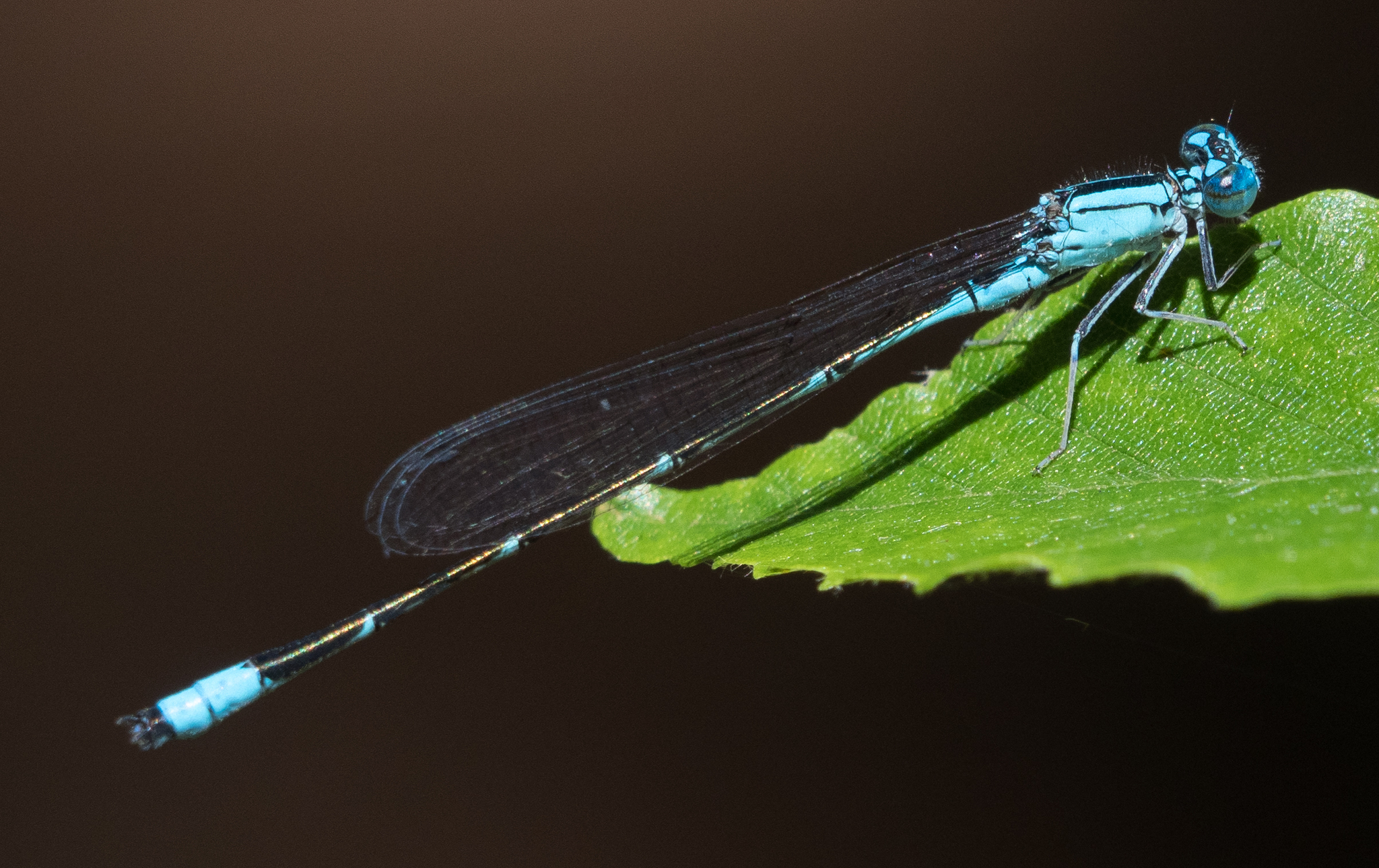
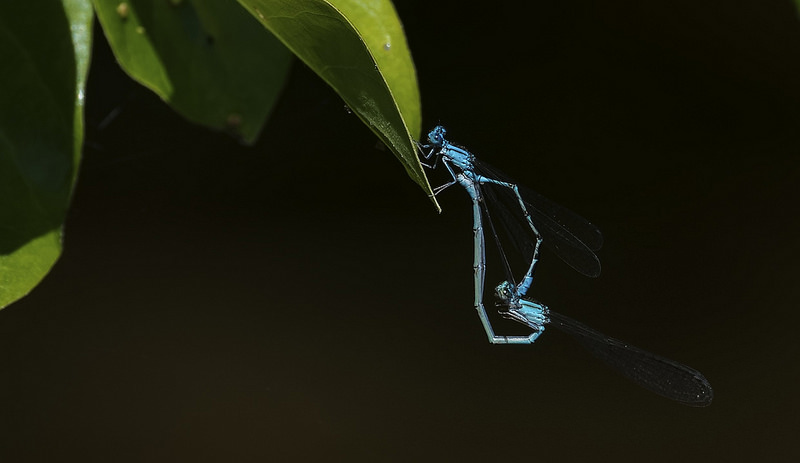
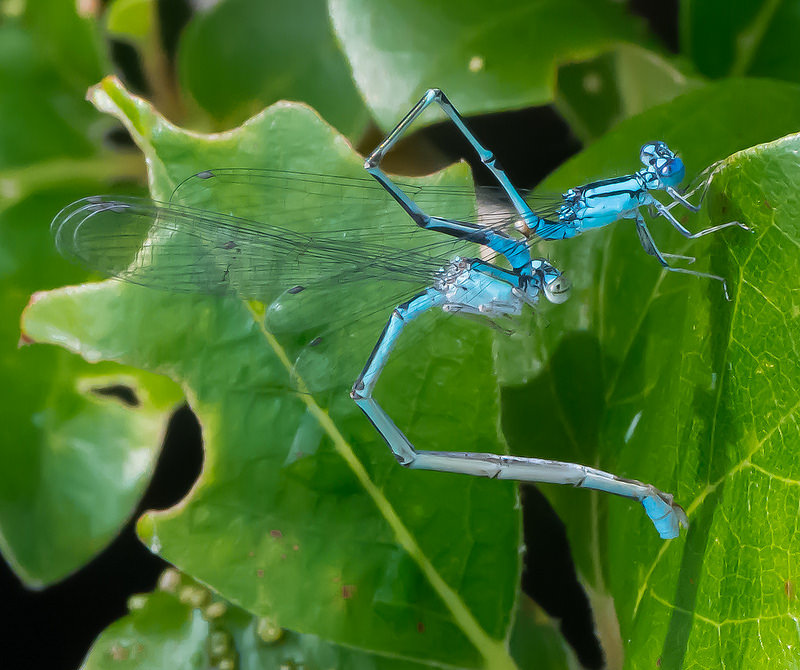
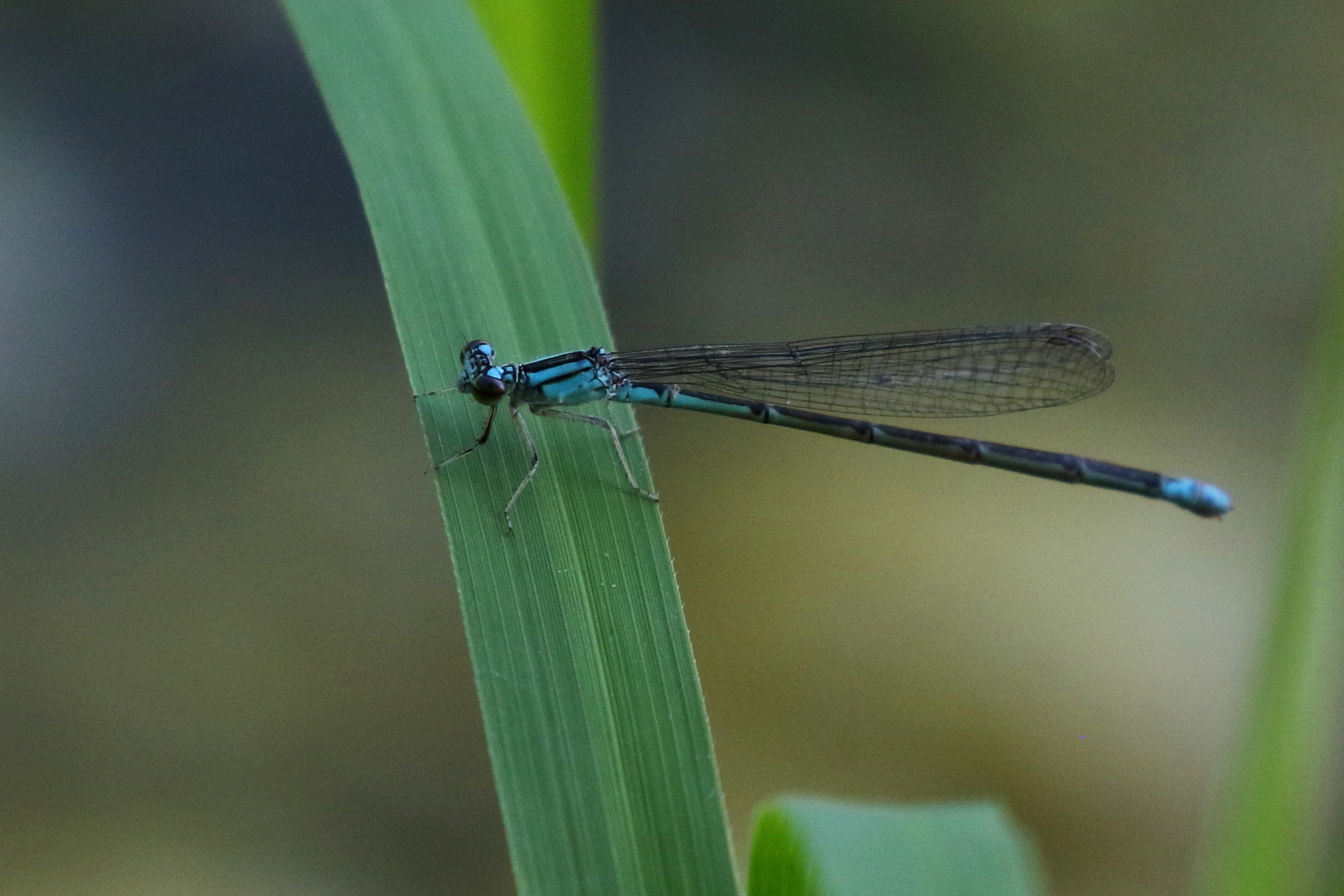
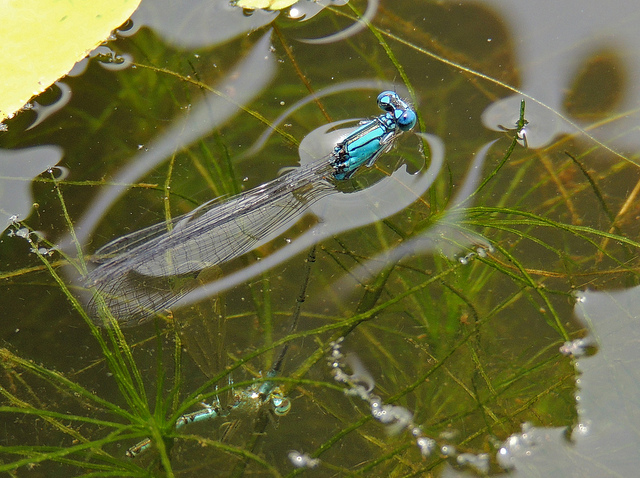
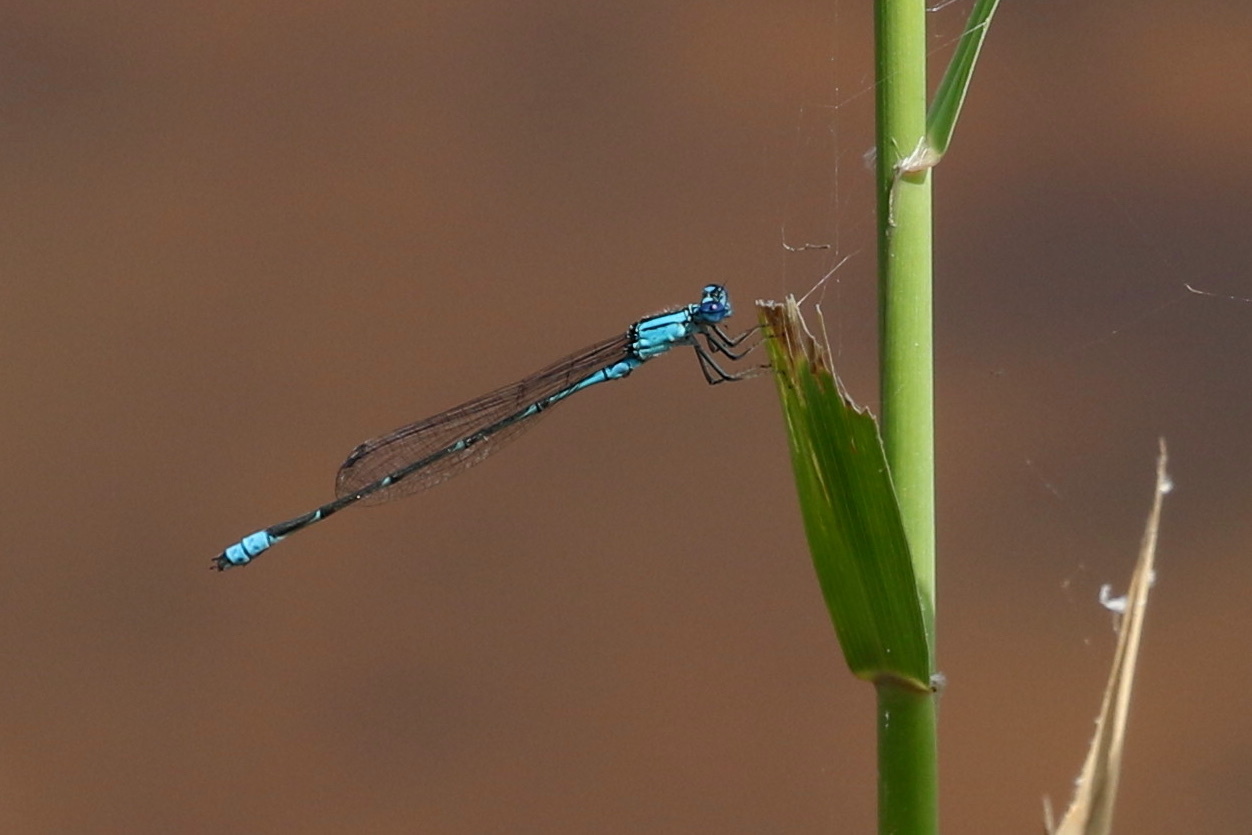
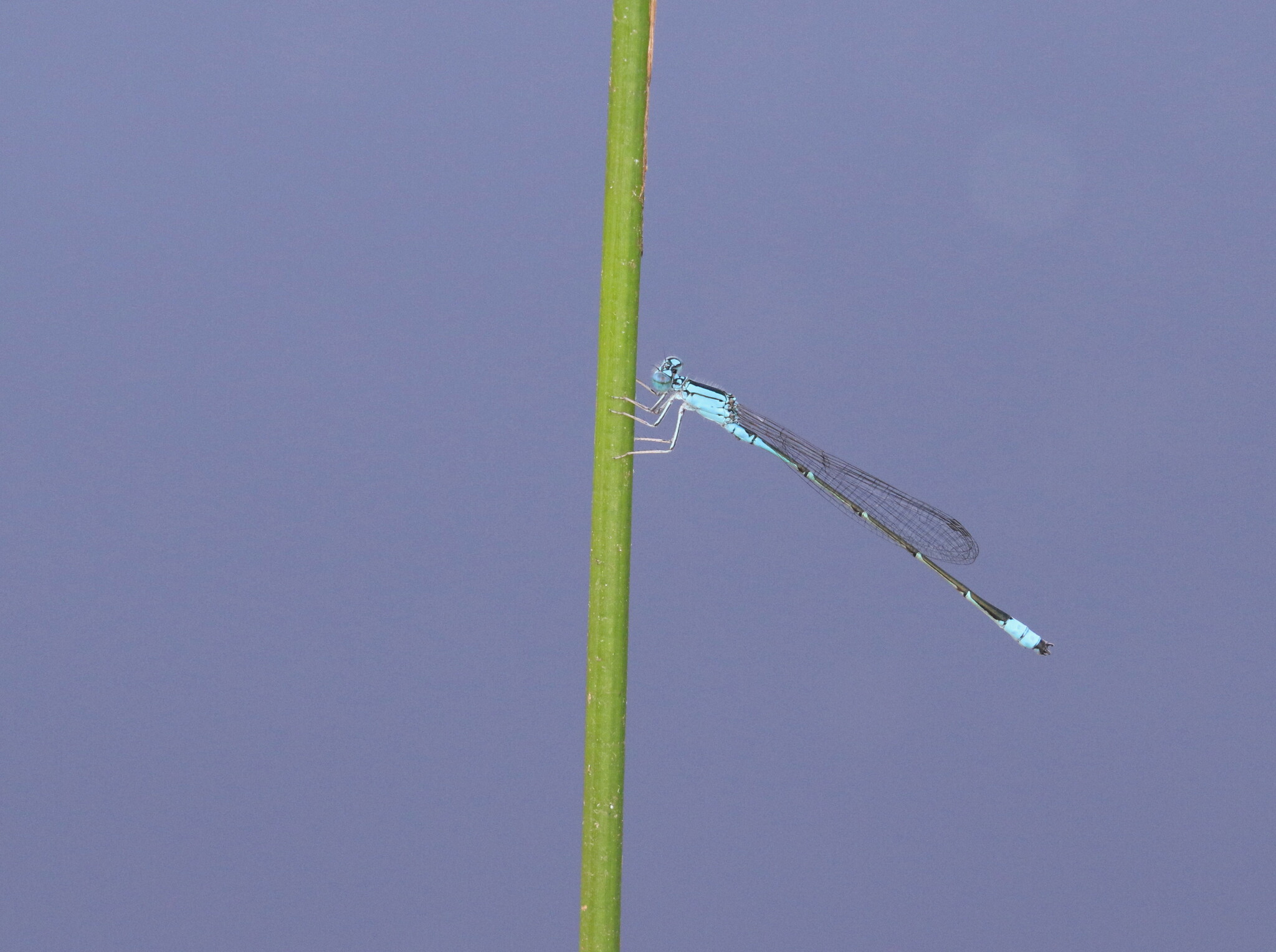
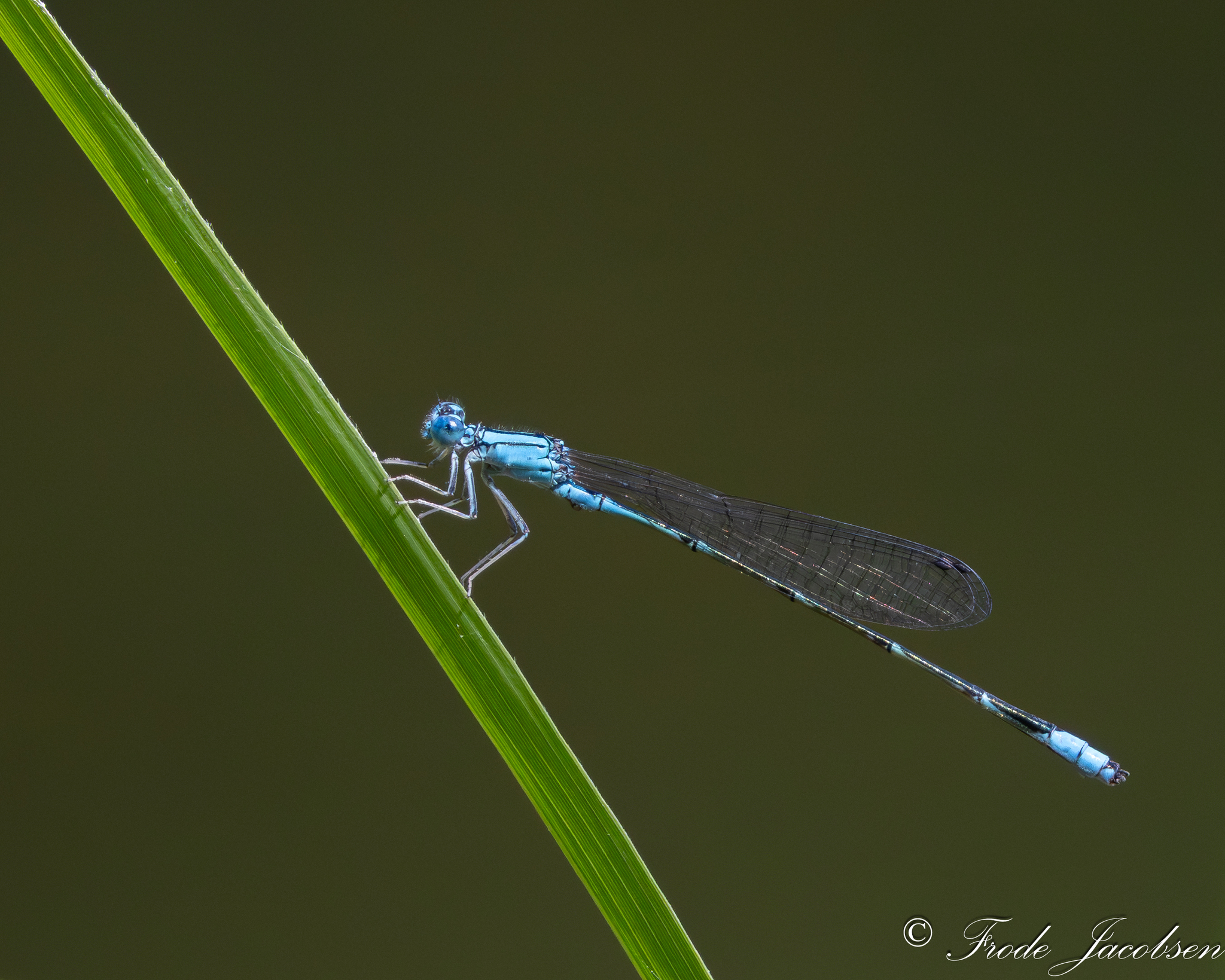
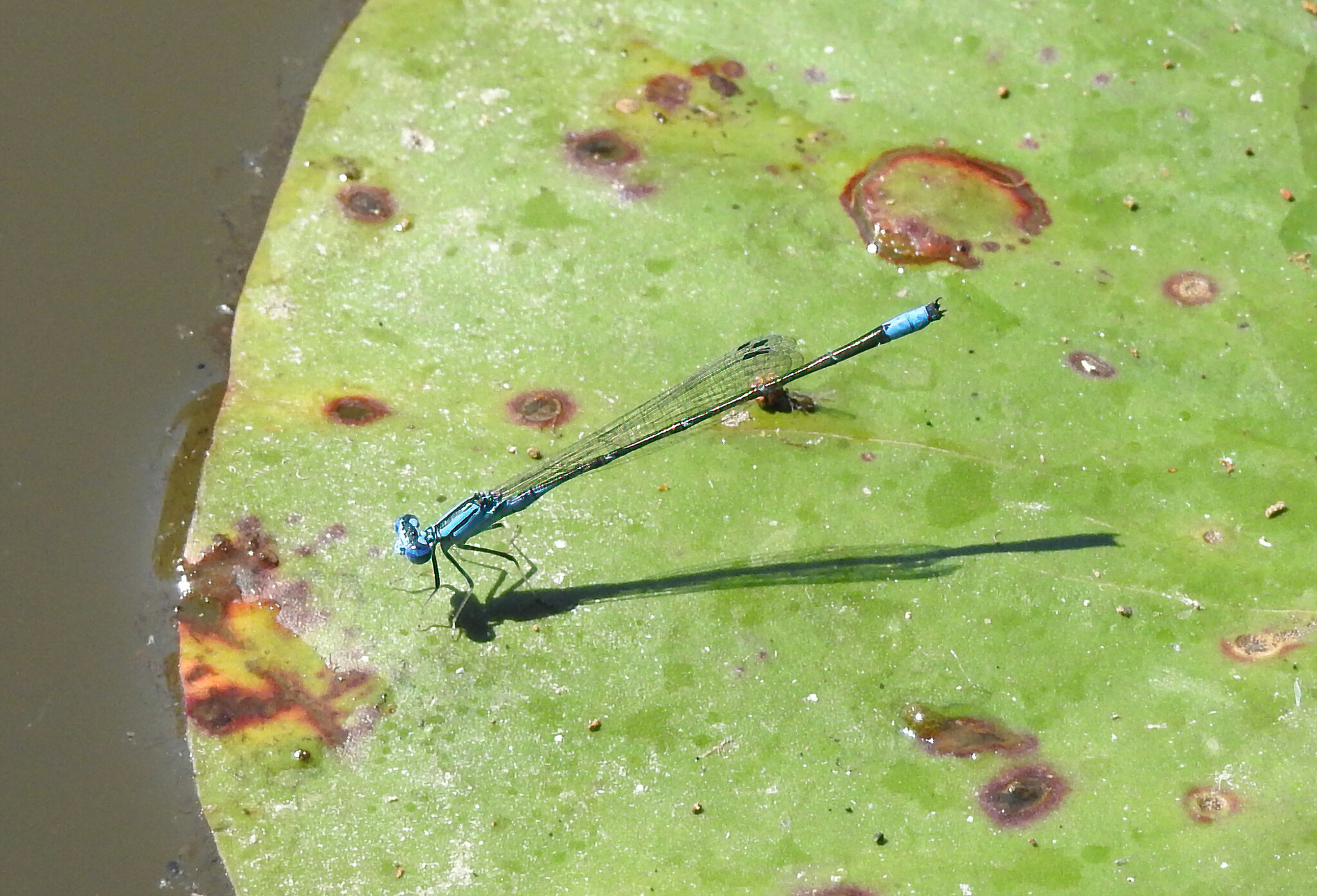
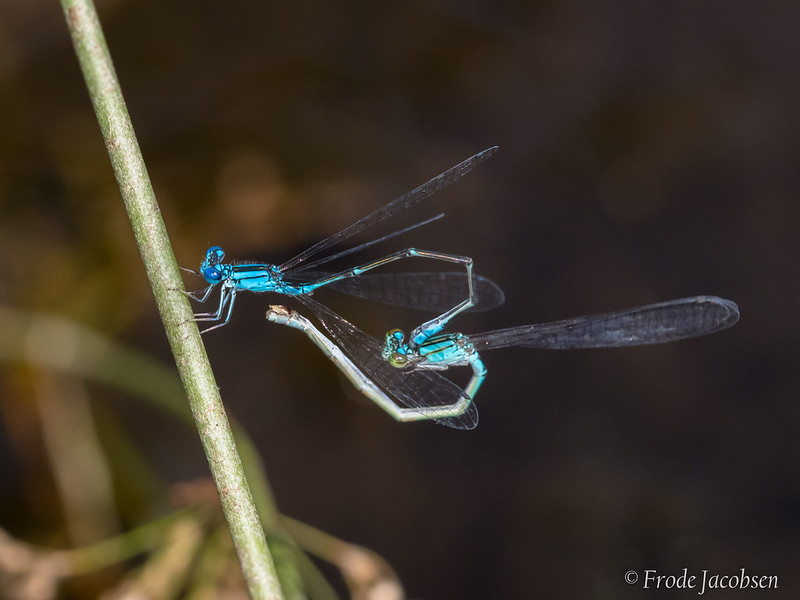
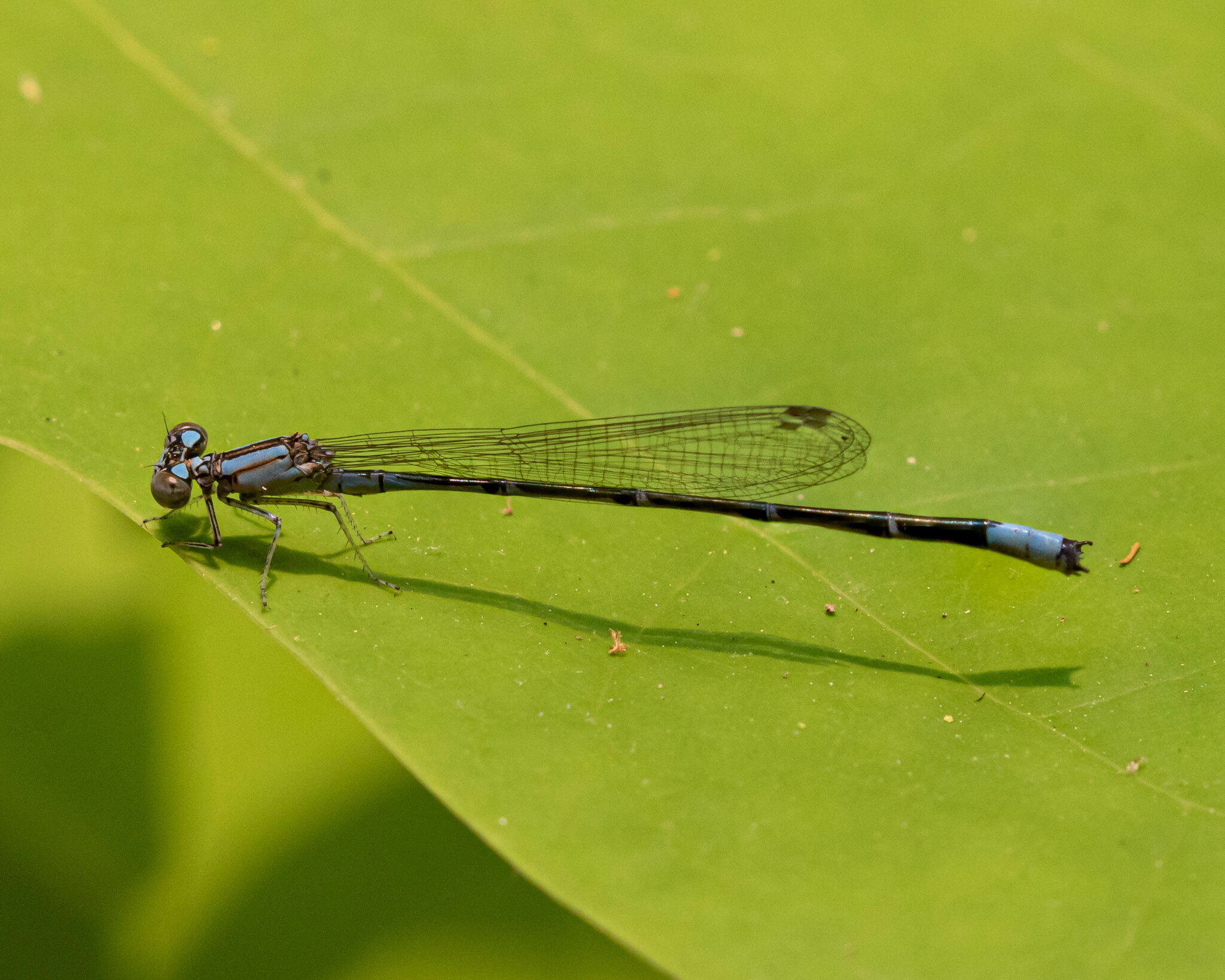
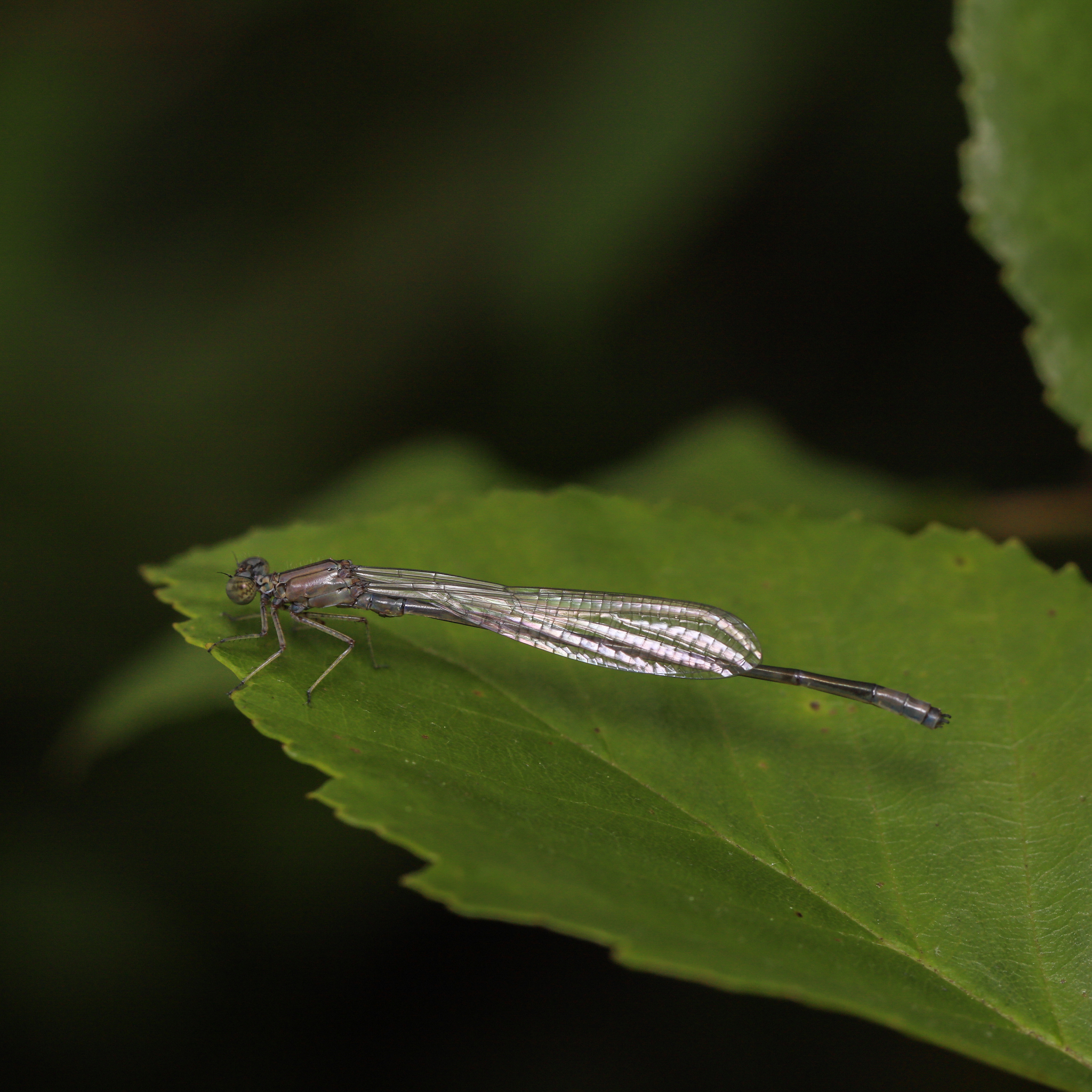
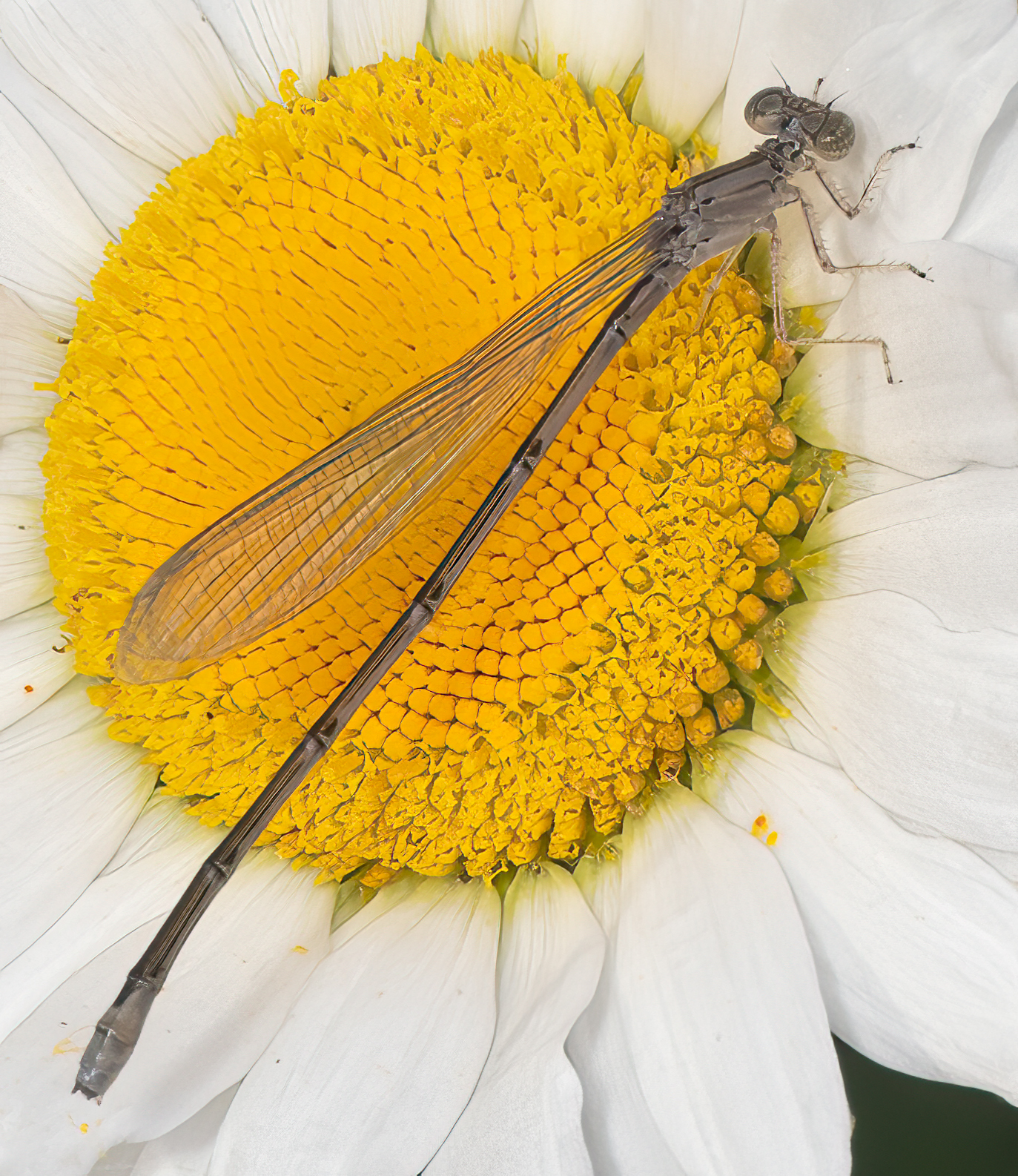
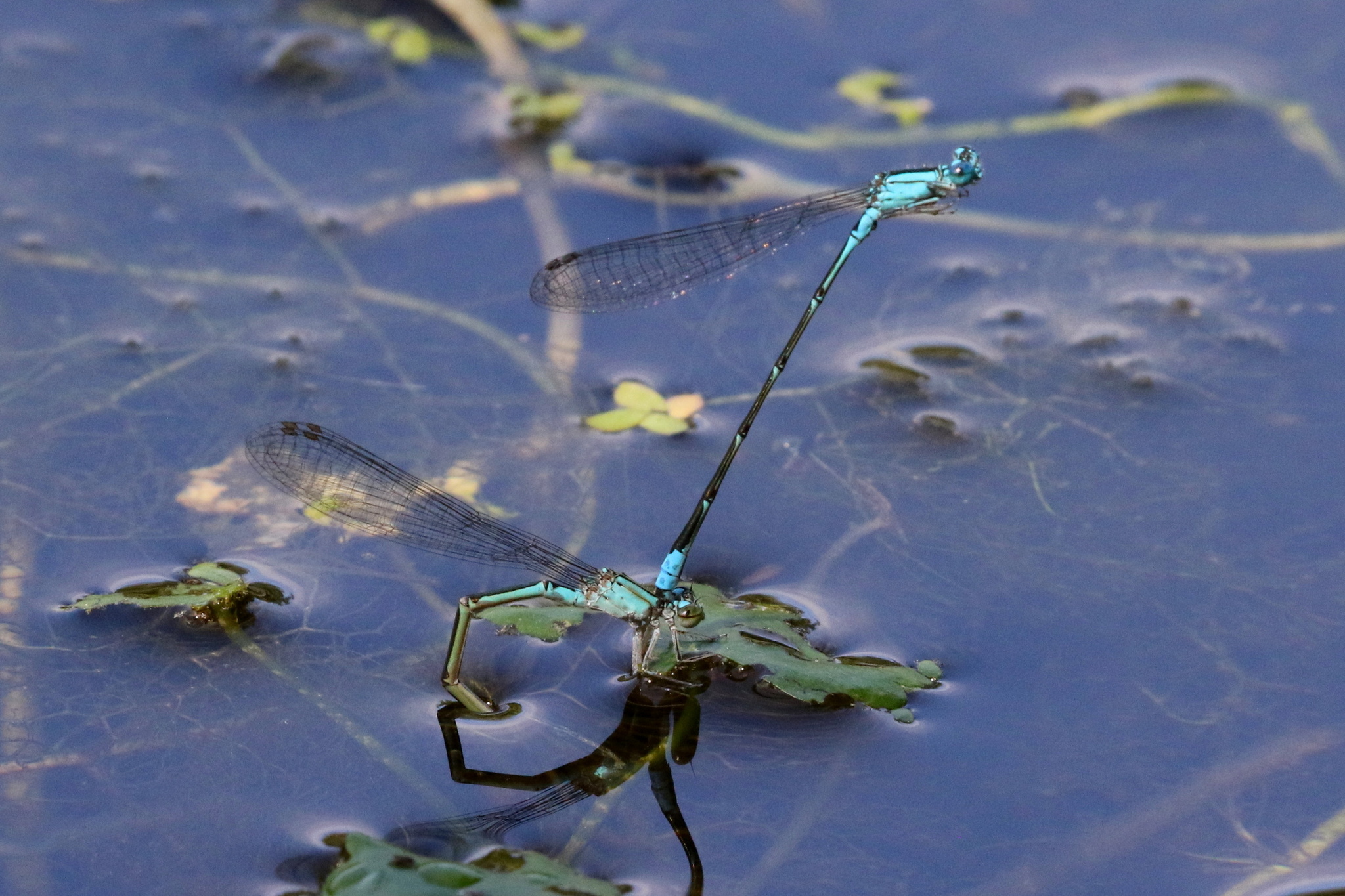
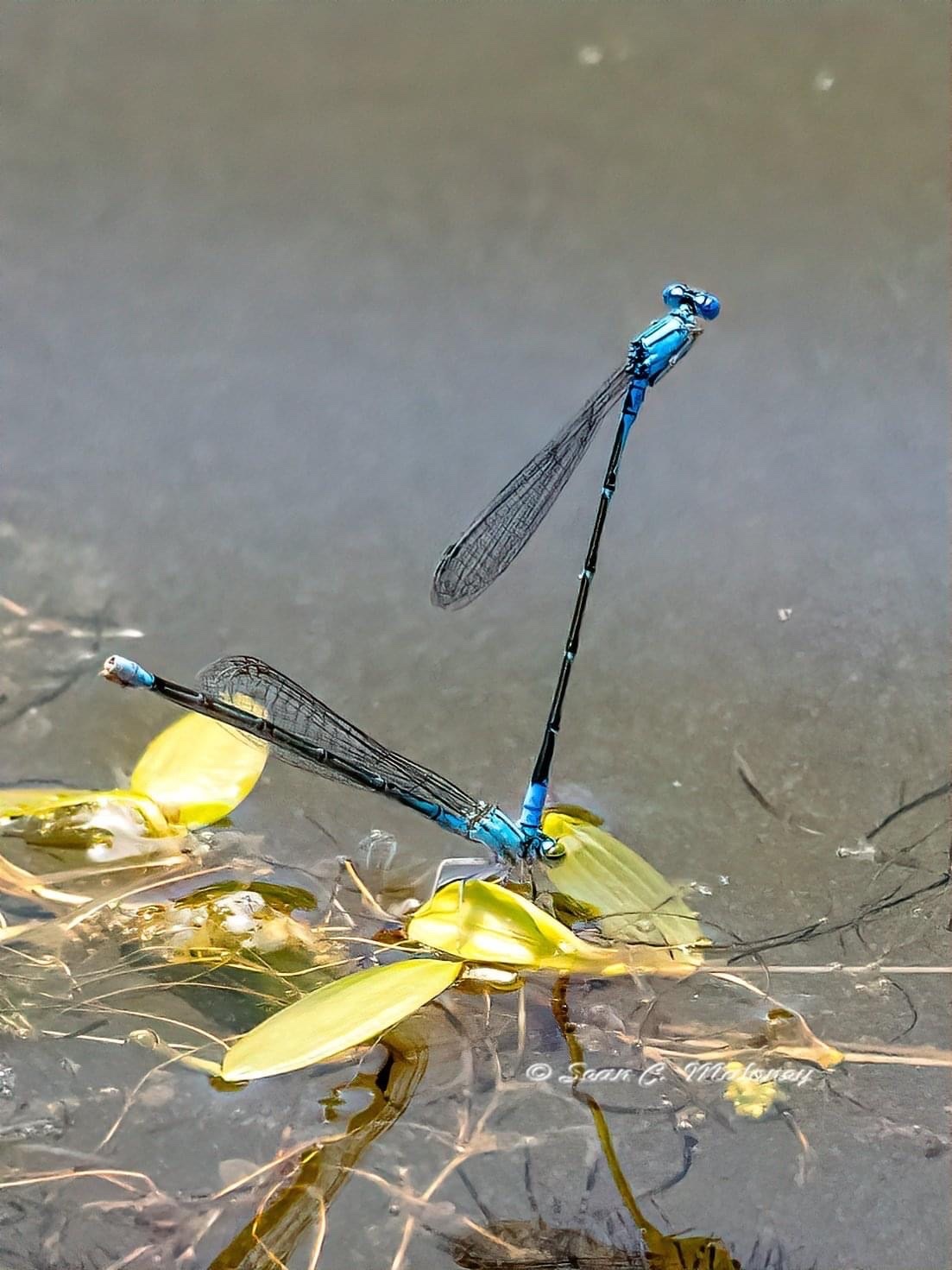
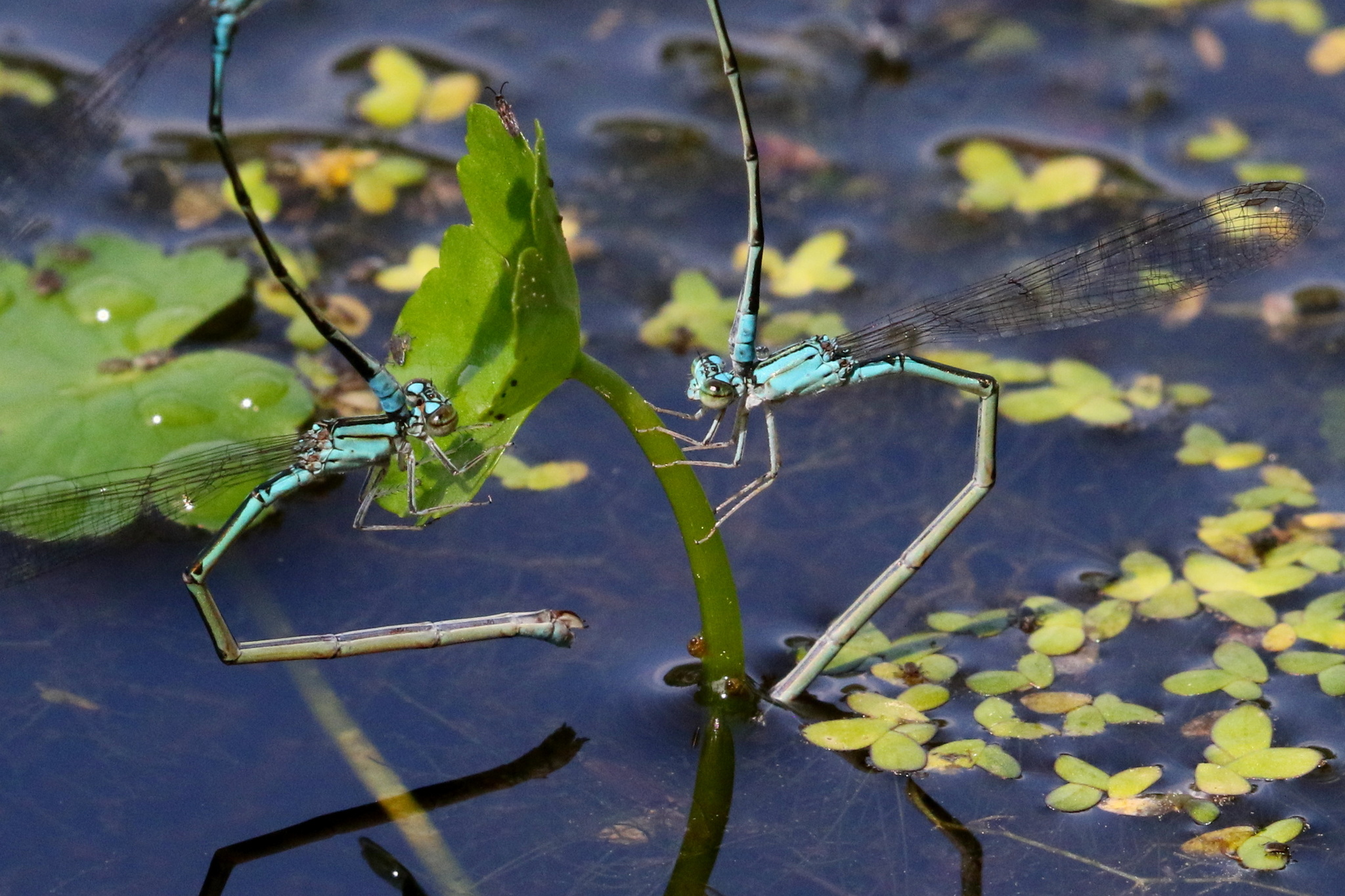
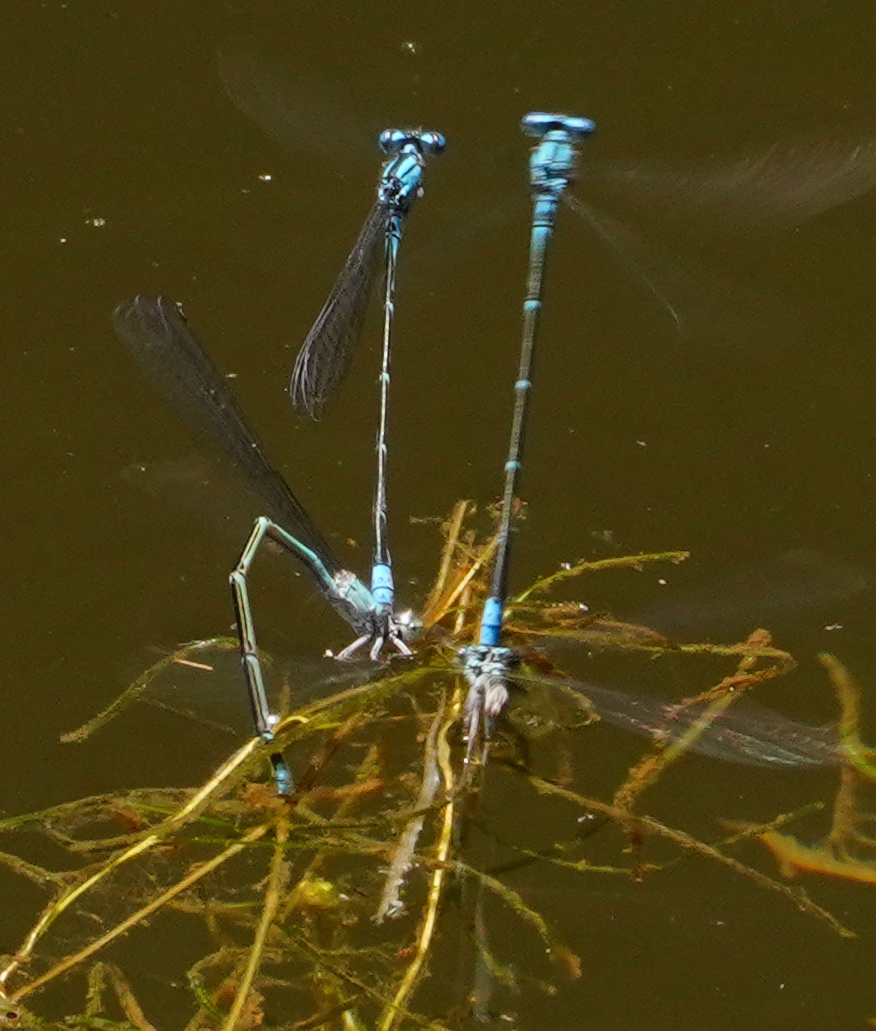
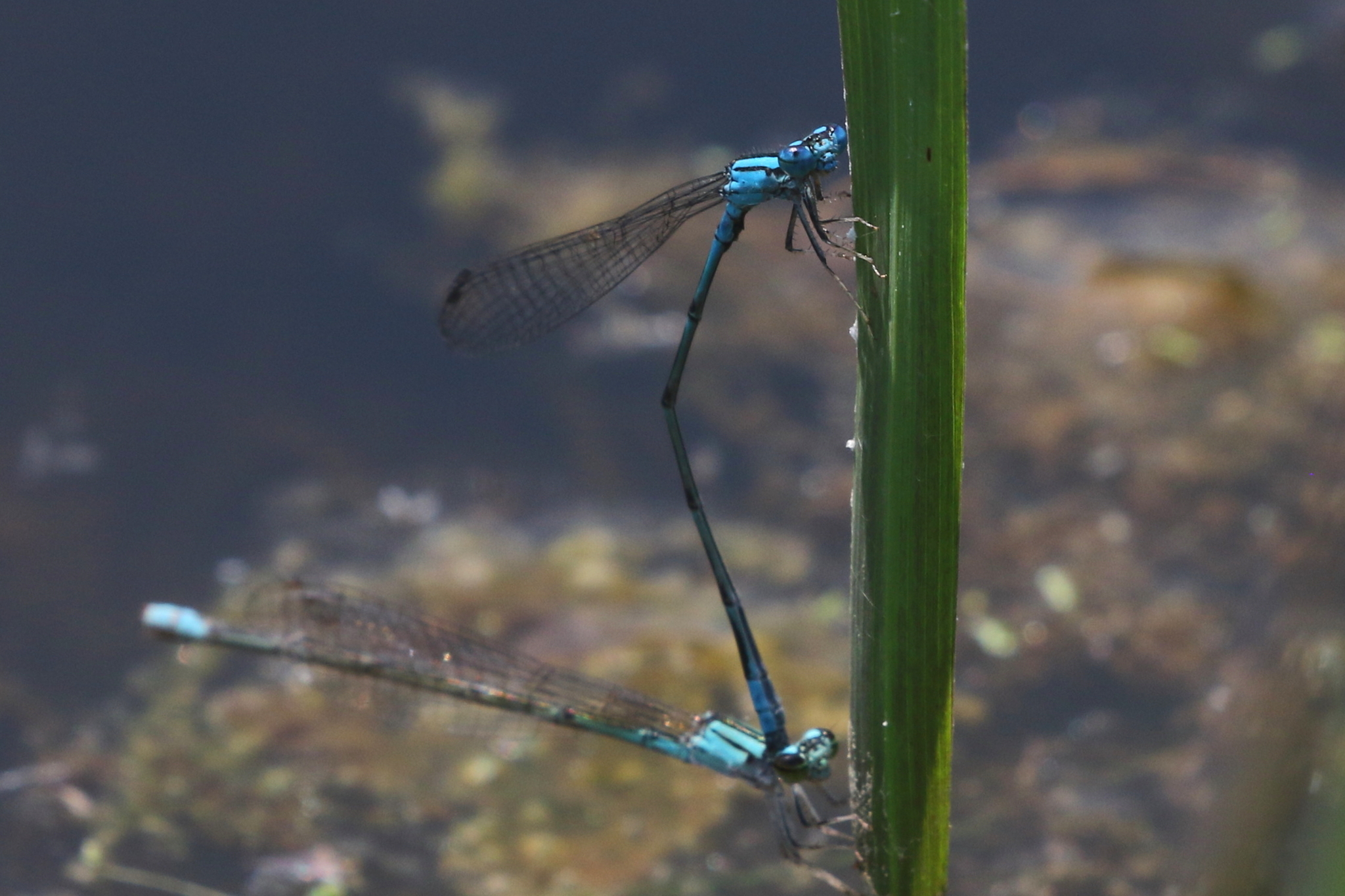
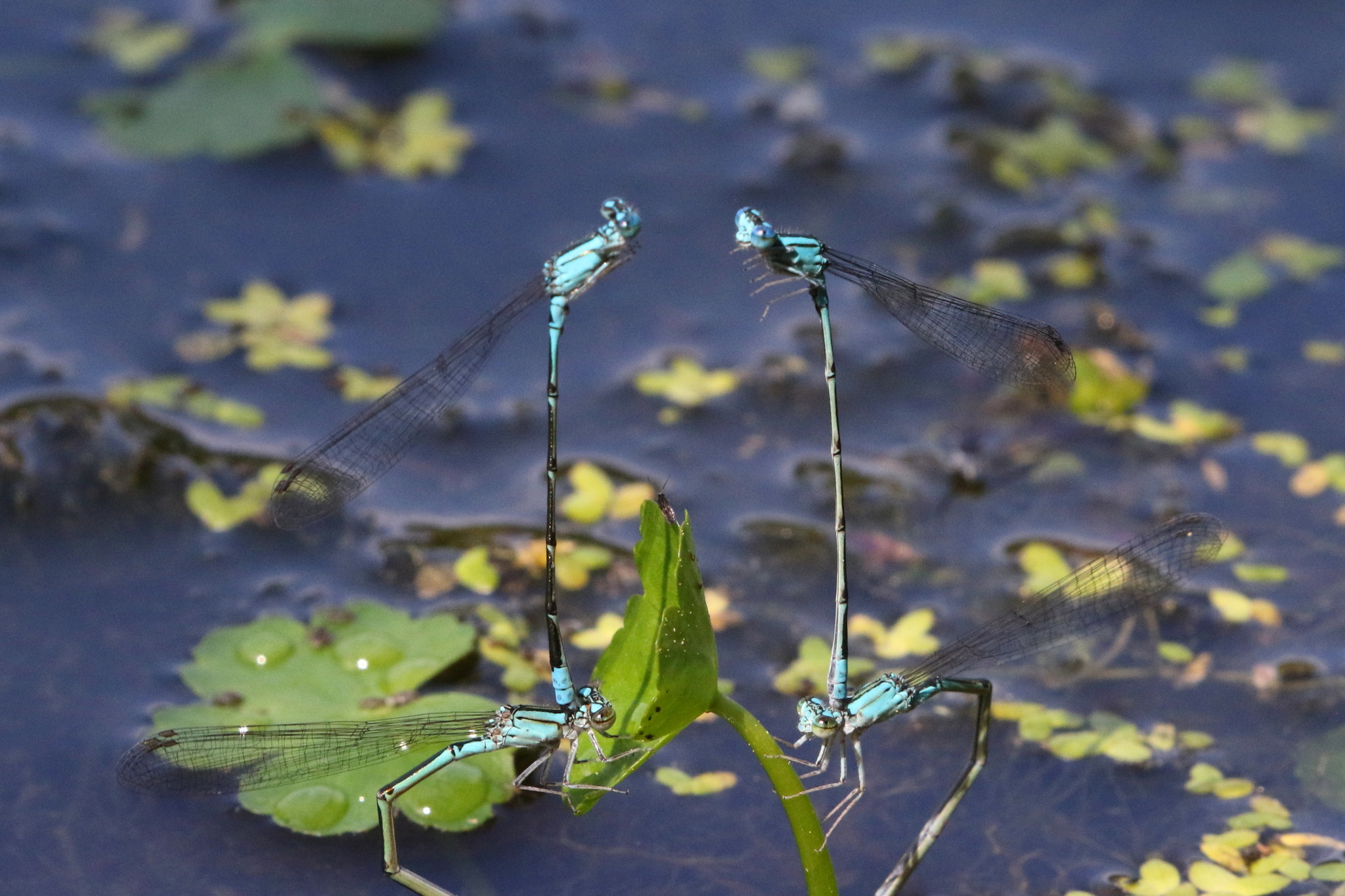
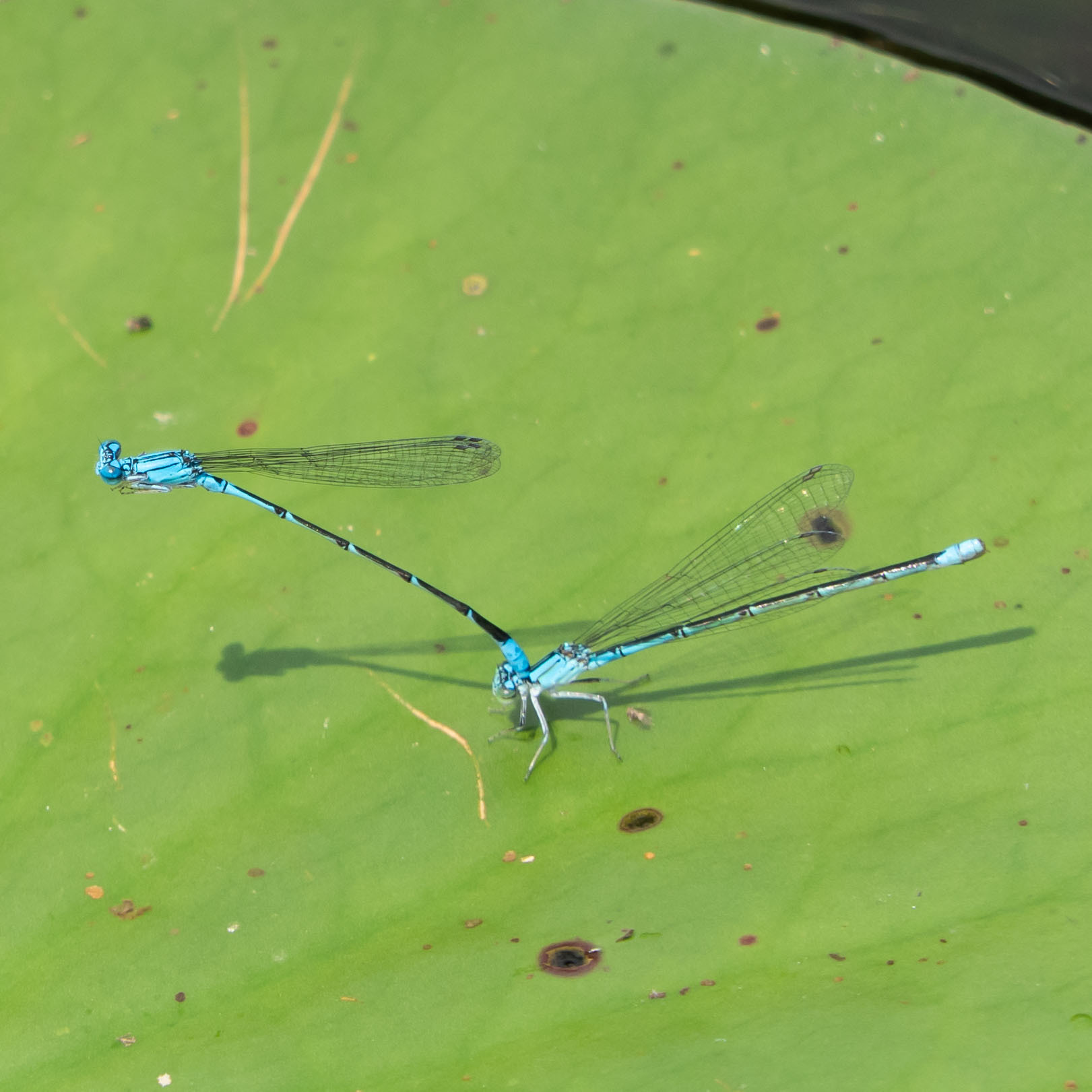
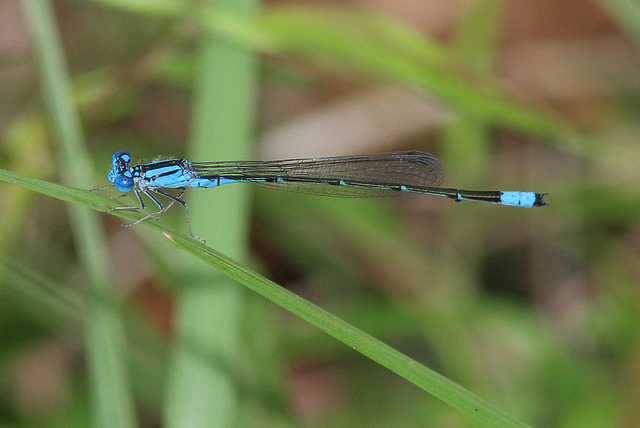
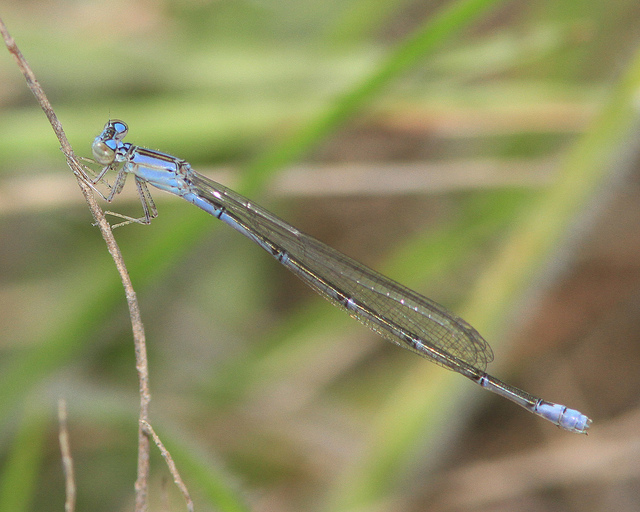
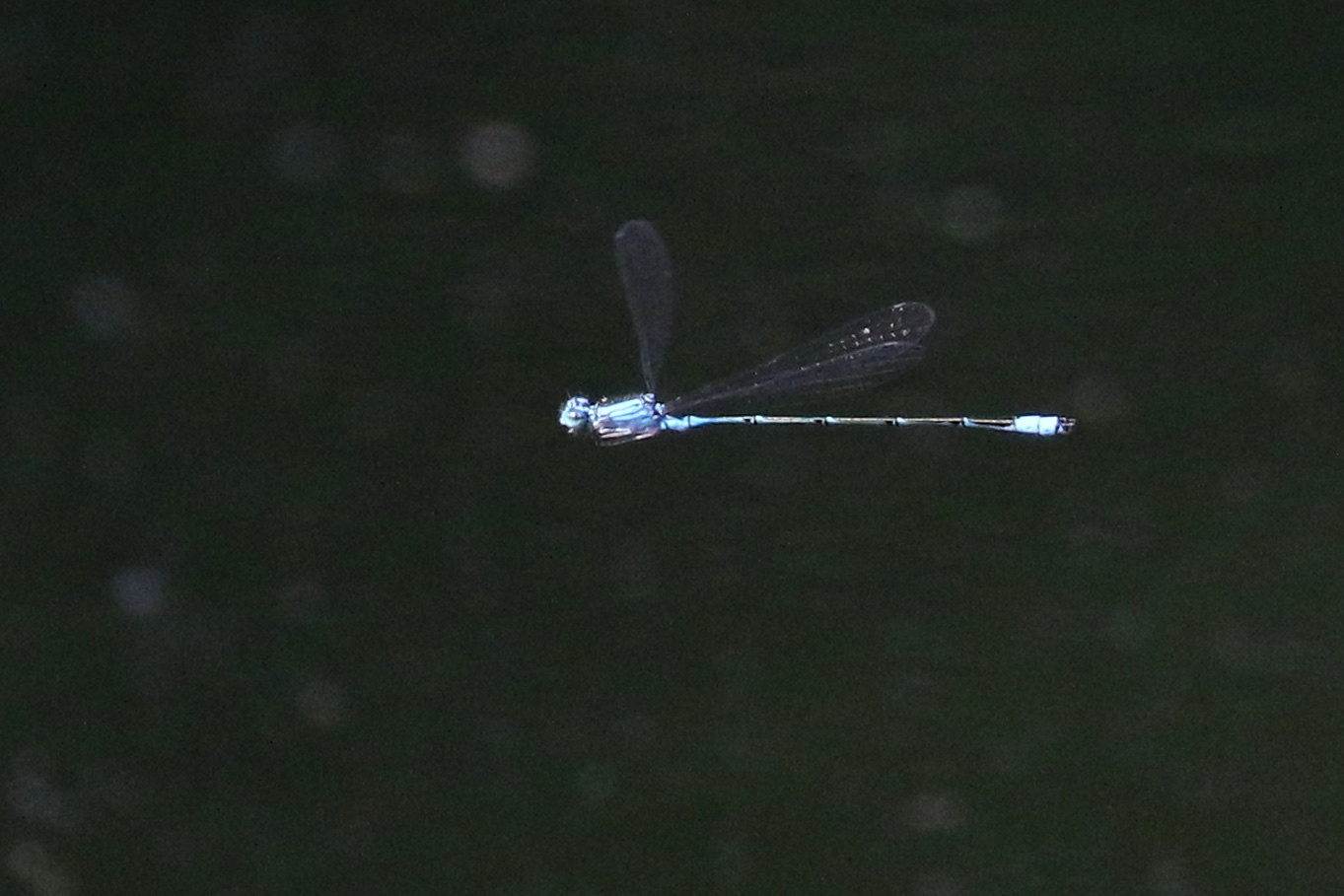
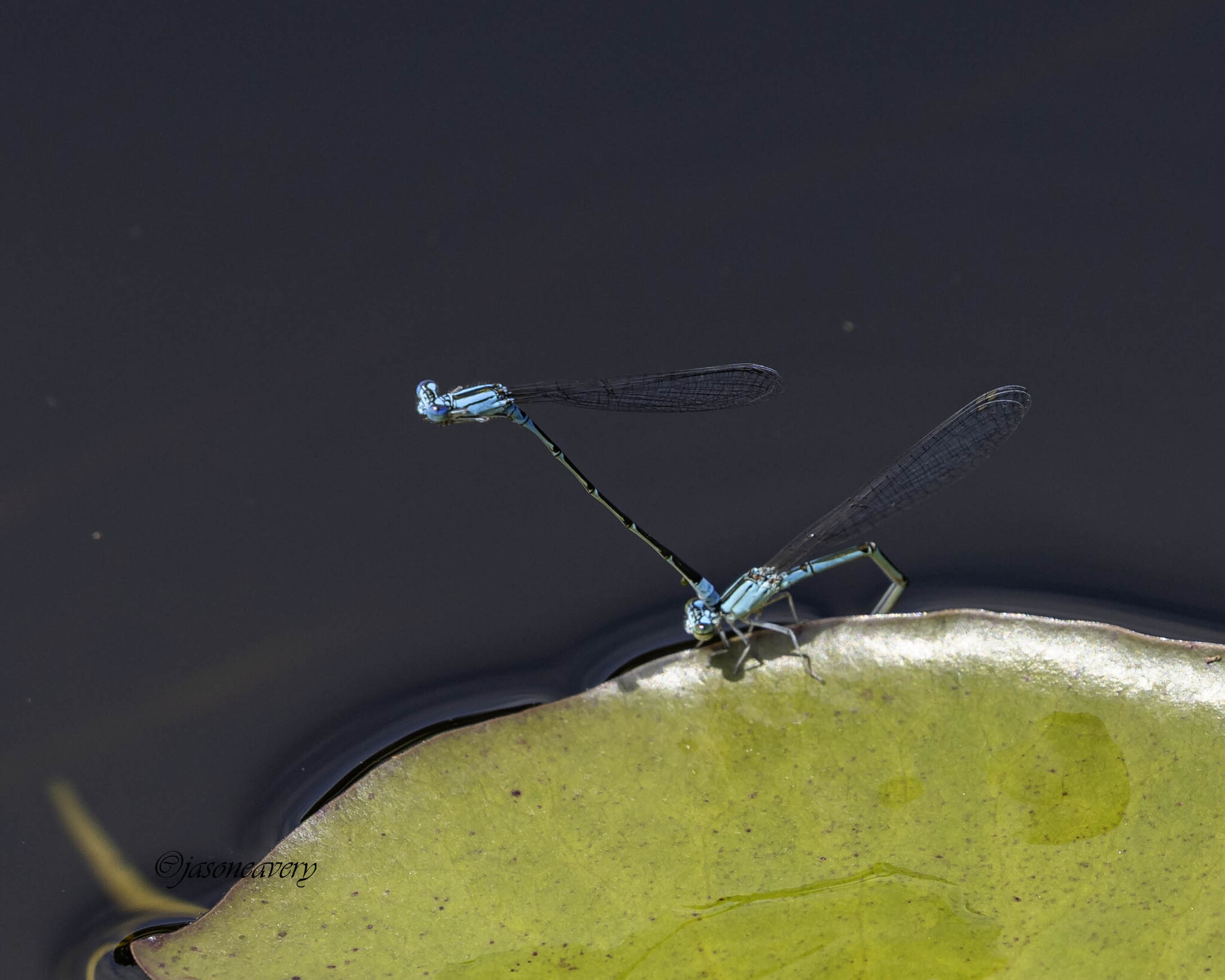
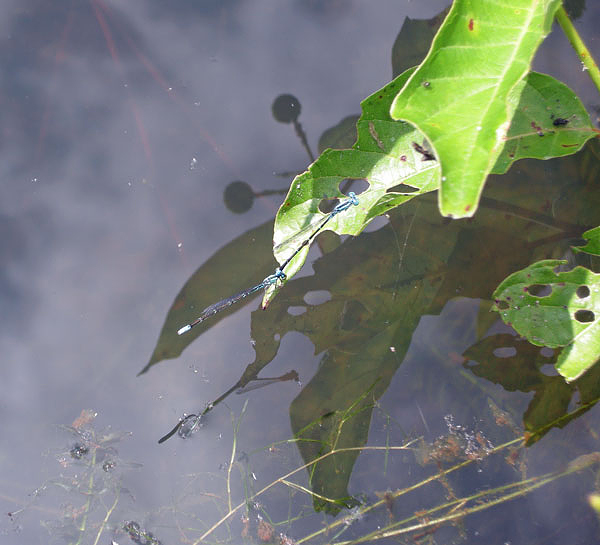
Slender Bluet (Enallagma traviatum) is a widespread damselfly related to the more range-restricted Attenuated Bluet (E. daeckii) and Pale Bluet (E. pallidum). This species is found in a wide variety of ponds and lakes with vegetation, often with forest edges nearby (Lam, 2004).In Maryland, this damsel is widespread, but usually uncommon. Both the nominate subspecies and the western subspecies westfalli occur in Maryland, and they may be found in close proximity in the Catoctin Mts. (Richard Orr's Dragonflies and Damselflies of Maryland and the District of Columbia). Slender Bluet is ranked S3 (watch list) in Maryland.
Enallagma traviatum is a species of small damselfly in the familyCoenagrionidae. It is commonly known as the slender bluet. The slender is small about 29–32 mm in length.
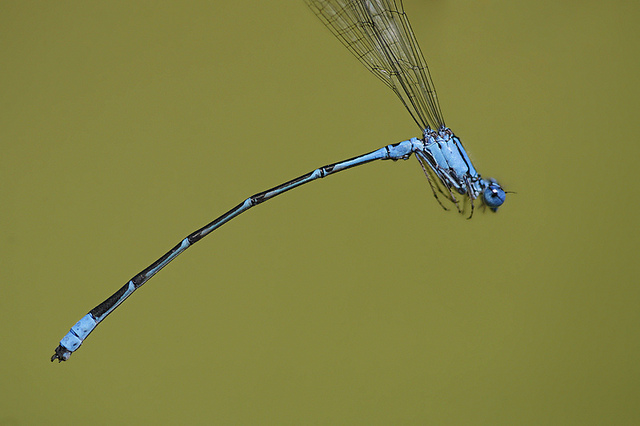
The slender bluet, as its common name implies is a blue damselfly with a thin abdomen. The eyespots of both genders are large, with a thin blue line between them. The black shoulder stripes are thin in both genders. On the male slender bluet his abdominal segments 8 and 9 are blue. Segment 10 of the male is black and its terminal appendages are longer than its similar species. On the female slender bluet her segments 8-10 are blue, while the top of segment 8 is a black bar or T-shaped mark.
Slender bluets are found along large ponds and lakes, particularly those with the forest edge nearby. It flies generally in June and July in Oklahoma.[2]
The slender bluet has many species that are similar to it. One of the similar species is the skimming Bluet which is found in similar habitats. It is also similar to the stream bluet and turquoise bluet which are usually found along streams and last the attenuated bluet found in the Pine Barrens.
^Smith, Brenda D. (2021). Dragonflies at a biogeographical crossroads: the odonata of Oklahoma and complexities beyond its borders (Thesis). Boca Raton, Florida: CRC press, Taylor & Francis group. ISBN978-1-003-00756-2.